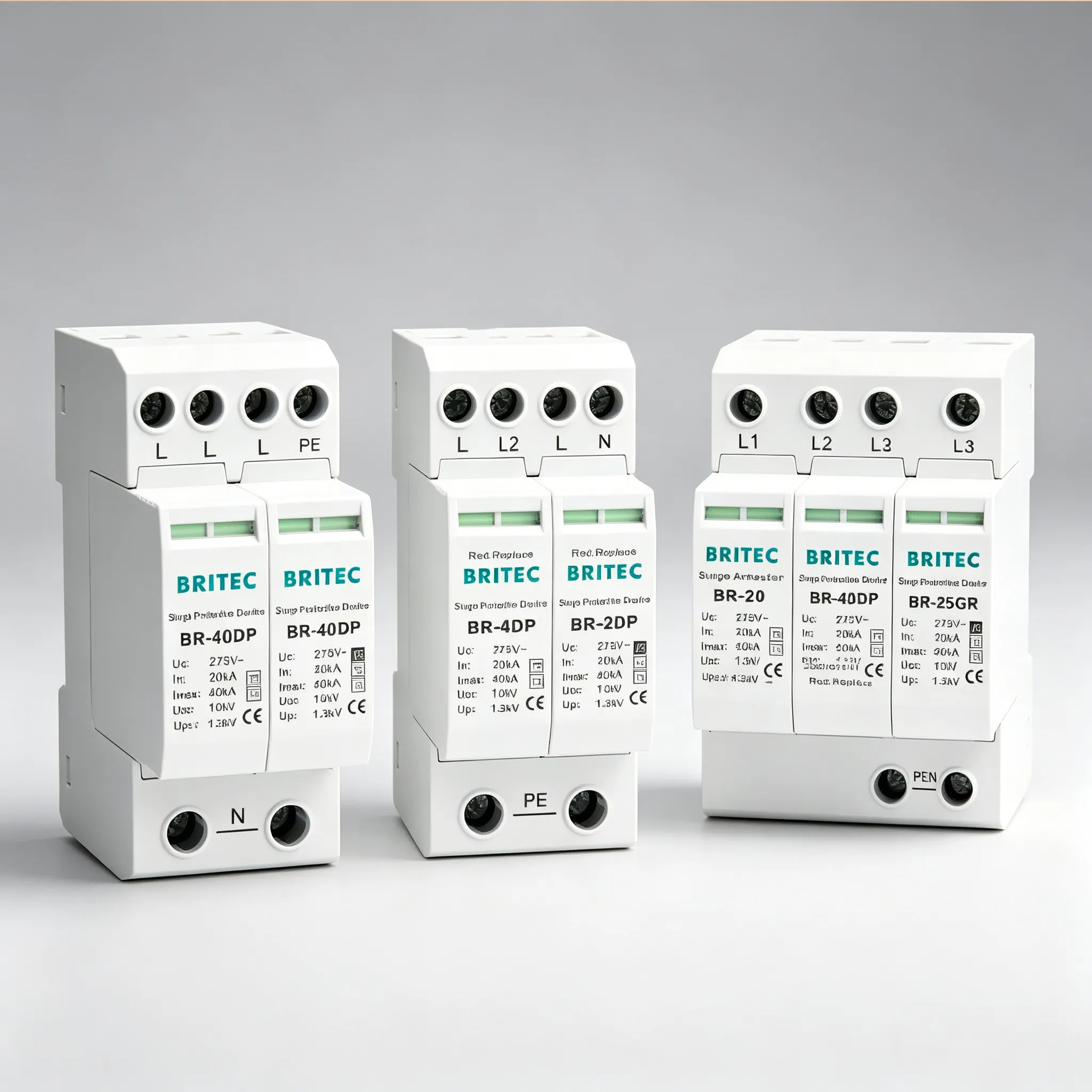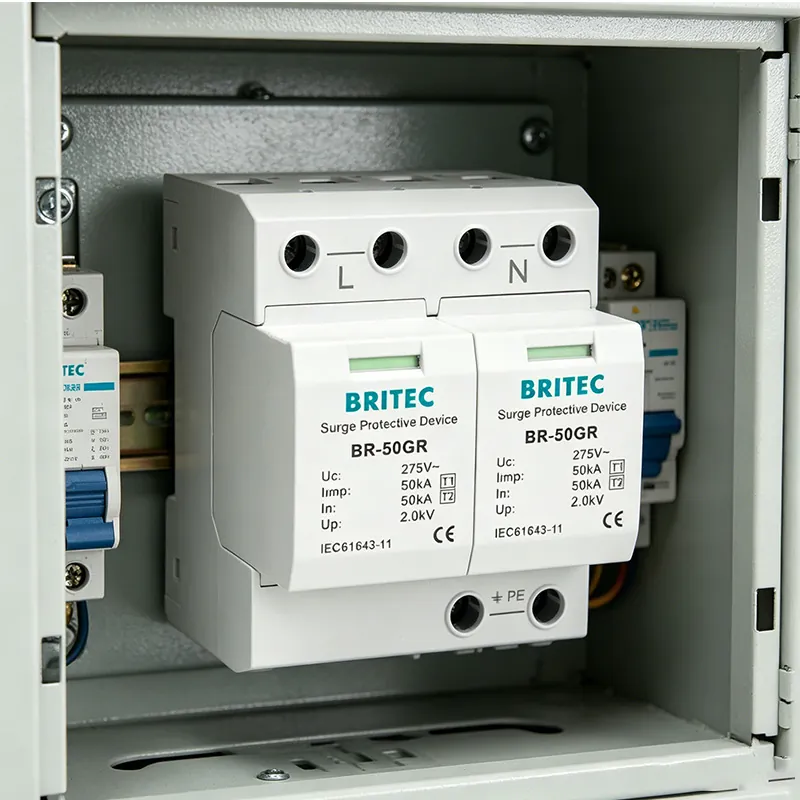

A solar photovoltaic (PV) system is a long-term asset – panels are warrantied for 25 years, and the inverter is often the single most expensive component in the chain. Yet many installations still leave that investment exposed to one of the most common causes of premature failure: electrical surges. If you are specifying, procuring, or maintaining a PV plant, the practical question is not “is surge protection nice to have?” but “does my system need a dedicated Electrical SPD?”
As a surge protective device manufacturer with more than 20 years of field experience (Britec Electric, established 2003), we have tested, certified, and supplied SPDs for residential rooftops, commercial carports, and utility-scale solar farms across Europe, South America, and Asia. In this guide we break down how an Electrical Surge Protection Device works in a PV context, where it must be installed, the SPD types available, and how to choose the right unit for your application.
Short answer: for almost every grid-tied or off-grid PV system, a dedicated Solar SPD is strongly recommended – and in exposed or utility-scale sites it is effectively mandatory under modern lightning-protection design practice. The DC side of a PV system behaves very differently from a normal AC distribution board, so a generic AC strip or breaker-mounted protector is not enough. Below we explain why.
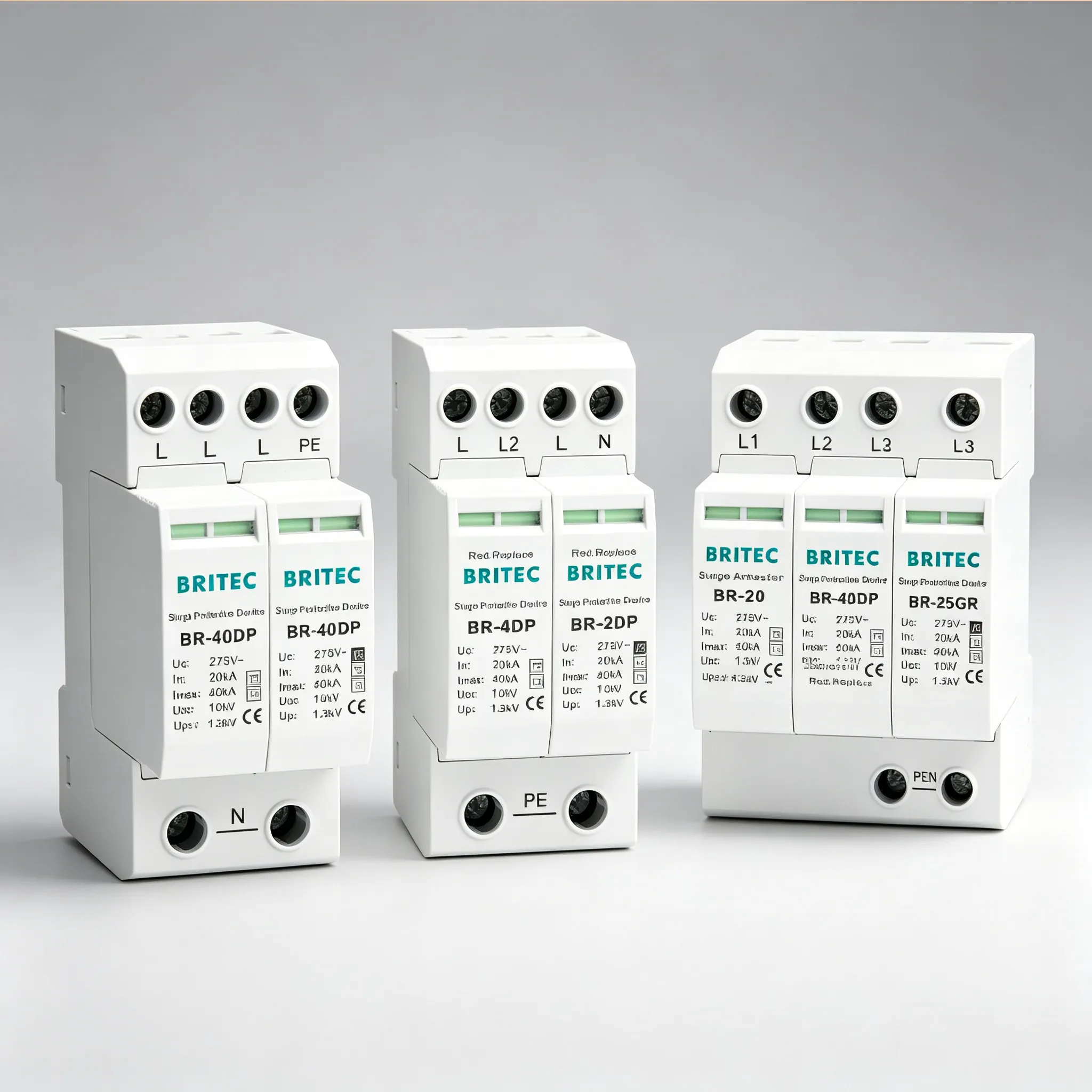
Bir Electrical Surge Protector (also called an Electrical Surge Protection Device or SPD) is a passive safety component installed in parallel with the protected circuit. Its job is to keep the voltage reaching your equipment below a safe limit during a surge event.
Under normal conditions the SPD presents a very high impedance and draws no current. When a transient overvoltage appears – for example from a nearby lightning strike or a utility switching operation – the internal varistor (MOV) rapidly drops to a low-impedance state and diverts the surge current safely to the protective earth (PE). Once the transient passes, the device resets to its high-impedance state. Quality PV SPDs include a thermal disconnector that safely isolates the module if the varistor degrades, plus a visible status window (green = healthy, red = replace) so maintenance teams can verify protection at a glance.
PV arrays are unusually exposed to surge energy for several reasons:
The result: the inverter, combiner boxes, charge controllers, and monitoring electronics are all at risk of catastrophic or cumulative damage.
A dedicated Solar Surge Protection Device is engineered for the DC side of a PV system, where standard AC protectors cannot be trusted. Its value is concrete:
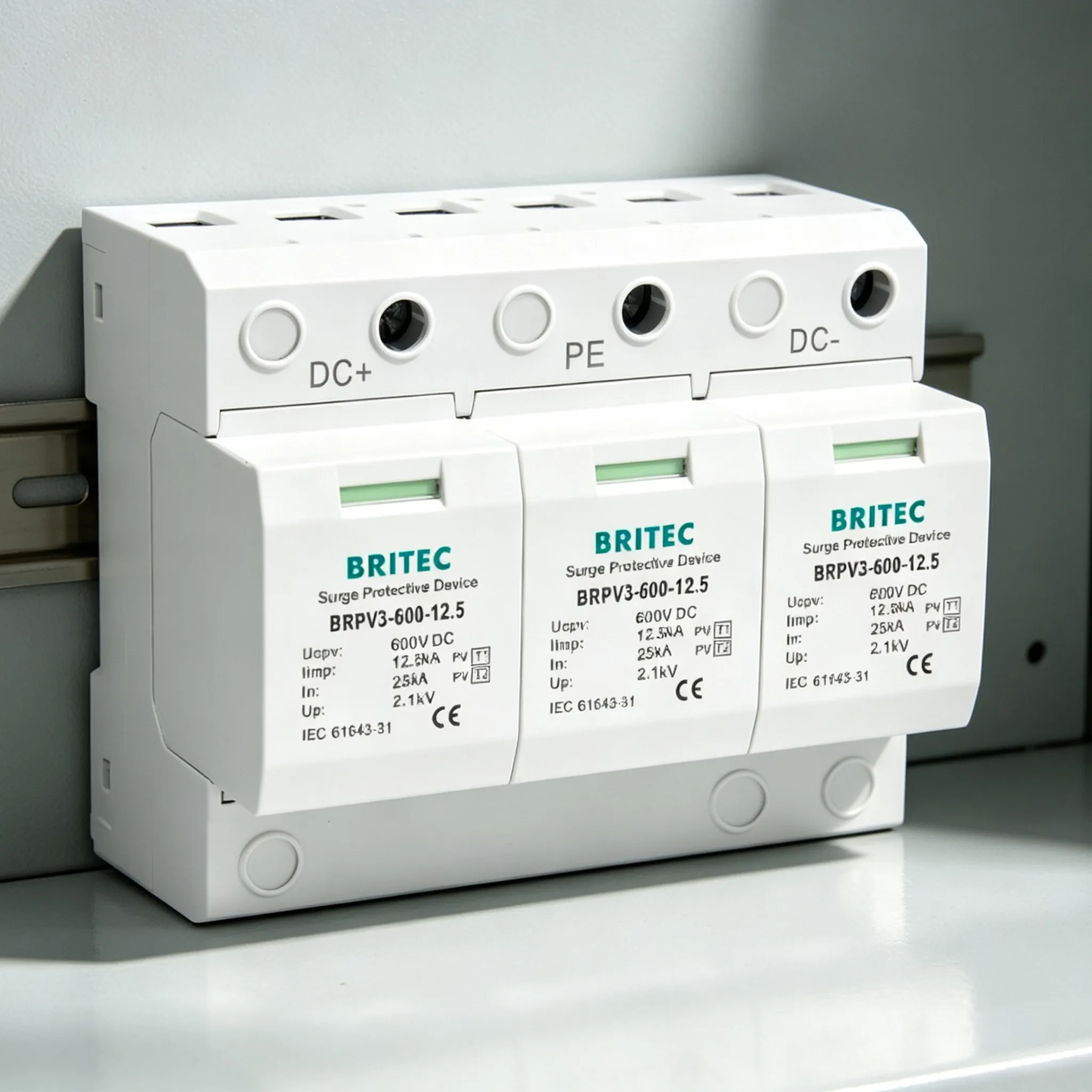
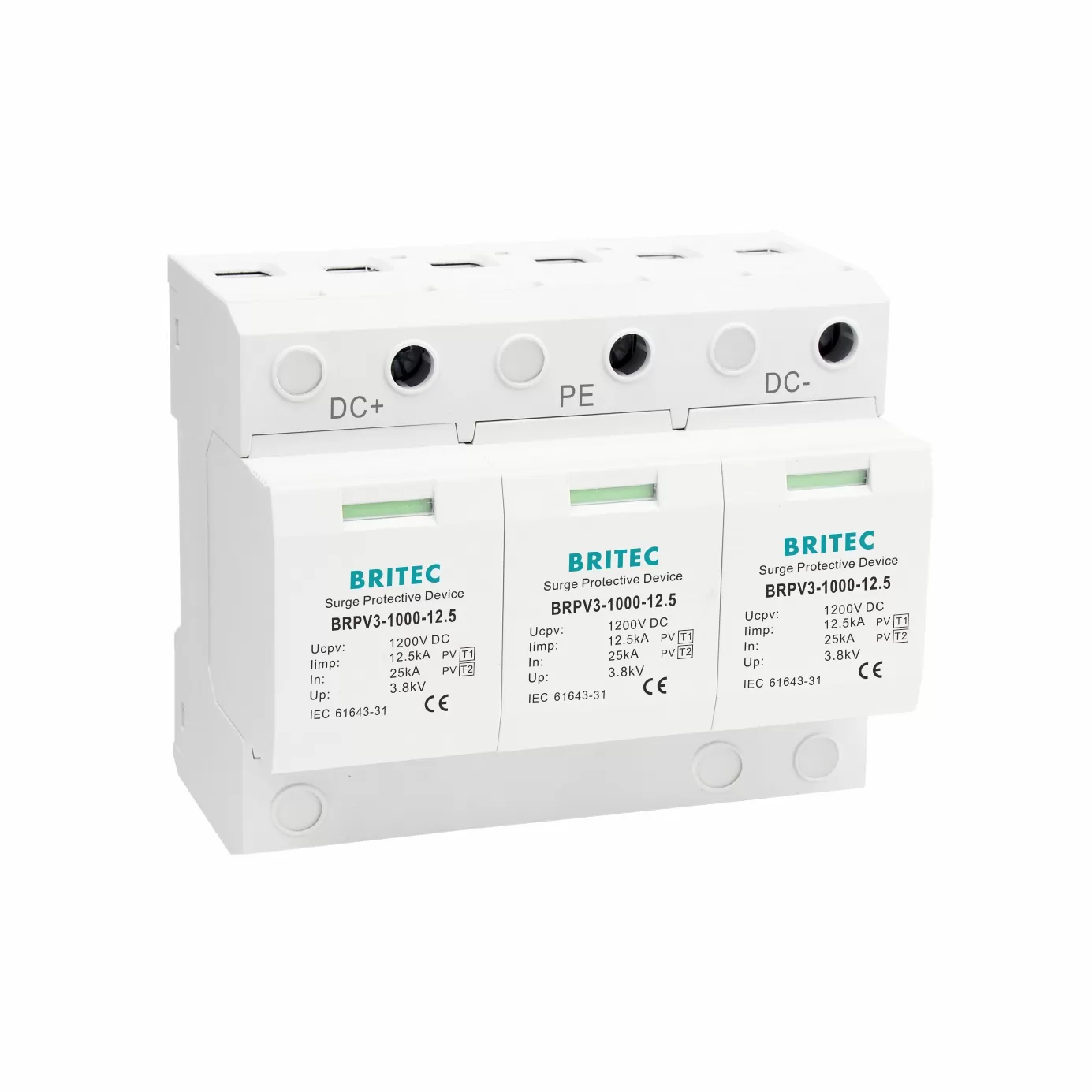
For a purpose-built DC unit rated to your string voltage, see our 1000 V Type 1+2 PV surge protection device, designed specifically for PV combiner and inverter DC inputs.
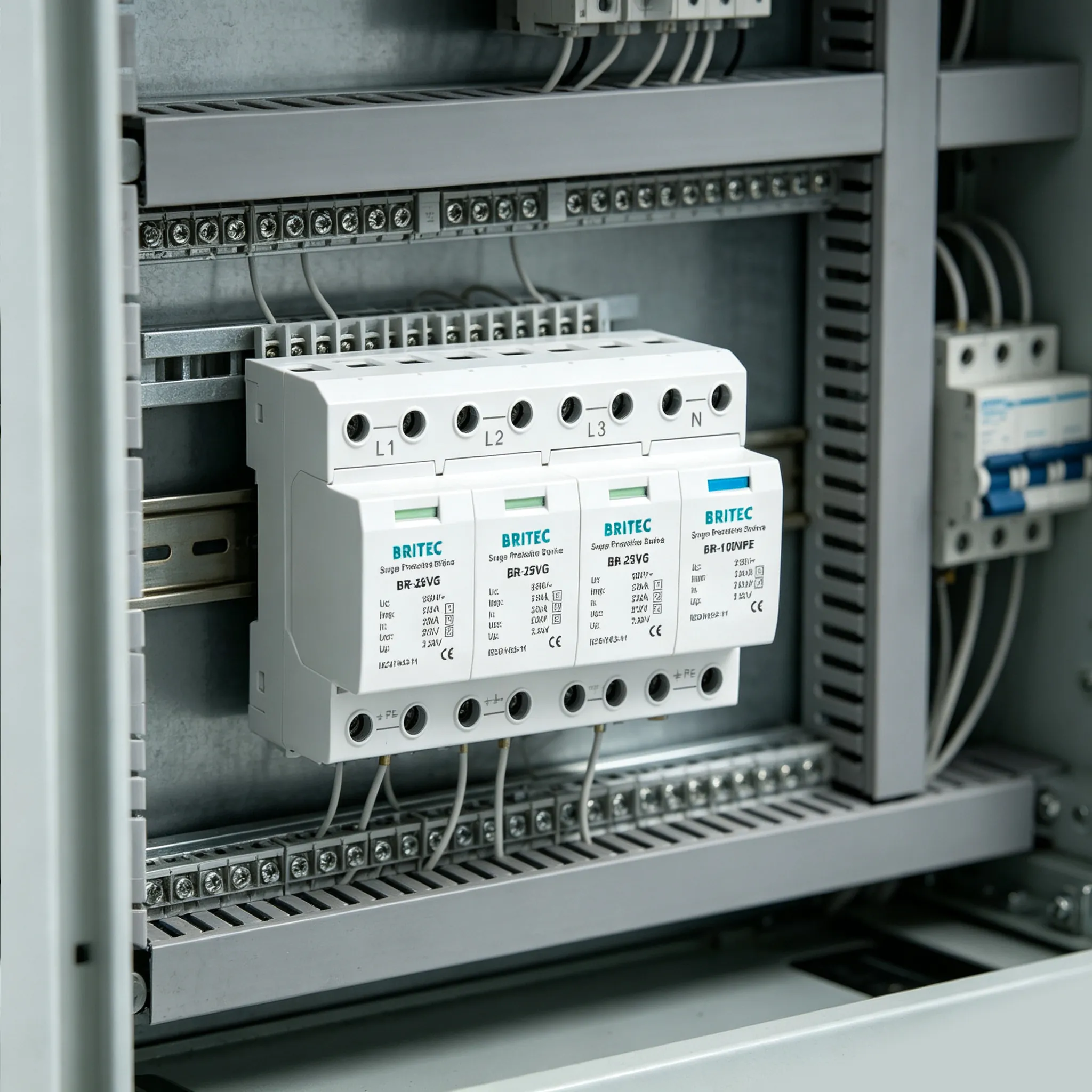
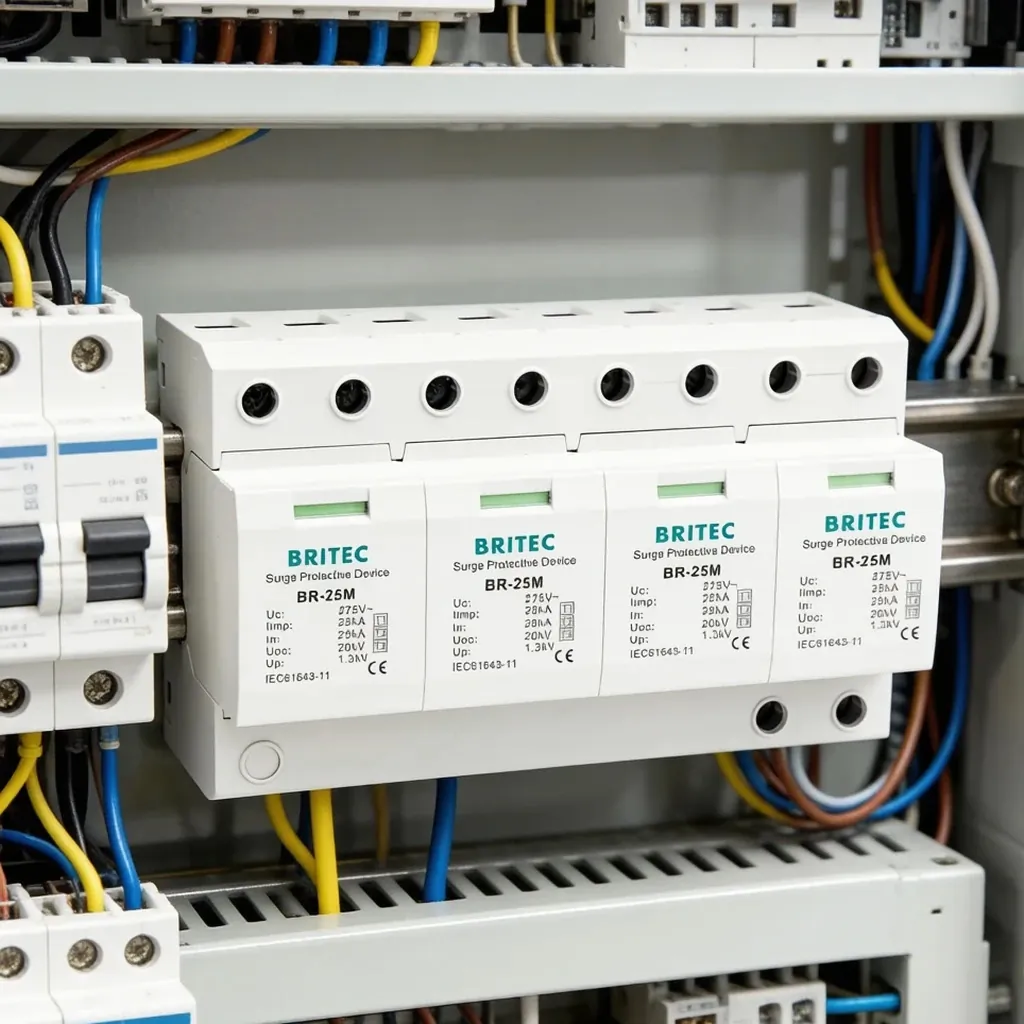
Correct placement is as important as the device itself. A typical coordinated layout follows IEC 61643-31:
SPDs are classified by the surge waveform they are built to withstand. For solar, three configurations matter:
Type 1 Spd For Solar Applications
Built to survive a direct lightning strike (10/350 µs, measured as Iimp). Installed where an external lightning-protection system (LPS) is present or the structure is directly exposed. Less common on small systems, but essential on tall or isolated industrial sites.
Type 2 Spd For Solar Applications
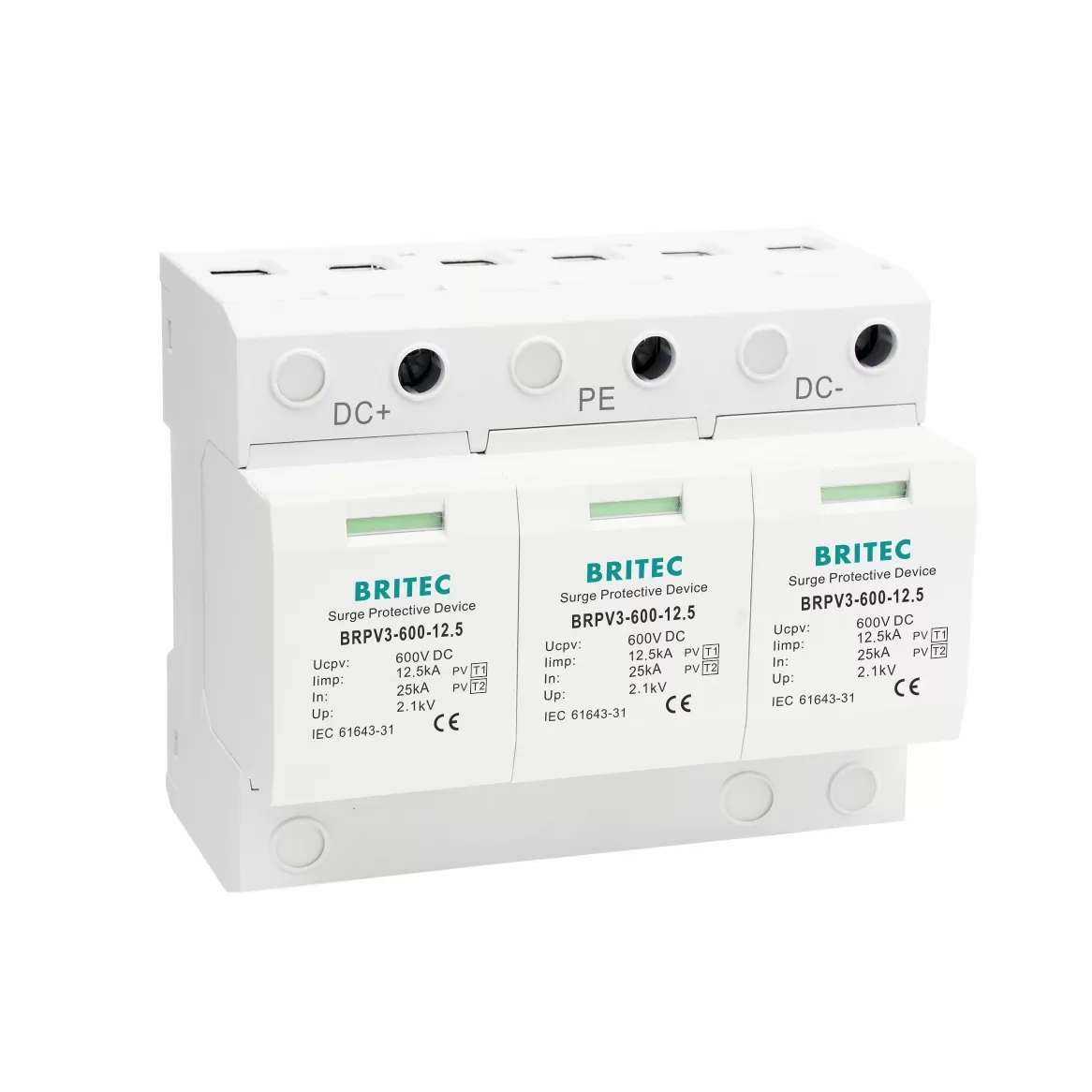
Designed for indirect lightning and switching surges (8/20 µs, measured as In / Imax). This is the workhorse protector for the vast majority of PV systems. A compact Type 2 PV surge protector up to 600 V is ideal for residential and small commercial arrays.
Type 1+Type 2 Combined Spd
Combines both functions in a single DIN-rail module – simpler design, fewer parts, and robust protection for exposed sites. For high-voltage utility and industrial plants, a Type 1+Type 2 combined SPD rated to 1500 V delivers the headroom large strings require.
Many buyers ask whether a regular AC Electrical Surge Protector can simply be reused on the DC side. It cannot, and here is why the distinction matters:
| Factor | Traditional AC Surge Protector | Dedicated Solar / PV SPD |
|---|---|---|
| Voltage type | AC only | DC, polarized (+/-) |
| Max voltage | Typically 230-480 V | Up to 1000 V / 1500 V (Ucpv) |
| Arc extinction | Relies on AC zero-crossing | Designed for DC, no zero-crossing |
| Kablolama | L/N/PE | +/-/PE (Y-connection) |
| Standard | IEC 61643-11 | IEC 61643-31 |
Using an AC protector on a DC string can lead to sustained arcing, thermal runaway, and total protection failure. A true Electrical SPD certified to IEC 61643-31 is the only safe choice for the PV DC side.
The right PV Surge Protection Device depends on system voltage, exposure, and plant size. Our full surge protection for solar photovoltaic systems guide covers sizing in depth, but the quick rules below get most projects 90% of the way there.
| Başvuru | Typical string voltage | Recommended SPD type | Notes |
|---|---|---|---|
| yerleşim | 600 – 1000 V | Type 2 (or T1+2 if exposed) | Compact, cost-effective, DIN-rail |
| Reklam | 1000 V | Type 1+2 at combiner + Type 2 at inverter | Higher In, layered protection |
| Industrial / utility | Up to 1500 V | Type 1+2 mandatory if exposed | Redundant, high Iimp, harsh environment |
Home rooftop arrays are smaller but still exposed. A Type 2 PV surge protector at the combiner box – and optionally at the inverter DC input – is usually sufficient. Choose a unit matched to your string open-circuit voltage (e.g. 600 V or 1000 V) with a clear status indicator so homeowners can confirm protection during routine checks. Keep the part count low and the footprint small to fit residential DIN rails.
Commercial installs (carports, warehouses, schools) carry higher fault energy and longer cabling. Best practice is layered: a Type 1+Type 2 combined SPD at the combiner box plus a Type 2 unit at the inverter AC output. Size the nominal discharge current (In) for the expected lightning level of the site, and always pair DC SPDs with coordinated backup protection to guarantee safe disconnection.
Utility-scale and industrial plants run at up to 1500 V and sit in the most exposed locations. Here a Type 1+Type 2 combined SPD rated to 1500 V is effectively mandatory, often installed redundantly at multiple collection points. Look for high Iimp rating, robust thermal disconnect, and remote status signalling so central monitoring can flag a failed module before it becomes a downtime event.
Selecting the correct PV Surge Protection Device is not a box-ticking exercise – the consequences of a wrong choice are measurable:
Britec Electric’s SPDs are manufactured in our own factory, certified to international standards, and backed by two decades of application engineering – so specifiers get both the product and the sizing support to deploy it correctly.
Send us your string voltage, plant size, and site lightning level. Our engineers will recommend the correct Type 1, Type 2, or combined PV surge protection device – and provide datasheets and quotations within 24 hours.
A well-designed PV SPD typically lasts 5 to 10 years, but service life depends on how many surges it absorbs and the ambient temperature. The visible status window and optional remote alarm tell you when a module has reached end of life.
Replace a module as soon as its status indicator shows “replace” (red), or during scheduled maintenance if remote monitoring reports degradation. There is no fixed calendar interval – replacement is condition-based, not time-based.
While not universally mandated by law, most inverter manufacturers’ warranties and modern lightning-protection guidance strongly recommend a Solar SPD, especially for exposed rooftops. It is a low-cost way to protect a high-value asset.
Yes. The long DC cabling, high string voltages, and exposed mounting make PV systems genuinely vulnerable to both lightning and switching surges. A dedicated Electrical SPD is the most cost-effective insurance for the inverter and electronics.
AC SPDs rely on the AC waveform’s natural zero-crossing to extinguish arcs and are built to IEC 61643-11, while DC SPDs (PV SPDs) are polarized, rated up to 1500 V, use Y-connection wiring, and follow IEC 61643-31. An AC protector must never be used on the PV DC side.
Start with your maximum string voltage (600 / 1000 / 1500 V), then select the SPD type by exposure (Type 2 for normal sites, Type 1+2 for exposed or LPS-protected sites). Confirm the protection level (Up) is below your equipment’s rating, and verify certifications and coordination with backup protection.
So, do you really need an Electrical SPD for your solar PV system? For residential, commercial, and industrial arrays alike, the answer is a confident yes – provided you choose a unit engineered for the DC side and installed at the right points. A correctly specified Solar Surge Protection Device protects your inverter, keeps generation online, and safeguards your warranty and ROI.
Whether you need a 600 V residential unit or a 1500 V utility-grade Type 1+Type 2 combined SPD, we can match a certified product to your exact system. Get datasheets, pricing, and a sizing recommendation today.
About Britec Electric
Britec Electric Wenzhou Co., Ltd. has manufactured surge protective devices since 2003. Our products are certified by TUV, CE, and Intertek SEMKO, and are supplied to projects across Western and Eastern Europe, South America, and Asia. All inquiries are answered by our engineering team within 24 hours.
From the Britec blog & knowledge base: