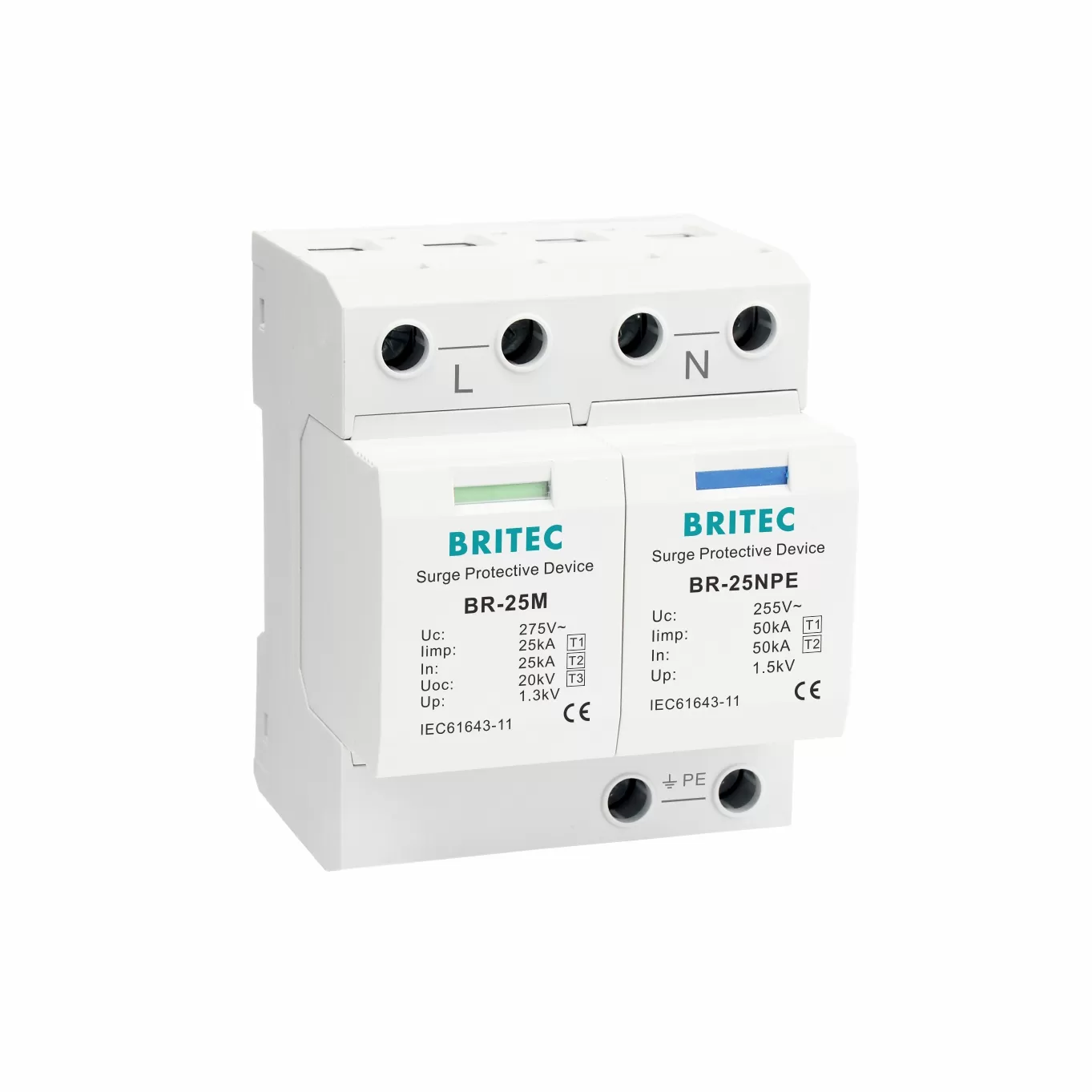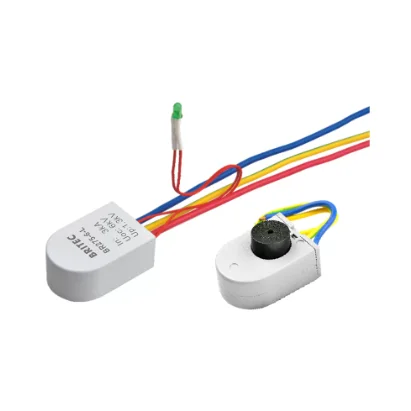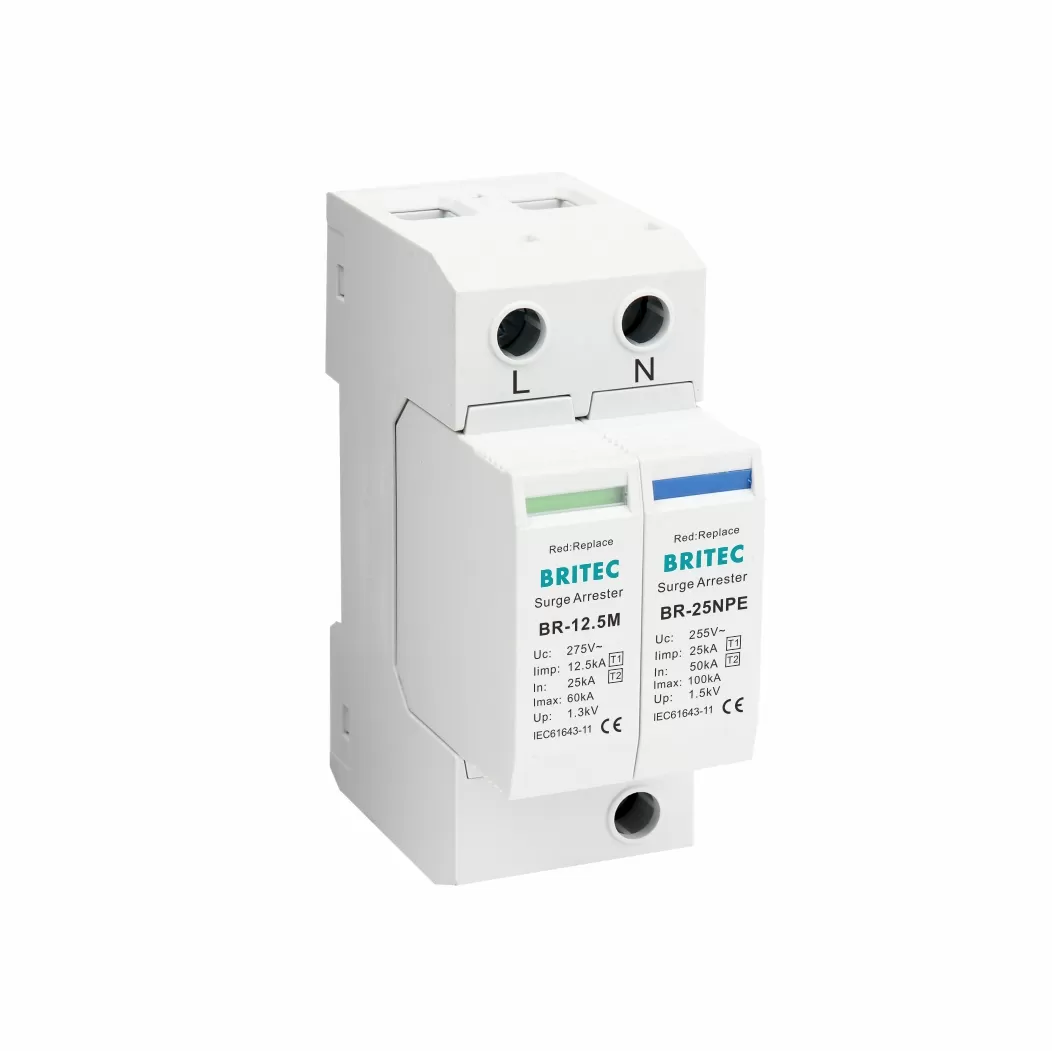

A solar SPD (surge protective device) sits between your PV array, inverter and the grid, clamping lightning and switching overvoltage to a safe level. But like every protective component, it does not last forever. So how often should a solar SPD be replaced? The short answer is not a fixed calendar date — it is when the status indicator shows end-of-life, after a major surge event, or when routine testing confirms the protection level has drifted out of specification. In this guide, Britec Electric, a surge protection manufacturer since 2003 with CE, TÜV and Intertek SEMKO certified designs, explains the real replacement triggers, typical service life, and how to choose the correct PV surge arrester for your system. If you are still deciding whether protection is needed at all, see our post on whether a solar PV system needs an SPD.
A solar SPD is a wear component. Each surge it absorbs shortens its remaining life, so replacement timing depends far more on surge exposure than on the date it was installed. The main factors are:
● Lightning ground flash density — sites in high-keraunic regions consume SPD life faster than low-risk sites.
● Surge energy and count — frequent switching or induced surges wear the internal varistors progressively.
● Device class — a Type 1+2 PV surge arrester is built for direct-strike current (10/350 µs, Iimp), while Type 2 handles indirect surges (8/20 µs).
● Environment — heat, humidity, salt mist and dust accelerate ageing of the housing and internal elements.
● Component quality — certified designs with thermal disconnectors and fault indication fail safe and tell you exactly when to replace.
There is no universal “replace every X years” rule for a solar SPD. Standards such as IEC 61643-31 (and EN 50539-11 for PV) define how PV SPDs are tested, but they do not assign a fixed service life. In practice, a good-quality PV surge arrester in a moderate climate commonly serves 5 to 10+ years, while the same device in a lightning-prone or high-temperature site may need replacement sooner. The deciding factor is always the end-of-life indication, not the calendar. For a broader industrial perspective, read our guide on how long industrial surge protectors last.
Solar SPD Replacement Interval — Quick ReferenceModerate climate, no strikes: inspect every 6–12 months, replace at the fault signal.
High lightning area: inspect every 6 months, replace after any direct or nearby strike.
After a confirmed major surge: test immediately and replace if indicated.
● Status window is red or shows fault — the green “OK” indicator is gone.
● No normal indication — the window is dark or the remote alarm reports failure.
● Visible damage — cracks, burn marks, swelling or discolouration on the module body.
● A lightning event occurred — a direct or very close strike should always trigger a check.
● Test failure — measured protection level (Up) or insulation no longer meets specification.
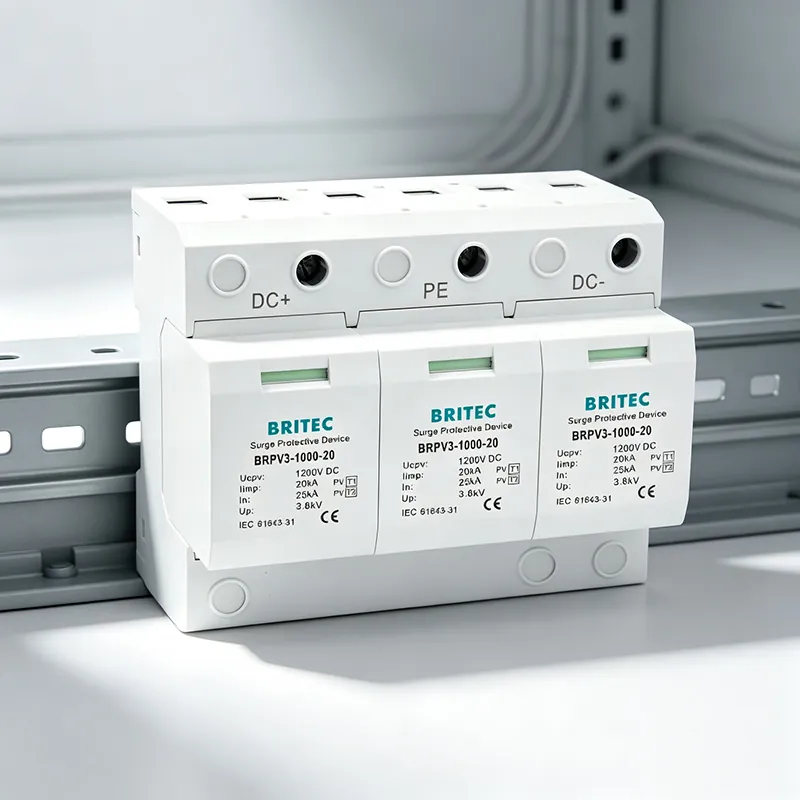
If a Tyyppi 1 tai Tyyppi 1+2 PV surge arrester absorbed a direct lightning current (Iimp, 10/350 µs), treat it as spent even if the window still looks normal — internal varistors may be degraded. A Tyyppi 2 device that only saw an induced surge may survive, but only a proper test confirms it. A typical field-proven example is the BRPV3-1000-20 Type 1+2 PV surge arrester, rated 1000 V, 20 kA T1+2, Iimp 12.5 kA, Up ≤4.0 kV, response ≤25 ns, 35 mm DIN rail, thermoplastic UL94-V0, IP20, −40 °C to +80 °C.
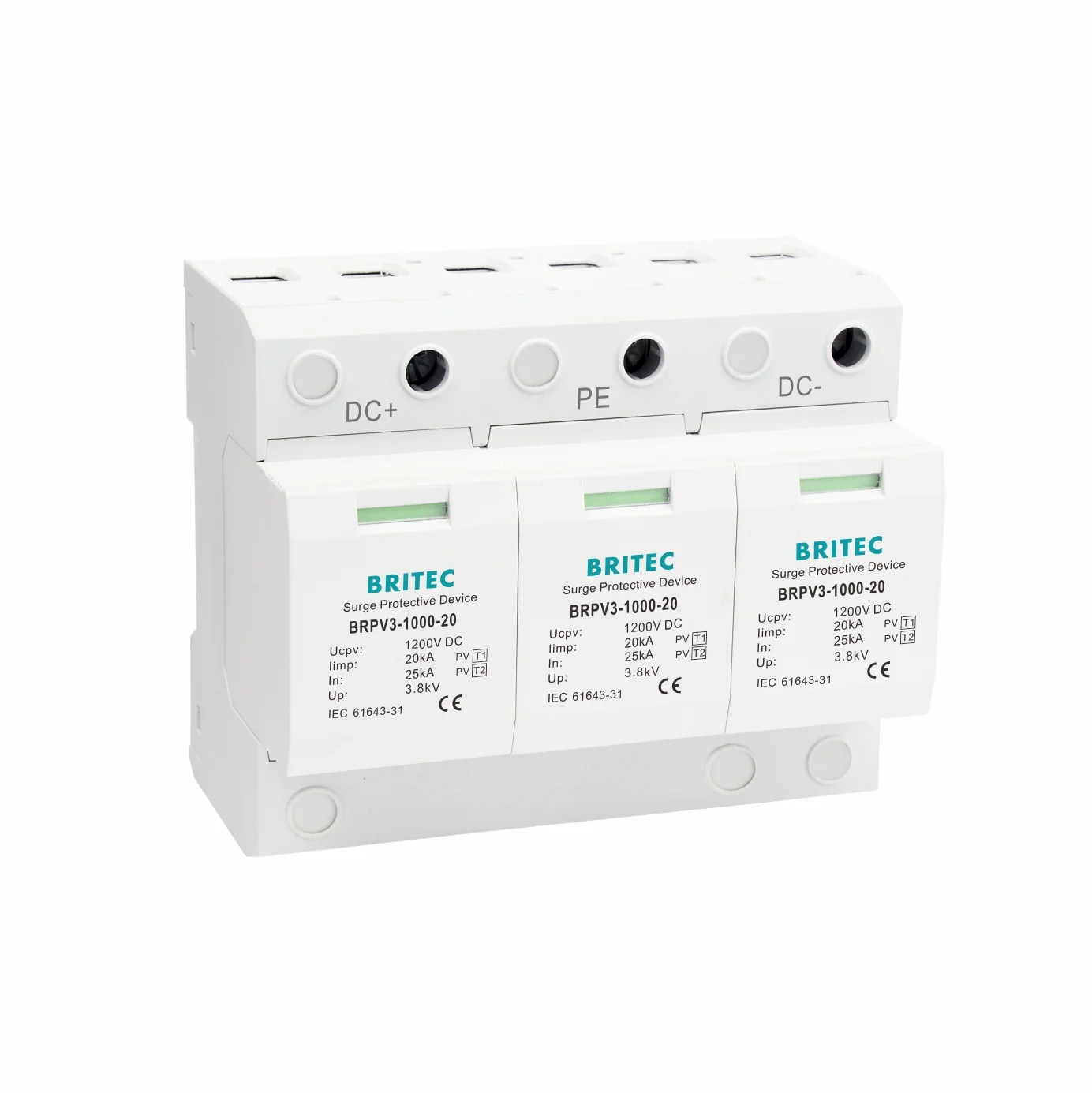
Match the replacement to your original design and site risk. Key selection points:
● Voltage class — Ucpv must cover 600 V, 1000 V or 1500 V DC per your string voltage.
● Tyyppi — keep Type 1+2 at the boundary with lightning risk, Type 2 inside the plant; see our Type 2 PV surge protector range.
● Current rating — Iimp for Type 1+2, In/Imax for Type 2, matched to your exposure level.
● Protection level (Up) — low enough for the inverter and controller withstand voltage.
● Indication and remote signal — choose models with visual and optional remote fault alarm.
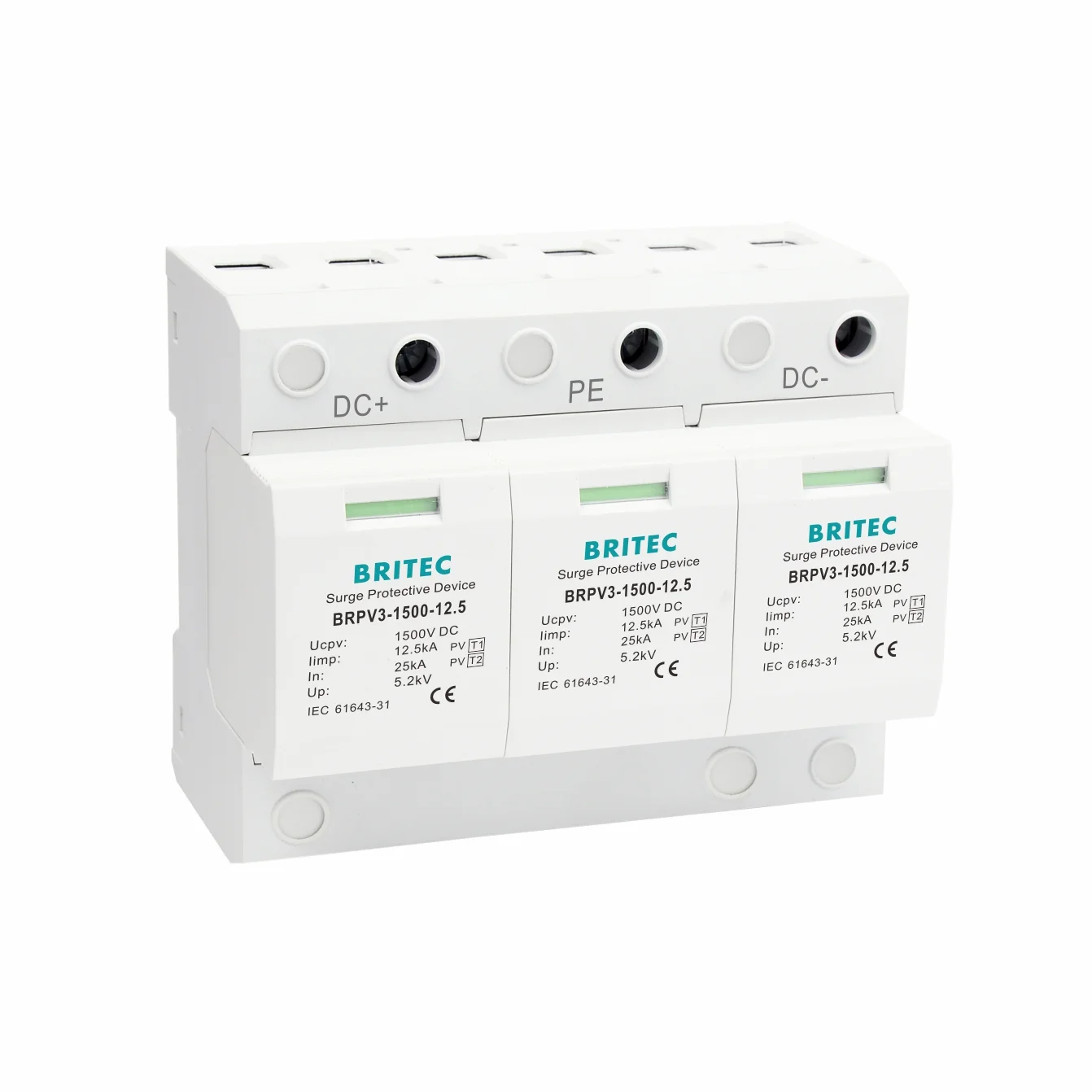
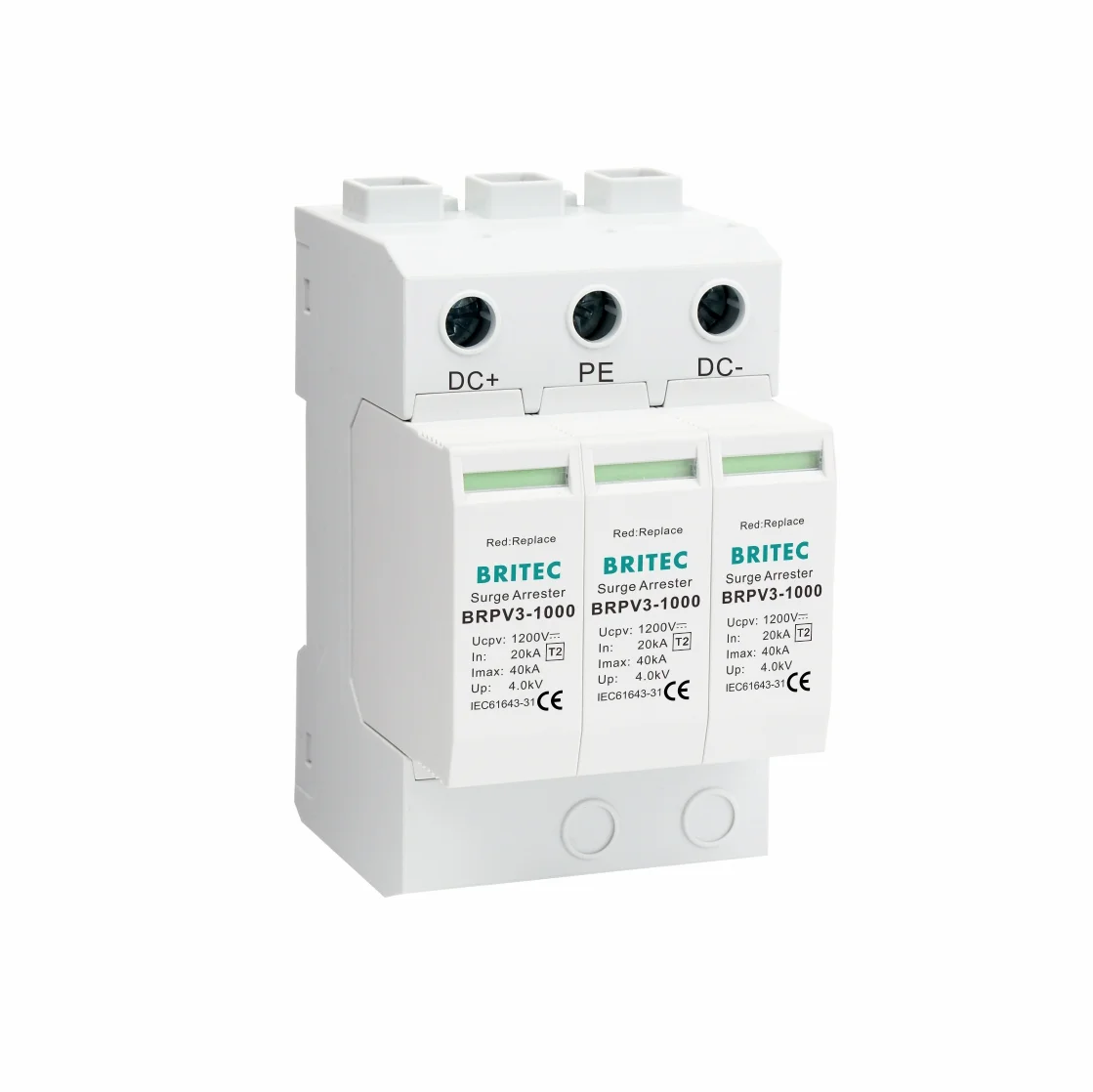
For 1500 V systems, the BRPV3-1500-12.5 1500V PV surge arrester (Type 1+2, Iimp 12.5 kA, In 20 kA, Up ≤5.2 kV) is a common choice, while the BRPV3-1000 covers Type 2 protection up to 1000 V.
Need a replacement solar SPD specification?Britec Electric engineers can match the correct Type 1+2 or Type 2 PV surge arrester to your array voltage and lightning risk, with CE, TÜV and Intertek SEMKO certified designs. Contact our team for a quote →
● Visual check — confirm the green “OK” window on every site visit.
● Remote signal — verify alarm contacts report healthy status to the SCADA or BMS.
● Post-strike test — after any lightning event, test before returning the system to service.
● Record keeping — log installation date, surge events and replacements for warranty and audits.
● Spare on hand — keep matched spares so a fault is restored without downtime.
How often should a solar SPD be replaced?
Not on a fixed schedule. Replace it when the fault indicator shows end-of-life, after a direct or nearby lightning strike, or when testing confirms the protection level is out of specification. Inspect every 6–12 months in moderate climates.
What is the typical lifespan of a PV surge arrester?
Most quality PV surge arresters serve 5 to 10+ years in moderate climates, but service life is driven by surge exposure, not the installation date. A lightning-prone or high-temperature site shortens that window.
What are the signs that a solar SPD needs replacement?
A red or dark status window, loss of the green “OK” light, visible damage such as cracks or burn marks, a recent lightning event, or a failed protection-level test all indicate replacement.
Does a lightning strike require immediate SPD replacement?
If a Type 1 or Type 1+2 device absorbed a direct strike, replace it even if the window looks normal. A Type 2 device that saw only an induced surge may survive, but only a test can confirm it.
Can I replace a solar SPD myself, or do I need an electrician?
Replacing a DIN-rail PV surge arrester is straightforward, but it must be done with the DC circuit de-energized and by a qualified electrician who follows local electrical code and the inverter manufacturer guidance.
How do I choose the correct replacement PV surge arrester?
Match the original Ucpv (600/1000/1500 V), keep the same Type (1+2 at the boundary, 2 inside the plant), confirm the current rating and protection level, and prefer models with clear fault indication plus optional remote signal.
Should Type 1, Type 1+2 and Type 2 solar SPDs be replaced differently?
The replacement interval logic is the same — replace at end-of-life or after a strike — but Type 1 and Type 1+2 units at the exposed boundary should be checked first and most strictly after any direct-lightning event.
How does the environment affect solar SPD replacement frequency?
High ambient temperature, humidity, salt mist and dust accelerate internal ageing and corrosion. Coastal and desert PV plants should inspect more often and keep matched spares ready.
Which standards apply to solar SPD replacement?
PV surge protective devices are tested to IEC 61643-31 and EN 50539-11. Replacements should meet the same standard and voltage class as the original design.
Do solar SPDs show when they reach end of life?
Most modern PV surge arresters have a mechanical status window (green = OK, red = fault) and many offer a remote signal contact, so end-of-life is clearly indicated without opening the enclosure.
● Electrical SPD for Solar PV Systems: Do You Really Need It?
● How Long Do Industrial Surge Protectors Last? Lifespan And Replacement Guide
● Type 1 vs Type 1+2 vs Type 2 vs Type 3 DC SPD — Which to Choose
● 1500V vs 1000V DC SPD: Should You Upgrade Your PV System?
● Common SPD Surge Protective Device Failure Causes And Solutions