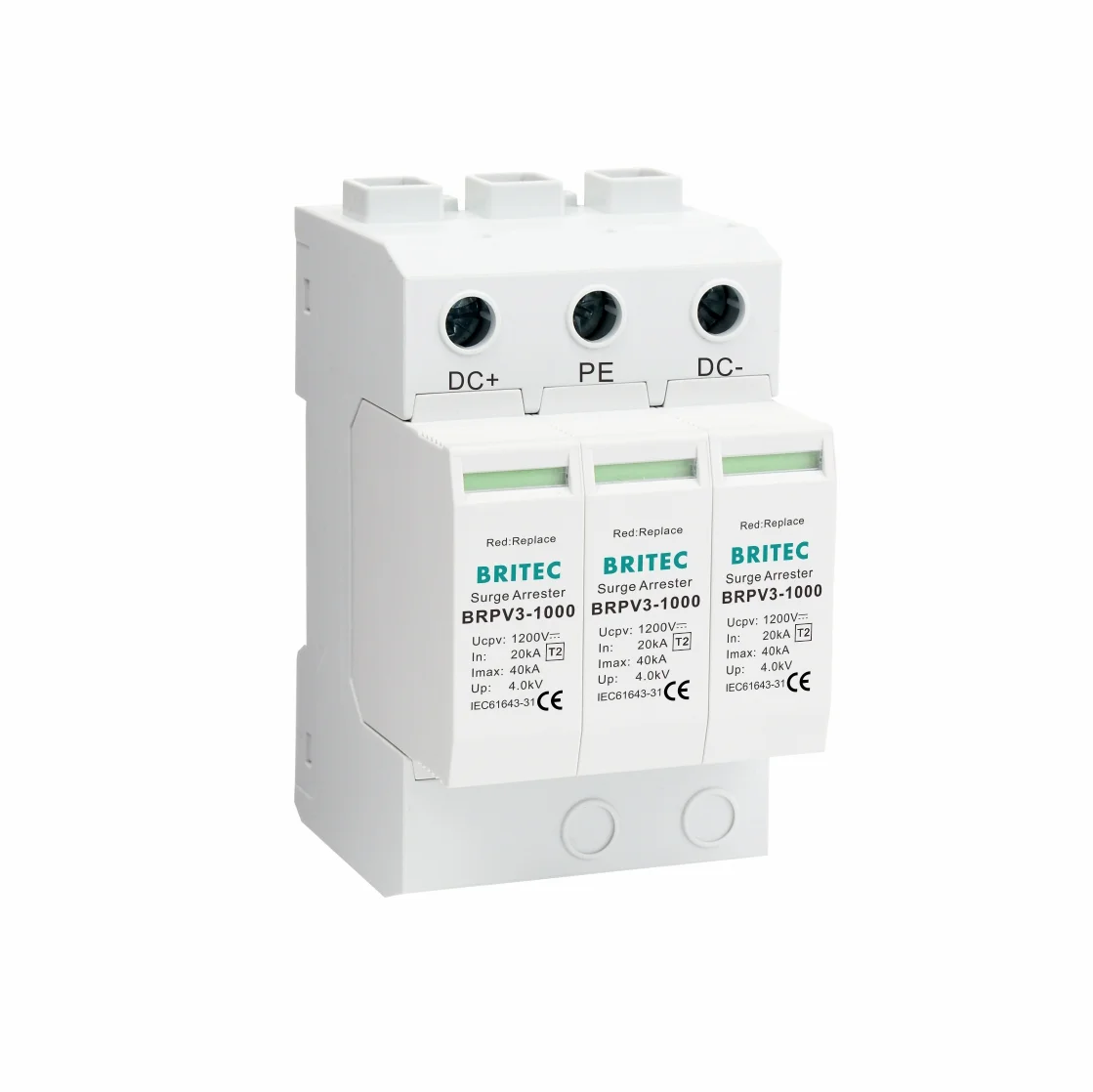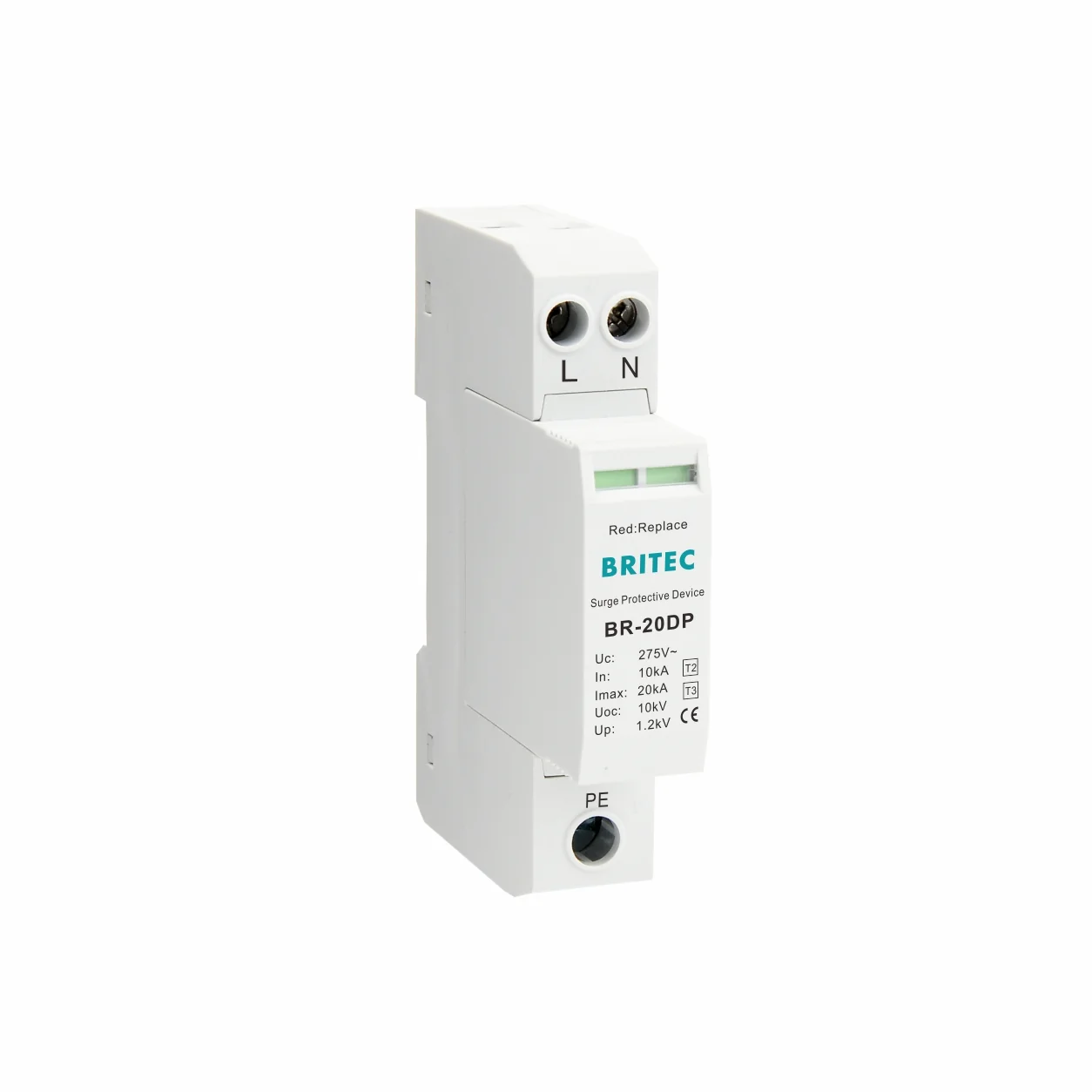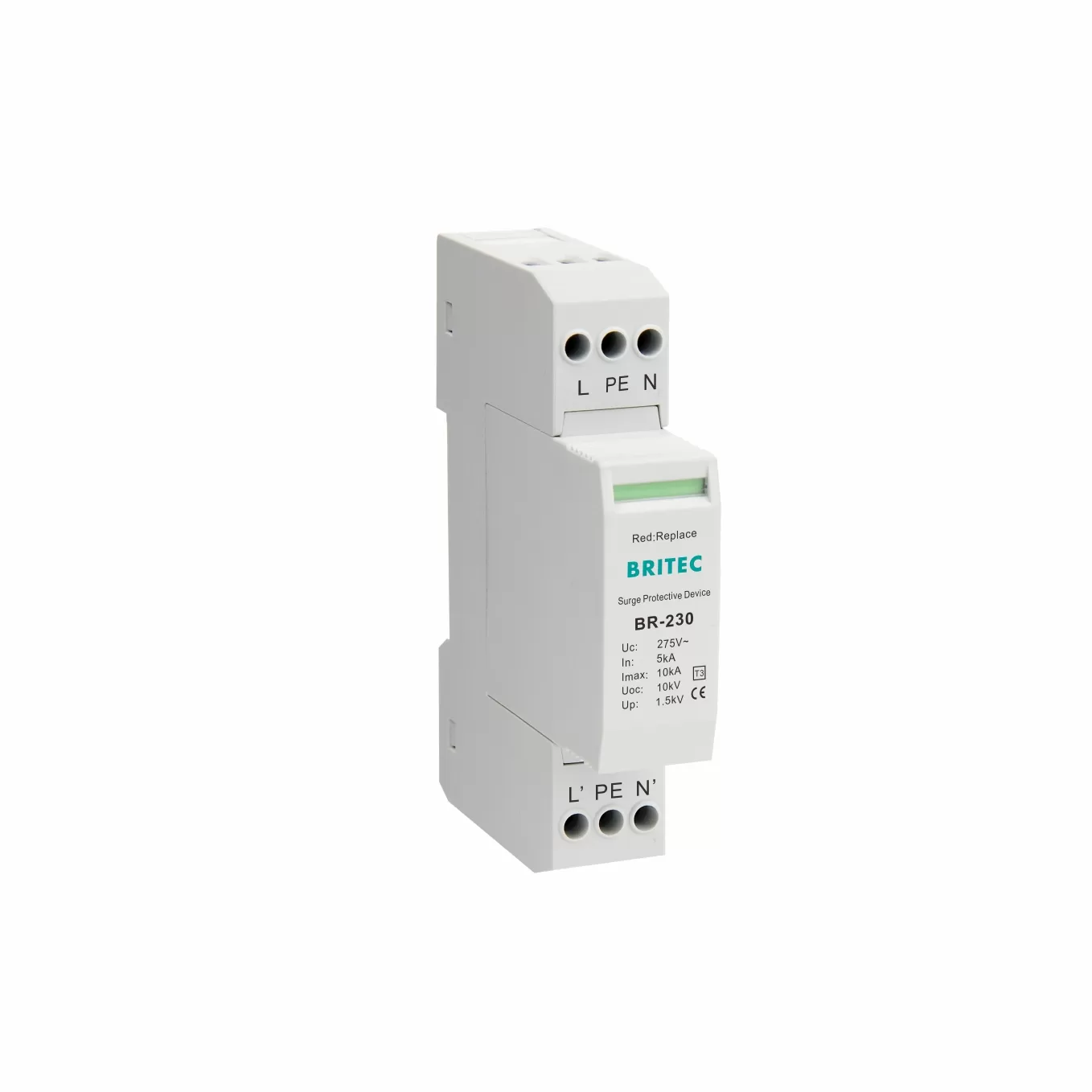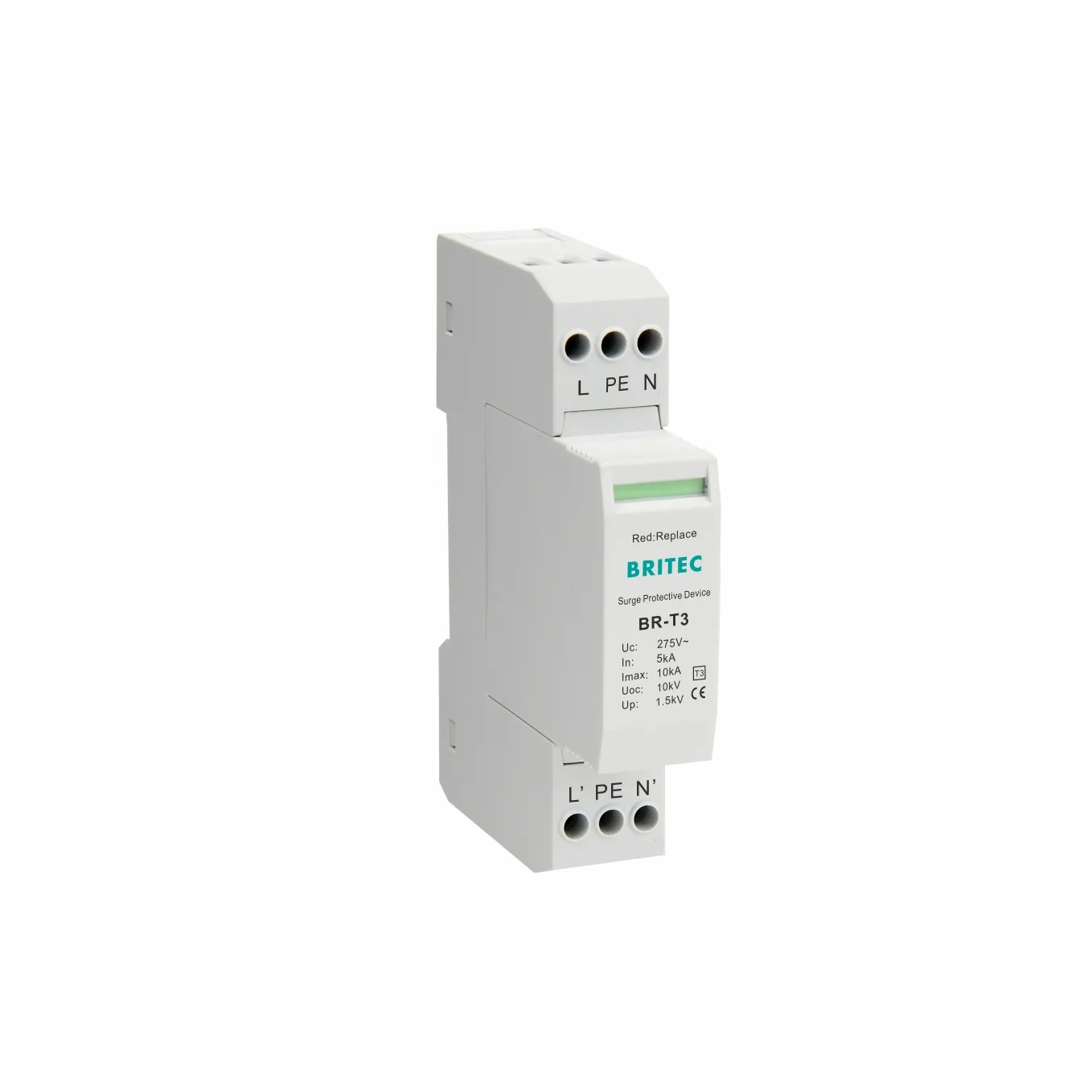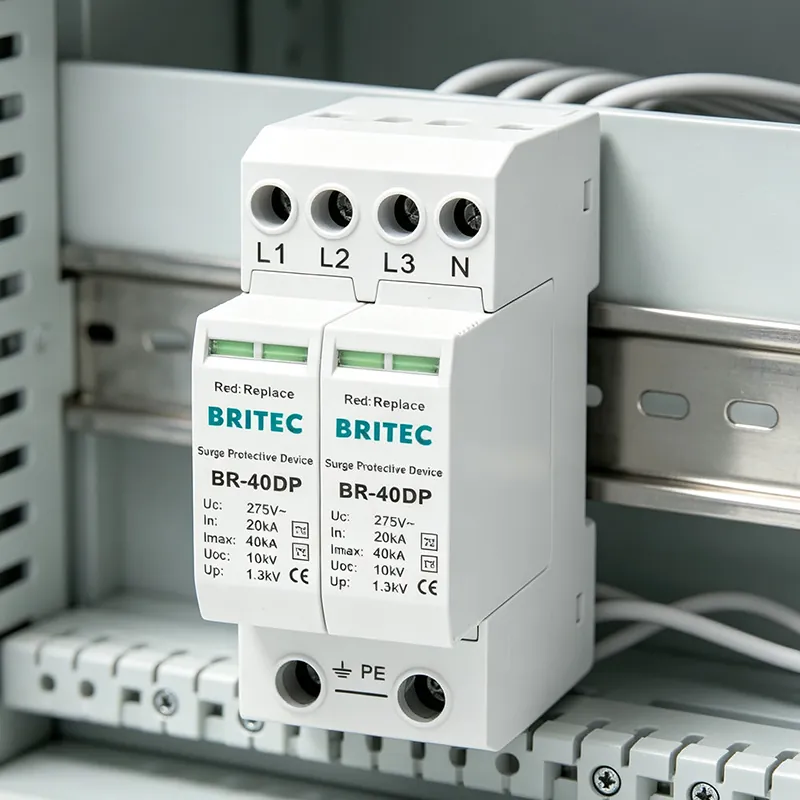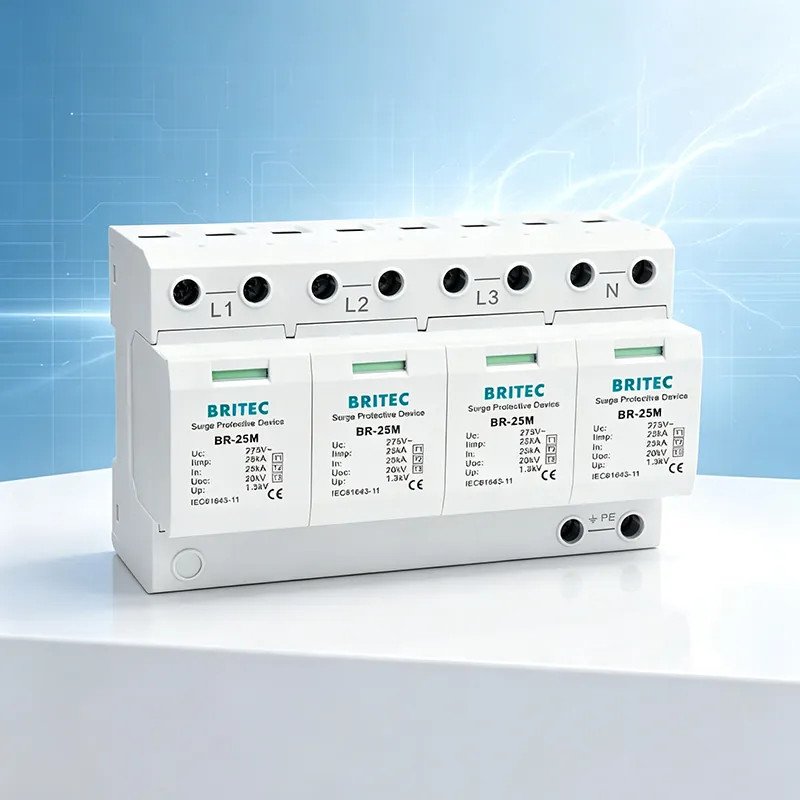

By the Britec Electric engineering team — Britec Electric (Wenzhou, Zhejiang, China) has manufactured IEC/EN 61643 surge protective devices since 2003, with products certified by TÜV, CE and Intertek SEMKO and an ISO 9001 quality system. This guide explains, from a PV system designer’s perspective, exactly where a solar SPD should be mounted inside a PV combiner box and why that position determines how much lightning and switching-surge energy actually gets diverted before it reaches the inverter.
A PV combiner box sits between the PV string cabling and the inverter. It aggregates the output of several DC strings through fuses or circuit breakers onto a common DC busbar, then feeds the inverter. The array cabling is the longest, most exposed part of the system — metres of conductor run across rooftops and open ground, acting as an antenna for induced lightning overvoltage. If you only protect the inverter input, the surge has already travelled the full string length unchecked.
Placing a dedicated DC SPD at the combiner box gives the first and best clamping point: it intercepts the overvoltage right where the exposed array wiring enters the protected zone. For a deeper look at whether a PV system needs surge protection at all, see our guide on whether you really need an SPD for solar PV systems.
The goal is simple: divert the surge to earth as close as possible to the point where the string conductors enter the box, with the shortest possible SPD lead length.
The SPD must be connected in parallel across the DC bus, on the incoming (array) side of the combiner — not on the outgoing inverter side. Follow this physical order from the cable entry inward:
● Mount the SPD directly on the positive and negative DC busbar, between the string fuses/breakers and the combiner output terminal.
● Position it as close as physically possible to the incoming string terminals — ideally within 0.5 m of lead length from the busbar to the SPD.
● Install it on the array side so every string is protected before its current reaches the common bus and the inverter feed.
● Keep the SPD away from the enclosure door and any moving parts; DIN-rail mount it on the same rail as the string breakers for a short, clean connection.
● For a multi-string box, one Type 1+2 SPD across the main + / − bus is normally sufficient; do not fit a separate SPD per string unless the design calls for it.
In practice the SPD is the last device the incoming surge meets before the busbar. That placement is what limits the let-through voltage (Up) seen by the inverter and the DC isolator downstream.
Specifying SPDs for your PV combiner boxes?
Britec supplies IEC 61643-31 Type 1+2 DC SPDs in 1000 V and 1500 V classes, with DIN-rail modules and remote-signal options for panel builders.
Request a combiner-box SPD quote
Correct position is only half the story — the wiring determines whether the SPD actually performs. Inductance in the leads is the enemy: every extra centimetre of conductor lets the surge overshoot the rated protection level.
● Use the shortest possible connection from the SPD terminals to the DC busbar; keep both the live and the protective-earth leads short and equal in length.
● Bond the SPD’s earthing terminal to the combiner box chassis and the site earth bar with a low-impedance, direct conductor — never share a long daisy-chained earth path.
● Keep the SPD earth lead separate from the DC power leads and route it straight to the enclosure earth point.
● Verify the enclosure itself is bonded to the PV system earthing electrode conductor so the diverted current has a low-resistance path to earth.
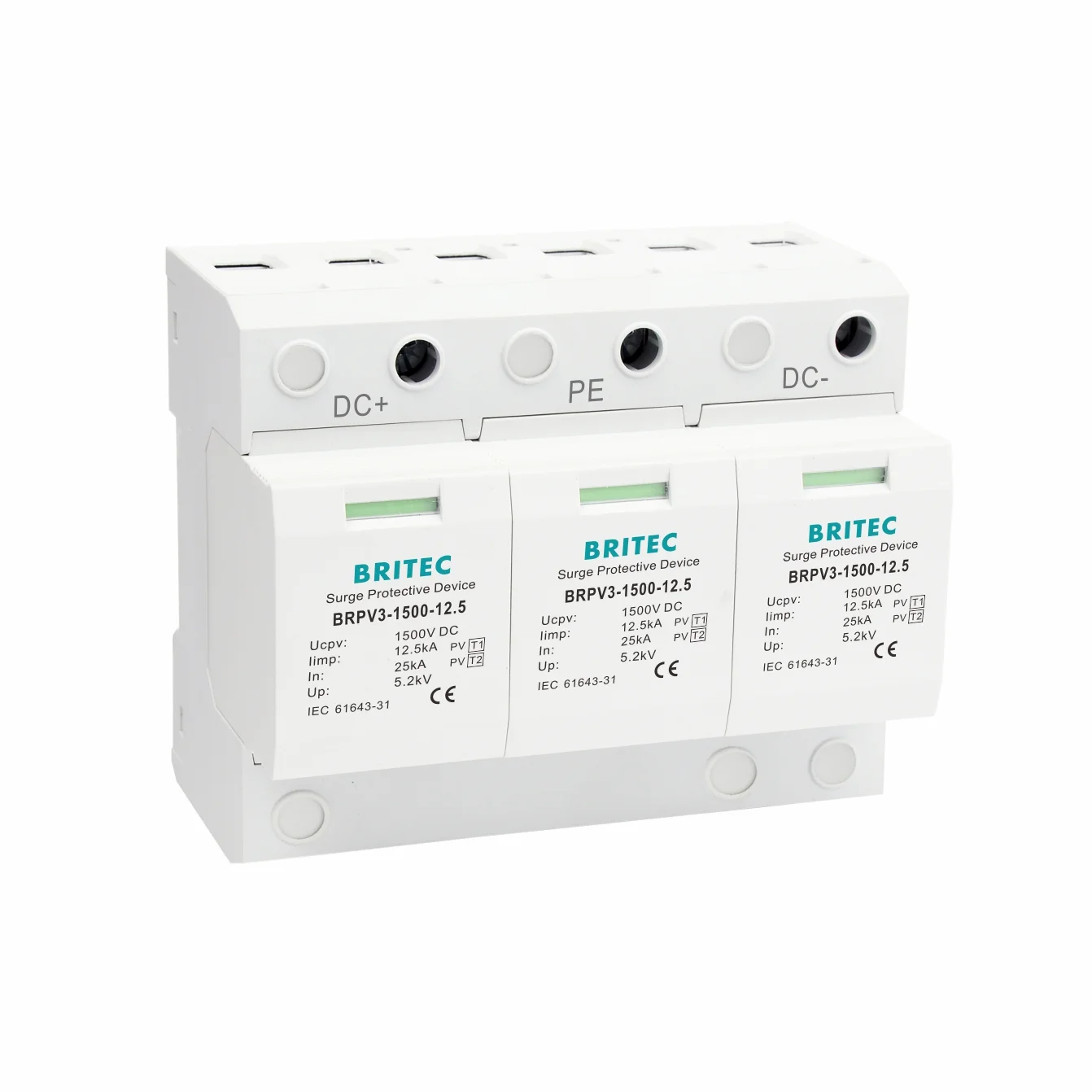
A solar SPD inside a combiner box must comply with IEC/EN 61643-31 (PV applications) and match the system’s open-circuit voltage. Two decisions matter most: the Type and the voltage class.
Type: For a combiner box exposed to both direct and indirect lightning, a Type 1+2 (T1+T2) device is the safest choice because it handles the partial lightning current (10/350 µs) and the induced surge. A pure Type 2 is acceptable only where an upstream T1 already exists. If you are unsure which Type your site needs, our comparison of Type 1, Type 1+2, Type 2 and Type 3 DC SPDs breaks it down by application.
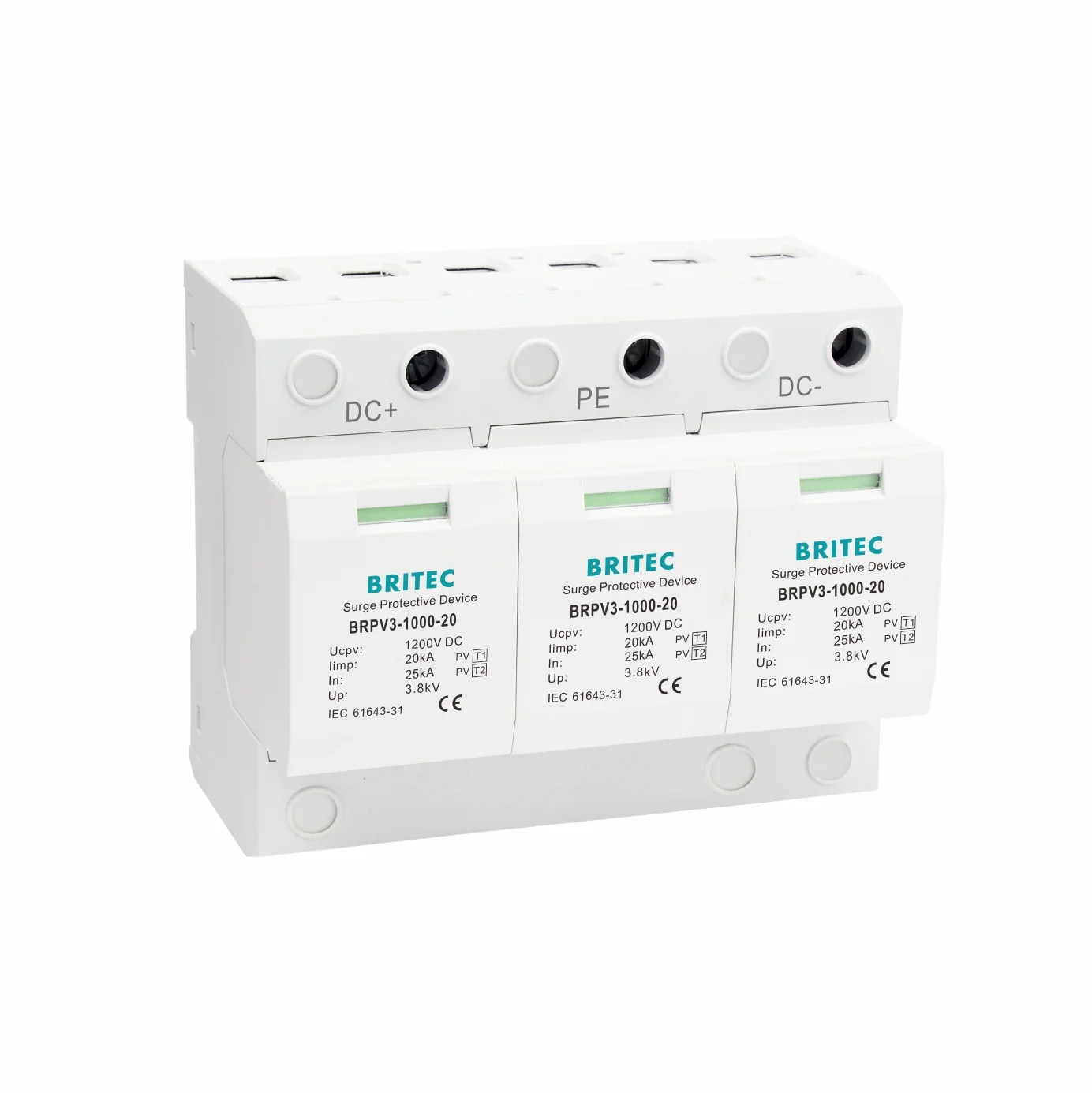
Voltage rating: Match Ucpv to the array’s maximum open-circuit voltage. For a 1000 V system the BRPV3-1000 Type 2 PV surge arrester is the standard fit, while 1500 V arrays need a 1500 V-class device such as the BRPV3-1500-12.5 T1+T2 PV surge arrester. The choice between the two voltage classes affects let-through and cost — see our post on 1000V vs 1500V DC SPD. For sites in high lightning-density regions, a higher nominal current device like the BRPV3-1000-20 Type 1+2 PV surge arrester (20 kA) gives extra margin.
Not sure which voltage class or Type fits your array?
Send us your string open-circuit voltage, lightning zone and box layout — our engineers will size the right T1+T2 device.
Talk to a Britec engineer
An SPD can become a short circuit at end of life or after a heavy surge, so the combiner box needs a backup protective device (Surge Protective Device Circuit Breaker, SCB) in series with the SPD. The SCB must be coordinated so it does not trip on normal SPD leakage current yet clears a fault quickly. Position the SCB on the incoming feeder to the SPD, before the SPD connection to the bus. Proper coordination is covered in our guide to DC Type 2 SPD coordination with DC circuit breakers.
● Installing the SPD only at the inverter and leaving the long array string unprotected.
● Running long, looped SPD leads — inductance then defeats the protection level.
● Using an AC-rated SPD instead of an IEC 61643-31 DC/PV device.
● Picking a voltage class below the array open-circuit voltage (e.g. a 1000 V SPD on a 1500 V string).
● Forgetting the SCB or sharing the string breaker as the SPD backup.
● Leaving the SPD earth lead long or bonding it to a painted, high-resistance enclosure surface.
| Check item | Pass criteria |
|---|---|
| Mounting point | On + / − DC busbar, array side of output |
| Johdon pituus | ≤ 0.5 m from busbar to SPD |
| Earth bond | Direct, low-impedance to enclosure earth bar |
| Type & voltage | T1+T2, Ucpv ≥ array Voc |
| Backup | Coordinated SCB in series with SPD |
1. Can I install the solar SPD at the inverter instead of the combiner box?
You can, but it is not ideal. Mounting at the combiner box clamps the surge at the point where the long, exposed array wiring enters the system, giving the shortest protected run. An inverter-only SPD leaves the entire string length unprotected. Best practice is an SPD at the combiner box, with a second coordinated stage at the inverter if the design requires it.
2. Should the SPD go on the input or output side of the combiner box?
Always on the incoming (array / string) side, connected across the DC busbar before the output terminal that feeds the inverter. This way every string is protected before its energy reaches the common bus and the inverter feed.
3. How long can the SPD leads be?
Keep the total lead length from the DC busbar to the SPD at or below 0.5 m, with equal-length live and earth conductors. Longer leads add inductance that raises the let-through voltage and undermines the rated protection level.
4. What Type of SPD do I need in a PV combiner box?
For most combiner boxes a Type 1+2 (T1+T2) device per IEC/EN 61643-31 is recommended because it handles both direct lightning partial current and induced surges. A Type 2 alone is acceptable only when a Type 1 device is already installed upstream.
5. Does the SPD voltage rating have to match the array voltage?
Yes. The SPD’s maximum continuous operating voltage (Ucpv) must equal or exceed the array’s maximum open-circuit voltage — 1000 V systems use a 1000 V-class device, 1500 V strings need a 1500 V-class device. Underrating causes premature failure.
6. Is a backup breaker required for the combiner-box SPD?
Yes. A coordinated Surge Protective Device Circuit Breaker (SCB) in series with the SPD clears a fault if the SPD fails short, without tripping on normal leakage. Do not simply share the string breaker as the SPD backup.
Build a safer PV combiner box with Britec
Get datasheets, wiring diagrams and sample units for your next solar project.
Contact Britec Electric
● Do You Really Need an SPD for Solar PV Systems?
● Type 1 vs 1+2 vs 2 vs 3 DC SPD — Which to Choose
● 1000V vs 1500V DC SPD — Should You Upgrade?