
A 100kA surge protector is engineered to clamp and divert massive transient currents, but every surge protective device (SPD) has a hard limit. When a surge arrives that exceeds its rating, the device does not simply shrug it off. It enters a controlled failure, a dangerous fault, or somewhere in between. For B2B buyers, panel builders, and electrical engineers specifying protection for industrial, commercial, or utility sites, knowing what actually happens past the rating is the difference between a safe shutdown and a panel fire.
This guide explains the two numbers behind a “100kA” label, what “beyond rating” really means, the physical failure sequence, the engineering safeguards that keep a site safe, and how to size protection so the SPD never has to absorb more than it can handle. Britec Electric has manufactured surge protective devices since 2003, with products certified to TÜV, CE, and Intertek SEMKO and impulse-tested to IEC/EN 61643-11.
A 100kA marking on an SPD usually refers to one of two very different values, and confusing them is the single most common cause of overload:
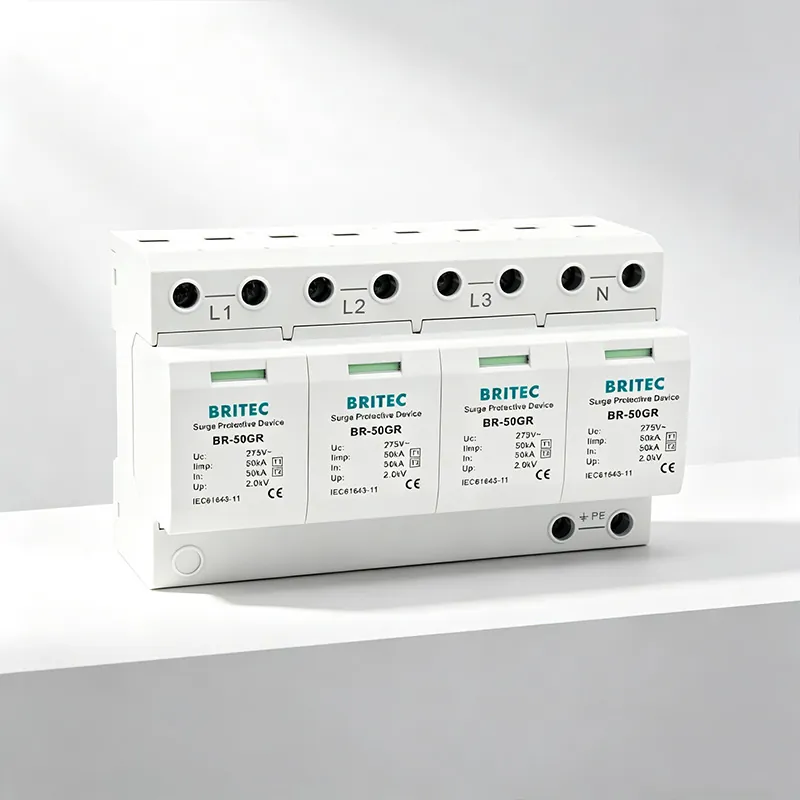
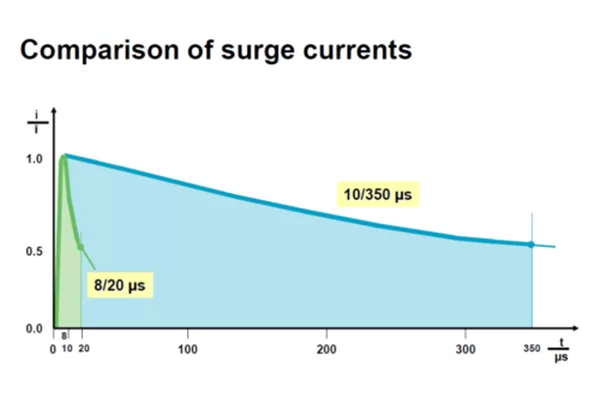
● Iimp (10/350 µs) — the impulse current a Type 1 device can withstand from a direct lightning strike. A true 100kA Iimp rating is rare; most Type 1 arresters are 12.5kA–50kA Iimp per mode, combined in parallel for higher totals.
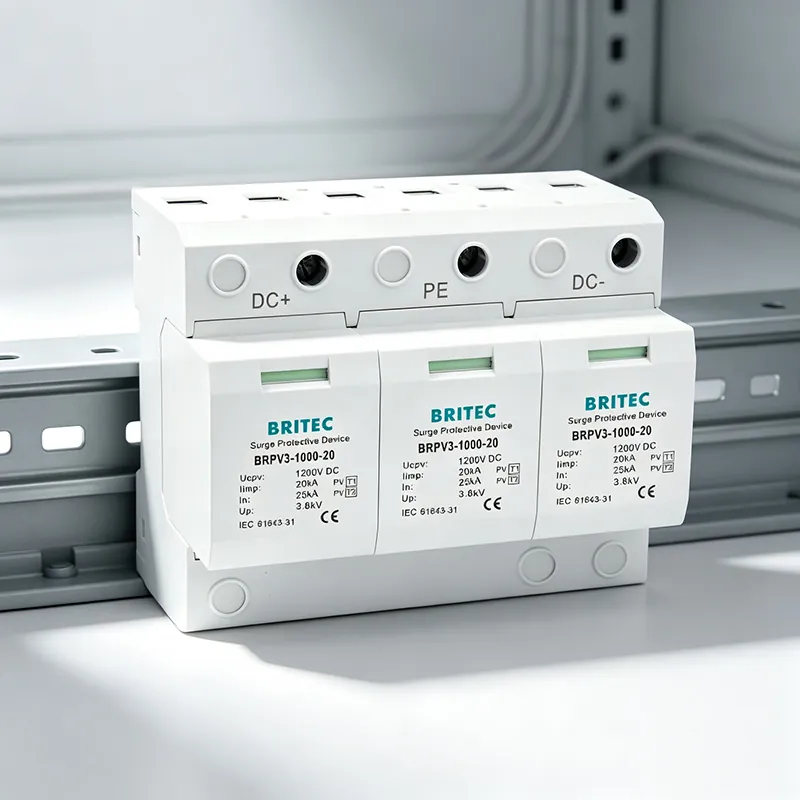
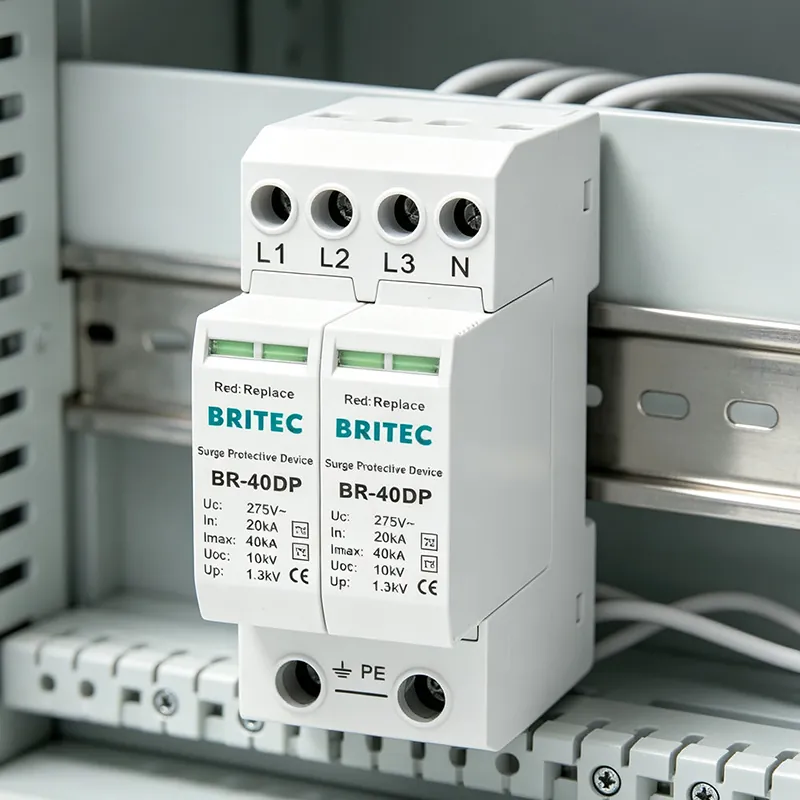
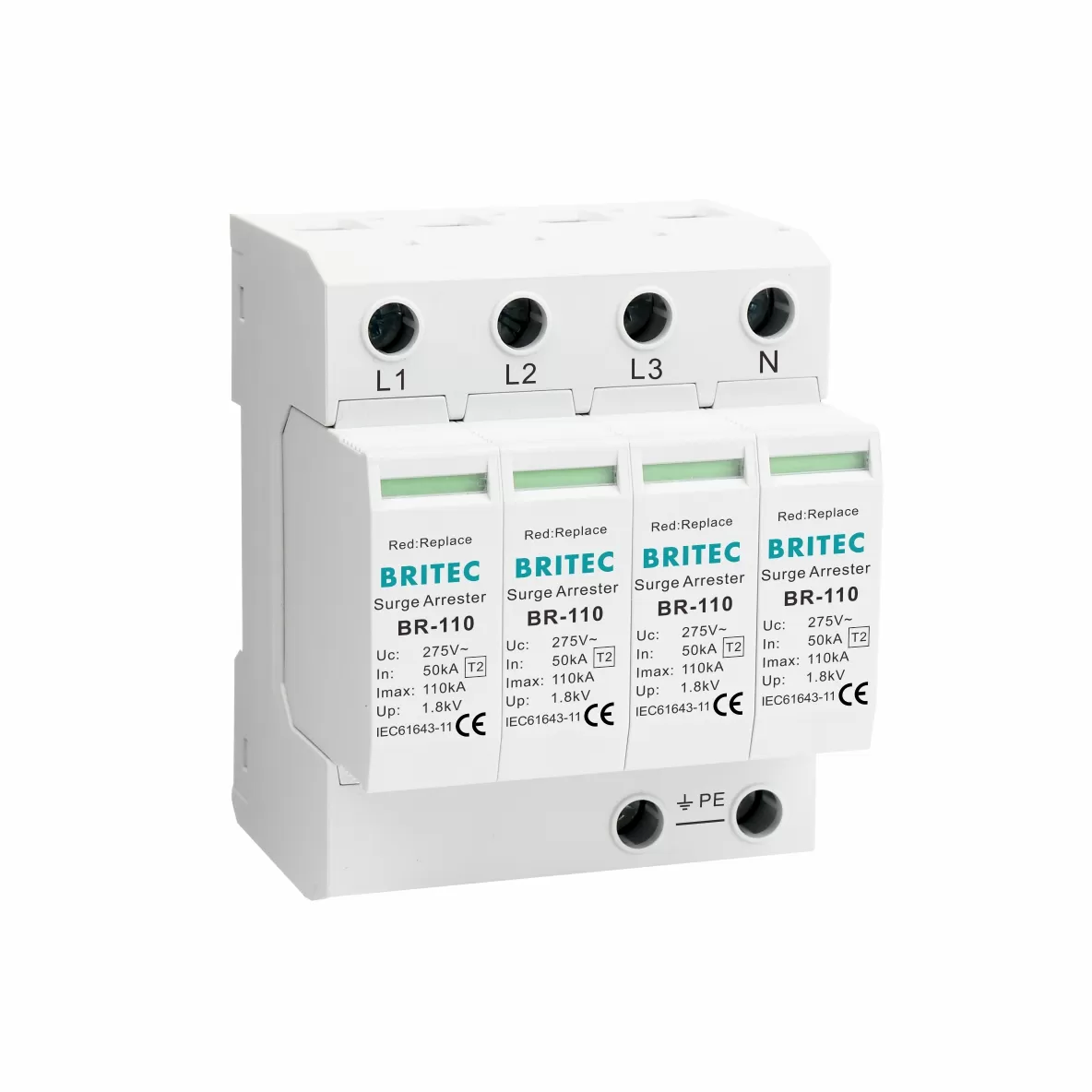
● Imax / In (8/20 µs) — the maximum discharge current an MOV-based Type 2 module can absorb. A “100kA SPD” most often means Imax = 100kA (8/20 µs), the class our 110kA Type 2 surge protective device belongs to.
● Up (voltage protection level) — the clamping voltage delivered to downstream equipment, which is independent of current handling.
Exceeding any one of these — current, energy, or clamping voltage — counts as “beyond rating,” and each failure mode looks different. To choose the right stage, start with our explainer on what a Type 1 SPD is and when it is required.
Here is what physically happens inside and around the SPD when the incoming surge is larger than the device was specified for:
● The metal-oxide varistor (MOV) absorbs the first part of the surge and heats far above its design temperature.
● Internal leakage current rises, accelerating thermal runaway inside the varistor.
● The built-in thermal disconnector senses the heat and tries to separate the module from the busbar.
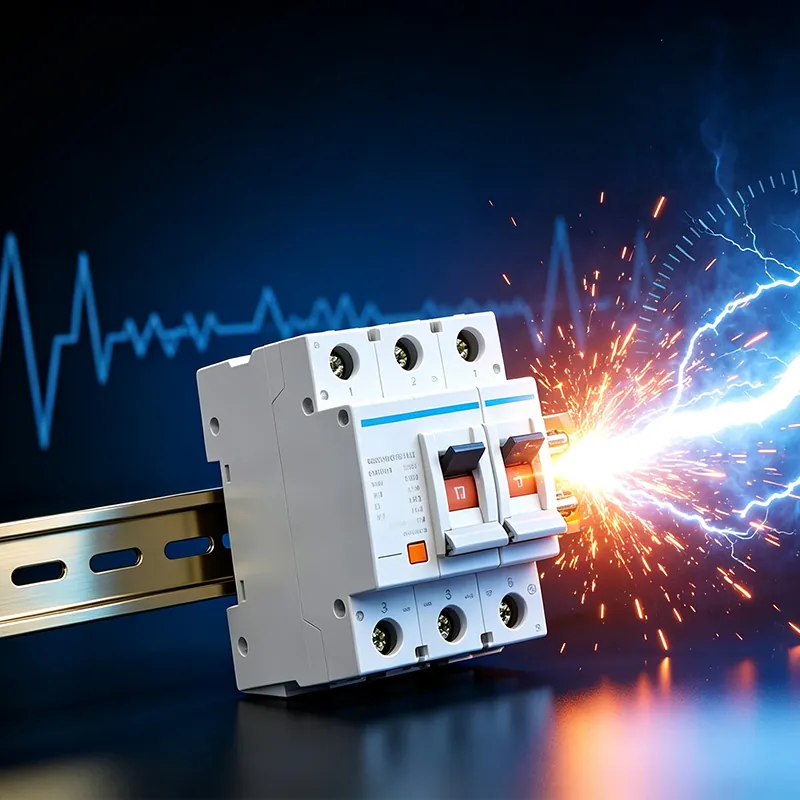
● If the disconnector is too slow or the follow current is too high, the module can short internally and arc.
● In the worst case the housing ruptures or ignites, creating a fire and shock risk inside the panel.
● Even when it survives, the MOV is permanently degraded — its clamping voltage drifts upward, so the next smaller surge does more damage.
A 100kA (8/20 µs) Type 2 device is excellent at handling induced and switched surges, but a direct strike delivers a 10/350 µs waveform with far higher energy. For lightning-prone regions and exposed incoming services, a Type 1 lightning surge protector rated in Iimp is the correct first stage. Britec’s 50kA Type 1 surge arrester is engineered for exactly this duty.
A properly designed installation turns “beyond rating” into a manageable event instead of a disaster. The key layers are:
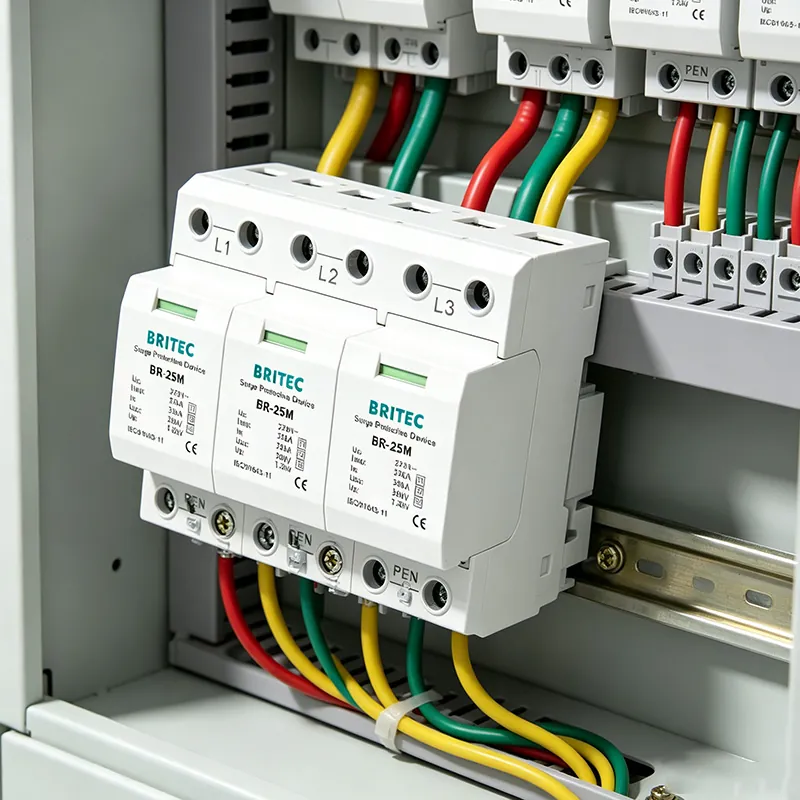
● Type 1 + Type 2 coordination — cascade stages so each handles the waveform it is built for. Our notes on surge protection coordination cover cascading Type 1, 2, and 3 devices.
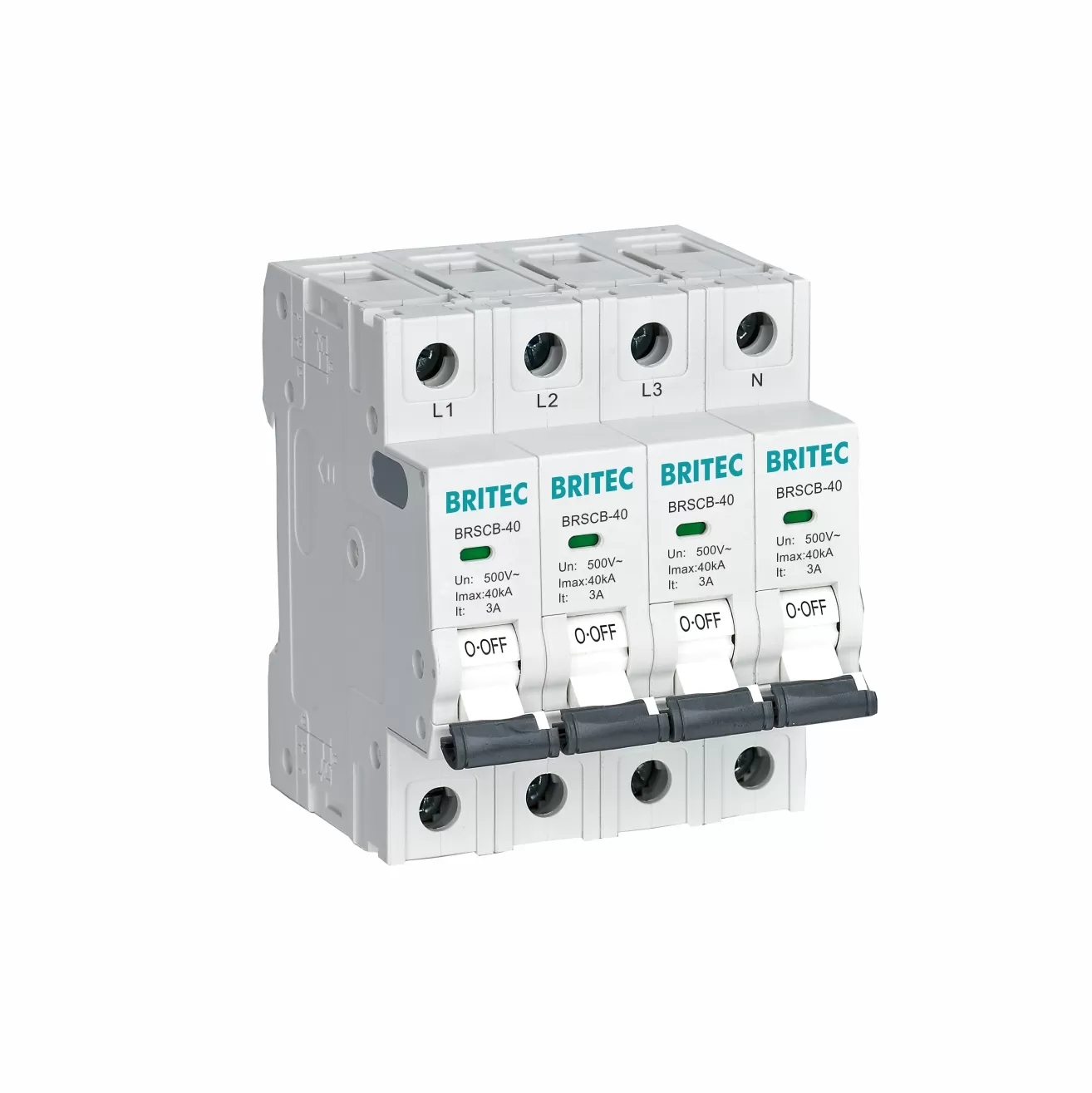
● Dedicated backup protector (SCB) — a surge-compatible breaker that clears the follow current the SPD cannot, preventing fire after a severe event. The BRSCB module shown below is purpose-built for this role.
● Thermal disconnector + status indicator — isolates a failed module and shows green/red so maintenance catches end-of-life before the next storm.
● Remote status / surge counter — logs events so facility teams can confirm the SPD actually absorbed the surge and schedule replacement.
● Correct sizing to IEC/EN 61643-11 — match Iimp/Imax to the calculated lightning exposure of the site, not to a round number.
Selection is cheaper than cleanup. For a B2B project, specify the SPD with this checklist:
● Determine the lightning protection zone (LPZ) and the expected Iimp at the incoming service.
● Choose Type 1 (Iimp) at the main board for exposed or lightning-prone sites; Type 2 (Imax) downstream.
● Verify Imax (for example 100kA/110kA) covers the calculated multi-stroke surge budget.
● Confirm Up is below the withstand voltage of the protected equipment.
● Always pair the SPD with a dedicated backup protector and a coordinated disconnector.
● Require third-party certification (TÜV / CE / SEMKO) and a documented impulse-test record.
Most real-world SPD failures trace back to undersizing or missing coordination rather than a single freak surge. The typical root causes — and how to avoid them — are covered in our breakdown of common SPD failure causes and solutions. The pattern is consistent: no backup protector, wrong Type for the waveform, or an SPD left in service long after its end of life. For the code side, see why surge protector ratings matter in electrical safety codes.
Q1. Can a 100kA surge protector handle a surge bigger than 100kA?
A. Not safely. The 100kA figure is a maximum (Imax, 8/20 µs), not a comfortable operating point. A larger surge pushes the MOV into thermal runaway, and without a fast disconnector and backup protector the module can short or ignite. The device should be sized with margin, not run at its limit.
Q2. What is the difference between Iimp and Imax on a surge protector?
A. Iimp (10/350 µs) is the direct-lightning impulse current a Type 1 SPD withstands; Imax (8/20 µs) is the discharge current an MOV-based Type 2 module absorbs from induced or switched surges. A “100kA SPD” is almost always an Imax rating, which is why exposed sites also need a Type 1 stage.
Q3. What physically happens inside an SPD when it is overloaded?
A. The MOV heats rapidly, leakage current climbs, and thermal runaway begins. The thermal disconnector then attempts to isolate the module. If it cannot clear the follow current in time, the module shorts, arcs, and can rupture or burn.
Q4. Will a surge protector catch fire if the surge is too large?
A. It can, which is why standards require a thermal disconnector and a coordinated backup protector. Properly specified and installed, the SPD reaches a safe fault state (status turns red) instead of burning. Missing coordination is the main fire risk.
Q5. Does a 100kA SPD protect against a direct lightning strike?
A. A 100kA Imax Type 2 device is not built for the 10/350 µs energy of a direct strike. For that duty you need a Type 1 arrester rated in Iimp at the incoming service, with Type 2 stages downstream. Cascade them per IEC/EN 61643-11.
Q6. What is a thermal disconnector and why does it matter?
A. It is the internal component that physically separates a failed MOV from the busbar once it overheats. It is the SPD’s last line of defense against fire. A clear status indicator lets maintenance confirm the module has reached end of life.
Q7. Do I need a backup protector (SCB) with my SPD?
A. Yes for exposed or high-risk sites. A standard MCB may not clear the SPD follow current fast enough. A surge-specific backup protector (SCB) is tuned to let the surge pass but disconnect the fault, preventing panel damage after a severe event.
Q8. How do I know if my surge protector has already failed?
A. Check the status window (green = healthy, red = fault) and any remote alarm or surge counter. A degraded MOV still passes current but clamps at a higher voltage, so annual testing and event logging are recommended for critical loads.
Q9. How should I size a surge protector for my site?
A. Base it on the lightning protection zone, expected Iimp/Imax, and the equipment withstand voltage (Up). Add a Type 1 stage for exposed services, cascade Type 2 downstream, and always fit a dedicated backup protector and certified device.
Q10. Can a degraded SPD still protect my equipment?
A. Partially, and that is the danger. A worn MOV clamps at a higher voltage, so downstream gear sees more stress and fails sooner. Once a status indicator shows fault, or a counter logs a major event, replace the module before the next storm.
A 100kA surge protector that absorbs a surge beyond its rating will not quietly keep working. It either trips its thermal disconnector and reaches a safe fault state, or — without proper coordination and backup protection — it can short, rupture, or burn. The fix is design, not hope: size to the real waveform, cascade Type 1 + Type 2, and always fit a dedicated backup protector. Britec Electric Wenzhou Co., Ltd. has manufactured certified surge protective devices since 2003 and can review your single-line diagram to recommend the right SPDs and coordination for your site.
Need a surge rating that matches your site’s real lightning risk?
Talk to Britec’s engineering team about sizing Type 1 / Type 1+2 SPDs, coordination, and dedicated backup protection for your industrial, commercial, or utility project.
● What Is a Type 1 SPD and When Is It Required?
● Surge Protection Coordination: How To Cascade Type 1, 2, And 3 SPDs
● Why Surge Protector Ratings Matter in Electrical Safety Codes
● Common SPD Surge Protective Device Failure Causes And Solutions