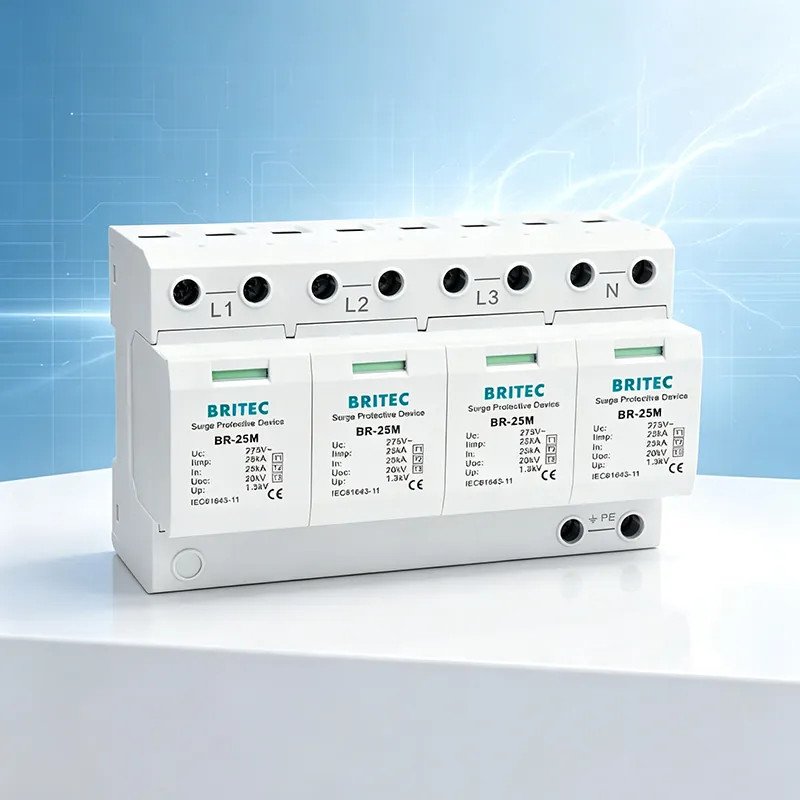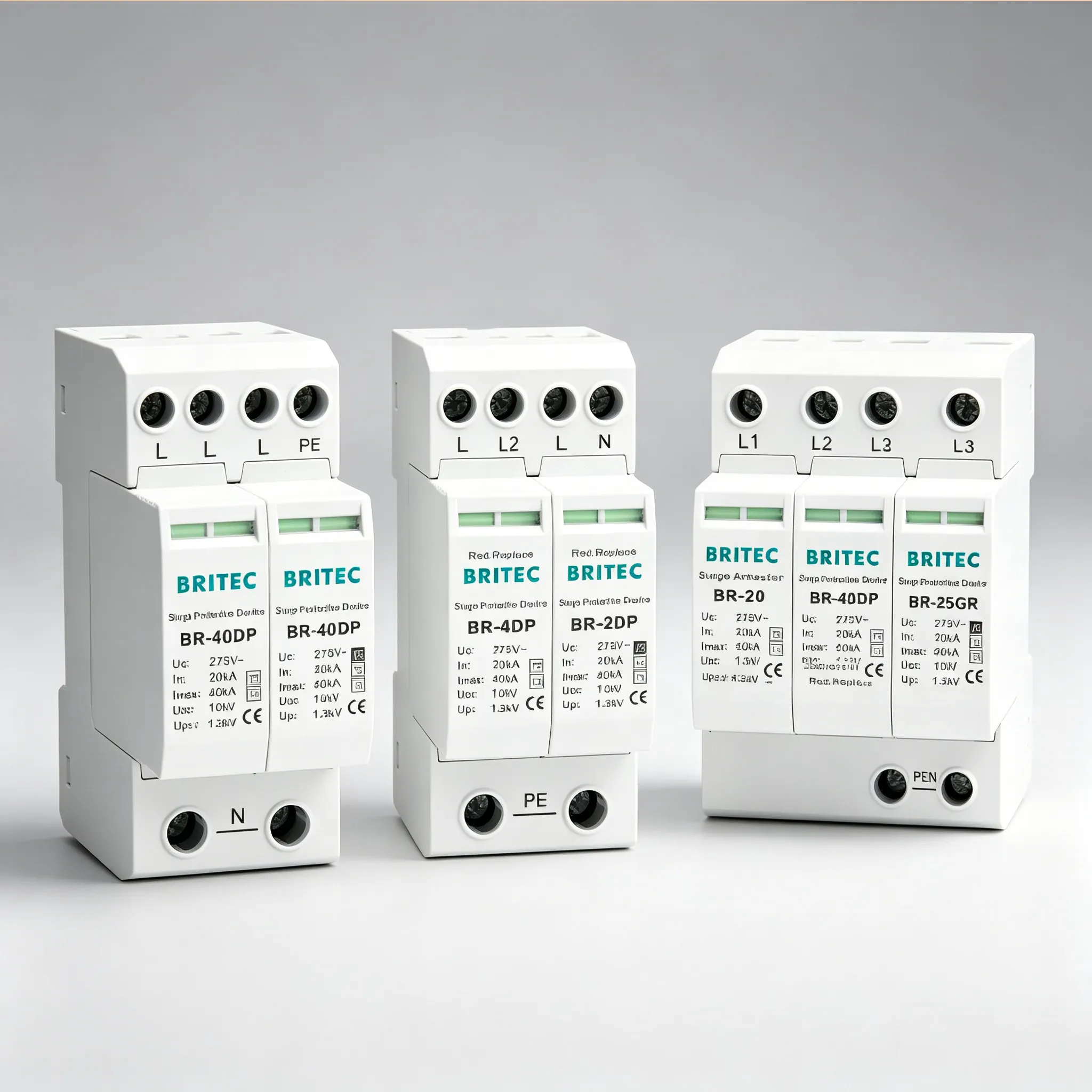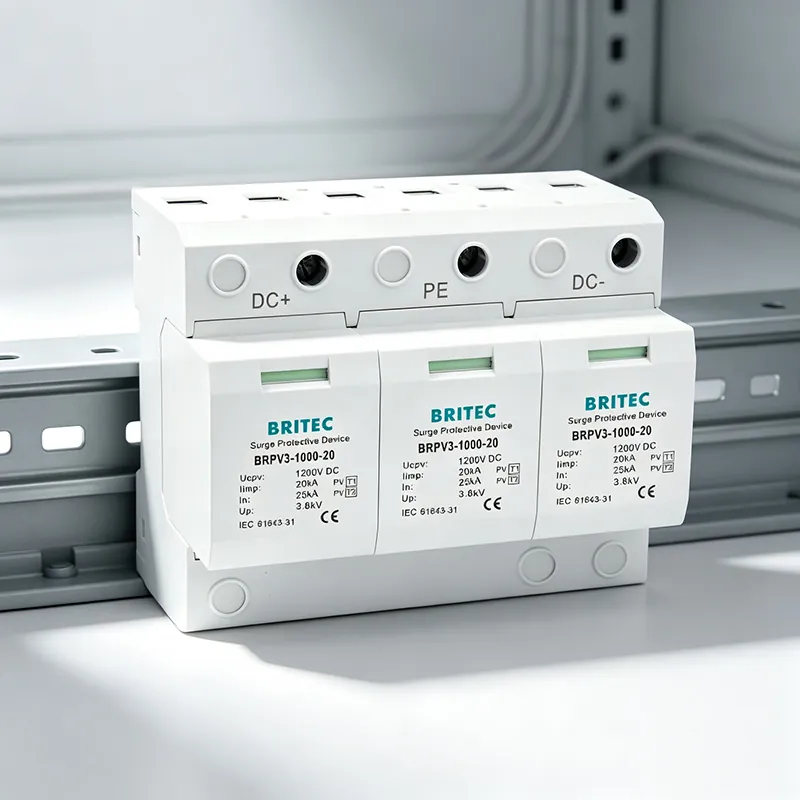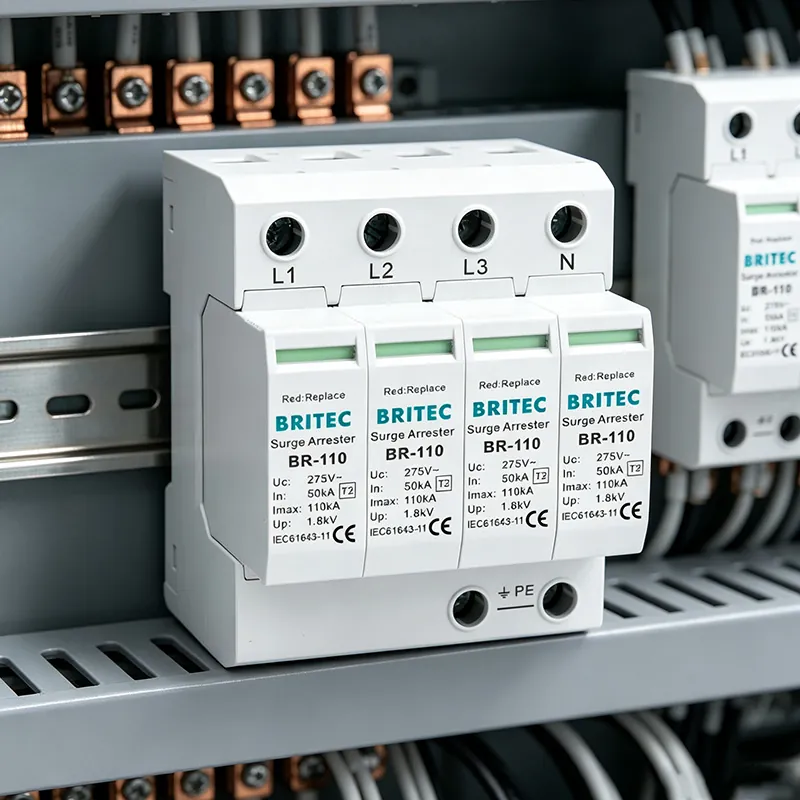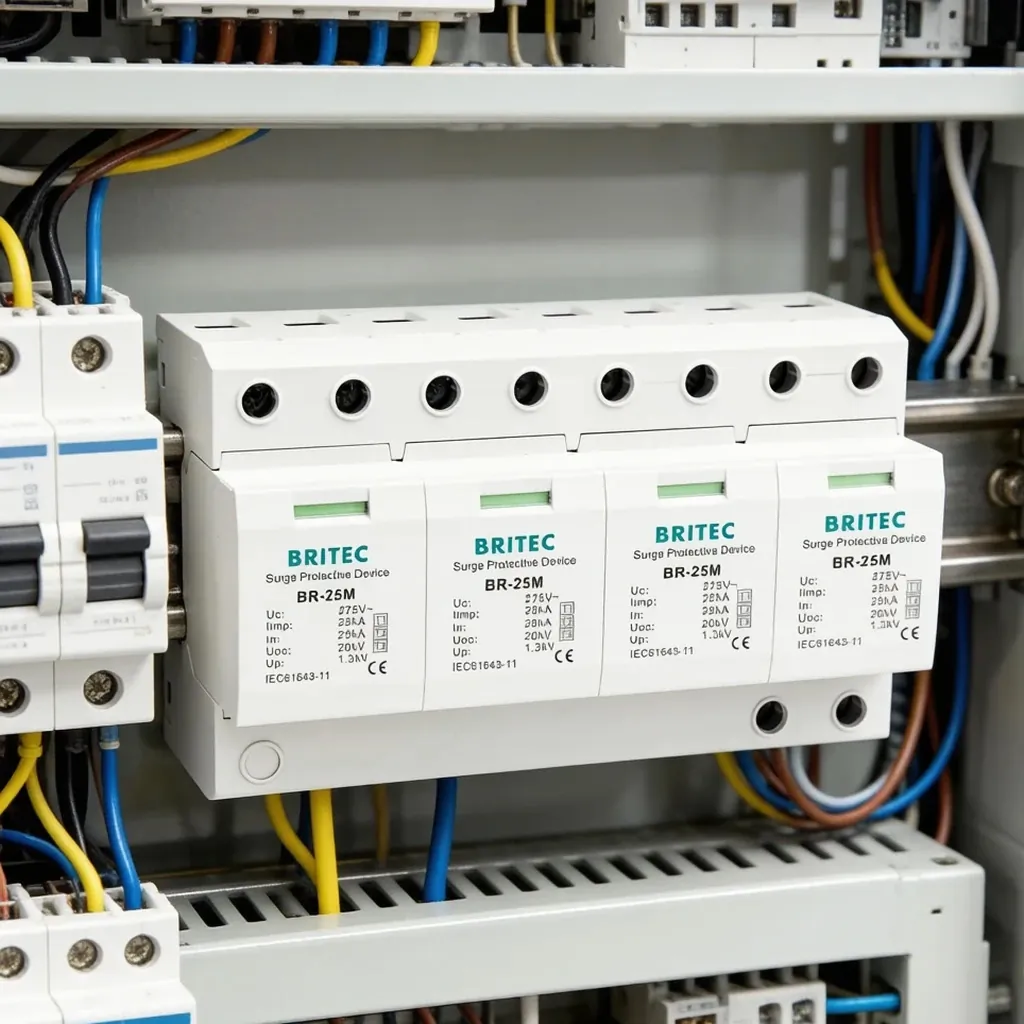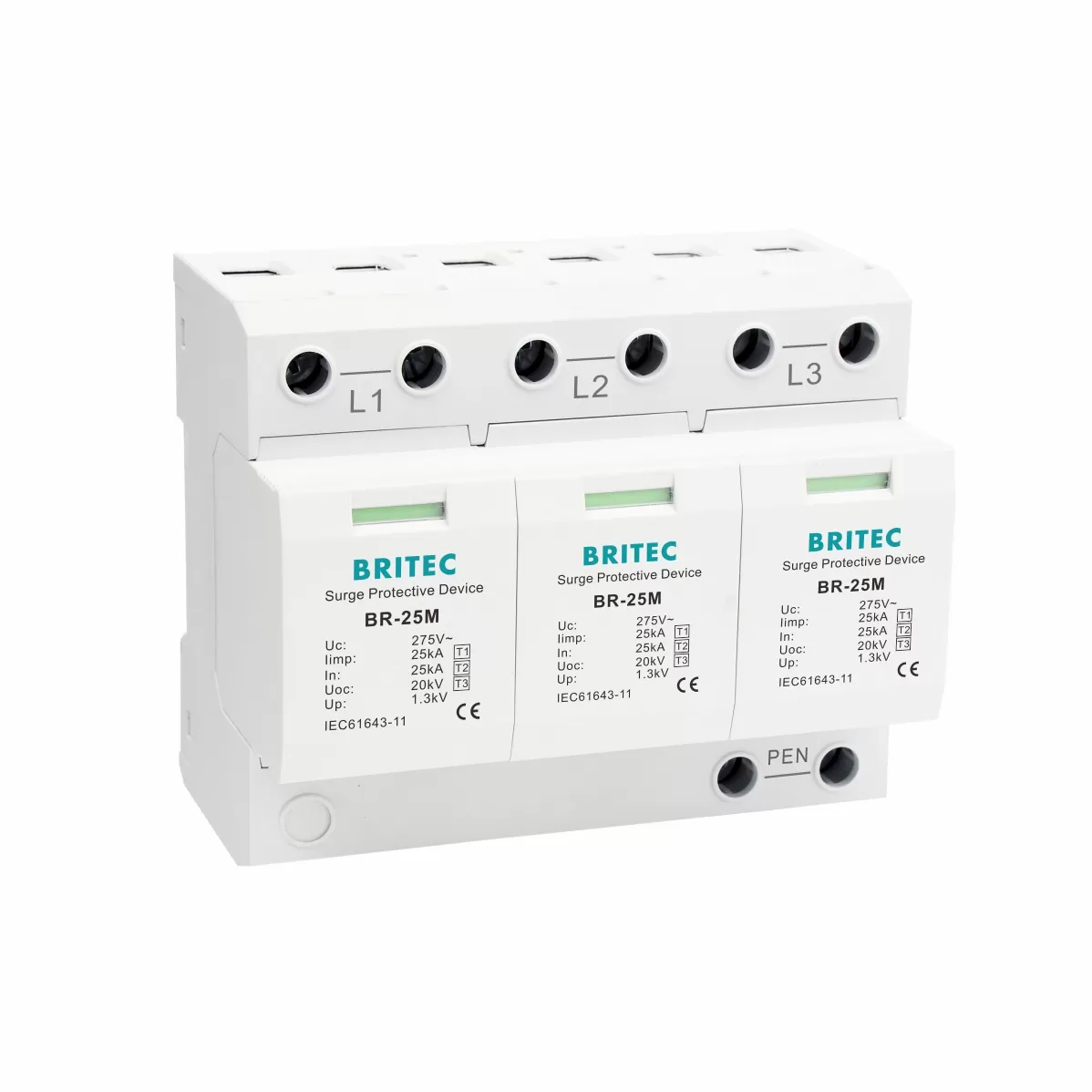

Britec Electric has manufactured surge protective devices (SPDs) since 2003, and the question we hear most from residential developers, panel builders, and electrical contractors is simple: which surge rating actually fits a home branch circuit? For most apartments, townhouses, and small residential units, a 10kA SPD hits the sweet spot between protection, panel space, and budget. This guide explains why a 10kA nominal discharge rating works so well on residential branch circuits, where to place Type 2 and Type 3 devices, and how to specify one that meets IEC 61643.
A branch circuit is the final wiring run from the distribution board to a socket, light, or appliance. It is exactly where sensitive residential loads — routers, heat pumps, EV chargers, and smart-home controllers — actually connect. Protecting that run is what keeps a single surge from taking out a whole apartment’s electronics.
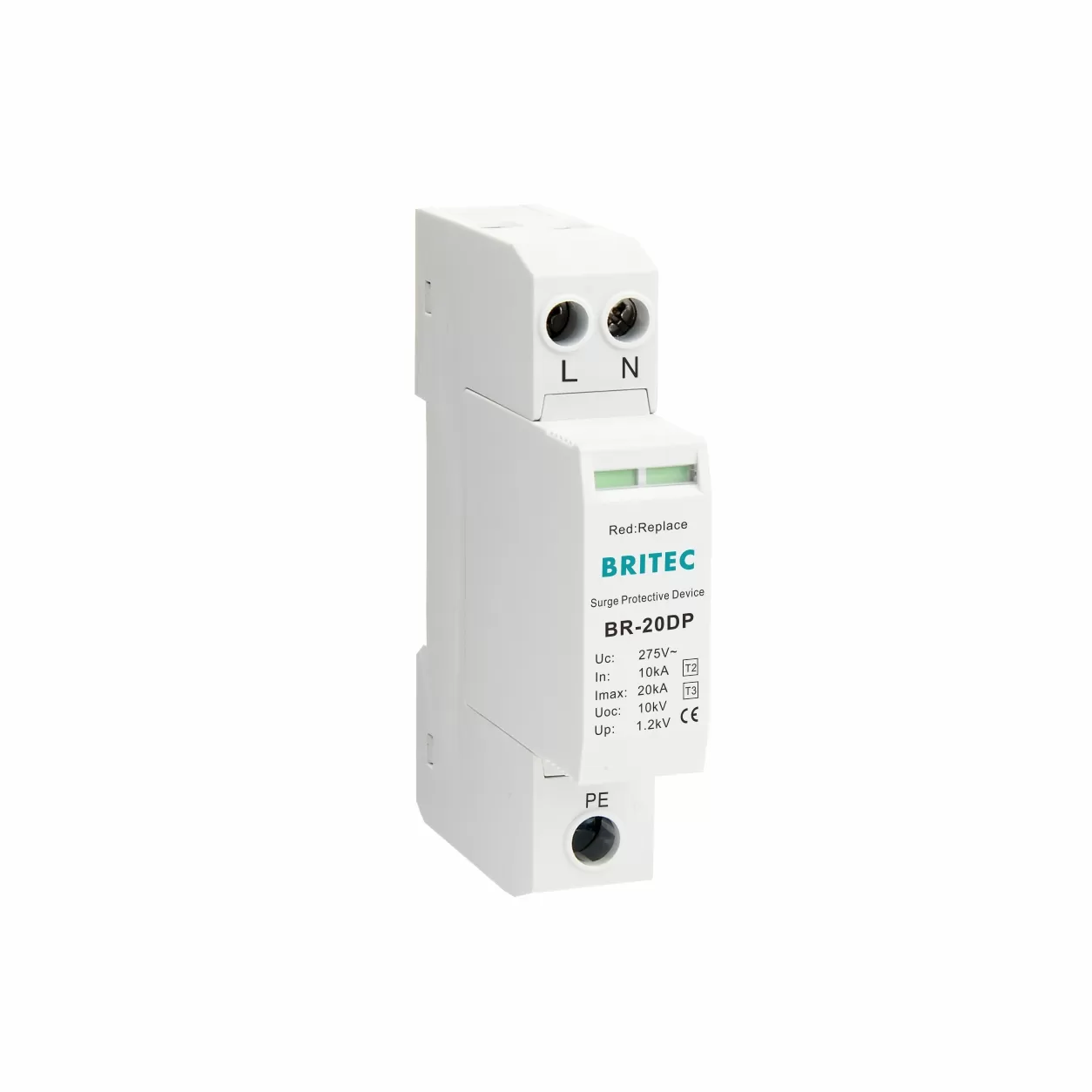
ال nominal discharge current (In) of an SPD is the surge current it can absorb repeatedly without aging out. A 10kA In rating (typically paired with a 20kA maximum, Imax) is well matched to the exposure profile of a residential unit:
● Lower lightning exposure — homes are protected by a Type 1 or Type 1+2 device at the service entrance, so the branch-circuit SPD only sees the residual, already-attenuated surge.
● Switching surges dominate — most residential overvoltage comes from in-building switching of motors, compressors, and contactors, which a 10kA device handles comfortably.
● Compact DIN-rail footprint — a 10kA module is small enough to share the consumer unit with breakers and RCDs without crowding the board.
● Better lifetime per dollar — versus a 5kA device that ages faster, or a 40kA device sized for industrial buses, 10kA balances wear and cost for homes.
A 5kA SPD is cheap but wears out quickly under repeated switching surges, inviting silent end-of-life. A 40kA or 110kA SPD is built for distribution buses and main incomers, not the modest exposure of a branch circuit — paying for that headroom adds cost and panel space with no real benefit at the outlet. The 10kA class lands in the middle: enough margin for years of service, sized for the real risk. See how the 40kA rating compares in our breakdown of why 40kA surge protectors are widely used in low-voltage systems.
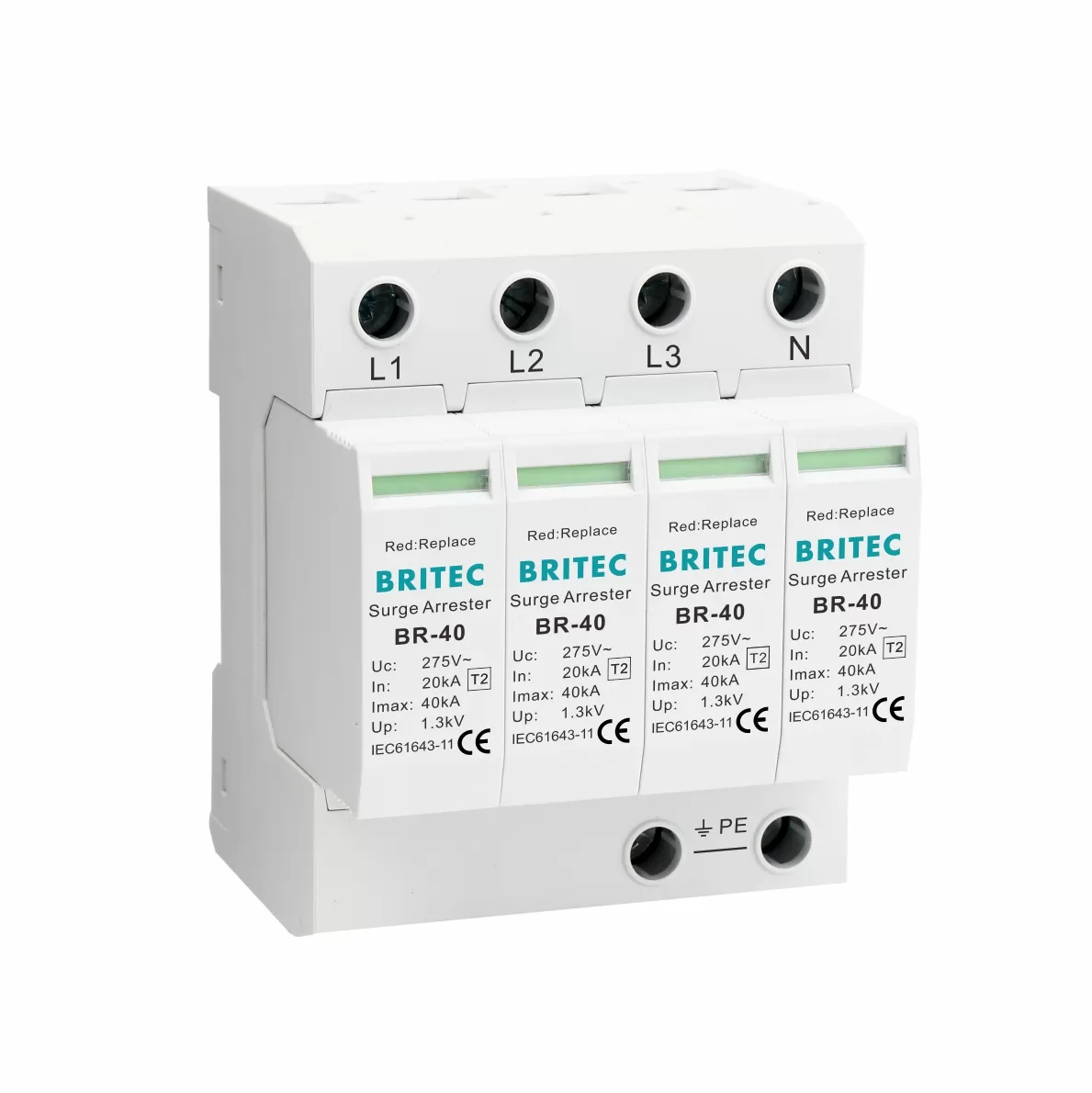
IEC 61643 divides SPDs by where they sit. A 10kA device is usually deployed as a النوع 2 SPD at the residential distribution board, with a النوع 3 SPD added at the point of use for the most sensitive loads.
| Layer | Where It Sits | Typical Rating |
|---|---|---|
| Type 2 (board) | Consumer unit / distribution board | 10kA In, 20kA Imax |
| Type 3 (outlet) | Within 10 m of the load, at the socket | Fine protection, low Up |
Browse the full Type 2 surge protective device range for board-level protection, and the Type 3 surge protector range for point-of-use devices.
Do not select a residential SPD by kA alone. Check these specifications against the panel schedule and the load it feeds:
● مستوى حماية الجهد (أعلى) — keep it at or below the withstand of the connected equipment, commonly 1.5 kV or less for electronics.
● Nominal / maximum discharge (In / Imax) — 10kA In with 20kA Imax is the residential sweet spot.
● وقت الاستجابة — sub-nanosecond clamping for modern MOVs.
● Status indication — visual or remote-signal window shows end-of-life so a failed device is replaced, not ignored.
● المعايير — construction to IEC 61643-11, application to IEC 61643-12, within an IEC 62305 lightning-protection concept.
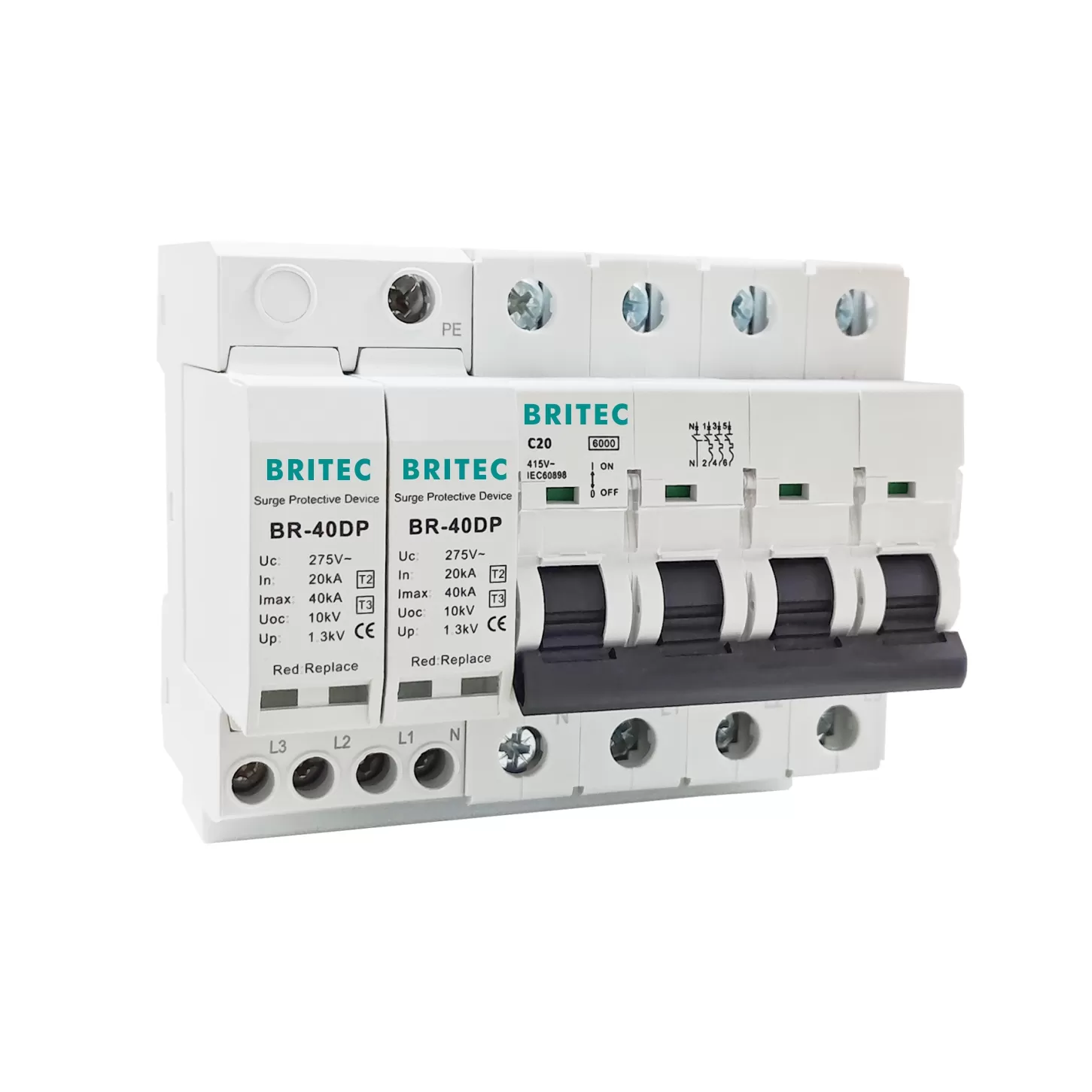
A surge protector is only as safe as the device that isolates it when it ages. For a branch circuit, the cleanest solution is a combined MCB + Type 2 SPD in one module — the breaker protects the circuit while the SPD clamps the surge, in a single DIN slot. Where the SPD is separate, pair it with a dedicated backup protector or a coordination inductor so a short-circuited SPD is disconnected without dropping the whole feeder. Britec supplies these coordination parts from the same catalogue, which keeps the cascade coordinated on paper and in the field.
Need a Coordinated 10kA SPD Schedule for Your Residential Panels?
Send Britec your panel schedule and we will specify Type 2 and Type 3 devices with the right voltage protection level, backup protection, and IEC 61643 compliance for your project.
1. Why is a 10kA SPD ideal for residential branch circuits?
A 10kA nominal discharge rating matches the lower lightning exposure of a home, where a Type 1 or Type 1+2 device at the service entrance has already attenuated the surge. It gives enough margin for years of switching surges without the cost and bulk of an industrial 40kA device.
2. Is 10kA enough, or should I use 20kA or 40kA at home?
For a branch circuit fed from a protected service entrance, 10kA In (with 20kA Imax) is sufficient. Reserve 20kA–40kA devices for the main incomer or distribution bus, not the final outlet run.
3. Where should a 10kA SPD be installed in a residential unit?
Install it as a Type 2 SPD on the DIN rail of the consumer unit, then add a Type 3 SPD at the outlet for the most sensitive loads such as routers, EV chargers, and smart controllers.
4. What do In and Imax mean on a 10kA SPD?
In (nominal discharge current) is the surge the device absorbs repeatedly; Imax (maximum discharge current) is the peak it survives once. A 10kA In / 20kA Imax rating is common for residential Type 2 SPDs.
5. Do I need both Type 2 and Type 3 protection at home?
For general outlets, a Type 2 SPD at the board is the minimum. Add Type 3 at the point of use for expensive or sensitive electronics, keeping roughly 10 m of wiring between the two stages.
6. Can a 10kA SPD share the consumer unit with the breakers?
Yes. A 10kA module is compact enough for the DIN rail, and a combined MCB + SPD unit places branch-circuit protection and surge clamping in a single slot.
7. Which standard applies to a residential 10kA SPD?
Construction follows IEC 61643-11, application and selection follow IEC 61643-12, and the wider lightning-protection system follows IEC 62305. Quote these in any tender or specification.
8. How do I know when a 10kA SPD has worn out?
Choose a device with a status window or remote signal. Inspect it at each maintenance cycle and replace it when the indicator shows end-of-life or after a major surge event.
9. Does a 10kA SPD protect smart-home and EV-charger loads?
It protects the branch circuit feeding those loads. For the most sensitive equipment, pair the Type 2 board SPD with a Type 3 point-of-use device and keep the voltage protection level (Up) within the load’s withstand.
10. Why source 10kA SPDs from Britec?
Britec Electric is a Wenzhou SPD manufacturer established in 2003, certified by Intertek SEMKO, TUV, and CE, supplying Type 1, Type 1+2, Type 2, and Type 3 devices plus coordination parts from one catalogue — with OEM or ODM support and replies to inquiries within 24 hours.
● Single Phase Surge Protection: 1P vs 1P+N vs 2P Compared
● What Is a Type 1 SPD and When Is It Required
● How SPD Surge Protective Devices Handle Transient Overvoltage
● SPD Type 3 vs Surge Protection Power Strip: Key Differences Explained
● Industrial Surge Protection Devices: 5 Key Applications by Sector