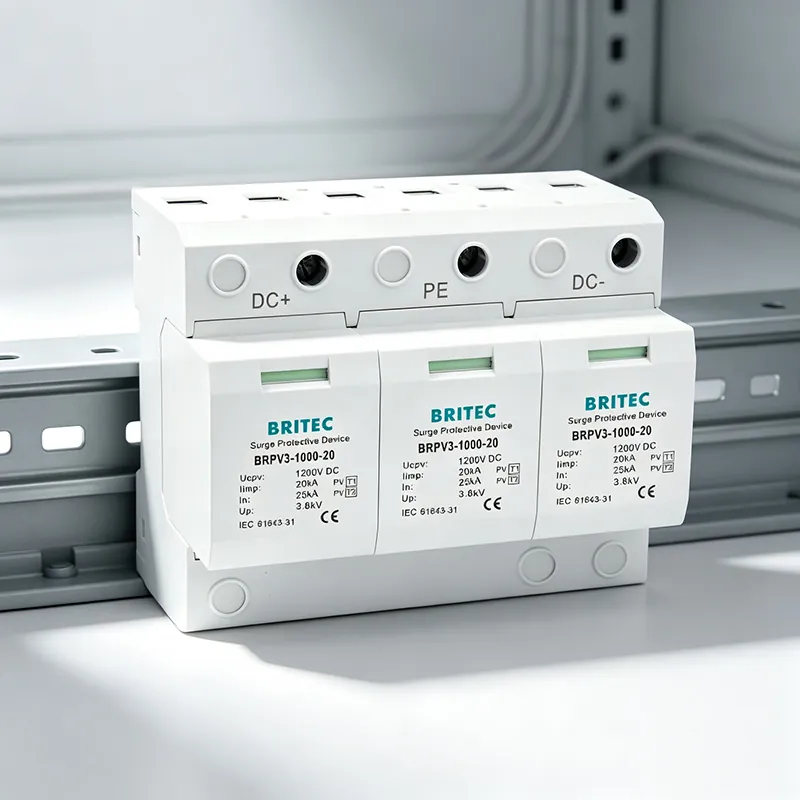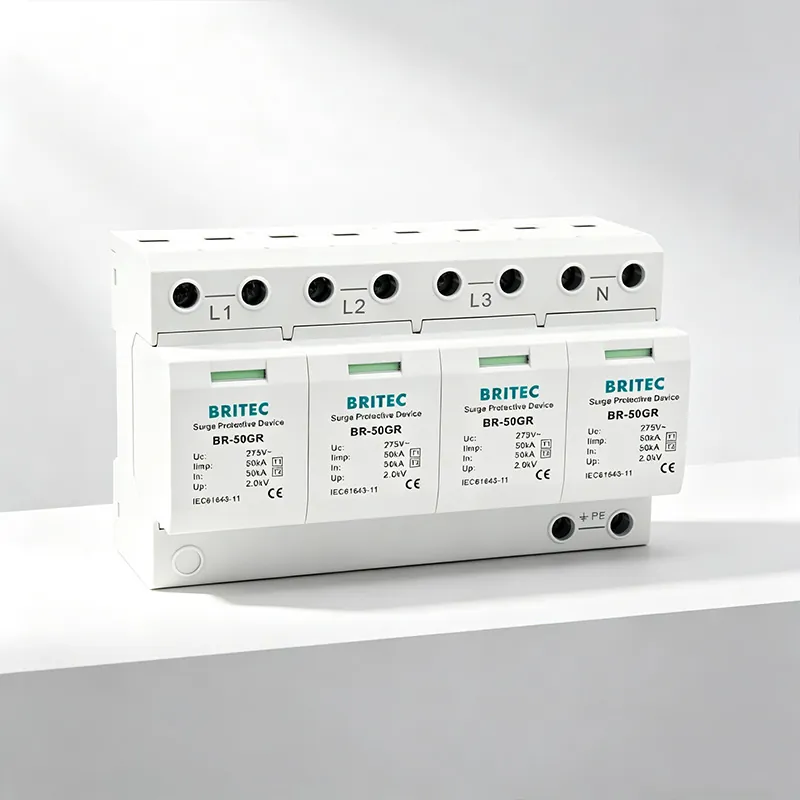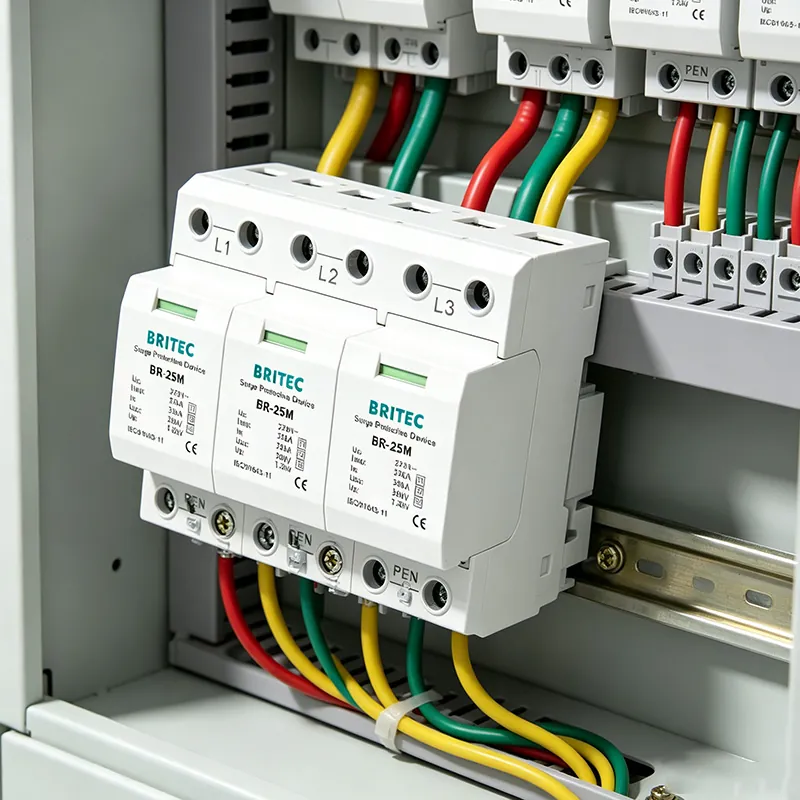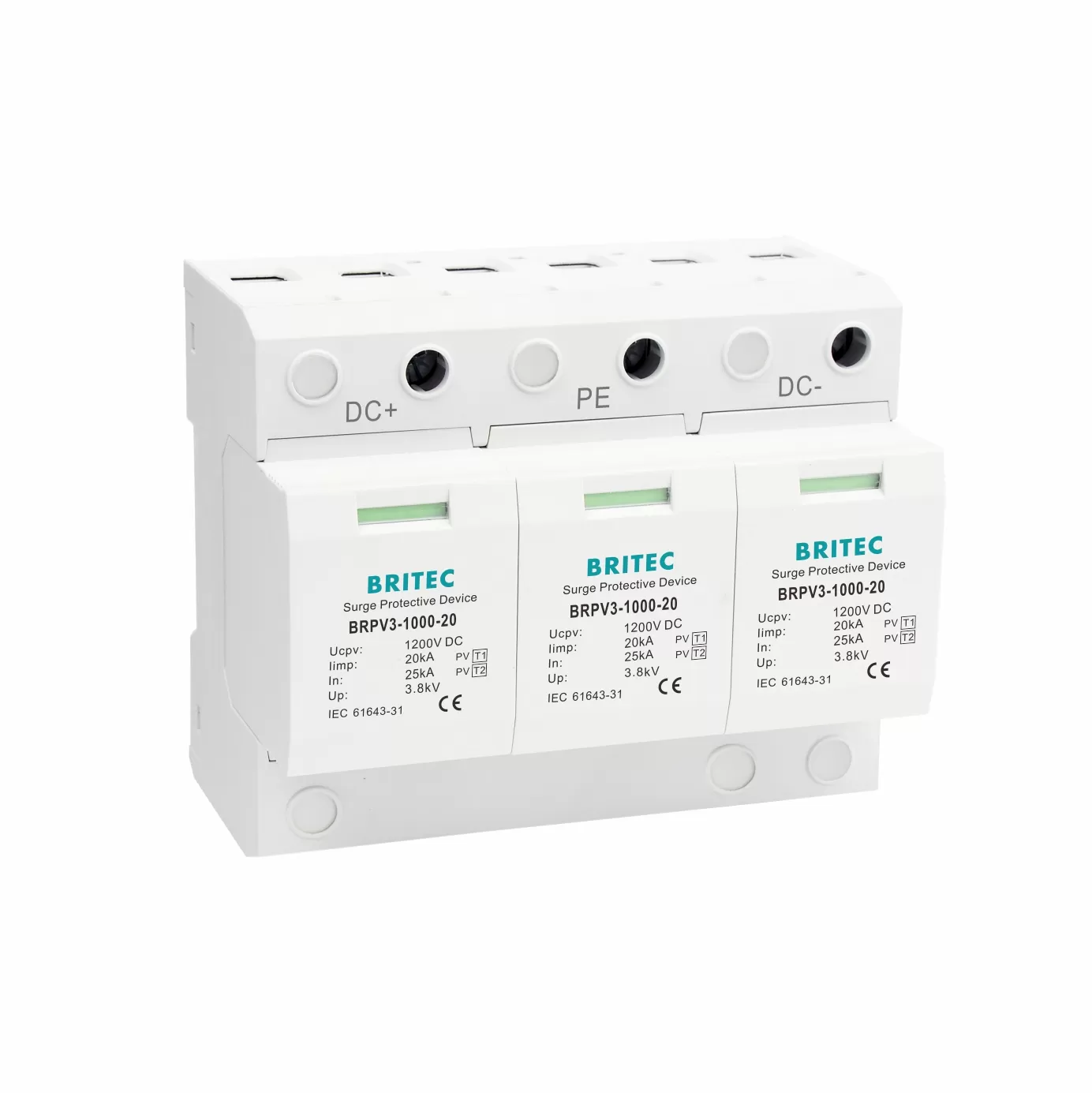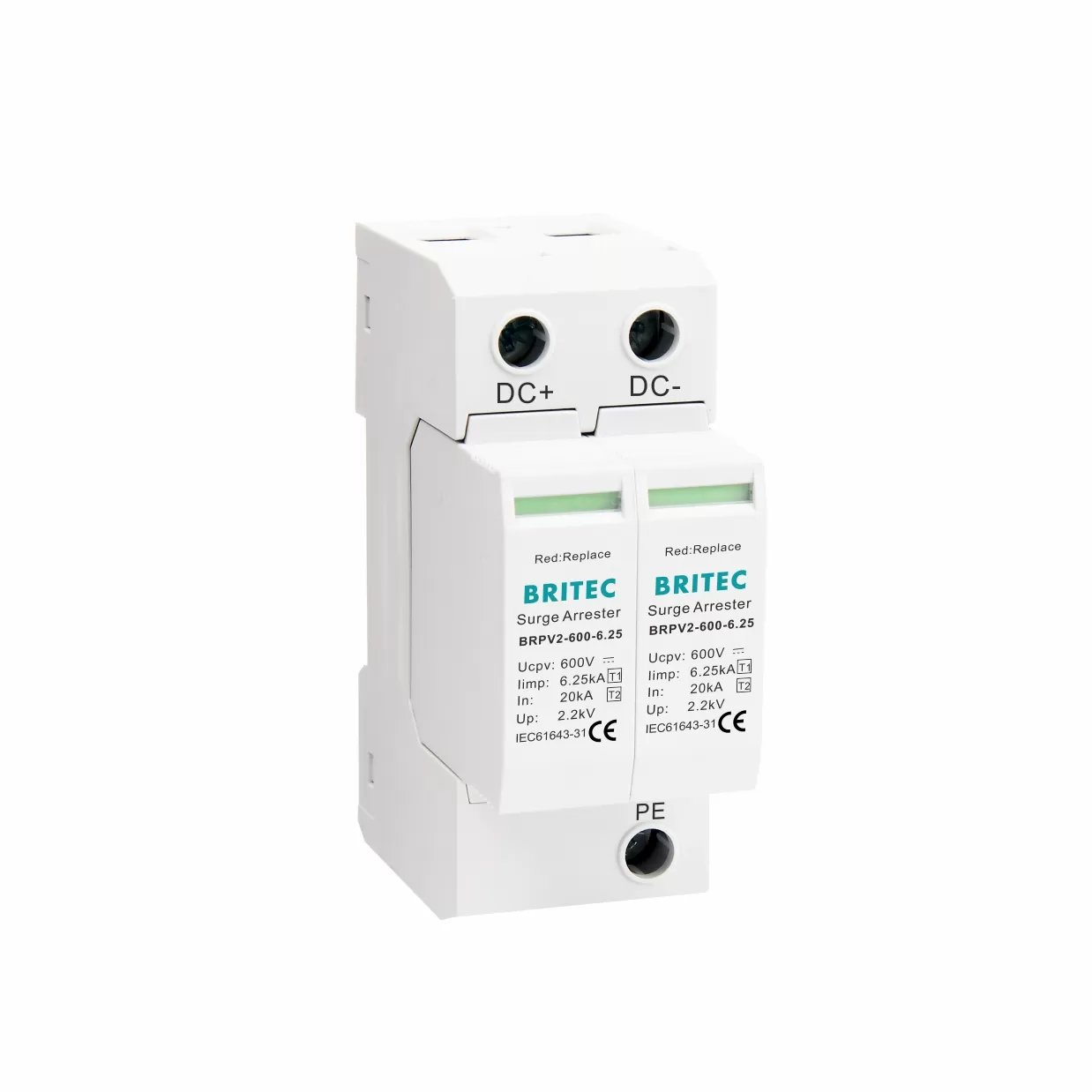

Britec Electric has manufactured surge protective devices (SPDs) since 2003, and the question we hear most from facility managers, OEMs, and IT teams is simple: what is the best surge protection for electronics and sensitive equipment? A basic power strip will not protect a PLC, a server rack, or a laboratory instrument. This guide explains how to choose the right SPD layers, the specifications that matter, and how to protect both the power supply and the data lines that sensitive equipment depends on.
Modern electronics are built with low-voltage semiconductors that fail at voltage levels far below what a surge can deliver. A transient that lasts only microseconds can corrupt data, trip a controller, or permanently damage a power supply. The most common surge sources are:
● Lightning — indirect strikes induce kilovolt transients on power and signal cables even without a direct hit.
● Switching operations — contactors, motors, and transformers create fast transients on the same distribution bus.
● Grid disturbances — faults and load switching propagate overvoltage through the supply.
● Induced surges on data lines — long Ethernet, coaxial, and telephone cables act as antennas for nearby strikes.
IEC 61643 classifies SPDs into three types based on where they sit and what they absorb. For sensitive equipment you usually need more than one type working together.
| SPD Type | Where It Sits | What It Protects Against |
|---|---|---|
| Tip 1 | Service entrance / main incoming | Direct lightning current, 10/350 µs |
| Tip 2 | Distribution boards | Induced and switching surges, 8/20 µs |
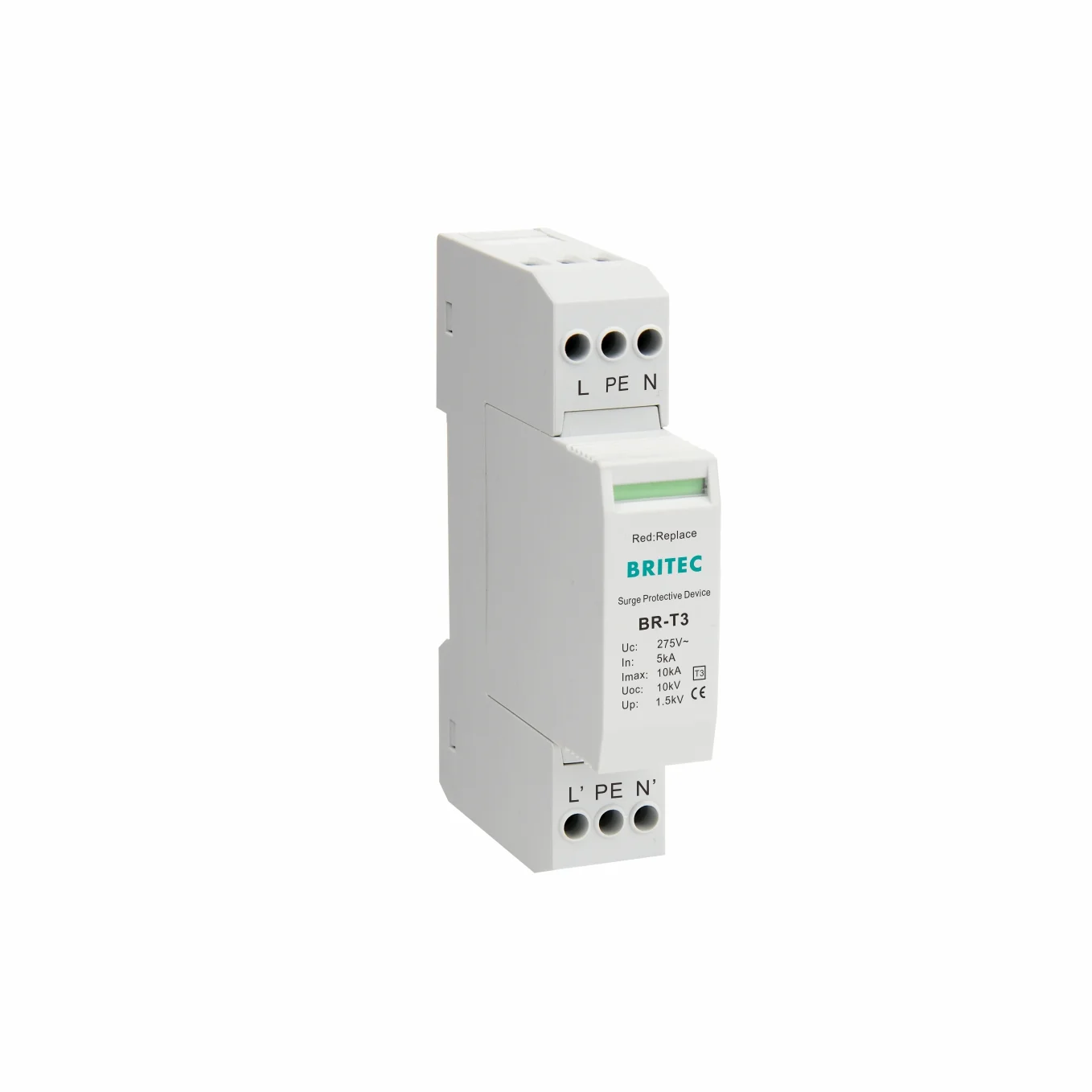
| Tip 3 | Point of use, near the equipment | Residual overvoltage at the outlet |
There is no single device that fits every load. Match the protection layer to the equipment and its exposure:
● Servers, network switches, and data centers — coordinate a Type 2 SPD at the rack PDU feed with Type 3 at the device, and protect every Ethernet and PoE port.
● Medical and laboratory instruments — require low let-through voltage (Up) and isolated protection; specify Type 2 at the branch and Type 3 at the outlet.
● Industrial controllers and PLCs — protect the 24 V DC and signal side as well as the mains. See our guide to surge protection for critical electrical loads.
● POS, ATM, and retail electronics — point-of-use Type 3 SPDs at the outlet stop the transient that travels through the building wiring.
● Home office and consumer electronics — a quality Type 3 SPD or a listed surge-protective power strip is the minimum; never rely on a basic extension lead.
A Type 2 SPD at the distribution board limits the surge, but the wiring between the board and the outlet can still carry hundreds of volts of residual overvoltage. A Type 3 SPD mounted within 10 m of the load — ideally at the socket next to it — is what actually protects a sensitive device. It is the difference between a protected PLC and a corrupted one. Understand the trade-offs in our comparison of Type 3 SPDs versus a surge protection power strip.
Need Point-Of-Use SPDs For Sensitive Loads?
Send Britec your panel schedule and we will specify Type 3 devices with the right voltage protection level for your equipment.
Up to half of equipment damage comes through the data cable, not the power cord. A surge riding on an Ethernet or coaxial line bypasses the power SPD entirely. Protect every external and long-run cable with a dedicated data-line protector.
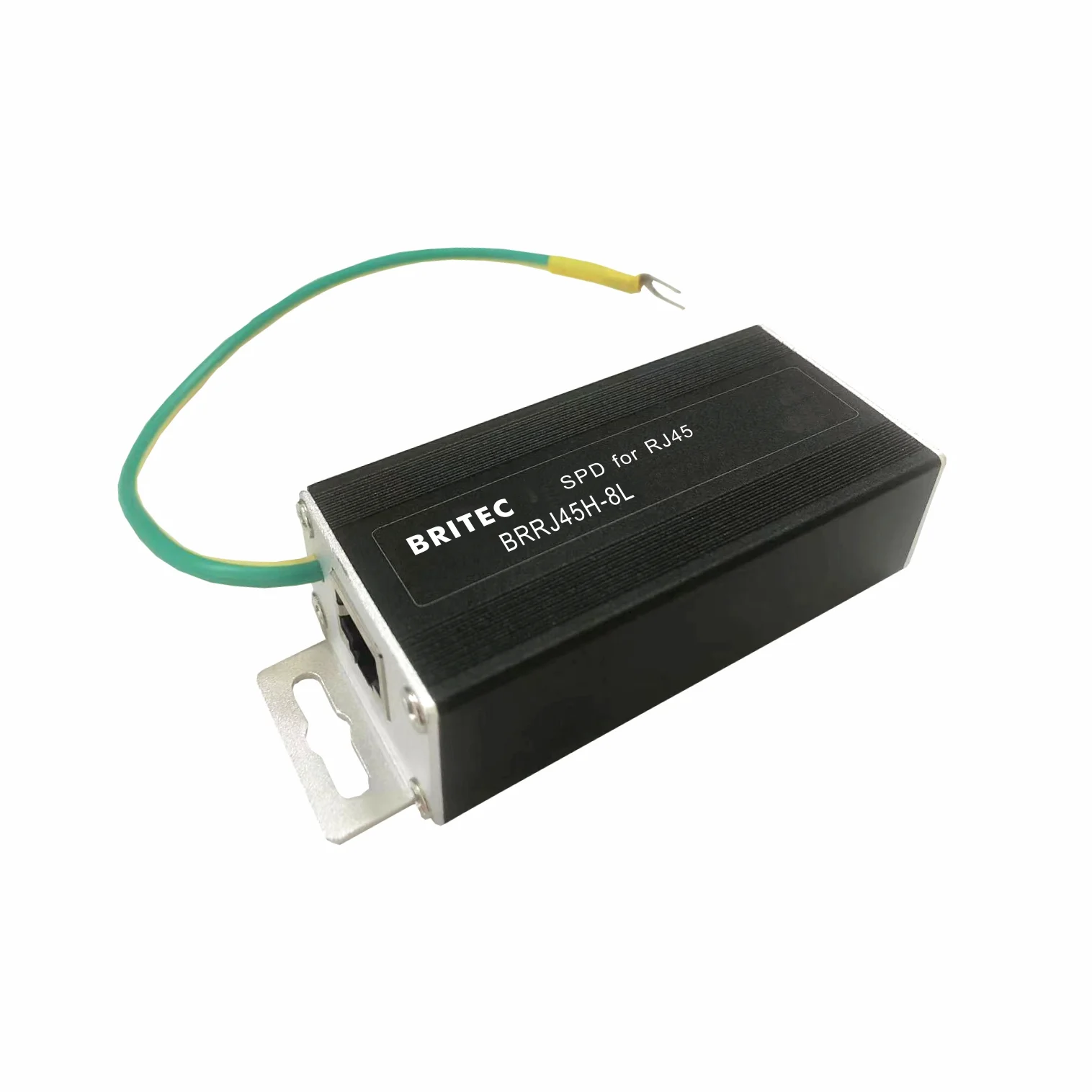
● Ethernet and PoE — fit an RJ45 or PoE surge protector on every exterior or long-run cable.
● Coaxial and CCTV — protect camera and antenna feeds at both ends.
● Telephone and data terminals — RJ11 and DB9 protectors stop induced surges on comms lines.
Do not specify an SPD by price alone. The numbers below decide whether your equipment actually survives a surge event.
| Spesifikasyon | What It Means | What To Target |
|---|---|---|
| Gerilim koruma seviyesi (Yukarı) | Clamping voltage at the equipment | As low as the load withstand allows (often ≤1.5 kV) |
| Nominal discharge (In) | Continuous surge handling | Matched to site exposure |
| Max discharge (Imax) | Peak surge the device survives | Type 2 40 kA is common for low voltage |
| Yanıt Süresi | How fast it clamps | Sub-nanosecond for modern SPDs |
| Standartlar | Compliance for tenders | IEC 61643-11 / EN 61643 |
| Status indication | Tells you when it has aged out | Visual and remote signal options |
The most reliable protection is a coordinated cascade: a Type 1 or Type 1+2 device at the service entrance, a Type 2 SPD at each distribution board, and a Type 3 device at the equipment — with roughly 10 m of wiring (or a coordination inductor) between stages. Pair every SPD with the correct backup fuse or circuit breaker so a failed device is isolated without dropping the feeder. Review our 10 criteria for choosing a surge protector supplier before you specify.
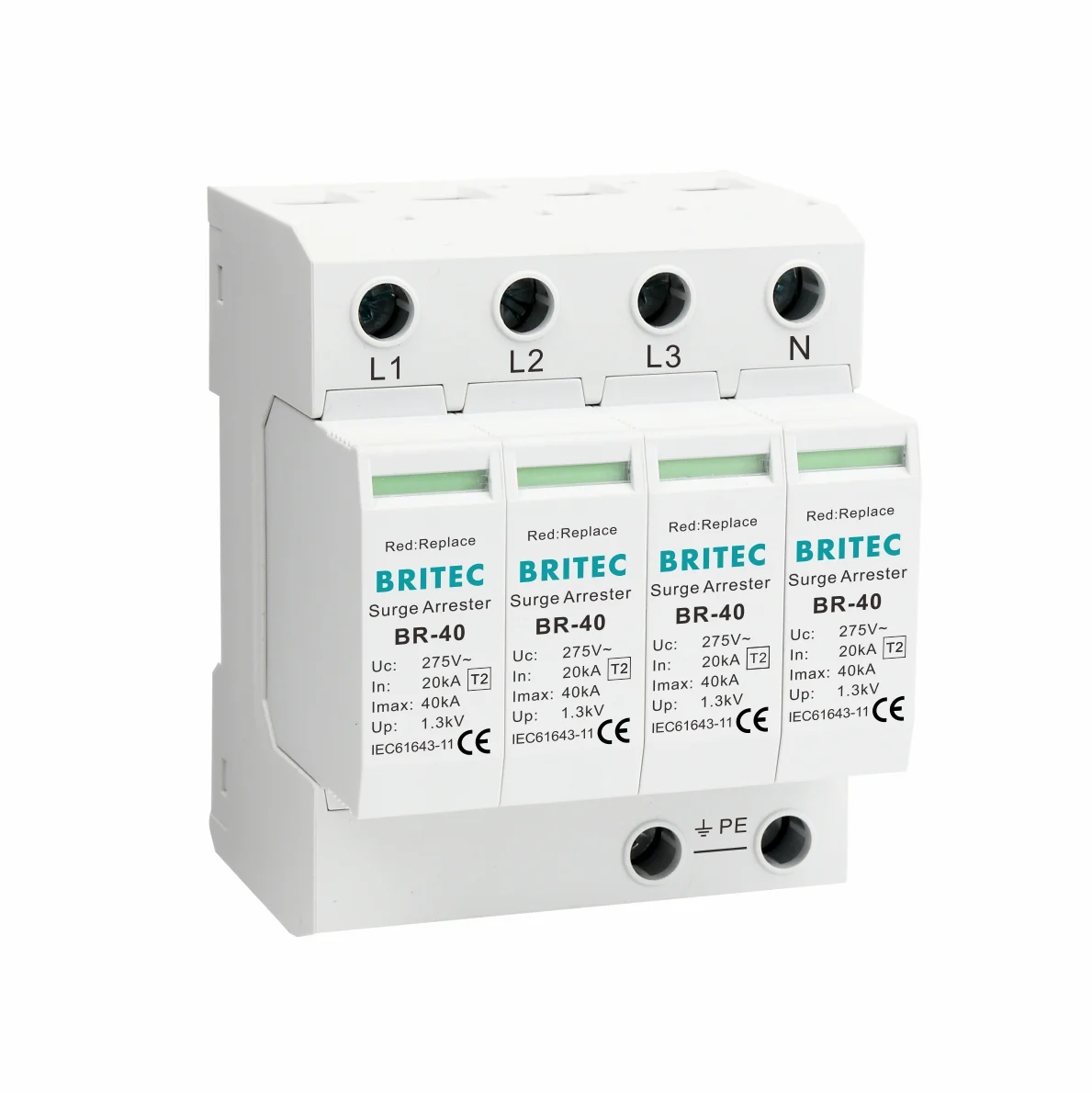
Britec Electric is a Wenzhou-based SPD manufacturer established in 2003, certified by Intertek SEMKO, TUV, and CE, and supplying Type 1, Type 1+2, Type 2, and Type 3 devices plus coordination inductors and dedicated backup protectors from one catalogue. That single-source coordination data is what lets your cascade work on paper and in the field, with OEM and ODM support and replies to inquiries within 24 hours.
Get A Coordinated SPD Proposal
Send us your single-line diagram and equipment list. We return a Type 1+2+3 schedule with backup protection sized to IEC 61643.
1. What is the best surge protection for sensitive electronics?
A coordinated cascade: a Type 2 SPD at the distribution board plus a Type 3 SPD at the outlet, with data-line protection on every network and comms cable feeding the device.
2. Do I need a Type 1, Type 2, or Type 3 SPD for electronics?
Most sites need Type 2 at the board and Type 3 at the equipment. Add Type 1 only where lightning can strike the service entrance directly or the building is exposed.
3. Can a standard power strip protect sensitive equipment?
A listed surge-protective strip gives basic point-of-use coverage, but it lacks the coordination, status signaling, and let-through rating of a proper Type 3 SPD fitted at the board.
4. How do I protect network and data-line equipment from surges?
Fit data-line protectors (RJ45, PoE, coaxial, RJ11) on every external or long-run cable. Surges enter through the data cable as often as through the power cord.
5. What surge protection rating should sensitive equipment have?
Target the lowest voltage protection level (Up) the equipment withstand allows — often 1.5 kV or below — and match In and Imax to the site exposure.
6. Where should point-of-use surge protectors be installed?
As close as possible to the protected equipment, ideally within 10 m and at the final socket or DIN position feeding the load.
7. Does surge protection work for medical or laboratory equipment?
Yes. Sensitive instruments need low let-through Type 2 at the branch and Type 3 at the outlet, plus isolated protection so a fault on one circuit does not reach the device.
8. How do I choose a surge protection supplier for a B2B project?
Check certifications (TUV, CE, Intertek SEMKO), published coordination data, production capacity, lead time, and whether the maker offers OEM or ODM support and fast technical response.
9. Which standards apply to surge protection for electronics?
Construction is covered by IEC 61643-11, selection and application by IEC 61643-12, and the wider lightning-protection system by IEC 62305. Quote these in tenders.
10. How often should surge protectors for sensitive equipment be replaced?
Replace when the status indicator shows end-of-life or after a major surge event. Devices with visible failure signaling should be inspected at each maintenance cycle.
● Industrial Surge Protection Devices: 5 Key Applications by Sector
● How SPD Surge Protective Devices Handle Transient Overvoltage
● Single Phase Surge Protection: 1P vs 1P+N vs 2P Compared
● Why 40kA Surge Protector Is Widely Used in Low Voltage Systems
● How Surge Protective Devices Protect Modern Electrical Infrastructure