
Modern electrical systems are no longer simple grids of breakers and cables. They are dense networks of inverters, EV chargers, PLCs, IoT sensors, and server racks — all built on power electronics that tolerate far less voltage stress than the machinery they replaced. A surge protective device (SPD) is now a designed layer of protection, not a bolt-on accessory. This guide explains how SPD surge protective devices are engineered for modern electrical systems, from component selection and standards to multi-level coordination and type testing.
Surge immunity has dropped exactly as surge sources have multiplied. Switching transients from variable-frequency drives, lightning-induced overvoltage on long PV strings, and noise on data lines all land on equipment with tight voltage windows. Designing protection means matching the SPD to the actual withstand of the load, not just the panel rating.
The main drivers pushing SPD design up the priority list:
● Power electronics — inverters and drives fail at lower overvoltage than electromechanical loads.
● Renewables and storage — long DC strings expose arrays to higher transient voltages.
● Connected facilities — IoT and building management systems add sensitive low-voltage circuits.
● Uptime requirements — one surge trip can halt a production line or a data hall.
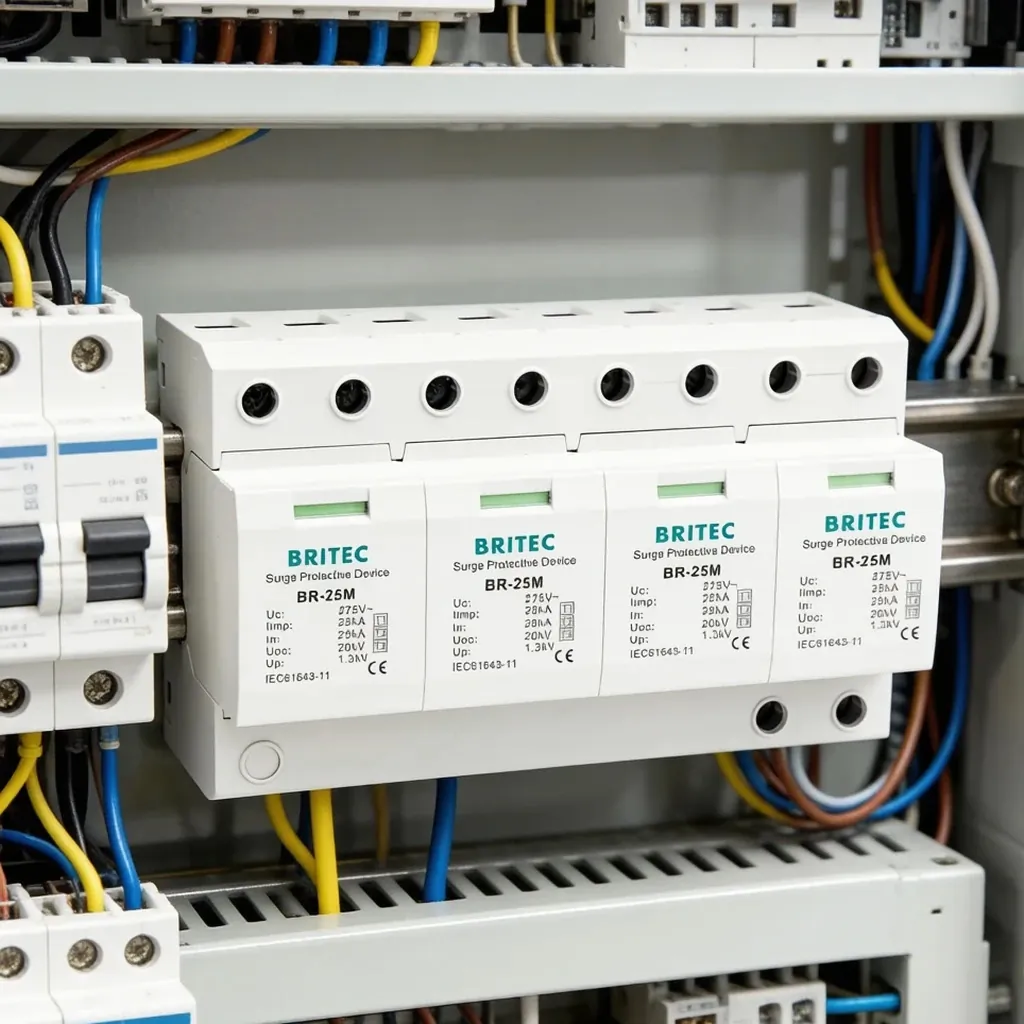
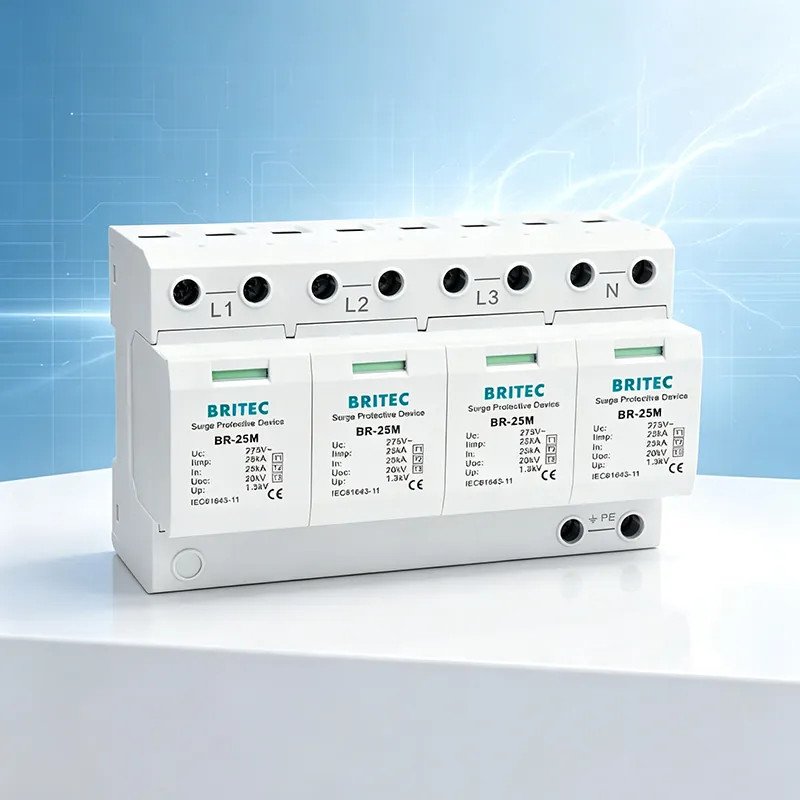
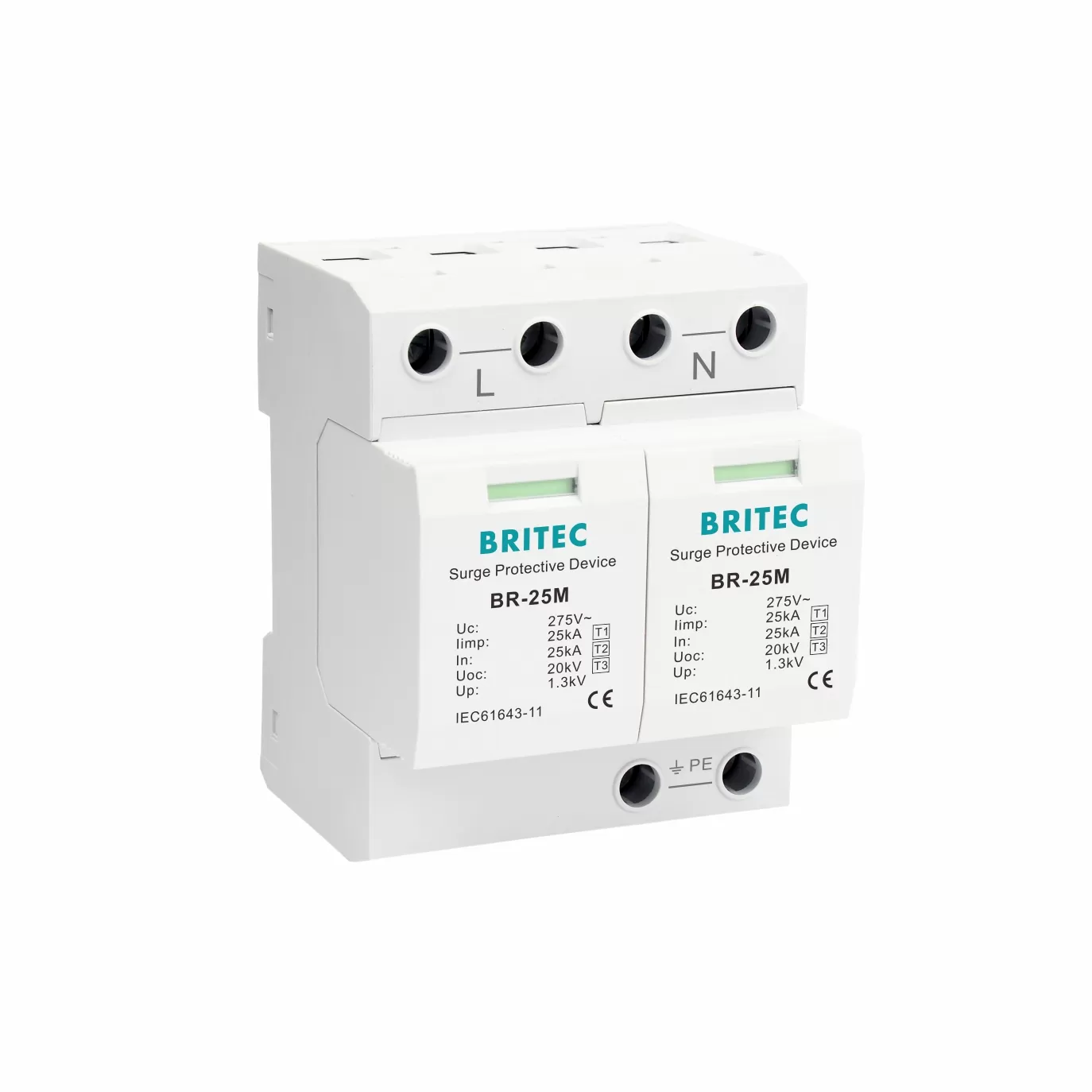
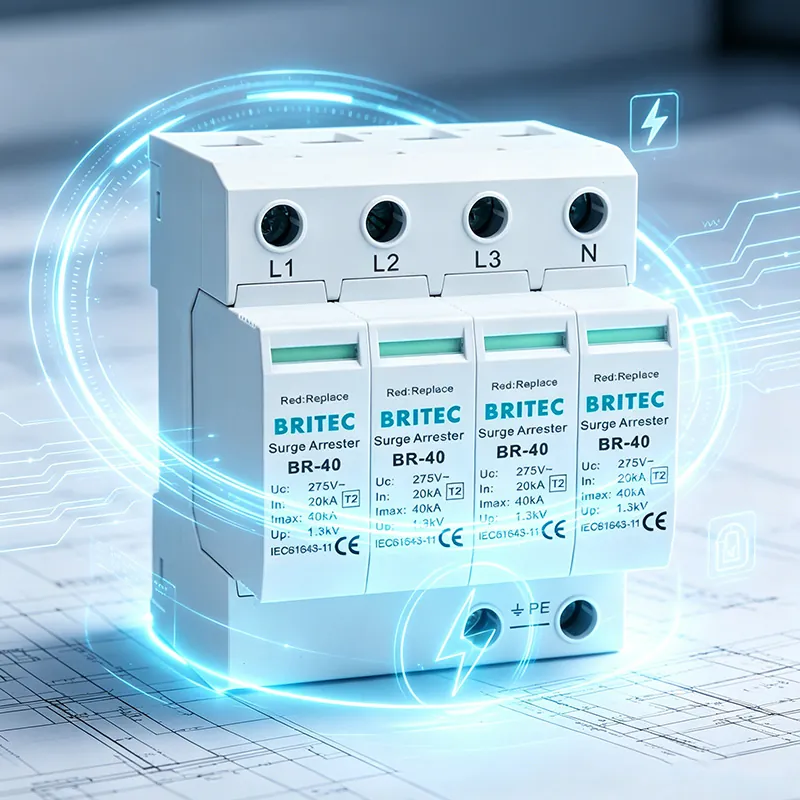
A reliable Type 2 surge protective device is an assembly of a few engineered parts, not a single component. Understanding each part explains why two SPDs with the same headline kA number can behave very differently in the field. For a wider view of where these devices sit in the network, see our guide to AC power surge protection in industrial systems.
The parts an SPD designer must specify:
● Metal oxide varistor (MOV) — the active element that clamps voltage and diverts surge current to earth.
● Thermal disconnector — a temperature-activated link that isolates a degraded MOV before it can ignite.
● Status indication and remote signal — a flag or volt-free contact that reports end-of-life to the BMS.
● Housing and DIN-rail foot — the mechanical form that sets wiring, spacing, and short-circuit rating.
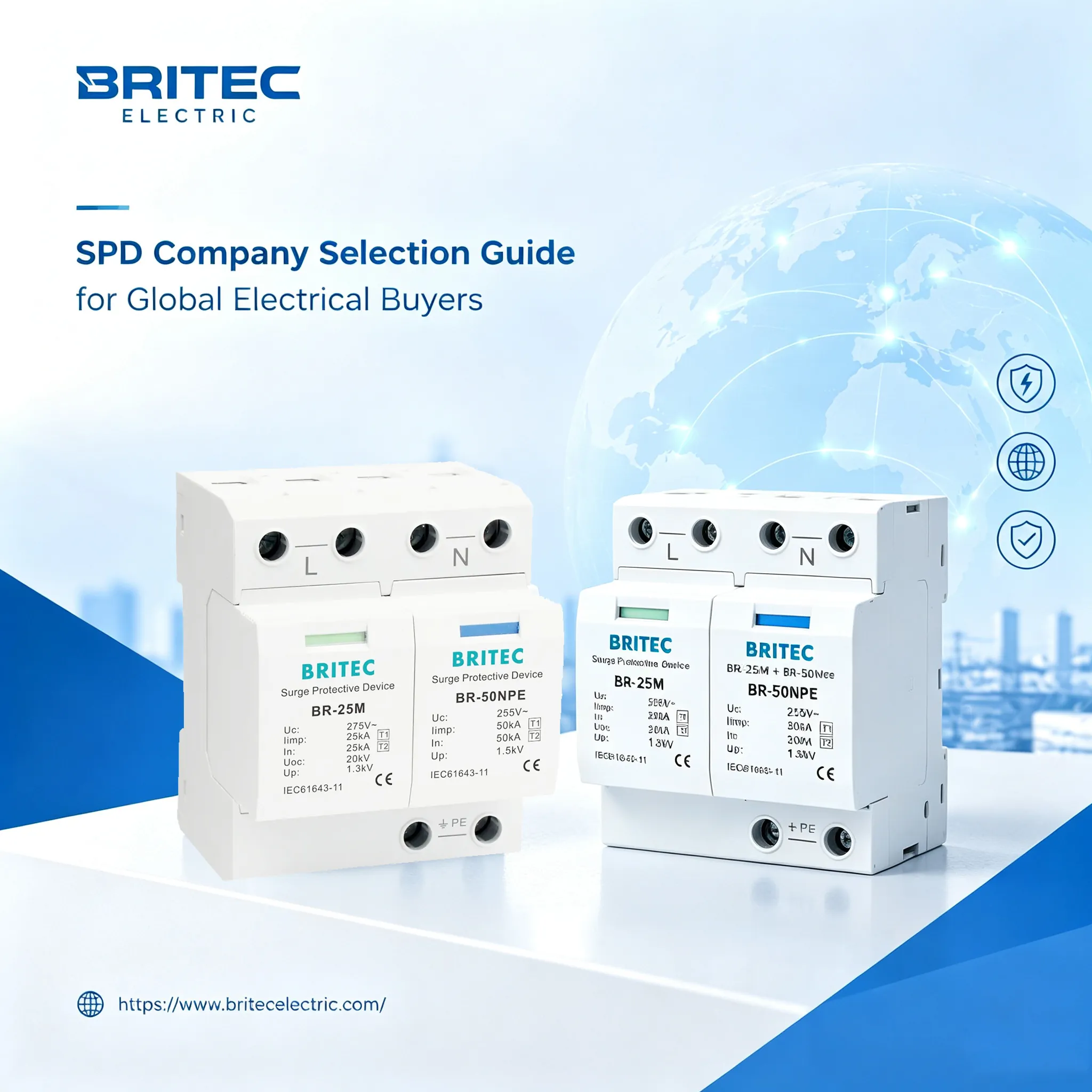
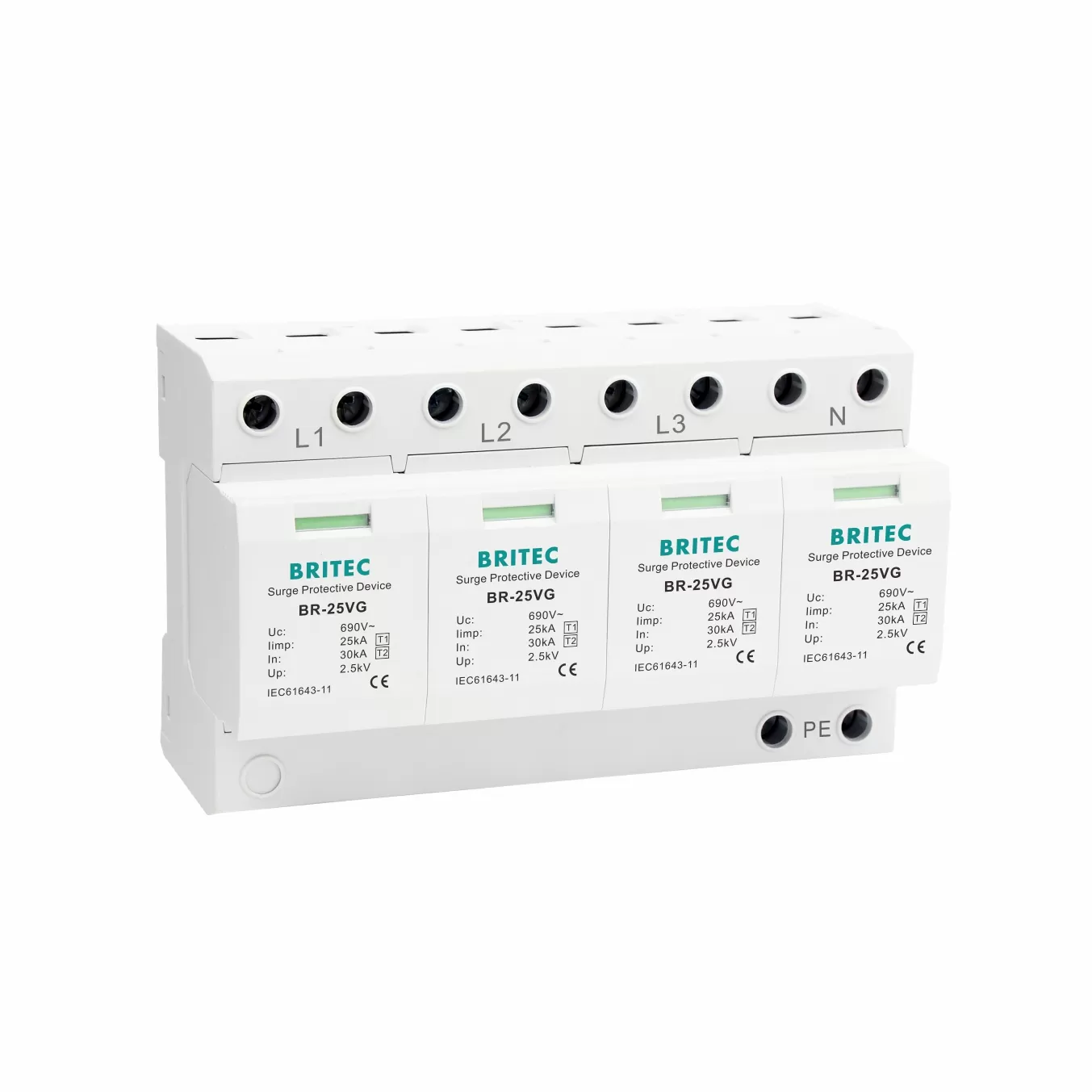
Standards turn “surge protector” from a marketing phrase into a defined product. IEC 61643-11 classifies SPDs into Type 1 (direct lightning, installed at the service entrance), Type 2 (switching and induced transients, the most common distribution-board device), and Type 3 (point-of-use, fine protection). UL 1449 is the North American equivalent that adds a strict SCCR (short-circuit current rating) rule. For deeper design detail on the service-entrance class, read our Type 1 SPD design considerations article.
The ratings a designer balances:
● Uc — maximum continuous operating voltage — must exceed the highest normal system voltage.
● Up — voltage protection level — the residual voltage the load actually sees; keep it below the load’s withstand.
● In / Imax / Iimp — nominal, maximum, and impulse discharge currents define how much a device can absorb.
● ПКАП — the fault current the housing can survive if the MOV fails short.
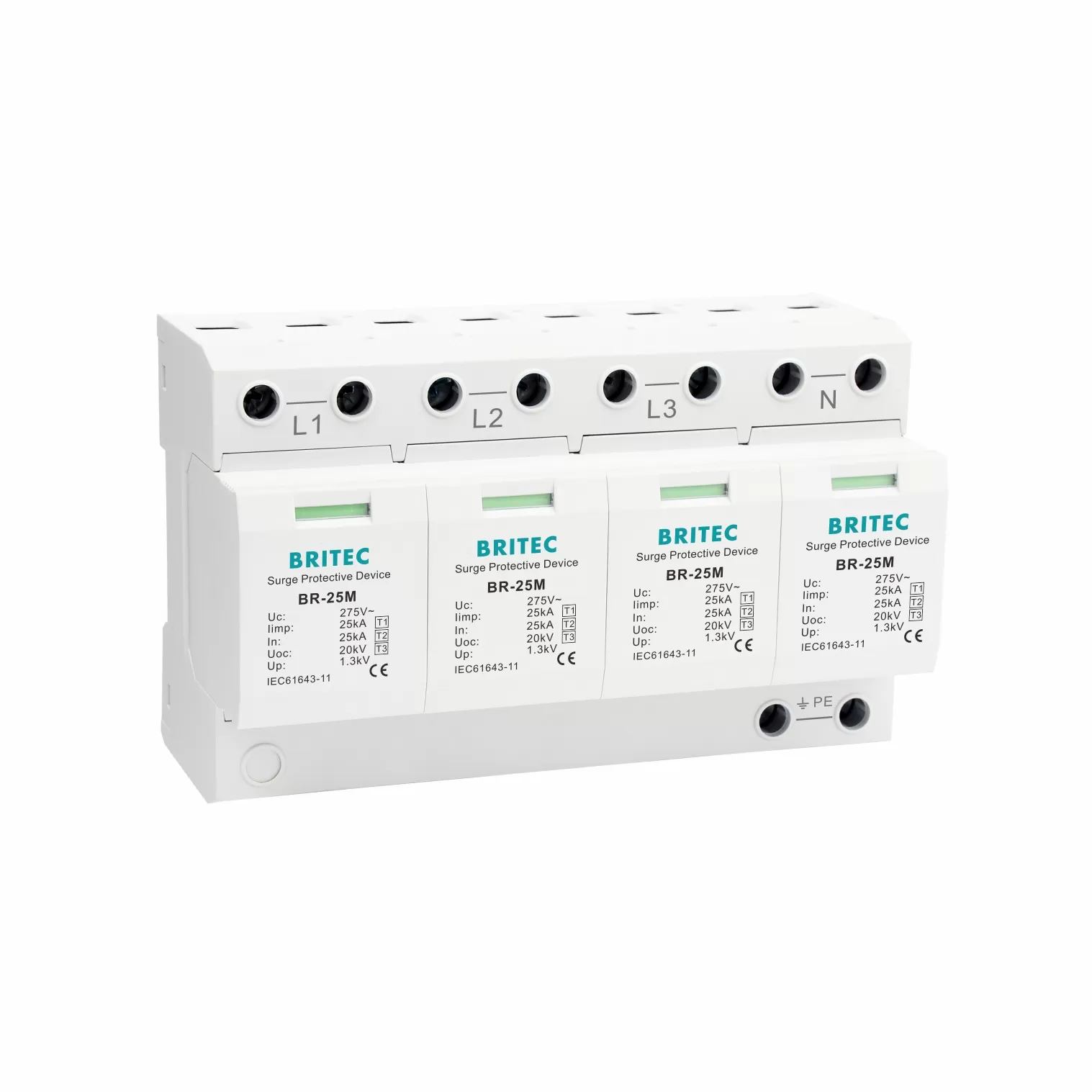
A Type 1 surge arrester is typically specified at the incoming supply where a direct strike is possible, then backed by Type 2 devices deeper in the board.
|
Need A Coordinated SPD Scheme For Your Project? Britec’s engineers specify and coordinate SPDs to IEC 61643-11 and UL 1449 for EPCs, panel builders, and distributors. Send your single-line diagram and we return a protected, documented design. |
A single SPD rarely covers a whole facility. Good design cascades protection: Type 1 at the service entrance, Type 2 at distribution boards, and Type 3 at sensitive terminals. The gap between stages is bridged by the voltage drop along the wiring and, where needed, by a coordination inductor. Critically, every SPD needs a dedicated surge backup protector (SCB) upstream, so a failed MOV is cleared by a device rated for the surge current rather than by a standard miniature circuit breaker that may not withstand it.
Coordination rules the designer follows:
● Keep lead length short — every centimetre of wire adds residual voltage at the load.
● Stage the Up values — downstream SPDs must clamp lower than upstream ones.
● Pair with an SCB — the backup protector must carry the Iimp without tripping and clear a fault safely.
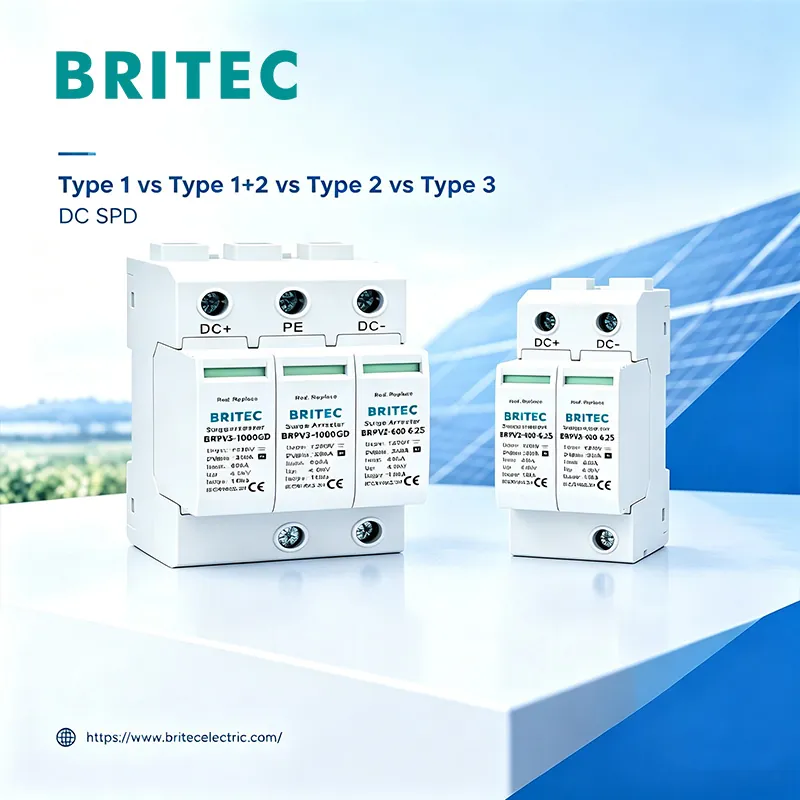
Modern systems add loads the old rulebooks did not imagine. A PV surge arrester must survive 1000 V or 1500 V DC strings and the floating voltages of ungrounded arrays. EV charging stations combine AC incoming protection with DC-side needs at the charger. Data centers layer data-line protectors on top of power SPDs so that network and signal ports are not the weak link. Each case changes Uc, Up, and the impulse current the device must absorb.
Application-specific design notes:
● Solar PV — size Ucpv above the open-circuit string voltage with margin for low temperatures.
● зарядка электромобилей — protect both the AC supply and the DC bus where the standard allows.
● Data centers — add coordinated data-line SPDs to match the power-side protection level.
A design is only as good as the evidence behind it. Type testing confirms the MOV can absorb the rated impulse, the thermal disconnector isolates a degraded element, the device survives a temporary overvoltage (TOV) without exploding, and it fails safely to a short circuit at end of life. Specifiers should ask for the test report, not just a catalogue number — our piece on how an SPD is type-tested walks through what those reports should show.
The checks that separate a documented SPD from a box of parts:
● Impulse current test — verifies In / Imax / Iimp absorption.
● TOV test — confirms survival under sustained overvoltage.
● Thermal stability and end-of-life — proves safe disconnection, not fire.
|
Specifying SPDs For A Tender Or Panel Build? Tell us your system voltage, fault level, and the loads you must protect. Britec returns a coordinated SPD schedule with IEC 61643-11 / UL 1449 ratings and certified type-test backing. |
Q1. What does “designing an SPD” actually mean for an electrical project?
It means selecting the type, ratings (Uc, Up, In, Iimp), location, and backup protection so the device clamps transients below the load’s withstand and fails safely — not just buying a unit with a high kA number.
Q2. Which standard governs SPD design — IEC 61643-11 or UL 1449?
Use IEC 61643-11 for most of the world and UL 1449 for North America. Both define Type 1/2/3 classes; UL 1449 adds a stricter short-circuit current rating (SCCR) requirement.
Q3. How do I choose between Type 1, Type 2, and Type 3 SPDs?
Type 1 goes at the service entrance where direct lightning is possible, Type 2 at distribution boards for switching transients, and Type 3 at the terminal of sensitive equipment. Most modern systems use a Type 1 + Type 2 cascade.
Q4. What is the difference between Uc, Up, In, and Imax?
Uc is the highest continuous voltage the SPD tolerates, Up is the residual clamping voltage the load sees, In is the nominal discharge current, and Imax is the maximum it can absorb on a single impulse.
Q5. Why does an SPD need a backup protector (SCB) in the design?
When an MOV ages and fails short, the SCB clears the fault with a device rated for surge current, preventing the standard breaker from welding or the panel from feeding an arc.
Q6. How do you coordinate SPDs across multiple distribution levels?
Stage them so downstream devices clamp to a lower Up than upstream ones, keep conductor lengths short, and bridge stages with a coordination inductor where the wiring drop is too large.
Q7. Can one SPD protect both AC and DC (solar PV) circuits?
No. DC arrays need a PV-rated SPD sized for the string’s open-circuit voltage (1000 V or 1500 V), while AC boards use an AC-rated device. They are separate products by design.
Q8. What makes an SPD fail prematurely, and how does design prevent it?
Undersized Uc, repeated large surges, and heat are common causes. Correct rating selection, an SCB, and a thermal disconnector that isolates a degraded MOV all extend service life.
Q9. How important is the thermal disconnector in SPD design?
It is the safety core. Without it a failing MOV can overheat and ignite; with it the device disconnects safely and signals end-of-life through the status indicator.
Q10. How do I specify an SPD for an EV charging station or data center?
Protect the AC supply at the incoming board, add DC-side protection at the charger where applicable, and layer coordinated data-line SPDs in a data center so signal ports match the power-side Up.
● What Is A Surge Protective Device? Function, Types
● SPD Surge Protective Device In Modern Electrical System Design
● SPD Type 1 Design Considerations For Electrical Engineers
● How SPD Surge Protective Devices Handle Transient Overvoltage
● AC Power Surge Protection: The Safety Gatekeeper For Industrial Systems