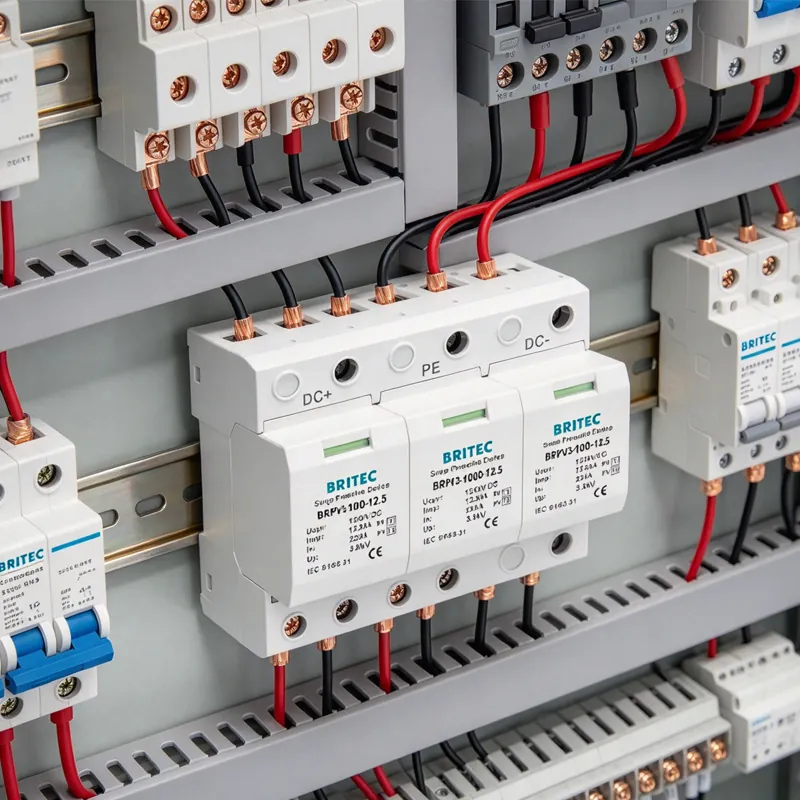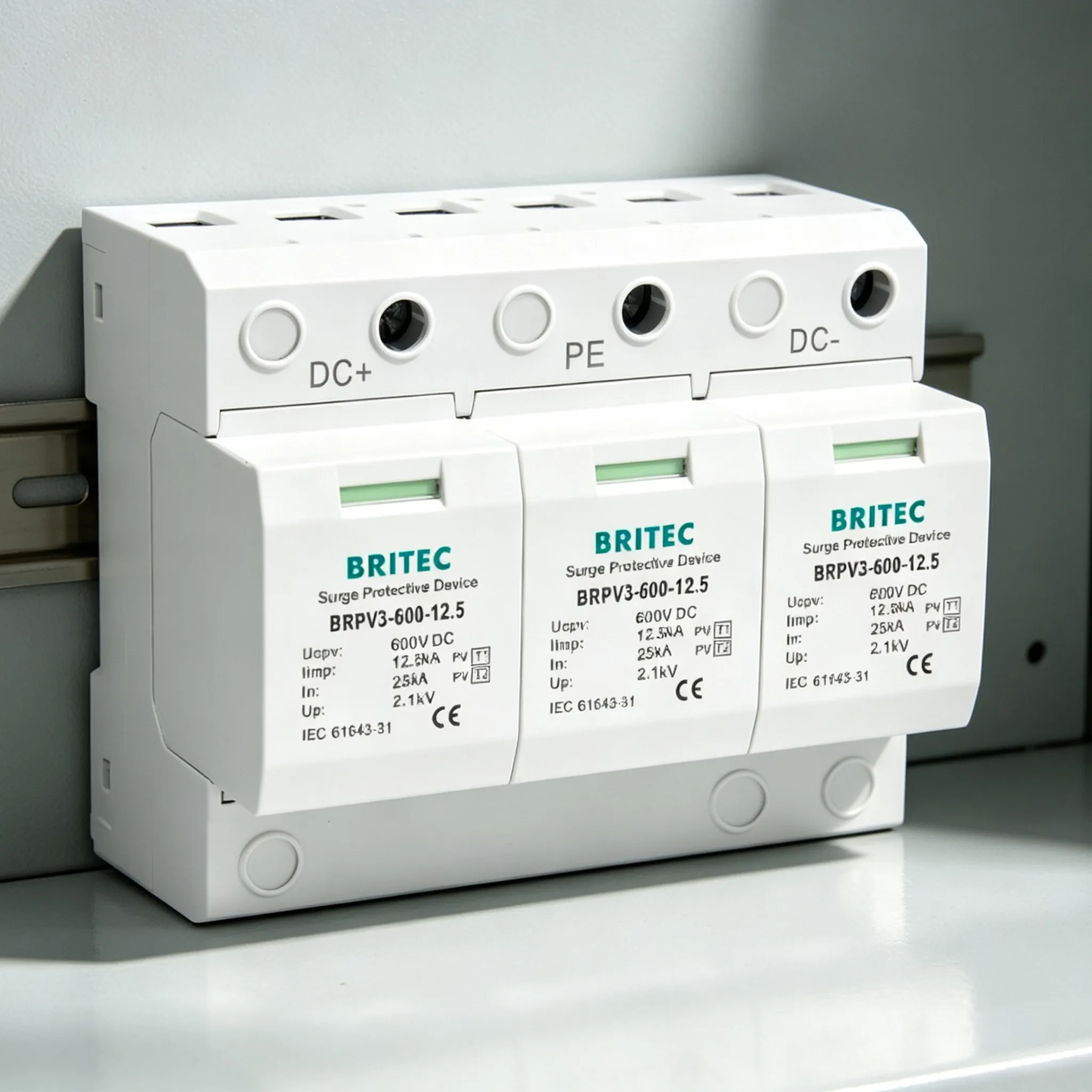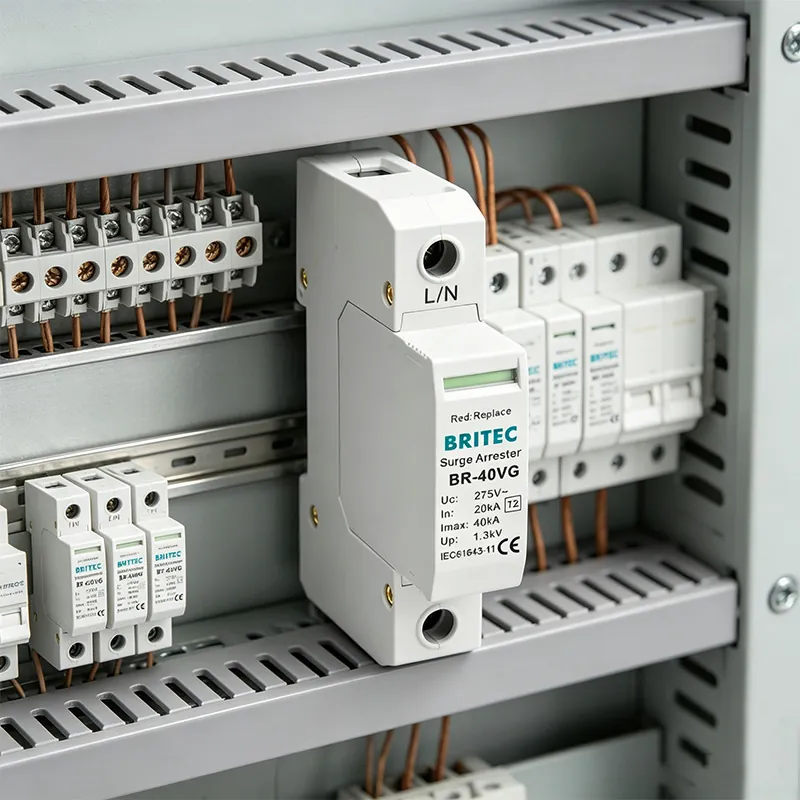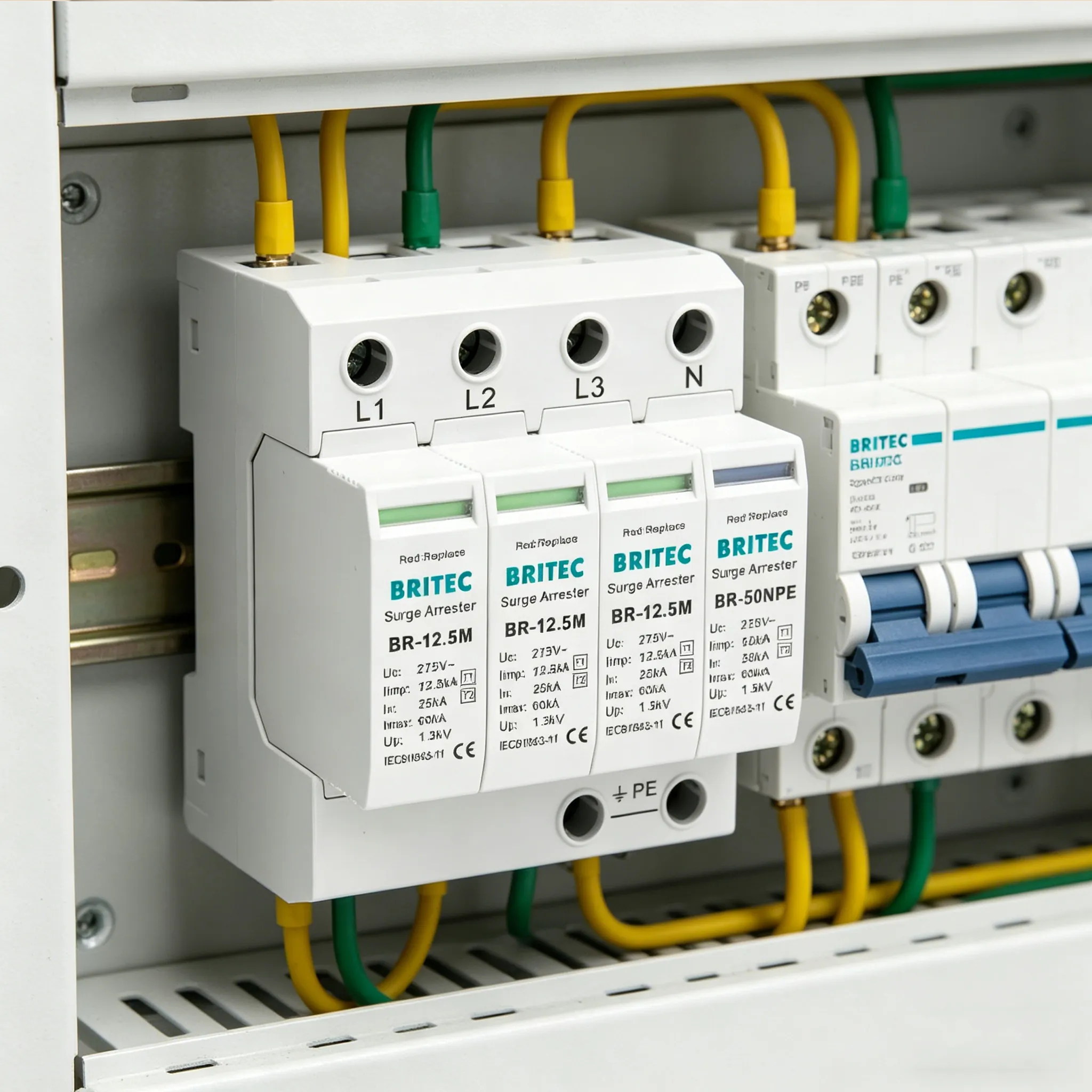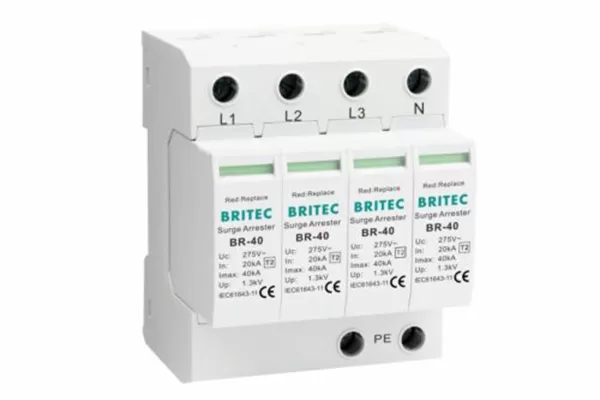

Choosing an electrical surge protector supplier is one of those decisions that looks like procurement but behaves like engineering. The surge protective device (SPD) you source will sit in distribution boards for the next ten years or more, and the supplier you select determines field failure rates, certification validity, spare-part availability, and how quickly your team can respond when a project schedule slips. This guide was written by the Britec Electric engineering and export team. We have manufactured SPDs in Wenzhou, Zhejiang, since 2003 under an ISO 9001 quality system, with TÜV, CE, and Intertek SEMKO certifications across our BR series, and we have watched hundreds of global buyers run this selection process — some brilliantly, some expensively. The seven steps below turn supplier selection from a judgement call into a repeatable procedure you can defend in any audit.

Britec Electric SPD factory in Wenzhou, Zhejiang — on-site visits and live video audits are welcome.
Before comparing companies, be clear about who you are talking to. There are four commercial roles in this industry: a direct manufacturer with its own assembly and test lines; an OEM factory that produces for other brands; a trading company that resells; and a stocking distributor. Each has a legitimate place, but confusing them is the most expensive early mistake. A trading company can be a convenient single contact, yet it cannot answer questions about MOV wafer sourcing, thermal-disconnect design, or end-of-line test data — and when a field failure needs root-cause analysis, distance to the factory decides how fast you get answers.
Whatever the role, the burden of proof is the same. A credible supplier demonstrates, with documents, that its devices comply with IEC 61643-11 or EN 61643-11 for most export markets and UL 1449 for North America, that type-test reports match the exact model numbers quoted, and that production is backed by an in-house impulse laboratory and 100% end-of-line testing. Claims on a website are not evidence; certificate numbers that resolve in a TÜV or Intertek database are.
The most common failure in SPD sourcing starts before the first email: buyers request quotes without a technical specification, then receive three offers for three different products and compare prices on things that cannot be compared. Write the specification first, and every later conversation becomes faster and cheaper.
● Electrical system — voltage and frequency (for example 230/400 V, 50/60 Hz) and the grounding arrangement (TN-S, TN-C, TT, or IT).
● Protection class and ratings — Type 1 (Iimp in kA, 10/350 µs), Type 2 (In/Яmax in kA, 8/20 µs), or Type 3 point-of-use, plus maximum continuous operating voltage Uc and voltage protection level Up.
● Pole count and form factor — 1P, 2P, 3P, 4P, or 1+1 / 3+1 spark-gap arrangements, and the DIN-rail modules per device.
● Coordination requirements — backup breaker sizing and cascade coordination between protection stages.
● Signalling and environment — status window and remote-signal contact, operating temperature range (typically −40 °C to +80 °C), and enclosure protection.
● Target market and certificates — IEC/EN 61643-11 reports for Europe and most export regions, UL 1449 for North America, plus CE and TÜV marks.
● Commercial frame — estimated annual quantity, packaging and labelling language, and preferred Incoterms.
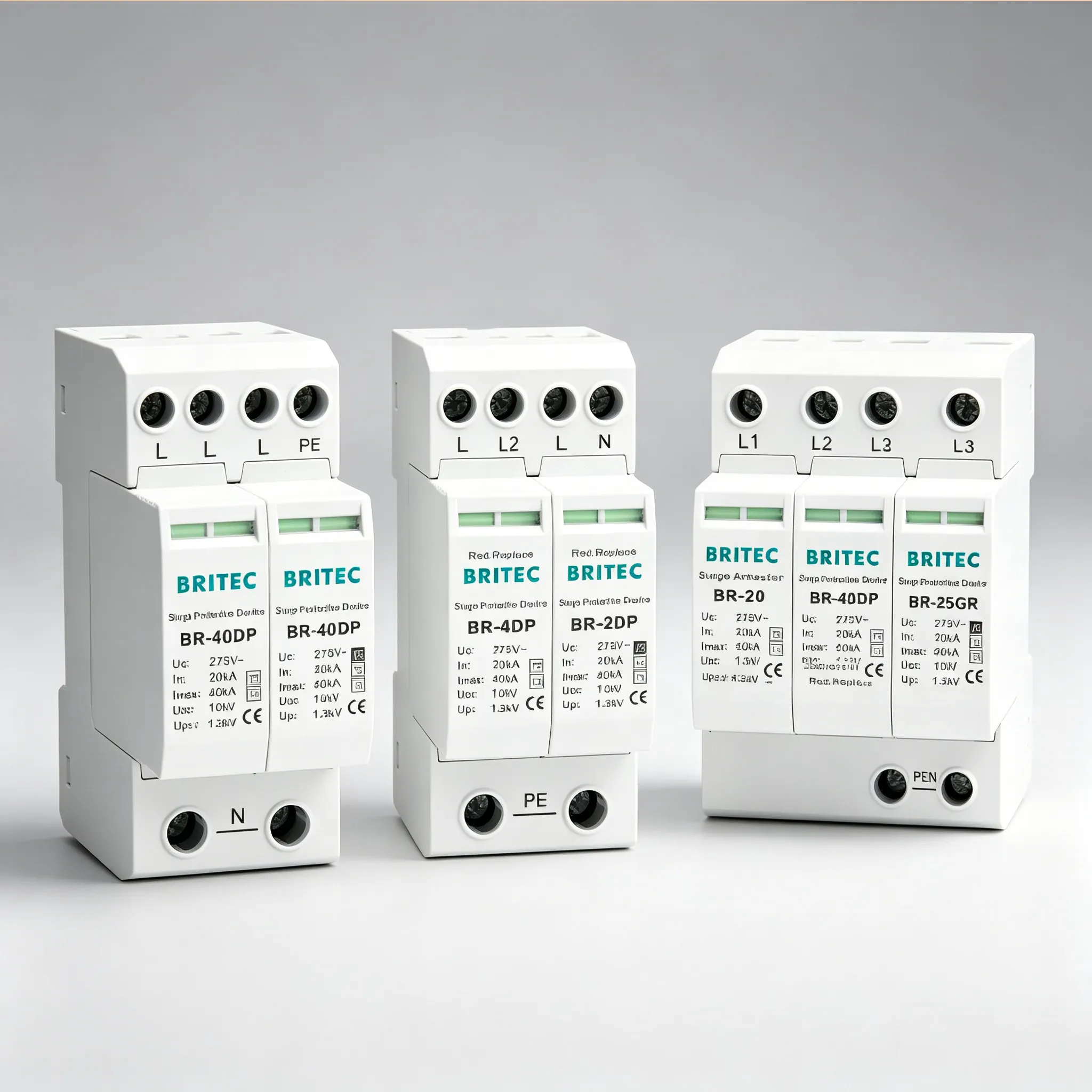
A concrete example keeps this real: for a 230/400 V TN-S service entrance in a high-lightning region, a common coordination is a BR-40 4P Type 2 40 kA surge protective device at the sub-distribution board, a Type 1 device at the origin where direct lightning current must be handled, and point-of-use protection near sensitive loads — the Type 3 surge protector category on our site shows what that final stage looks like in production. Suppliers who respond to a specification like this with model-specific datasheets deserve to be on your list; those who reply with a generic price sheet do not.
Global buyers usually assemble their first long list from four channels, and the quality of the list depends on how deliberately each is used:
● Trade fairs — the Canton Fair in Guangzhou and Hannover Messe in Germany let you meet factory staff face to face and see real products, not rendered images.
● Referrals — panel builders, EPC contractors, and other importers in your market already know which suppliers ship on time and which go quiet after the deposit.
● B2B platforms — usable for discovery, but filter hard for factory-verified badges and treat super-low prices as a question, not an answer.
● Targeted search — search for product terms rather than generic keywords, then check whether the website publishes downloadable datasheets with complete test parameters and traceable certificate numbers.
Apply a ten-minute screening filter to every candidate: does the site show model-level datasheets; do certificate numbers resolve in the issuing body’s database; is there a verifiable factory address with production photos; is the range deep across Type 1, Type 2, Type 3, DC, and signal protection; how long has the company exported; and does the engineering communication read like an engineer wrote it? Any supplier that fails two of these checks can be removed before you spend an hour on them.
Memory is a poor evaluation tool once five or more suppliers are in play. Score each candidate on a weighted matrix so the comparison is visible, debatable, and repeatable across buyers in your organisation:
| Criterion | Weight | What “good” looks like |
|---|---|---|
| Certifications and standards compliance | 20% | Verifiable IEC/EN 61643-11 or UL 1449 reports matching the exact model numbers quoted |
| Manufacturing and quality system | 20% | ISO 9001, in-house impulse lab, 100% end-of-line testing, MOV incoming inspection |
| Engineering and after-sales support | 15% | Selection support, fast datasheet turnaround, spare modules, answers within 24 hours |
| Lead time, MOQ, and flexibility | 15% | Realistic lead times backed by delivery history, pilot orders welcomed |
| Price and total cost of ownership | 10% | Competitive landed cost including freight, expected failure rate, and spares |
| Export experience and documentation | 10% | Complete documentation pack and references in your market or region |
| Communication | 10% | Named engineering contact, clear English, proactive schedule updates |
Score each criterion from 1 to 5, multiply by the weight, and keep the top three for sample testing. The weights above suit most panel builders and distributors; shift them if your context demands it — an EPC working to a fixed completion date may raise the lead-time weight, while a distributor building its own brand may raise engineering support.
Send the specification from Step 1 to Britec Electric and our engineers will return model-specific datasheets, certification copies, and pricing — not a generic price list. Every inquiry is answered within 24 hours.
Samples decide more deals than brochures, yet most sample evaluations stop at appearance. A proper sample protocol takes one to two weeks and removes most of the risk before any purchase order:
● Insist on production units — ask for samples pulled from standard production with normal lead time, not “golden samples” prepared for visitors.
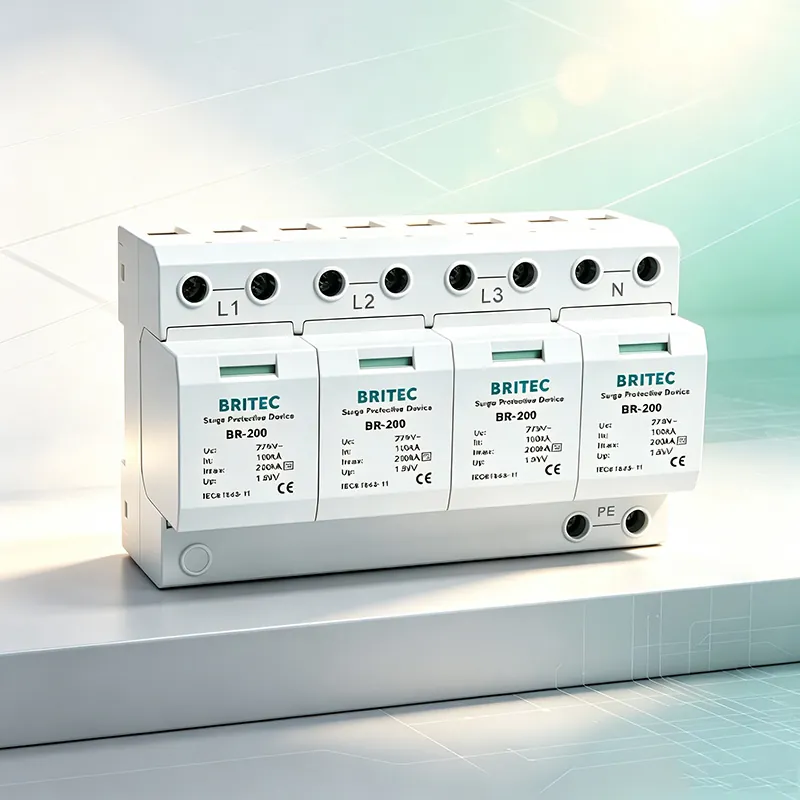
● Read the nameplate — Uc, In, Imax, Iimp, Up, waveform class, standard reference, and certification marks must match the datasheet and your specification exactly.
● Trace the certificate — check the certificate number against the issuing body’s online database and confirm it names the same model and rating you are buying.
● Check the mechanics — DIN-rail fit, terminal screw torque range, acceptable wire cross-sections, status-window action, and remote-signal contact operation.
● Retest independently — for volume projects, send samples to an SGS, TÜV, or Intertek laboratory for an 8/20 µs impulse at rated In (or 10/350 µs for Type 1) and compare the measured Up against the declared value.
● Open or weigh — compare internal MOV size and unit weight between finalists; significant differences usually mean different surge capability than the catalogue claims.
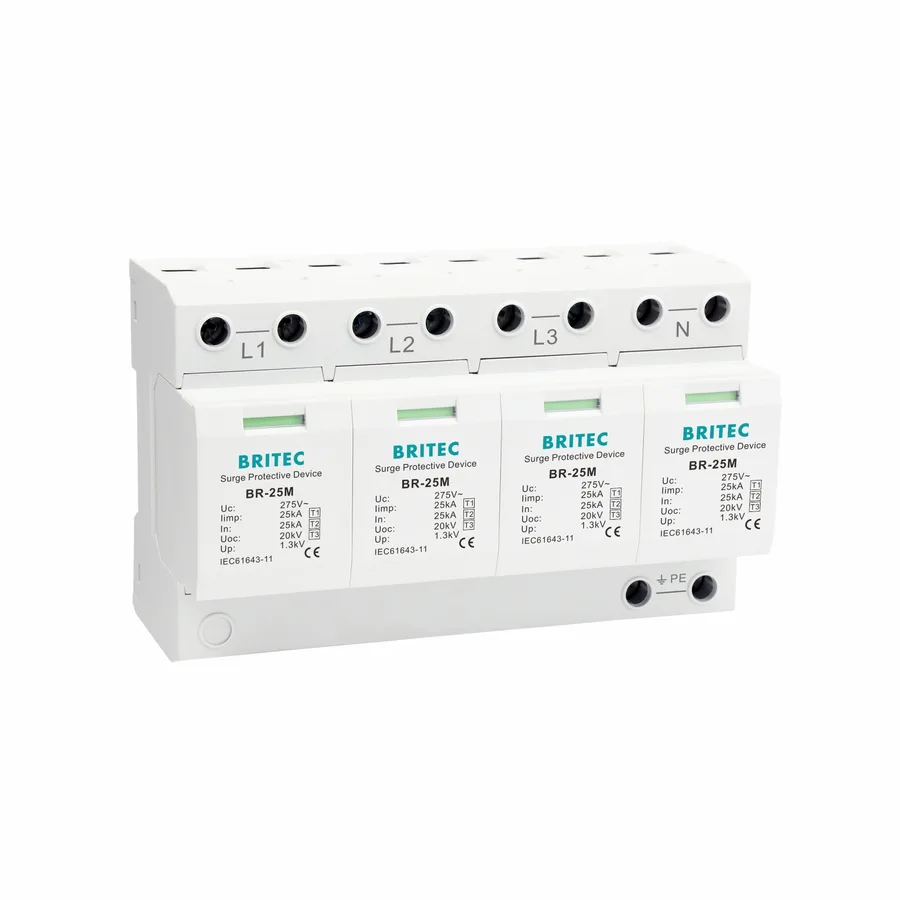
The Britec BR-25M 4P Type 1 25kA surge arrester — nameplate details like these are exactly what to verify during sample evaluation.
Sample testing also reveals how a supplier behaves under technical pressure. The dependable ones explain their design choices — varistor selection, disconnector construction, thermal behaviour after impulse — and this is exactly the subject covered in our article on how SPD suppliers ensure product reliability for electrical projects.
An audit is where a manufacturer and a middleman become visibly different. Travel is not always practical, but a scheduled live video walkthrough of the workshop answers most questions if you know what to look for:
● Assembly capacity — real production lines with work in progress, not an empty line switched on for the camera.
● End-of-line testing — an impulse generator on the line and a documented 100% test routine before packing.
● MOV incoming inspection — how varistor wafers are received, sampled, and stored before assembly.
● Quality records — ISO 9001 procedures, batch traceability, and non-conformance handling you can see on paper.
● Export readiness — finished-goods stock, warehouse organisation, and export packing that survives sea freight.
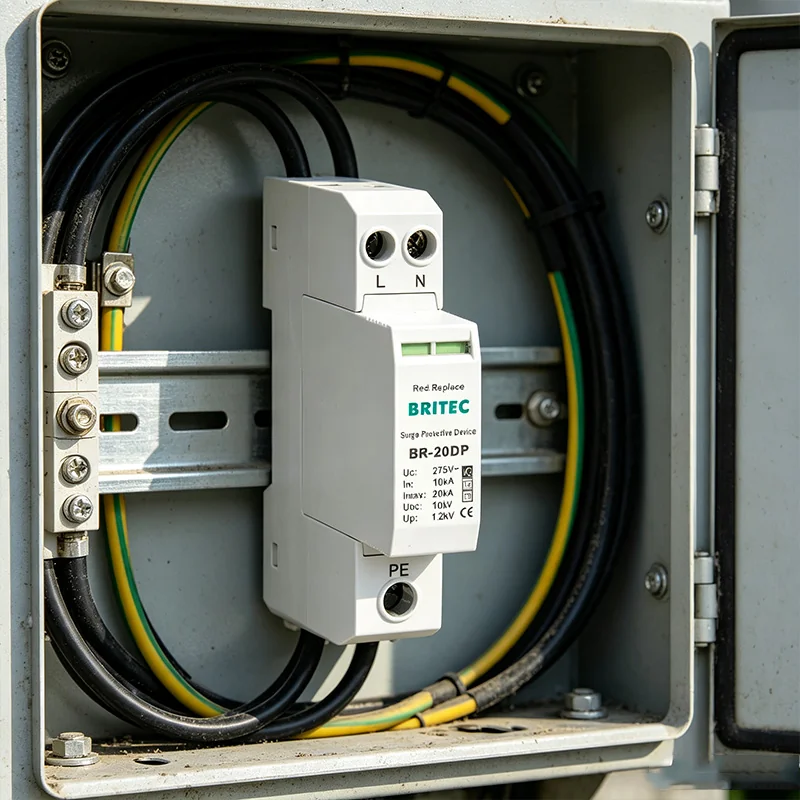
A Britec BR-20DP 2P 20kA Type 3 surge protector wired in an enclosure — audit points like wiring quality and labelling start on the supplier’s own assembly bench.
Prepare for the audit with a written checklist so the visit produces comparable notes rather than impressions. We publish the exact one our engineers recommend in the SPD factory audit checklist covering the nine checks to complete before you buy.
See the lines before you commit. Britec Electric welcomes on-site visits in Wenzhou and scheduled live video audits of our assembly, testing, and packing operations — bring your checklist or ask us for ours.
Once the technical winner is clear, convert it into a contract. The commercial terms below are normal for SPD imports and worth agreeing explicitly rather than discovering later:
● Incoterms — FOB Ningbo is the common baseline from Zhejiang factories; CIF or DAP for buyers who prefer landed-cost clarity.
● Payment — 30% deposit with 70% before shipment is typical; letters of credit for larger contract volumes.
● MOQ and pilot batch — a small pilot order lets you verify packing, labelling, and field performance before the main volume.
● OEM arrangements — own-brand labelling, colours, and packaging are standard for most manufacturers; confirm tooling lead time and minimum branding quantities in writing.
● Warranty and spares — warranty duration, replacement-module policy, and how quickly replacements ship.
● Change notification — a clause requiring written notice before any change to materials, internals, or test routine.
Require a complete documentation pack with the first shipment: type-test reports, CE, TÜV, or CB certificates for the exact models, RoHS and REACH declarations, datasheets in your language, installation manuals, and the customs paperwork your broker needs. A supplier who resists putting these in the contract is telling you something about the next ten years of the relationship.
Selection does not end at the first container. Treat the first year as a probation window: run a periodic batch retest on units from normal shipments, keep a second qualified source for project-critical ratings, hold a reorder buffer ahead of your peak season, and feed every field failure back with batch numbers so root cause can be traced. Review the scorecard annually and re-audit whenever volumes grow significantly or a change notification arrives. Buyers who do this convert a one-off purchase into a supply partnership that gets cheaper and safer every year — and suppliers reward them with better lead times and priority in tight component markets.
Some signals cost you nothing to observe and everything to ignore:
● Certificate numbers that do not resolve in the issuing body’s database, or certificates naming different models than quoted.
● Refusal of a video audit or a factory address that cannot be verified.
● “Any rating is available” offered without model-specific datasheets or test reports.
● Prices far below the market with identical claimed specifications — the difference always comes from somewhere.
● No impulse testing equipment, no change-notification clause, no named engineer — only a sales inbox.
Q: How do I verify that an electrical surge protector supplier is a real manufacturer?
A: Combine three checks: a verifiable factory address and business licence, live video or on-site evidence of assembly and impulse-testing lines, and certificate numbers that resolve in the issuing body’s database. A genuine manufacturer answers technical questions about MOV sourcing and end-of-line testing without hesitation; a reseller redirects you to “the factory”.
Q: What certifications should I require before placing an order?
A: For most markets, IEC or EN 61643-11 type-test reports, CE marking, and ISO 9001 for the quality system; TÜV or Intertek SEMKO certification adds independent weight. For North American projects, require UL 1449. Always confirm that each certificate names the exact model and rating you are purchasing.
Q: What MOQ and lead time are normal when sourcing surge protectors from China?
A: Standard catalogue models typically start from a few hundred pieces, while pilot batches can be smaller; customised or own-brand versions carry higher minimums plus tooling time. Lead times of two to five weeks are common depending on stock and season — judge the supplier by documented on-time delivery history, not the best-case figure in a quote.
Q: Can I buy surge protectors with my own brand (OEM/ODM)?
A: Yes — most established manufacturers offer own-brand labelling, colours, packaging, and in some cases modified electrical configurations. Confirm who owns the tooling, what the branding minimums are, and that certificates still apply to the modified product before signing. Britec Electric provides OEM and ODM services for distributors and panel builders worldwide.
Q: Should I have samples tested in an independent laboratory?
A: For pilot and volume orders, yes. An SGS, TÜV, or Intertek impulse test at rated current, comparing measured voltage protection level against the declared Up, is inexpensive insurance relative to the cost of field failures. For small orders, nameplate checks, certificate tracing, and mechanical inspection already eliminate most risk.
Q: Which Incoterms and payment terms are standard for SPD imports?
A: FOB (commonly FOB Ningbo from Zhejiang) is the default baseline; CIF or DAP suits buyers who prefer landed-cost certainty. Payment by 30% deposit and 70% before shipment is typical for first orders, with letters of credit common for large contract volumes. Whatever you choose, align the Incoterm with your customs broker before signing.
Q: How many suppliers should I keep on my shortlist?
A: Take three finalists into sample testing and qualify a second source for your critical ratings. One primary supplier keeps quality and communication consistent; one qualified backup protects your projects against capacity, logistics, and regional disruption risks.
Continue your supplier research with these guides from Britec Electric:
● How to Choose a Surge Protector Supplier: 10 Criteria for B2B Buyers
● SPD Company Selection Guide for Global Electrical Buyers
● Types of Surge Protection Devices: Complete Buyer’s Guide
● Global Surge Protection Devices Market Share & Market Size Analysis
● Топ-10 производителей СПД в 2025 году
Shortlist Britec Electric as your surge protector supplier. Since 2003 we have delivered certified Type 1, Type 2, Type 3, DC, and signal SPDs to buyers across Europe, South America, the Middle East, and Asia — with datasheets, certificates, and answers within 24 hours.