
Electrical professionals, facility managers, and OEM buyers often face a critical decision when specifying surge protection: should they use an SPD Type 3 or a surge protection power strip? While both appear in the Type 3 category of surge protective devices, they serve fundamentally different purposes, comply with different standards, and are built for entirely different environments. Understanding the differences between an SPD Type 3 and a surge protection power strip is essential for ensuring equipment safety, regulatory compliance, and long-term cost efficiency.
Na Britec Electric, we have manufactured certified surge protective devices to IEC 61643-11 standards since 2003. In this guide, we break down the key differences between SPD Type 3 devices and surge protection power strips, covering installation, protection scope, technical specifications, compliance standards, and real-world application scenarios.
Our engineering team helps B2B clients select, configure, and deploy IEC 61643-11 certified surge protection for industrial, commercial, and infrastructure projects. Tell us your application and we will recommend the optimal SPD specification.
Jakiś SPD Type 3 (also classified as Klasa III under IEC 61643-11) is an industrial-grade surge protective device designed for installation near sensitive terminal equipment within electrical distribution systems. According to the surge protection device overview, Type 3 SPDs have a low discharge capacity and must be installed as a supplement to Type 2 SPDs in the vicinity of sensitive loads. They are characterized by a combination of voltage waves (1.2/50µs) and current waves (8/20µs).
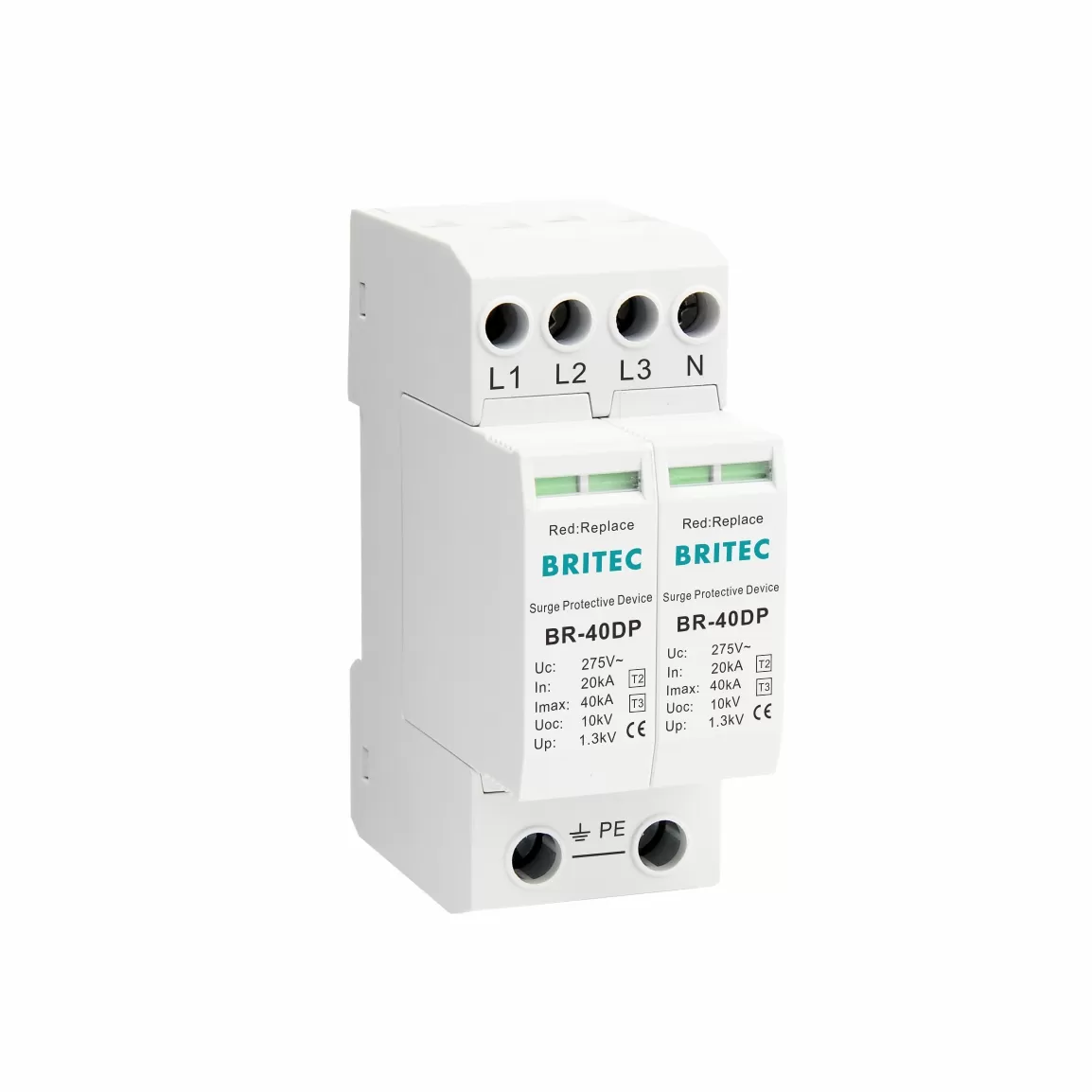
Key characteristics of SPD Type 3 devices include:
For example, the BR-20DP 2P 20kA Ochronnik przeciwprzepięciowy typu 3 from Britec offers an Imax of 20kA, Up of ≤1200V, and a combined impulse Uoc of 10kV. The BR-T3 Type 3 Surge Protector series supports voltages from 24V to 275V AC with nominal load current up to 25A, making it suitable for protecting electrical networks, installations, and electronic equipment in LPZ2 to LPZ3 zones.
A surge protection power strip is a consumer-grade plug-in device that connects to a standard wall outlet and provides surge protection for devices plugged into its receptacles. While some surge protection power strips are technically classified as Type 3 SPDs under UL 1449, they differ significantly from industrial SPD Type 3 devices in design, capability, and application.
Key characteristics of surge protection power strips include:
Surge protection power strips are widely used in office, home, and light commercial environments to protect computers, monitors, routers, and entertainment equipment from residual voltage transients. They are the last line of defense at the point of consumption.
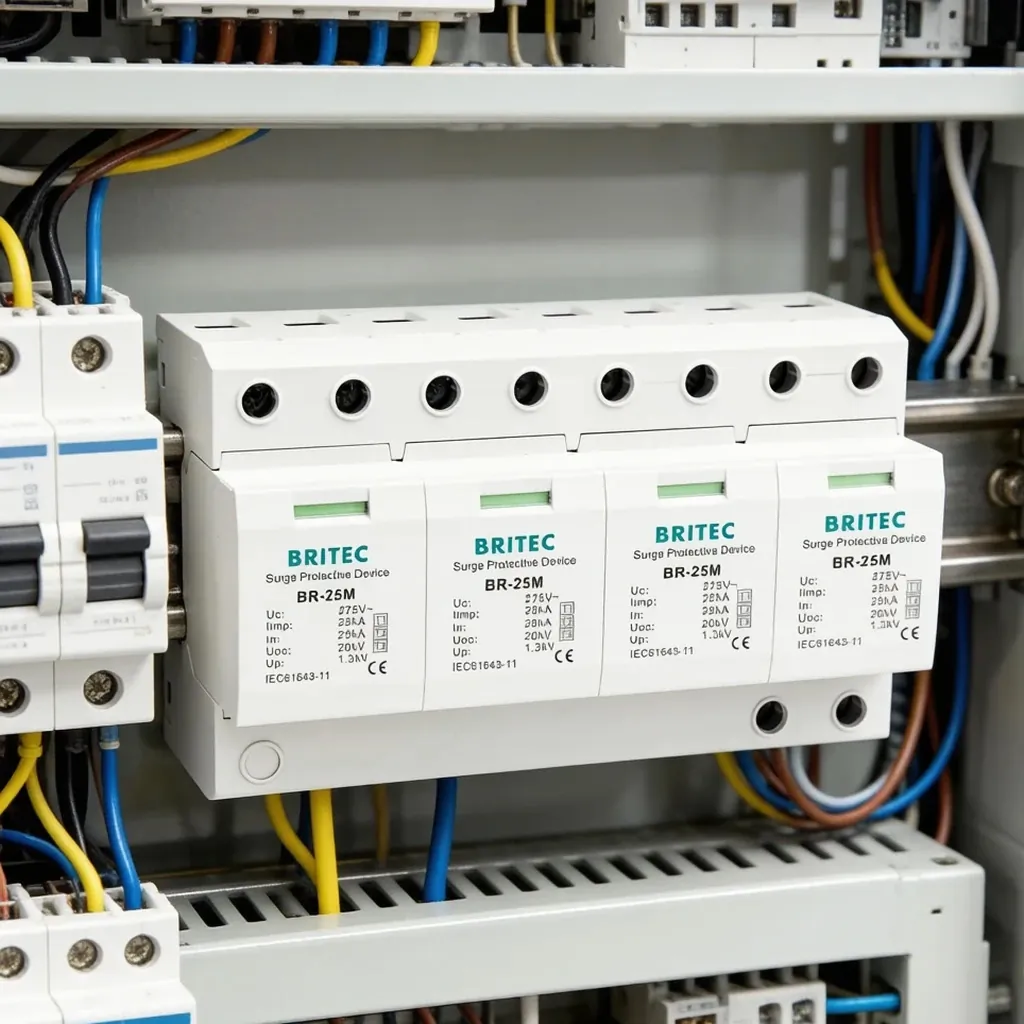
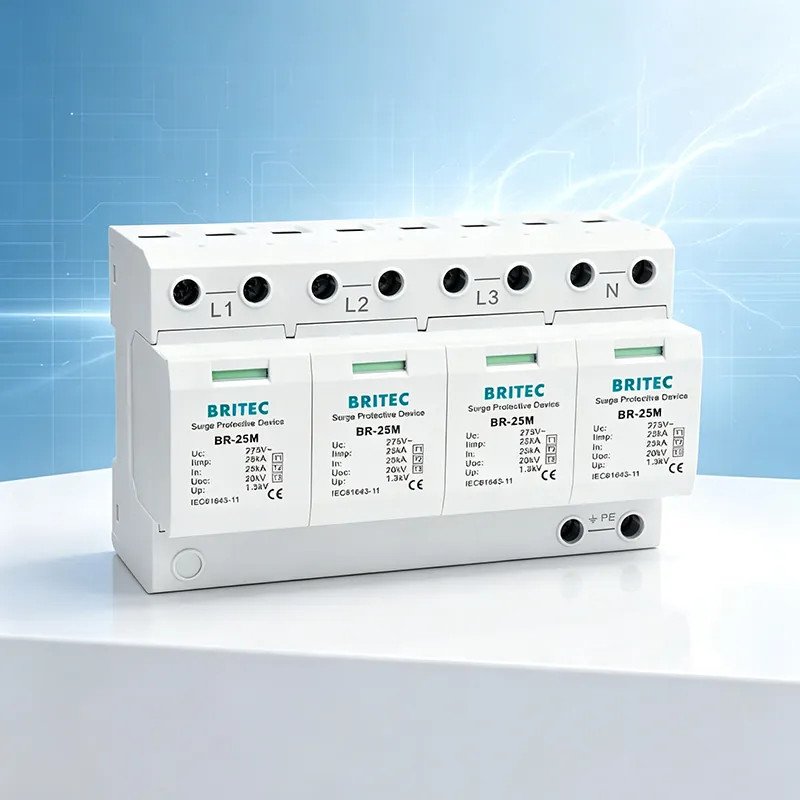
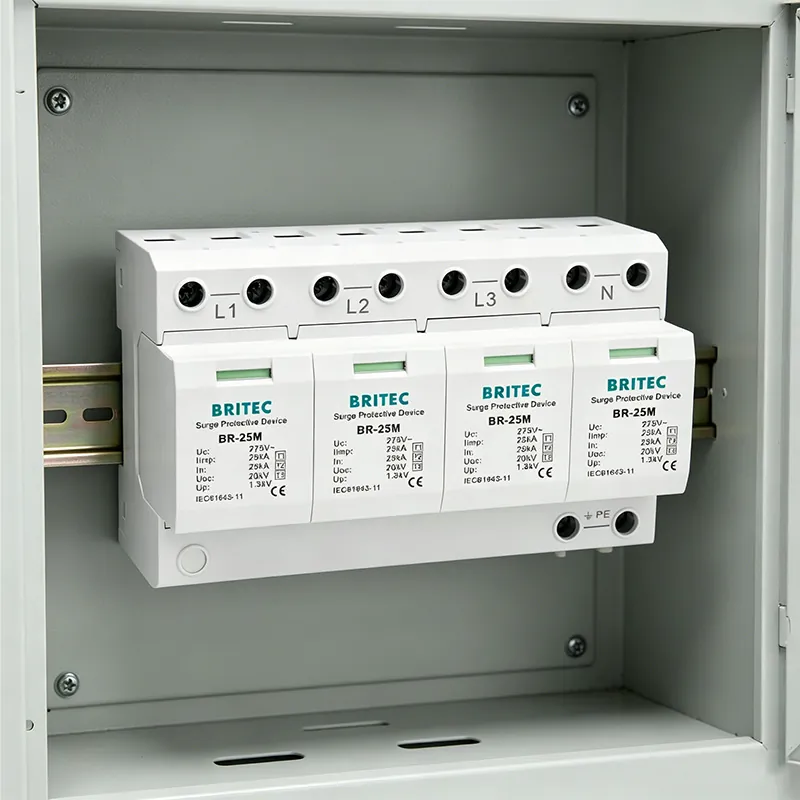
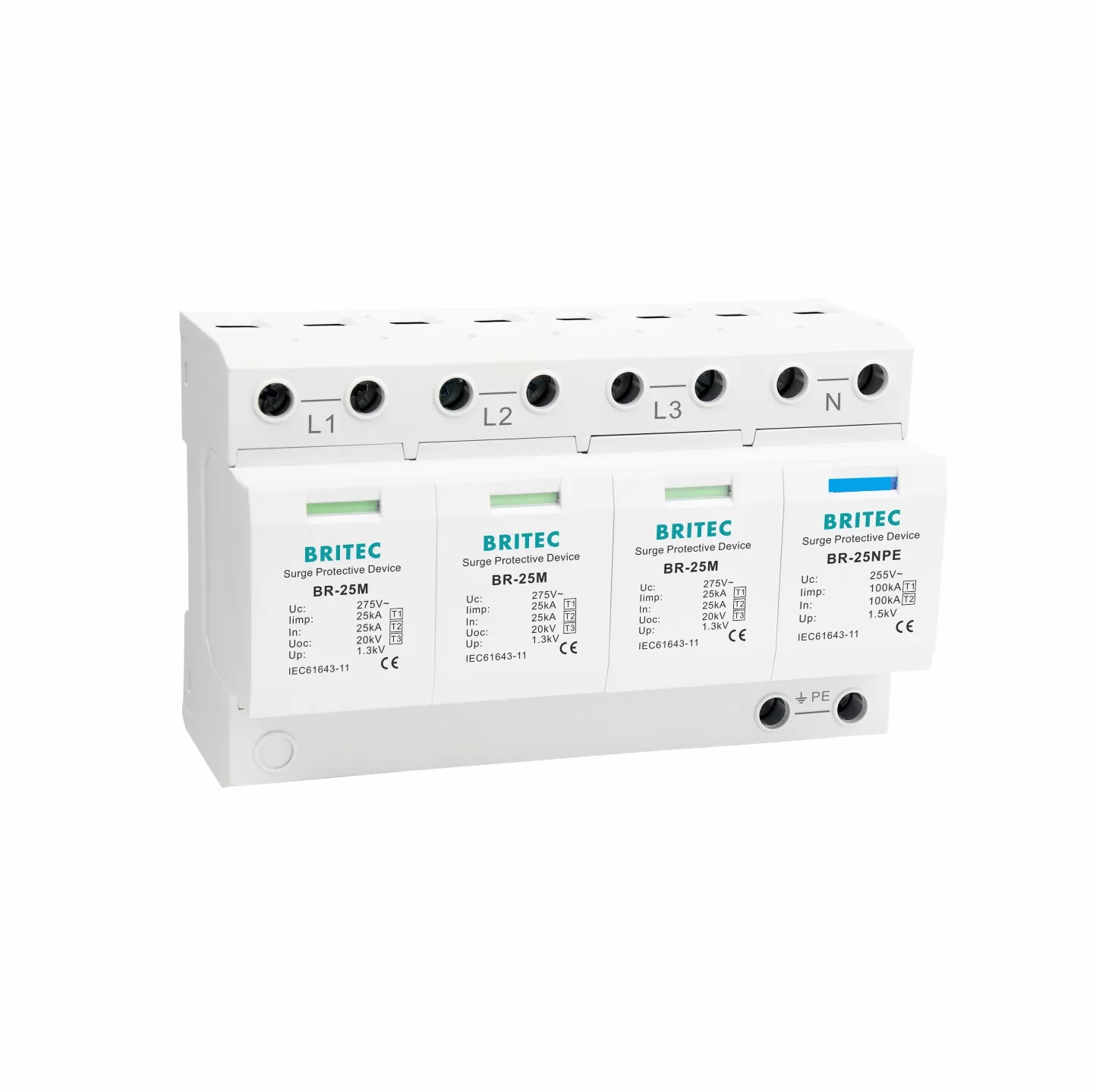
The most visible difference is the physical form. SPD Type 3 devices are modular units designed for 35mm DIN-rail mounting inside electrical panels, distribution boards, or equipment enclosures. This form factor allows professional electricians to integrate surge protection directly into the electrical infrastructure. Surge protection power strips, by contrast, are plug-in devices with a cord and multiple receptacles, designed for consumer convenience at wall outlets. No electrician or panel work is needed.
According to IEC 61643-11, SPD Type 3 devices are installed in the LPZ2 to LPZ3 boundary zone, typically at sub-distribution boards or within equipment panels near sensitive loads. They form part of a coordinated protection cascade alongside Type 1 and Type 2 SPDs. Surge protection power strips are installed at the point of use (wall outlet), with no connection to the building’s electrical distribution system. They operate independently, outside any coordinated protection strategy.
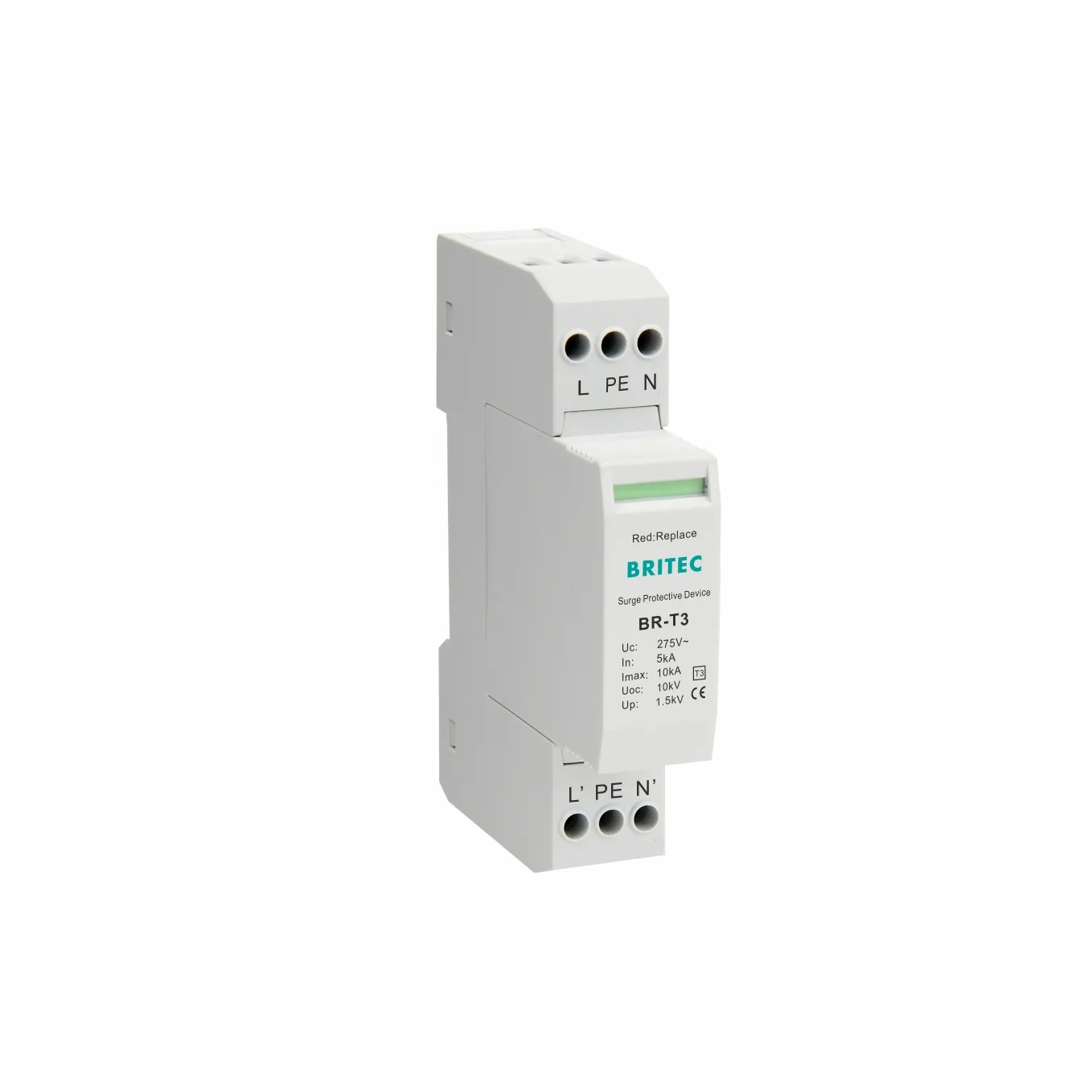
SPD Type 3 devices protect entire circuits and equipment groups downstream from the distribution point. When installed in a sub-panel, every circuit connected to that panel receives surge protection, including hardwired equipment such as PLCs, motor controllers, and industrial electronics. Surge protection power strips protect only the devices plugged directly into the strip. They cannot protect hardwired equipment, other outlets, or other circuits. This makes power strips unsuitable for protecting critical infrastructure where multiple devices on the same circuit need coordinated protection.
The technical performance gap between SPD Type 3 and surge protection power strips is significant:
| Parametr | SPD Type 3 (Industrial) | Surge Protection Power Strip |
|---|---|---|
| Standard | IEC / EN 61643-11 Class III | UL 1449 (Type 3) |
| Nominal Discharge Current (In) | 5kA to 10kA (8/20µs) | Not typically specified (joules used instead) |
| Max Discharge Current (Imax) | Up to 20kA | 6kA to 15kA (typical) |
| Poziom ochrony napięcia (w górę) | ≤630V to ≤1500V (varies by model) | 330V to 600V (VPR) |
| Combined Impulse (Uoc) | 10 kV | Not typically specified |
| Remote Signaling | Available (dry contact output) | Not available |
| Operating Temperature | -40°C to +80°C | 0°C to +40°C (typical) |
| Enclosure | Termoplastyczny UL94-V0 | Consumer plastic |
| Nominal Load Current | Up to 25A (BR-T3 series) | 13A to 15A (typical) |
SPD Type 3 devices comply with IEC 61643-11 I EN 61643-11, the international standards for surge protective devices connected to low-voltage power distribution systems. These standards define rigorous testing requirements including combined impulse testing with 1.2/50µs voltage waves and 8/20µs current waves. Products are certified by recognized bodies such as Intertek SEMKO, TUV, and CE.
Surge protection power strips typically comply with UL1449, the North American standard for surge protective devices. While UL 1449 provides consumer safety testing, the IEC 61643 standard family is more commonly required in professional electrical installations across Europe, Asia, South America, and other IEC-standard regions. For B2B projects in IEC-standard markets, specifying IEC 61643-11 certified SPD Type 3 devices is essential for regulatory compliance and project approval.
SPD Type 3 devices are engineered for long-term industrial operation. They feature thermal disconnection devices that safely disconnect the varistor at end-of-life, preventing fire hazards. The green/red visual indicator and optional remote signaling allow maintenance teams to monitor SPD health during periodic inspections. Many models support replaceable cartridges, reducing replacement cost and downtime.
Surge protection power strips have a shorter operational lifespan. Their consumer-grade MOVs degrade with each surge event, and the strip often provides no warning when protection fails. Some models include a protected LED that turns off when MOVs are depleted, but this requires manual checking. The entire strip must be replaced when protection is exhausted, typically every 3 to 5 years.
Choosing between an SPD Type 3 and a surge protection power strip depends on the application, environment, and protection requirements:
In most B2B and industrial scenarios, SPD Type 3 devices are the correct choice. They provide professional-grade protection, regulatory compliance, and integration capabilities that power strips cannot match.
In a well-designed electrical protection system, SPD Type 3 and surge protection power strips are not competitors but complementary layers in a cascading protection strategy. The concept is simple: each SPD type handles surges at a different point in the electrical system, progressively reducing the residual voltage to a level safe for sensitive equipment.
The cascade works as follows:
This layered approach ensures that no single device is overwhelmed by surge energy, extending the lifespan of all protection components and providing the highest level of equipment safety.
Many specifiers and buyers make avoidable errors when selecting between SPD Type 3 and surge protection power strips. Here are the most common mistakes and how to avoid them:
Selecting the right SPD Type 3 requires matching device specifications to your installation parameters. Here are the key selection criteria:
Britec Electric offers a full range of Type 3 SPDs, including the BR-20DP series (Imax 20kA, 2P, Uc 275V/320V) and the BR-T3 series (multi-voltage from 24V to 275V, In 5kA, nominal load current 25A). Both series are certified to IEC/EN 61643-11, feature thermoplastic UL94-V0 enclosures, and support DIN-rail mounting for professional installations.
Whether you need a single Type 3 SPD or a complete cascading protection system, our team provides professional specification support and fast quotes within 24 hours.
An SPD Type 3 is an industrial-grade surge protective device designed for DIN-rail mounting inside distribution boards or equipment panels, complying with IEC 61643-11 Class III. A surge protection power strip is a consumer-grade plug-in device that connects to a wall outlet and protects only the devices plugged into it. SPD Type 3 offers higher discharge current capacity, lower voltage protection level, remote signaling options, and is built for professional electrical installations, while power strips are designed for convenience use at the point of consumption.
No, a surge protection power strip cannot replace an SPD Type 3 in professional or industrial installations. SPD Type 3 devices are engineered for integration into electrical distribution systems with DIN-rail mounting, support higher discharge currents (up to 20kA Imax), and provide lower voltage protection levels. Power strips are limited to plug-in consumer applications, offer lower surge current ratings, and cannot protect hardwired equipment or entire circuits. For compliant electrical installations, only certified SPD Type 3 devices should be used.
SPD Type 3 devices comply with IEC 61643-11 (Class III) and EN 61643-11 standards, which define test requirements using combined 1.2/50µs voltage waves and 8/20µs current waves. Surge protection power strips typically comply with UL 1449 (Standard for Surge Protective Devices). In markets following IEC standards, professional installations should use SPDs certified to IEC 61643-11, while UL 1449 is common in North American consumer applications.
An SPD Type 3 should be installed in the Local Earthing and Protecting Measures (LEPM) zone LPZ2 to LPZ3, typically at the sub-distribution board or in the vicinity of sensitive terminal equipment. According to IEC 61643-11, Type 3 SPDs have a low discharge capacity and must be installed as a supplement to Type 2 SPDs, not as standalone protection. They should be mounted on 35mm DIN rails inside distribution panels near the equipment being protected.
An SPD Type 3 typically has a longer operational lifespan than a surge protection power strip. Industrial Type 3 SPDs use high-performance varistors with thermal disconnection devices and operate in temperatures from -40°C to +80°C, often lasting 5 to 10 years depending on surge activity. Surge protection power strips use consumer-grade MOVs that degrade faster, with a recommended replacement interval of 3 to 5 years. Both types feature status indicators (green for normal, red for end-of-life) to signal when replacement is needed.
In many installations, using both provides optimal protection through a cascading strategy. A Type 2 SPD at the main distribution board handles larger surges, a Type 3 SPD at the sub-distribution or equipment level clamps residual voltages to protect sensitive loads, and a surge protection power strip at the outlet provides an additional layer for consumer electronics. However, in professional industrial installations, SPD Type 3 devices at the equipment level often suffice without needing consumer power strips.
The nominal discharge current (In) of a Type 3 SPD typically ranges from 5kA to 10kA (8/20µs waveform), with maximum discharge currents (Imax) up to 20kA. For example, the Britec BR-20DP Type 3 SPD has an In of 10kA and Imax of 20kA with a combined impulse (Uoc) of 10kV. The BR-T3 series has an In of 5kA. These values are specified per IEC 61643-11, providing precise engineering data compared to the joule rating system used by consumer power strips.
SPD Type 3 devices feature visual status indicators: green means the device is operational, and red indicates end-of-life requiring replacement. Many models, such as the Britec BR-20DP and BR-T3, also offer remote signaling contacts that can send fault alerts to building management systems. During periodic inspections, verify the indicator window color and test the remote signaling circuit. If the indicator shows red or the device has experienced a known major surge event, replace the cartridge or the entire unit immediately.
No, SPD Type 3 cannot protect against direct lightning strikes on its own. Type 3 SPDs have a low discharge capacity and are designed to handle residual surges that pass through upstream Type 1 and Type 2 SPDs. For protection against direct or nearby lightning strikes, a Type 1 SPD (which can discharge partial lightning current with 10/350µs waveform) must be installed at the service entrance, followed by Type 2 at distribution boards, and Type 3 near sensitive equipment for cascading protection.
The voltage protection level (Up) of a Type 3 SPD varies by model and voltage rating. For example, the Britec BR-20DP 275V has an Up of ≤1200V, while the BR-T3 series ranges from ≤630V (for 30V models) to ≤1500V (for 275V models). The Up represents the residual voltage measured across the SPD terminals when the nominal discharge current is applied. For effective protection, Up must be lower than the impulse withstand capability of the protected equipment, typically not exceeding 2.5kV for 230/400V installations.