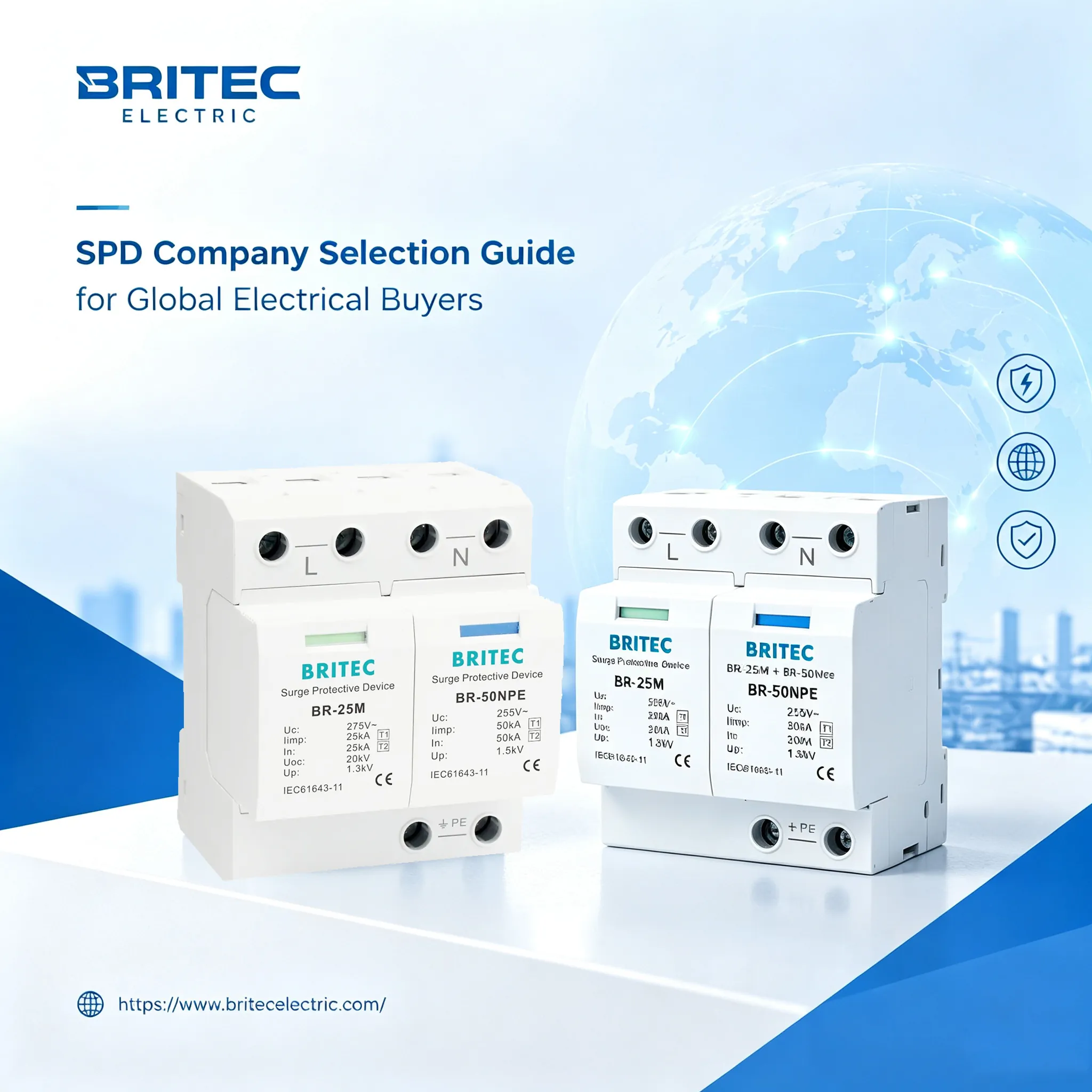

Het goede kiezen SPD company is one of the highest-leverage decisions a global electrical buyer makes. A surge protective device (SPD) sits between your equipment and lightning or switching transients, so the manufacturer you select determines not only price but also field reliability, compliance, and long-term serviceability. This guide walks procurement, EPC, and distribution buyers through a repeatable six-step selection process — from certification checks to total cost of ownership — so you can shortlist SPD companies with confidence.
A credible SPD company is more than a catalog of surge arresters. It is a technical partner that understands impulse-current testing, metal-oxide varistor (MOV) selection, thermal-disconnect design, and the coordination rules that keep a protection system safe after a surge event. When you evaluate an SPD company, look for evidence that it can support your project from specification to commissioning — not just ship a box.
Global buyers face fragmented standards: IEC 61643-11 and EN 61643-11 dominate Europe and most export markets, while UL 1449 governs North America. Voltage systems differ (TN-S, TT, IT), and lightning exposure varies by region. A structured process prevents you from comparing incompatible offers and protects you from suppliers who quote low but cannot document compliance. The six steps below keep your evaluation consistent across regions and suppliers.
Start every shortlist with proof of third-party certification. Certifications are the fastest way to separate a real SPD company from a trading company reselling uncertified modules.
● IEC 61643-11 / EN 61643-11 — the baseline for low-voltage AC SPDs in most global markets.
● UL 1449 — required for North American projects and increasingly requested by multinational EPCs.
● CE and TÜV — common marks Britec holds via Intertek SEMKO and TÜV; confirm the test report matches the exact model you will buy.
● ISO 9001 — evidence of a controlled quality-management system, not just a one-off test pass.
SPDs are classed by the surge energy they handle. Matching type to installation point is the core of correct selection, and a knowledgeable SPD company should help you build this map rather than push a single SKU.
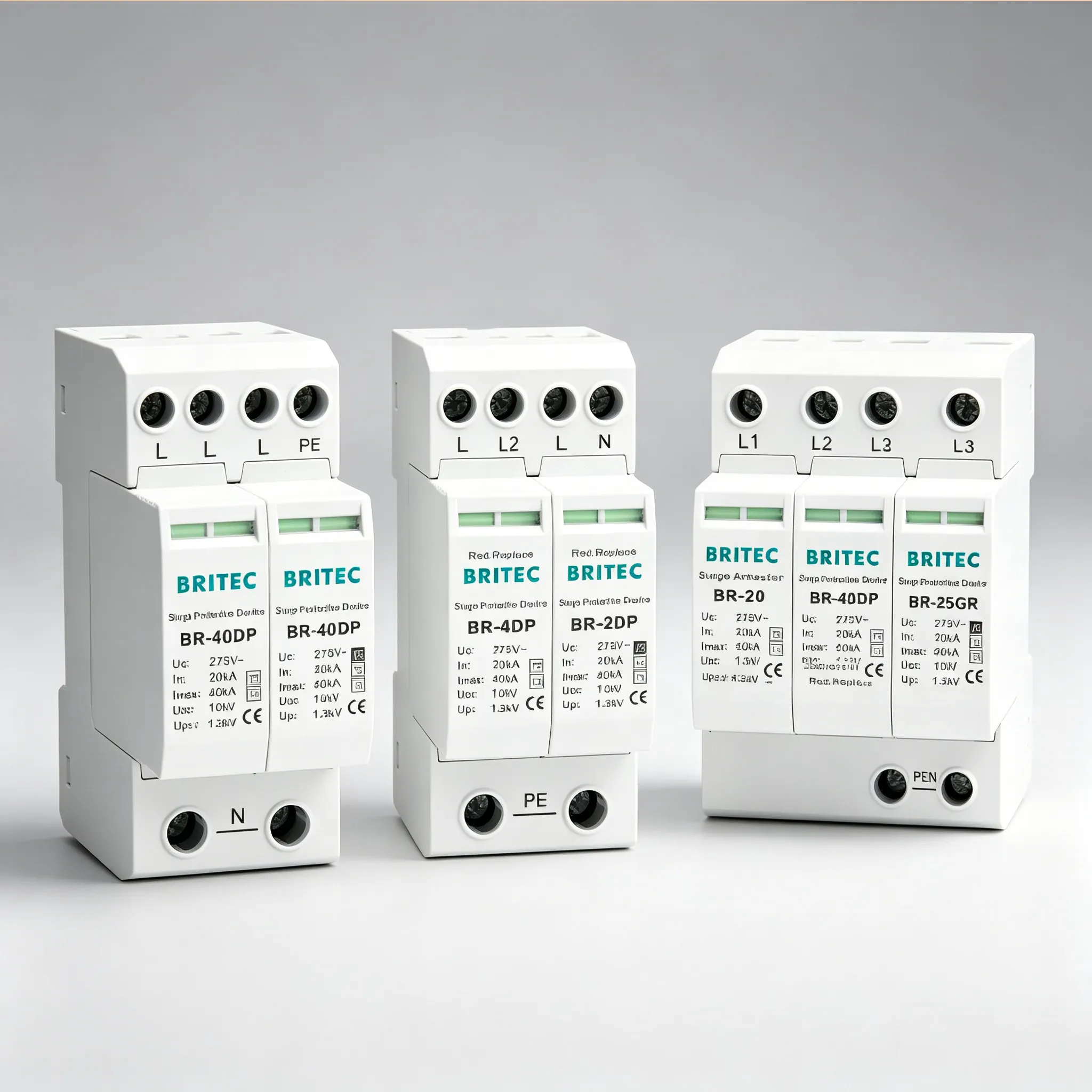
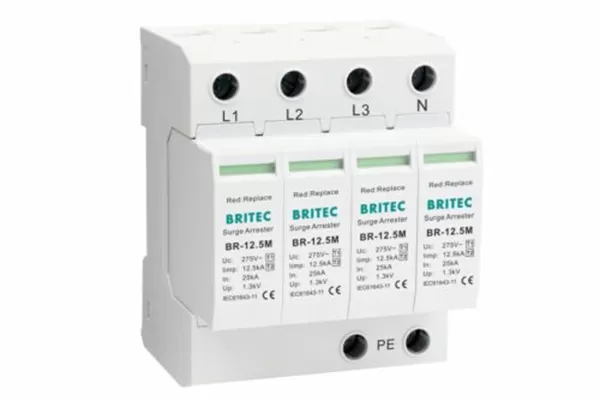
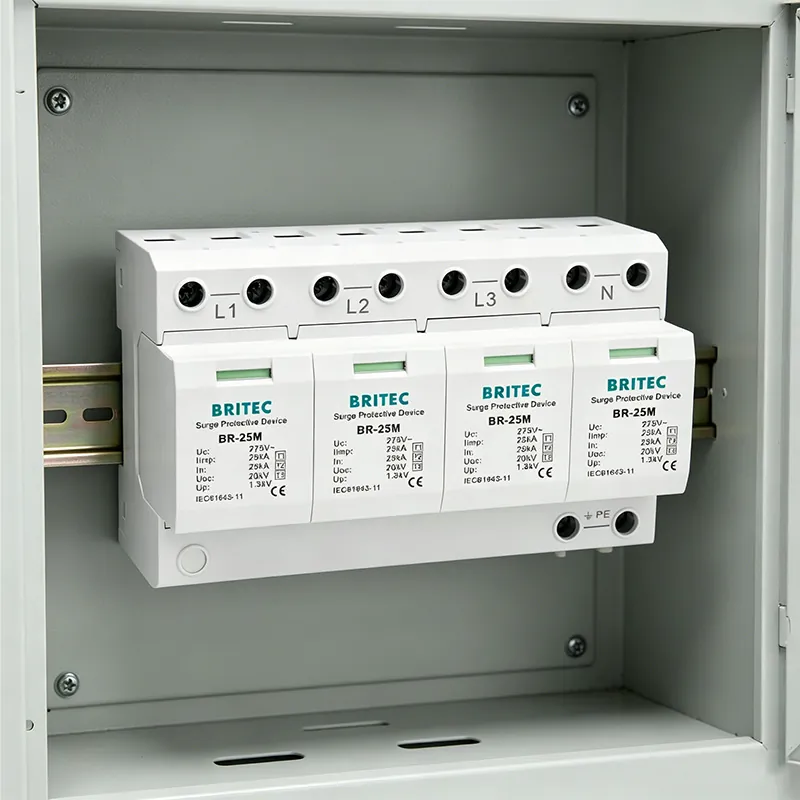
● Type 1 (Class I) — installed at the service entrance where direct lightning current (10/350 µs) must be diverted; examples include a Type 1 surge arrester rated 25kA Iimp for TN-S boards.
● Type 2 (Class II) — protects sub-distribution boards from induced and switching surges (8/20 µs); a 40kA Type 2 SPD is a workhorse for commercial panels.
● Type 3 (Class III) — point-of-use protection for sensitive equipment close to the load.
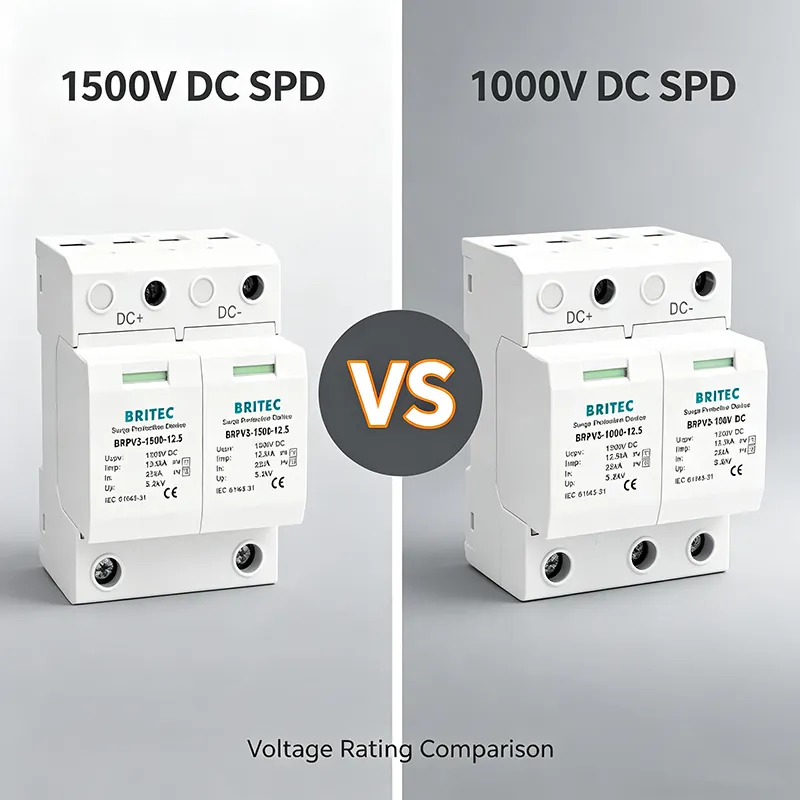
● AC vs DC vs PV — choose AC power surge protection devices for buildings and DC surge protectors for solar and battery systems.
● High-exposure sites — a 110kA Type 2 surge protective device concentrates more discharge capacity in a 4-pole package.
Share your system voltage, grounding type (TN-S, TT, IT), and surge risk profile. Britec engineers return a coordinated Type 1 / 2 / 3 proposal within 24 hours, backed by in-house impulse testing.
Ask the SPD company how it builds and tests. Britec has manufactured surge protection since 2003, runs in-house impulse testing, and performs 100% production checks on critical parameters. Look for the following evidence during a factory audit:
● In-house impulse-current test lab — lets the supplier retest batches instead of trusting an outside shop.
● MOV sourcing and traceability — varistor grade drives lifespan; request batch certificates.
● Thermal-disconnect and fault-indication design — a safe SPD disconnects cleanly instead of burning.
● 100% end-of-line testing — every module checked, not just samples pulled from the line.
A single project often needs multiple SPD types, voltages, and pole counts. A capable SPD company offers a broad range and OEM / ODM service so you consolidate suppliers and keep quality consistent. Britec covers Type 1, Type 1+2, Type 2, Type 3, PV, LED, and data-line SPDs with standard and customized pole configurations, plus coordinating accessories such as backup protectors and status indicators.
● Lead time — confirm whether the SPD company stocks popular models or builds to order; Britec ships standard ranges quickly even on large orders.
● MOQ — align minimum order quantity with your rollout; low MOQ helps pilot projects and trials.
● Warranty and replacement modules — plug-in modules should be field-replaceable; confirm spare availability before purchase.
● Reactietijd — Britec answers inquiries within 24 hours and supplies technical drawings and single-line coordination guidance.
Unit price is the smallest part of the equation. A cheaper SPD that fails certification or ships late can cost far more than a premium unit through rework, downtime, and warranty claims. Score suppliers on expected failure rate, spare-part cost, freight, and engineering support — not just the quote line.
Watch for these signals during evaluation:
● No third-party test report matching the exact model and rating you plan to buy.
● Vague factory address or no production photos — you may be dealing with a reseller, not a manufacturer.
● Refuses to share single-line coordination advice — a real SPD company engineers, not just sells.
● Unrealistic lead times with no batch testing — speed without QC is a field risk.
● No replacement-module policy — your maintenance team is left stranded after the first surge.
Use this checklist in every request for quotation to keep SPD companies comparable:
● System voltage and frequency (for example 230/400V 50/60Hz).
● Grounding type (TN-S, TN-C, TT, IT).
● Required SPD class and Iimp / In / Imax ratings.
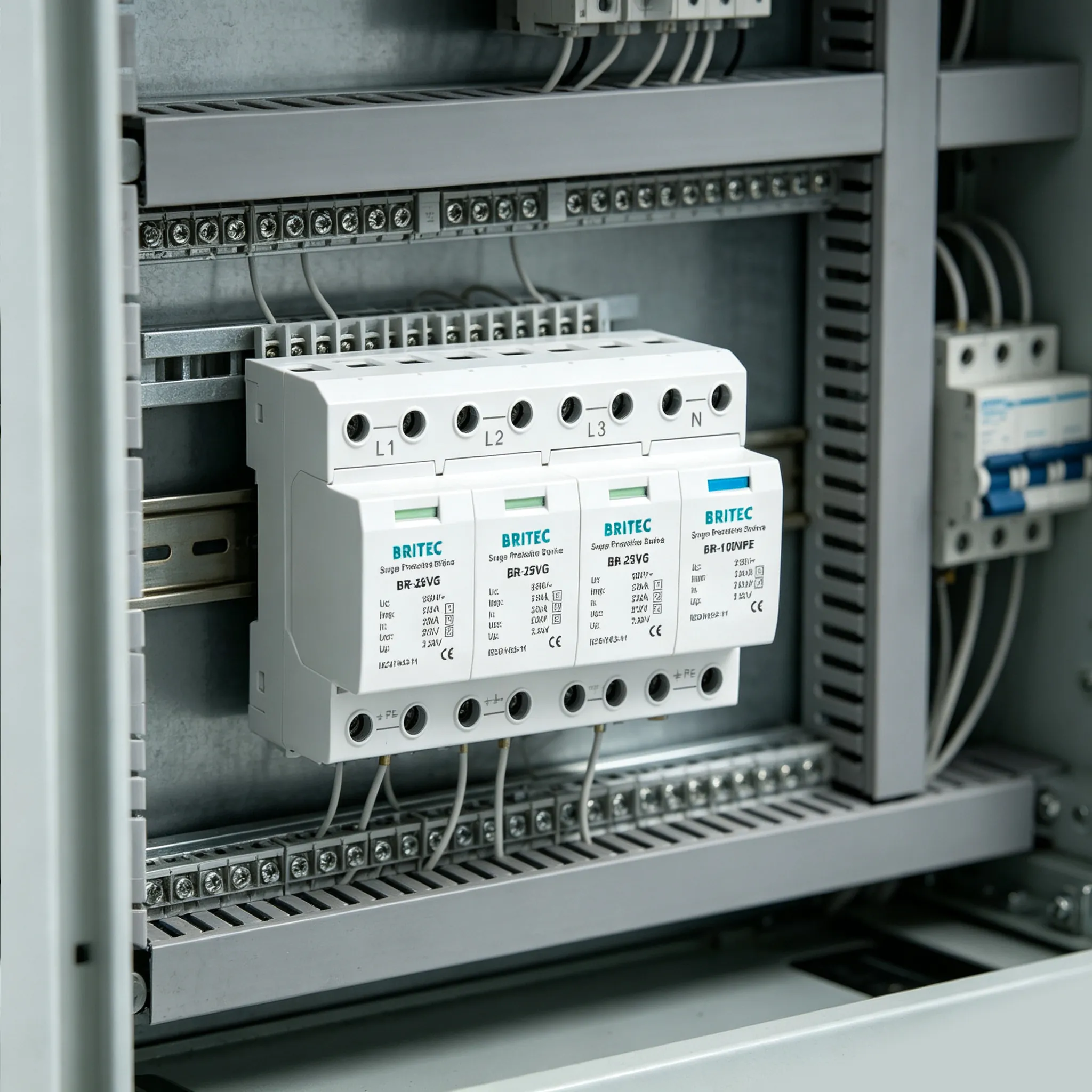
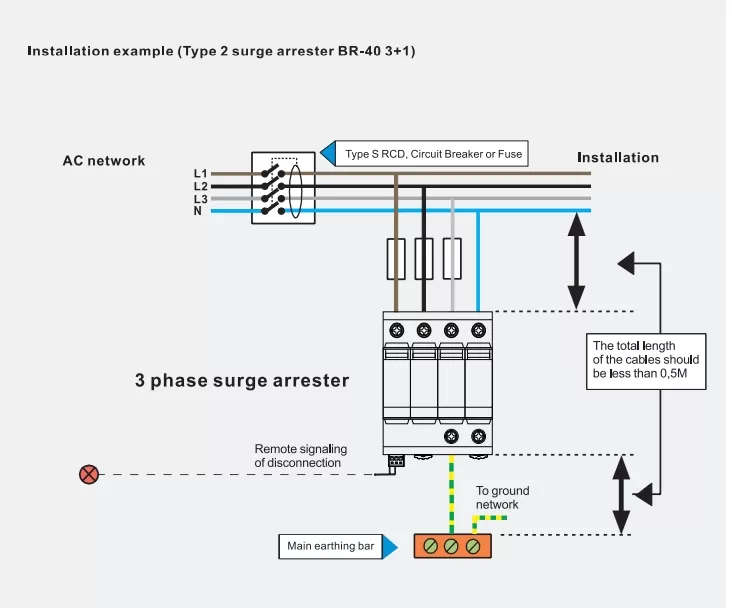
● Pole count and DIN-rail footprint.
● Certifications needed (IEC / EN 61643-11, UL 1449, CE, TÜV).
● Remote-signaling and status-indication requirements.
● Target lead time, MOQ, and warranty terms.
Paste the checklist above into a message to Britec and our engineers will return a matched SPD bill of materials with certifications, lead time, and pricing. All inquiries are answered within 24 hours.
Q: What certifications should a reliable SPD company hold?
A: At minimum, look for IEC 61643-11 or EN 61643-11 for AC SPDs, UL 1449 for North America, plus CE and TÜV marks backed by third-party test reports. ISO 9001 indicates a controlled quality system. Always confirm the report matches the exact model and rating you intend to buy.
Q: How do I verify an SPD company is a real manufacturer?
A: Request the factory address, production photos, and an impulse-current test-lab video. A genuine SPD company welcomes a factory audit and can show MOV sourcing, 100% end-of-line testing, and batch retest records. Britec, established in 2003, provides all of these on request.
Q: What is the difference between Type 1, Type 2, and Type 3 SPDs?
A: Type 1 handles direct lightning current at the service entrance (10/350 µs). Type 2 handles induced and switching surges at sub-distribution boards (8/20 µs). Type 3 provides point-of-use protection near sensitive loads. They are coordinated in layers, not used as interchangeable replacements.
Q: Which SPD type do I need for a building with an external lightning system?
A: Buildings with an external lightning protection system, overhead supply lines, or high lightning exposure normally require a Type 1 SPD at the origin, coordinated with downstream Type 2 and Type 3 devices. Confirm against local electrical codes and IEC 62305 risk assessment.
Q: How important is UL 1449 for global projects?
A: UL 1449 is mandatory for the North American market and is increasingly specified by multinational EPCs operating across regions. If your project spans the US or Canada, require UL 1449 listing on top of IEC / EN compliance.
Q: What MOQ and lead time are typical for SPD companies?
A: Minimum order quantities vary from a few pieces for pilot runs to hundreds for standard modules. Lead time depends on stock and customization; a transparent SPD company states realistic windows and proves them with on-time delivery history rather than best-case estimates.
Q: Should I choose a supplier with a broad or narrow product range?
A: For multi-site or multi-system projects, a broad range with OEM / ODM saves coordination overhead and keeps quality consistent across SPD types. A narrow specialist can work for single-application needs but limits future consolidation.
Q: How do I compare SPD quotes beyond unit price?
A: Score total cost of ownership: certification validity, expected failure rate, spare-module cost, freight, warranty length, and engineering support. A low unit price with weak support usually costs more over the asset life than a documented, supported device.
Q: What after-sales support should an SPD company provide?
A: Look for a clear warranty, available replacement modules, remote-signaling options, technical documentation, and responsive communication. Britec ships replacement modules quickly and answers technical inquiries within 24 hours to minimize downtime.
Q: Why source SPDs from a China-based manufacturer like Britec?
A: A focused manufacturer with two decades of SPD experience, in-house testing, ISO 9001 control, and CE / TÜV / Intertek SEMKO certification can deliver certified quality at competitive total cost, with engineering support for global electrical buyers across Europe, South America, and Asia.
Continue your supplier evaluation with these buyer-focused guides from Britec:
● How To Choose A Reliable SPD Company For Electrical Projects
● How to Choose a Surge Protector Supplier: 10 Criteria for B2B Buyers
● SPD Factory Audit Checklist: 9 Checks Before You Buy
Ready to shortlist Britec as your SPD company? Send your project details and receive a coordinated, certified SPD proposal with transparent lead time and pricing.