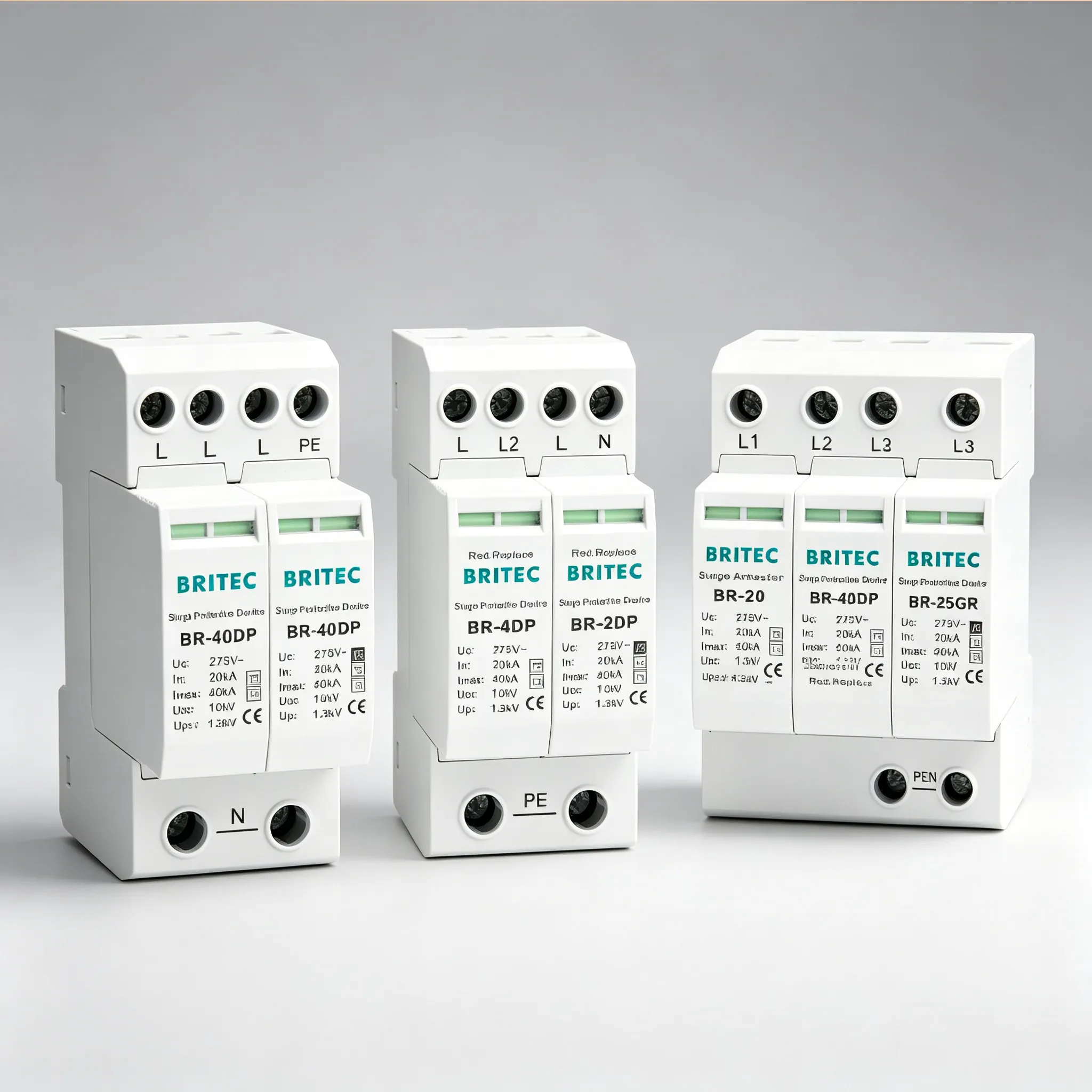
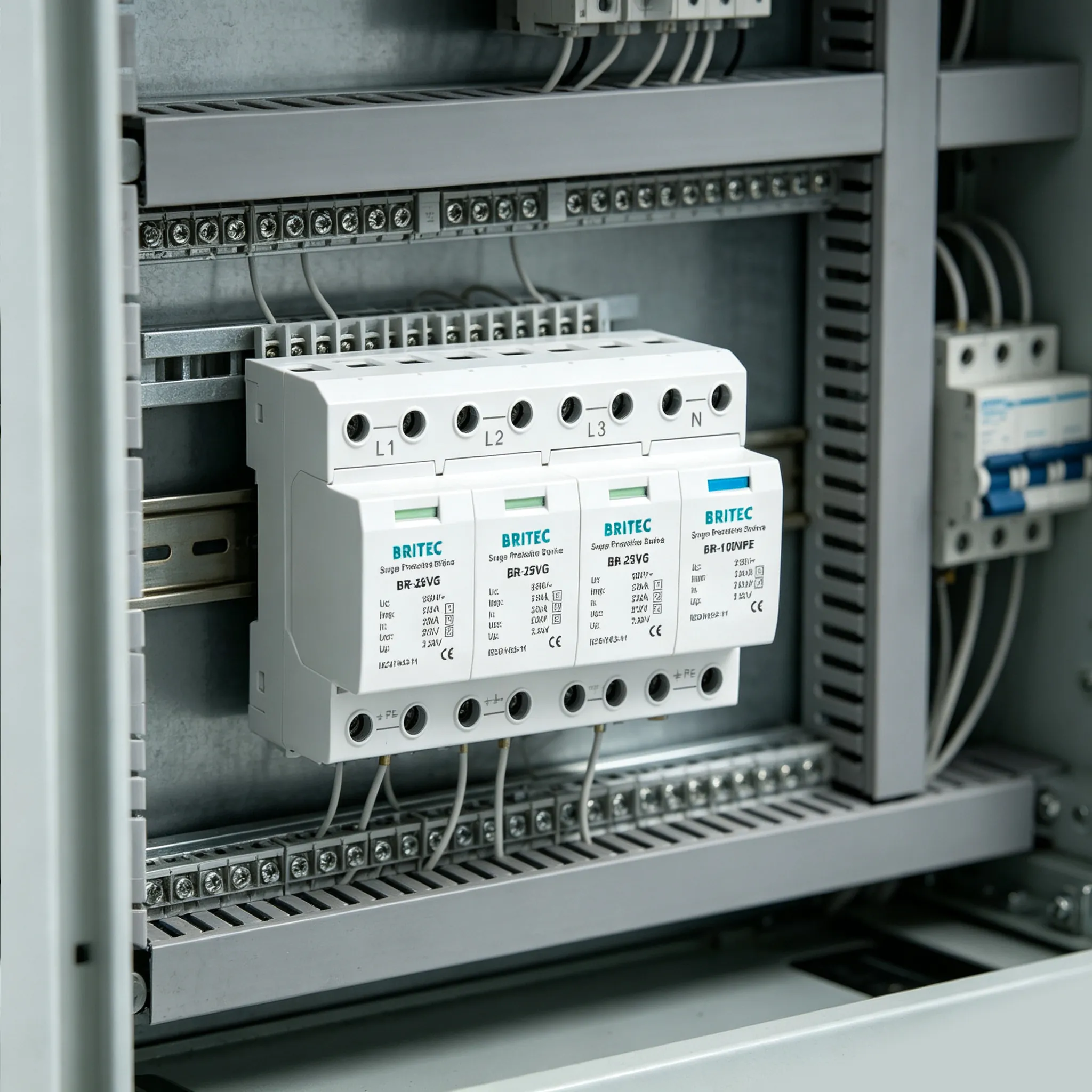
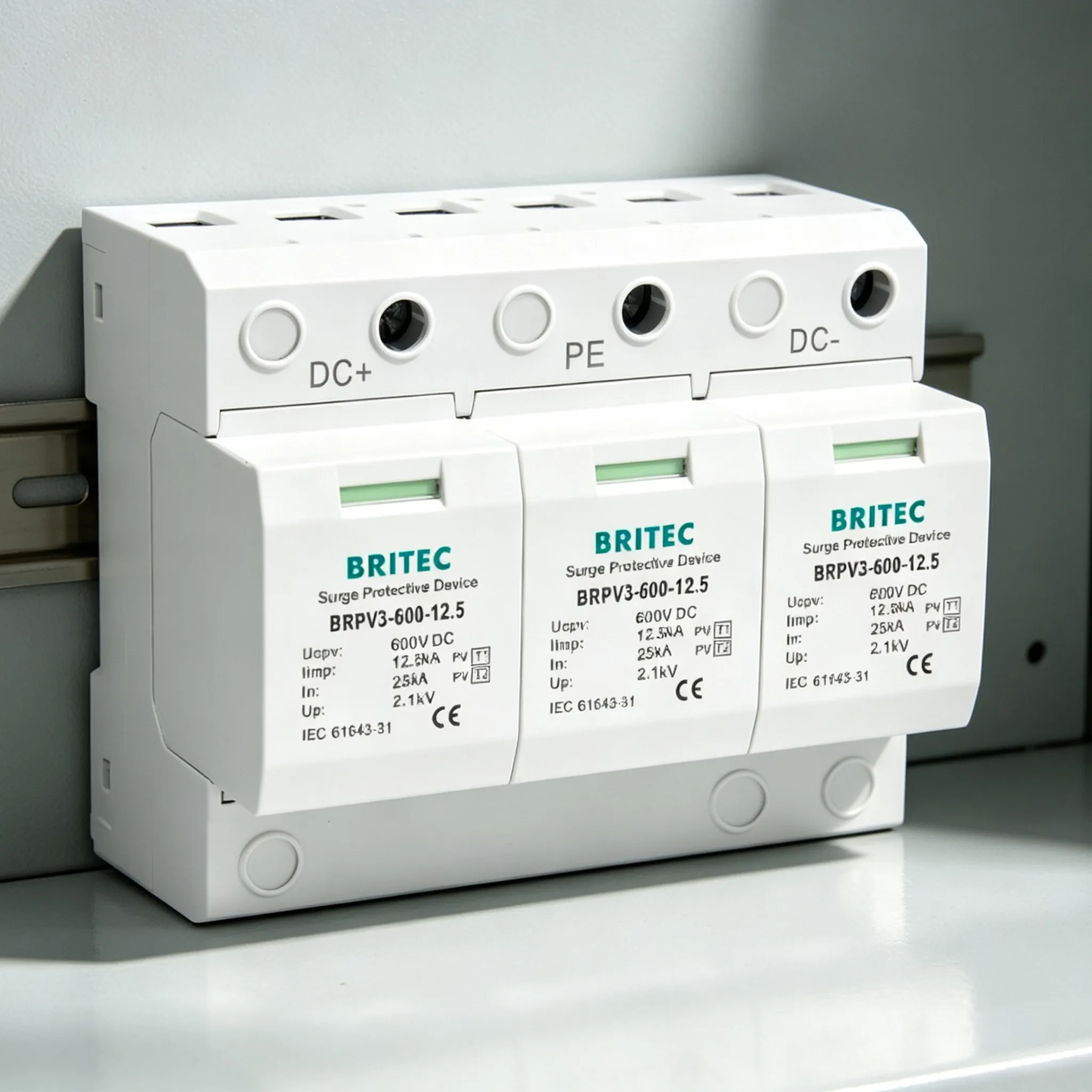
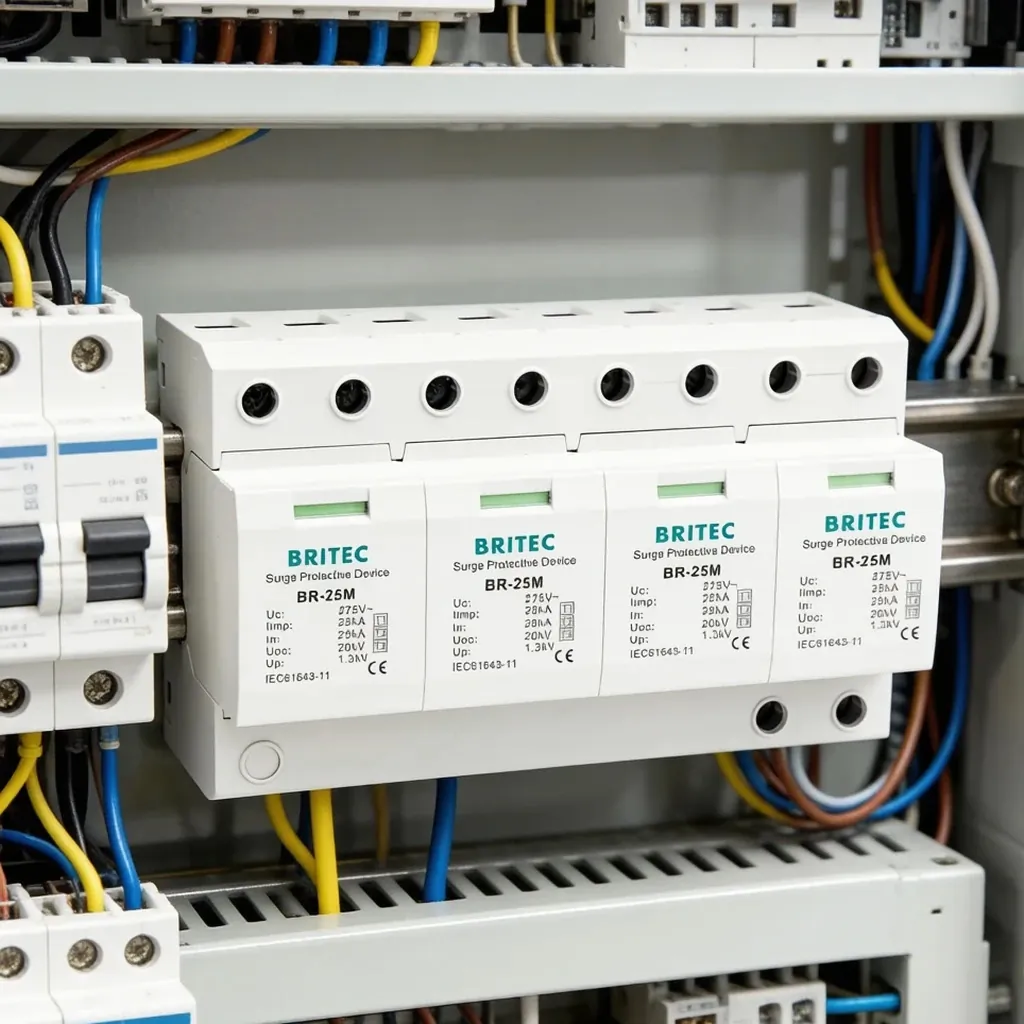
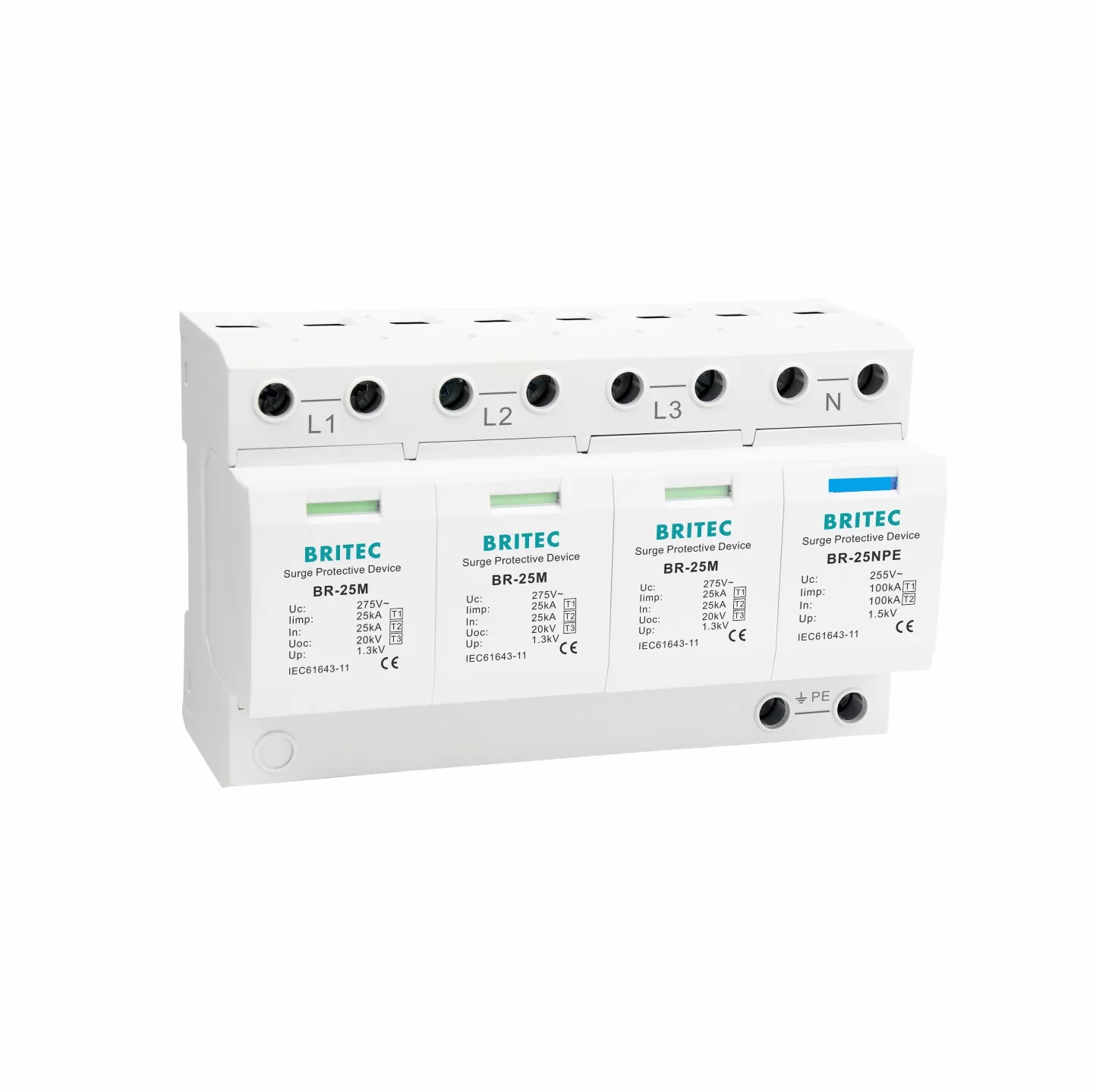
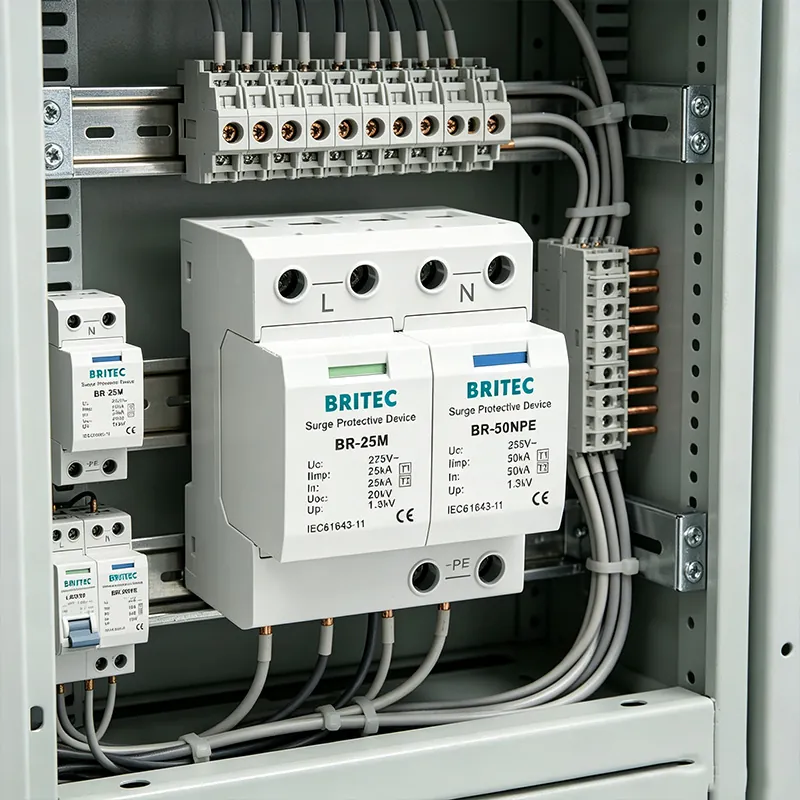
Industrial surge protectors are not fit-and-forget devices. Inside every panel-mounted unit, Metal Oxide Varistors (MOVs) absorb a finite amount of surge energy before their protective capacity starts to decline. For plant engineers, facilities managers, and electrical contractors, knowing the real service life of these components is essential to keeping production lines, control systems, and critical infrastructure safe.
A Britec elettrico Wenzhou Co., Ltd., we have manufactured industrial surge protection devices since 2003. Our Type 1, Type 2, and Type 3 SPDs are used in industrial plants, solar farms, railways, and LED lighting networks across Europe, Asia, and the Americas, with certifications from Intertek SEMKO, TÜV, and CE.
This guide answers the question: how long do industrial surge protectors last? We cover average lifespan, the factors that shorten it, warning signs, testing methods, replacement timing, and how to choose a reliable SPD company.
Need a Quote for Your Industrial SPD Project?
Britec Electric answers project inquiries within 24 hours and ships from a factory with multiple production lines.
Request a Quote
How Long Do Industrial Surge Protectors Last? Lifespan And Replacement Guide
Average Lifespan Of An Industrial Surge Protector
Most industrial panel-mounted SPDs are designed for 5 to 10 years of service under normal operating conditions. IEC references often cite a useful lifetime of 8 to 12 years for well-specified units in controlled environments, while field data from high-exposure sites suggest a preventive replacement interval closer to 8 to 10 years.
The service life depends heavily on standby hours versus surge events. A unit in a clean, temperature-controlled electrical room with few surges may last 12 to 15 years. The same unit installed in a coastal factory with frequent thunderstorms, harmonic-rich loads, and poor ventilation may need replacement in 5 to 7 years.
For B2B buyers, the key takeaway is: the rated lifespan is a planning number, not a guarantee. Condition-based monitoring and scheduled inspection decide the real replacement date.
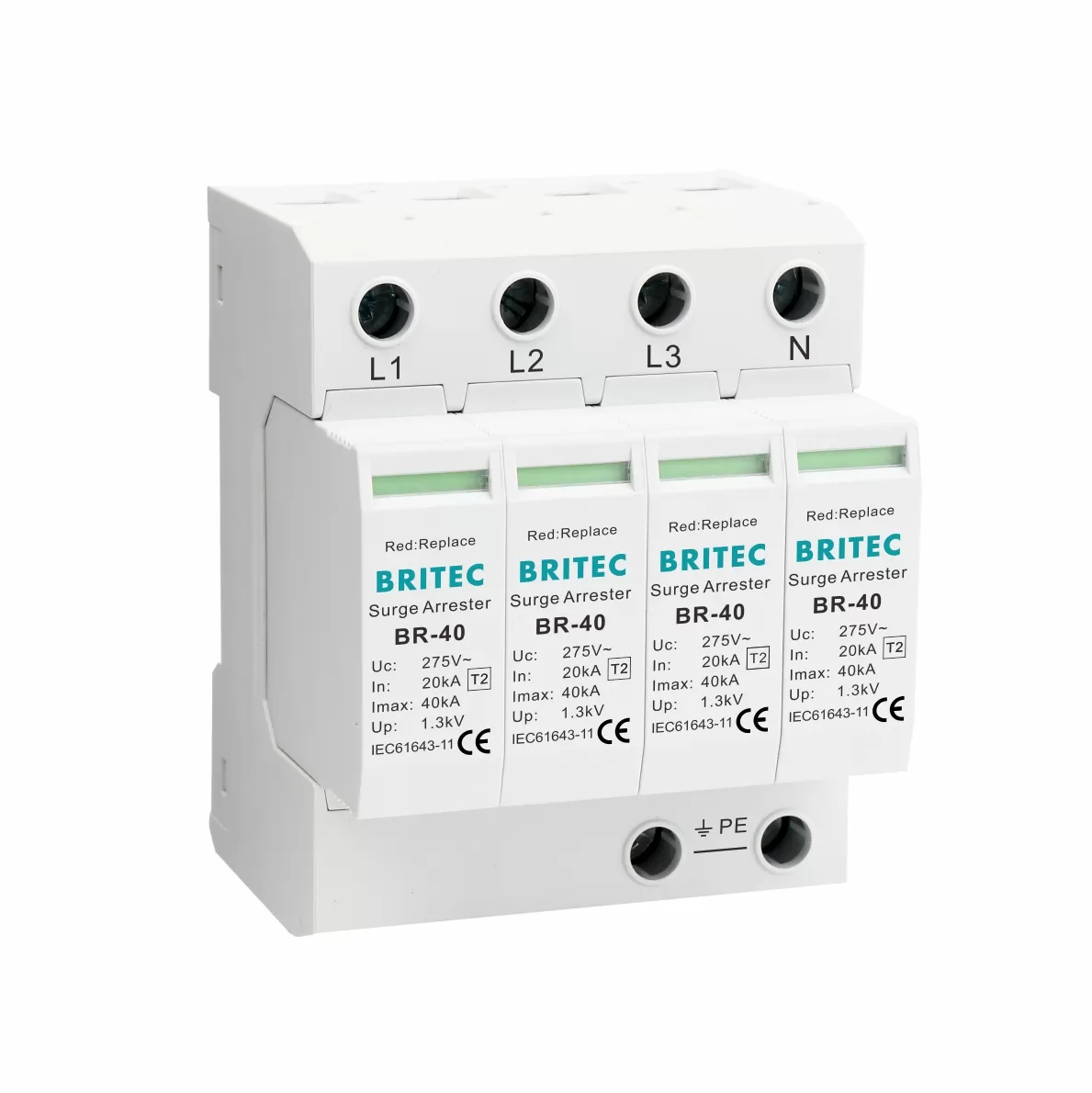
Factors That Affect The Lifespan Of Industrial SPD
Several variables determine how fast an industrial SPD ages. Understanding them helps you specify the right unit and plan maintenance.
- Surge frequency and magnitude: Every surge diverts energy through the MOV. Repeated 8/20 µs transients degrade the varistor even when the unit still shows a green indicator.
- Ambient temperature: Heat is the enemy of MOVs. Installations above 50°C can dramatically shorten service life. As a rule of thumb, a 10°C rise above rated temperature can halve component life.
- Humidity, dust, and corrosive gases: These increase surface leakage and corrode terminals, accelerating failure in harsh industrial environments.
- Continuous operating voltage (Uc): Sustained overvoltage or temporary overvoltage (TOV) forces the MOV into continuous conduction, generating heat and triggering the thermal disconnector early.
- Harmonic distortion: Facilities with variable-frequency drives, rectifiers, and switch-mode power supplies expose SPDs to harmonic stress. Studies show harmonic-rich environments can accelerate varistor aging by up to 40 times compared to clean sinusoidal conditions.
- Installation quality: Long PE leads, undersized grounding conductors, missing dedicated backup protection, and poor cascading coordination all reduce effective protection and stress the SPD.
- Component and manufacturing quality: Units built to IEC/EN 61643-11 with certified thermal disconnectors, UL94-V0 enclosures, and third-party test reports outlast uncertified alternatives.
- Maintenance discipline: Regular visual checks, leakage-current trending, and surge-counter reviews catch degradation before it becomes a failure.
How Surge Events Impact Industrial Surge Protector Lifespan
Surge events consume the finite energy rating of an SPD. A single severe strike can push the device close to its limit, while hundreds of smaller switching transients add up quietly over time. That cumulative damage is why an SPD can look healthy on the outside while its remaining protection margin is already low.
Best practice: after any confirmed lightning strike within 100 meters of the installation, or after a major grid switching event, inspect the SPD and consider proactive module replacement even if the status window is still green. The thermal disconnector only trips when the device reaches a critical thermal state; it does not report how much protective capacity remains.
Installing a surge counter (such as the Britec BRSC-01) makes this invisible history visible. It logs surge events and helps maintenance teams correlate equipment trips or seasonal storms with SPD stress.
Signs That An Industrial Surge Protector Needs Replacement
A failed SPD often creates a silent protection gap. Train your maintenance team to look for these warning signs:
- Status indicator is red, yellow, or off: This is the most obvious end-of-life signal. Some advanced models use a two-stage indicator: yellow for early degradation and red for complete failure.
- Visible damage: Cracks, swelling, blackening, soot deposits, or venting on the enclosure indicate an internal fault.
- Burning smell or heat: A hot SPD is often a leaking MOV. Thermal imaging can reveal hotspots more than 10°C above ambient.
- Elevated leakage current: A healthy MOV-based SPD typically leaks less than 0.1 mA. Readings above 0.5–1 mA, or a clear upward trend from the baseline, indicate degradation.
- Frequent upstream breaker or fuse trips: This may mean the SPD is conducting continuously because its Uc rating is too low or the varistors have degraded.
- After a severe surge event: Replace after major lightning or switching surges even if the indicator is green.
- Age beyond the recommended interval: Any SPD beyond 10 years in critical facilities or 12–15 years in standard industrial sites should be scheduled for replacement.
How To Test And Maintain Industrial Surge Protection Devices
Routine testing and maintenance extend service life and prevent surprise downtime. Follow this checklist:
- Visual inspection: Check the status window on every pole. Record green or red for each protection mode. Do not treat an SPD as healthy if any pole shows red.
- External inspection: Look for cracks, discoloration, soot, or heat damage on the housing and nearby wiring.
- Leakage-current measurement: A qualified electrician should clamp the SPD’s PE lead with a true-RMS leakage-current meter. Compare the result with the manufacturer’s baseline.
- Thermal imaging: Scan the panel during normal load. A hotspot indicates internal conduction or poor connection.
- Remote-signaling test: If the SPD has dry contacts for BMS or SCADA, verify that an alarm state changes the contact and registers on the monitoring system.
- Backup-protector coordination: Confirm the dedicated MCB or fuse is present and correctly rated per the manufacturer’s coordination table. A dedicated backup protector prevents fire risk when the SPD reaches end of life.
- PE connection check: The PE lead from the SPD terminal to the local earth bar should be less than 0.5 m. Extra length adds inductive voltage during a surge.
- Surge-counter review: Note event counts and any spikes tied to storms or switching operations.
- Documentazione: Keep a register of model, location, installation date, test results, and replacement history.
Inspection frequency: monthly in harsh environments, every 6 months in standard industrial plants, and annually for protected indoor installations. Always inspect after a known surge event.
Get Expert Surge Protection Support
Our engineers can review your single-line diagrams and recommend the right Type 1, Type 2, or Type 3 SPD layout for your facility.
Talk to an Engineer
When Should You Replace An Industrial Surge Protector?
Use this decision framework to set replacement schedules for your facility:
- Immediately: when the status indicator shows red, yellow, or off; when physical damage, burning smell, or heat is present; or after a severe surge event.
- Within 6 months: when leakage current is trending upward or a thermal hotspot is detected.
- Preventive replacement: every 8–10 years in high-lightning or harsh-environment sites; every 10 years for critical facilities such as data centers, hospitals, and continuous process lines; every 12–15 years in standard industrial or commercial buildings.
- When the electrical system changes: if you add harmonic-rich loads, raise supply voltage, or reconfigure from single-phase to three-phase distribution, the original SPD may no longer be correctly specified.
How To Choose Reliable SPD Company For Industrial Surge Protection
Not every supplier can deliver industrial-grade reliability. When selecting an SPD company, evaluate these points:
- Certifications and test reports: Look for IEC/EN 61643-11, UL 1449, CE, TÜV, CB, RoHS, and REACH. Ask for the actual certificate numbers and stamped third-party test reports for In, Imax/IOimp, and voltage protection level (Up).
- Manufacturing scale and quality control: A factory with multiple production lines, incoming inspection, aging tests, and outgoing verification can support large projects with consistent quality.
- Customization and OEM capability: Industrial projects often need special voltages, connector types, label languages, or packaging. Choose a manufacturer that supports OEM/ODM.
- Application engineering: The supplier should help select Uc, Type, coordination distance, and backup protection for TN-S, TT, IT, and three-phase systems.
- Response speed: Fast quotation and technical feedback reduce procurement delays. Britec responds to all inquiries within 24 hours.
- Global references: Ask for case studies in your region and application. Britec products serve markets in West Europe, East Europe, South America, and Asia.
- After-sales support: Replacement modules, spare cartridges, and technical documentation should be available for the expected life of the installation.
Choosing a manufacturer with deep experience like Britec elettrico reduces both specification risk and total cost of ownership.
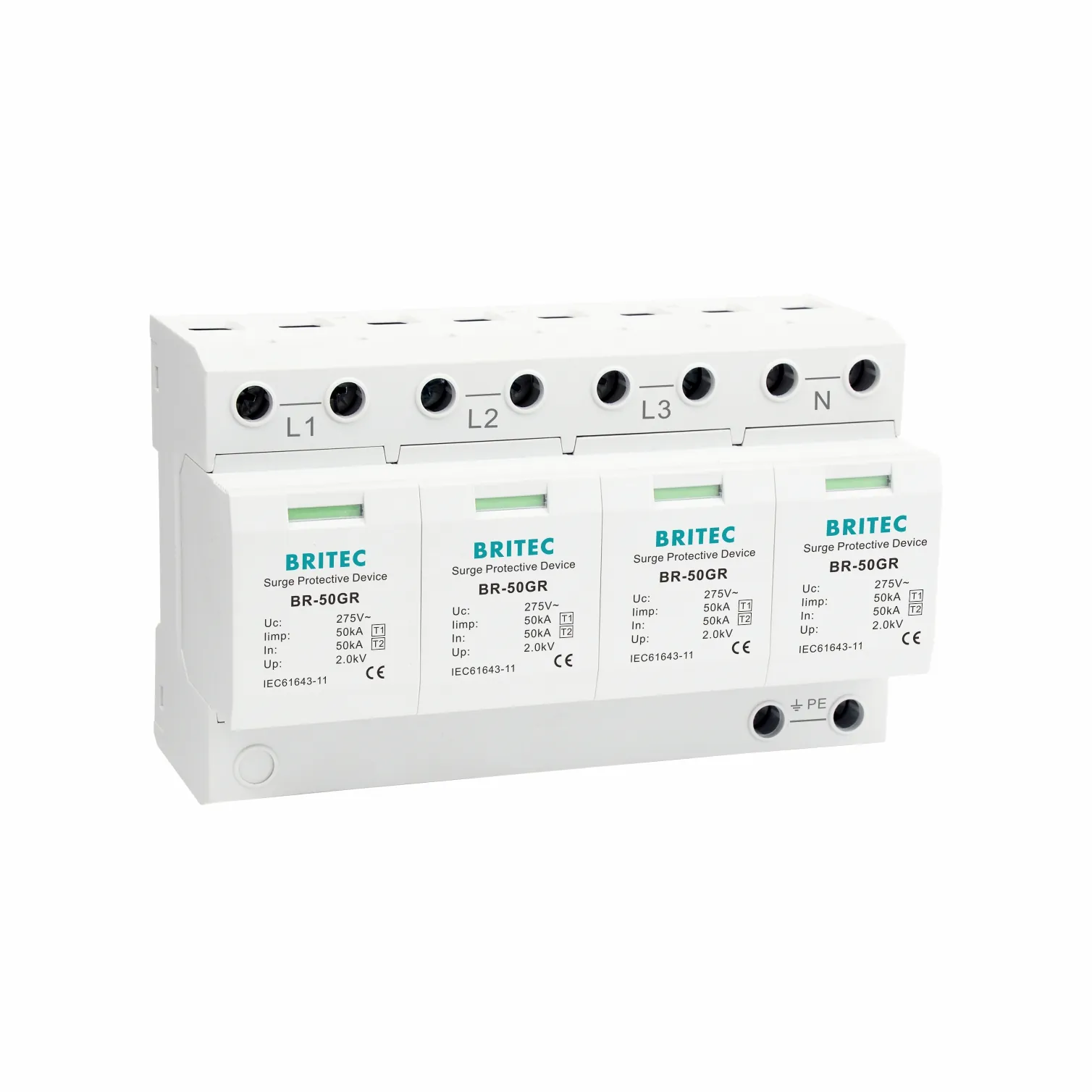
Looking for a Dependable SPD Company?
Britec Electric has supplied certified industrial surge protection devices to global B2B customers since 2003.
Contact Britec Electric
Industrial Surge Protector Replacement Cost Considerations
Budgeting for SPD replacement is not just about the price of a new module. Total cost includes the device, labor, downtime, and risk mitigation.
- Replaceable modules vs. whole-unit replacement: Modular industrial SPDs let you swap only the failed cartridge. This lowers material cost and avoids rewiring the entire panel.
- Downtime cost: In continuous processes, an unplanned SPD failure during storm season can cost far more than a scheduled replacement. Build replacement into your preventive maintenance budget.
- Labor and access: Panel access, live-work permits, and coordination with facility managers add cost. Schedule replacements during planned shutdowns when possible.
- Specification matching: Replacing an SPD with a lower-capacity unit to save money leaves the system underprotected. Match or exceed the original Type, Uc, In, and Imax.
- Avoid false economy: Cheap, uncertified units often lack thermal disconnectors and reliable status indication. The short-term savings disappear when equipment downstream is damaged.
- Maintenance contracts: Some B2B buyers negotiate annual inspection and module-replacement contracts with their SPD supplier or system integrator.
Request a Competitive SPD Replacement Quote
Send us your existing model numbers and panel requirements. We will match specifications or recommend an upgraded Britec solution.
Get a Quote
Industrial SPD Vs Standard Surge Protector: Lifespan Differences
Industrial SPDs and consumer surge-protector power strips both use MOVs, but their design life and failure behavior are very different.
| Caratteristica |
Industrial SPD |
Standard Surge Protector |
| Standard |
IEC/EN 61643-11, UL 1449 |
UL 1449 consumer grade |
| Montaggio |
35 mm DIN rail inside distribution board |
Wall outlet plug-in strip |
| Surge current capacity |
5 kA to 120 kA per mode |
Typically under 5 kA |
| Thermal disconnector |
Yes, with visual status indicator |
Usually absent |
| Replaceable modules |
Often available |
Rare |
| Typical lifespan |
5–10+ years, up to 15 in mild conditions |
3–5 years |
| Monitoraggio remoto |
Optional dry contacts / SCADA |
Not available |
The main message is clear: industrial SPDs are engineered for longer life, higher energy handling, and safer failure modes. A consumer strip is not a substitute for a Type 1 surge arrester at a service entrance or a Type 2 SPD in an industrial panel.
Domande frequenti
How Do I Know If My SPD Needs Replacement?
Check the status indicator first. Red, yellow, or no light means replace immediately. Also look for physical damage, burning smell, heat, elevated leakage current, frequent breaker trips, or age beyond 10–15 years.
Can Regular Maintenance Extend SPD Lifespan?
Yes, but only up to the component’s physical limit. Cleaning the panel, controlling temperature, tightening connections, and catching early degradation reduce unnecessary stress. Maintenance cannot restore already-degraded MOVs.
How Does SPD Company Ensure Product Reliability?
A reliable SPD company controls incoming materials, runs production-line tests, holds IEC/EN 61643-11 and UL 1449 certifications from accredited bodies, provides stamped test reports, and supports after-sales replacement. Britec Electric does this from a factory certified by Intertek SEMKO, TÜV, and CE.
How Long Does An Industrial Surge Protector Usually Last?
Typically 5 to 10 years. Under mild, low-surge conditions it can last 12 to 15 years; in harsh or high-lightning sites it may need replacement in 5 to 7 years.
Can Industrial Surge Protector Fail Without Visible Damage?
Yes. MOVs can degrade internally while the enclosure looks normal. That is why status indicators, leakage-current tests, and surge counters are essential.
What Is The Lifespan Of Industrial Surge Protector 3 Phase?
The same general rules apply: 5–10 years in service, up to 15 years in favorable environments. A 3-phase unit protecting a TN-S distribution board may last longer than a single-phase unit in a remote, unconditioned cabinet.
How Often Should Industrial Surge Protection Devices Be Replaced?
Replace immediately after any fault indication or severe surge. As preventive maintenance, use 8–10 years for high-exposure sites, 10 years for critical facilities, and 12–15 years for standard industrial installations.
Do Lightning Strikes Permanently Damage Industrial Surge Protectors?
A nearby strike can degrade or destroy the internal MOVs even if the SPD absorbs the surge and the downstream equipment survives. Always inspect and consider replacing the SPD after a major lightning event.
What Should I Consider When Selecting Industrial Surge Protection Devices?
Match the system voltage and configuration (TN-S, TT, IT, 3-phase), select the correct Type (1, 2, or 3), verify In and Imax ratings, ensure Uc is high enough for local grid conditions, and confirm certifications from recognized test houses.
Still Have Questions?
Our technical team can help you select, test, and replace industrial SPDs for any application.
Ask Britec
Conclusione
Industrial surge protectors are consumable safety components, not permanent fixtures. Their real lifespan is driven by surge history, temperature, voltage stress, and maintenance quality. Planning for replacement at 5 to 10 years, inspecting status indicators regularly, and testing leakage current in critical installations will keep your protection layer intact.
When it is time to replace, choosing a certified industrial SPD from a manufacturer with proven quality control and fast technical support lowers total cost and reduces downtime risk.
If you need product selection guidance, replacement modules, or a project quote, contact Britec Electric today. We reply to all inquiries within 24 hours.
Ready to Replace Your Industrial SPD?
Tell us about your system voltage, Type requirement, and quantity. We will recommend the right Britec SPD and send a competitive quote.
Request Your Quote Now
Related Resources