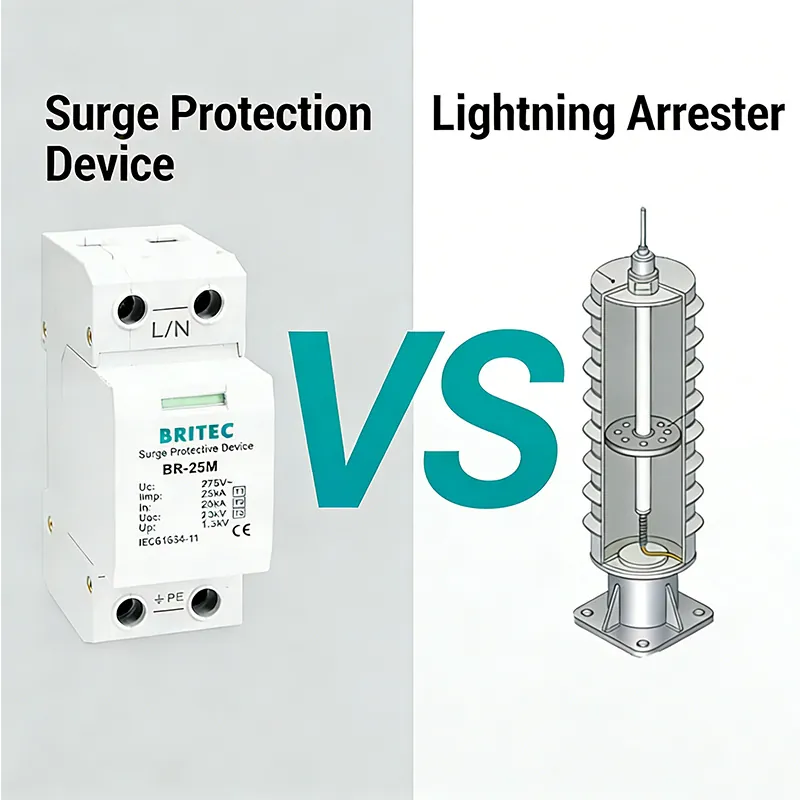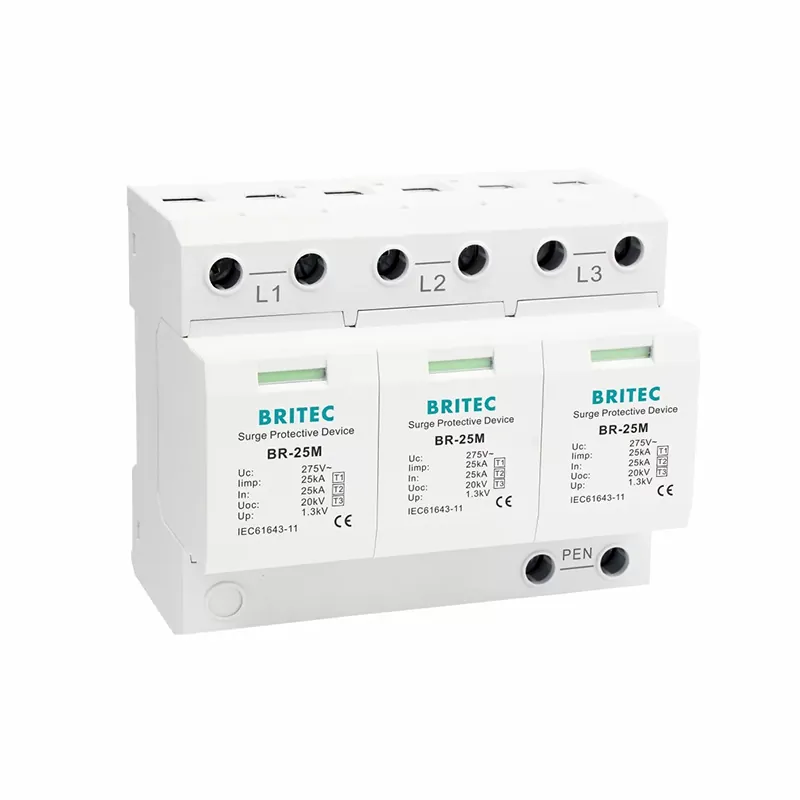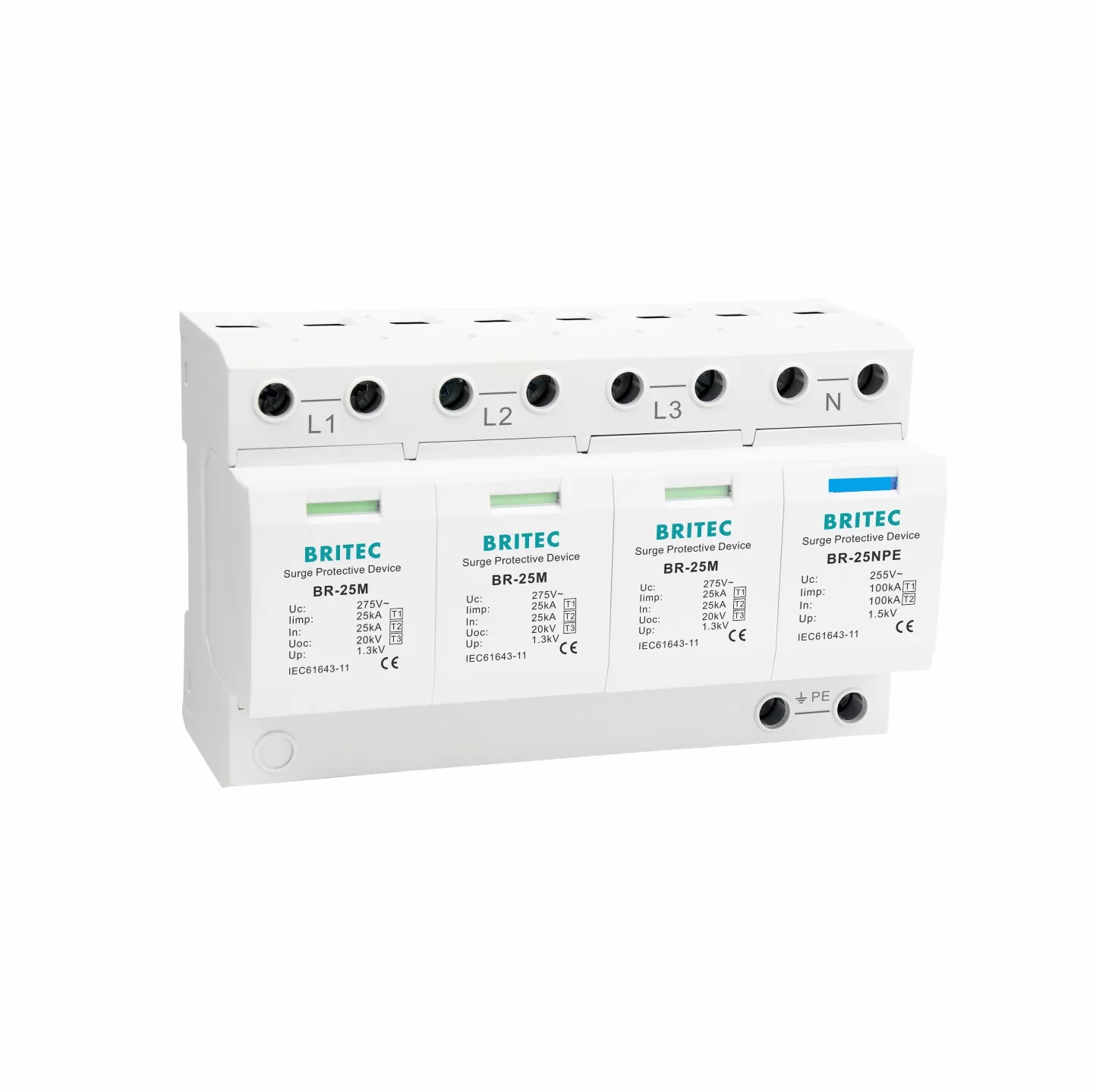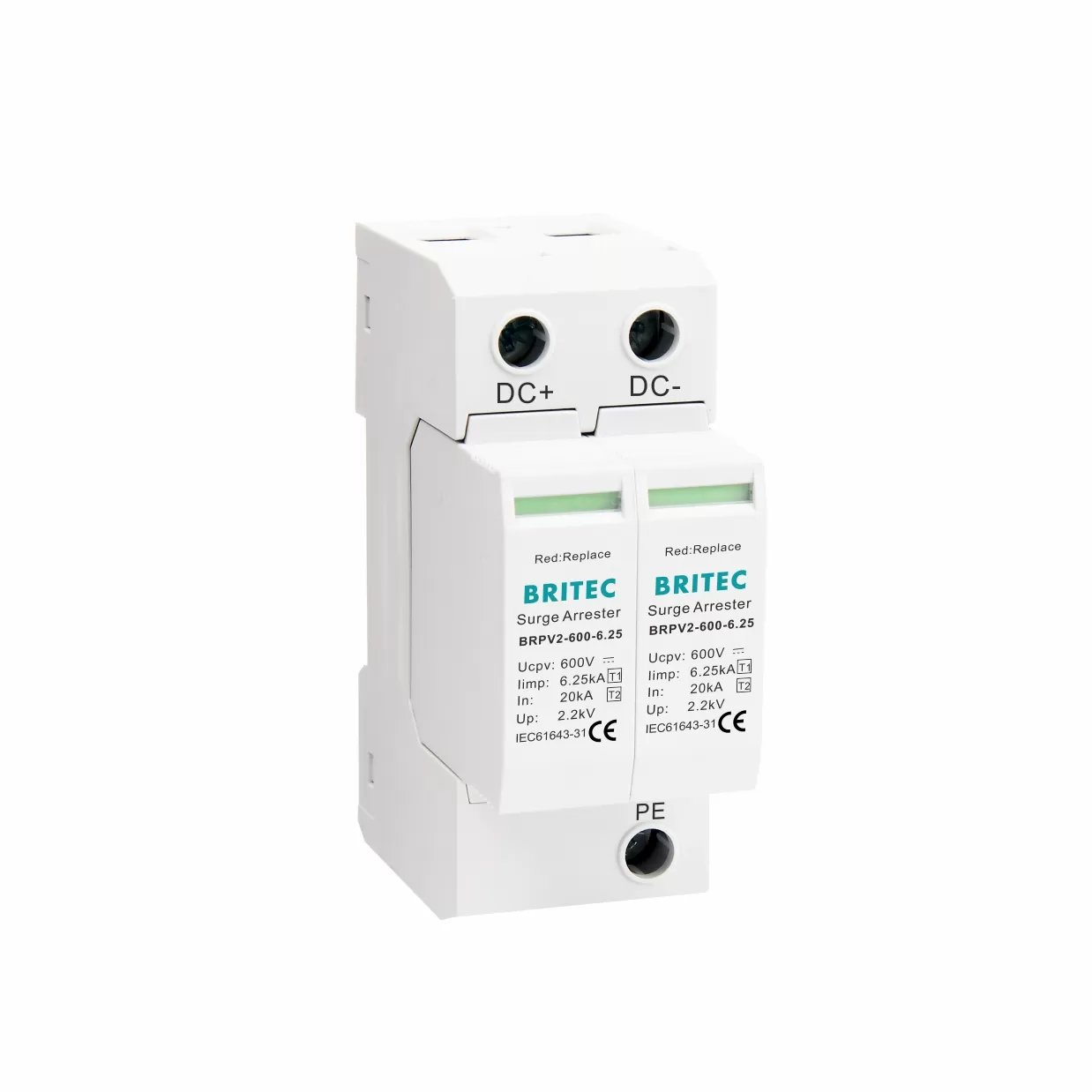

The hidden dangers of electrical systems go far beyond visible short circuits and overloads. What is truly difficult to prevent is transient power surges.It comes very quickly,with strong destructive power that cannot be detected by the naked eye.Once damage is caused,it is irreversible.Whether it is the high-energy surge caused by direct lightning strikes or induced lightning,or the internal overvoltage generated by power grid switch start stop and large equipment closing and power-off,the voltage can be pulled to several times the equipment withstand value within microseconds.It is common for chips to burn through,circuits to melt,and even the entire power supply system to collapse.SPD,That is to say,surge protection devices are specifically designed to deal with such transient overvoltages.Don’t treat it as an optional accessory,it is the essential defense line of modern power distribution systems.Scenes such as industrial plants,high-rise buildings, data centers, and medical computer rooms,without reliable SPD protection,are all empty talk about equipment safety and system stability.This guide does not involve redundant theories,only focuses on the core points,quickly explains the working logic,type differentiation,and selection rules of SPD,helps people understand the basics,and avoids common pitfalls in selection and application.
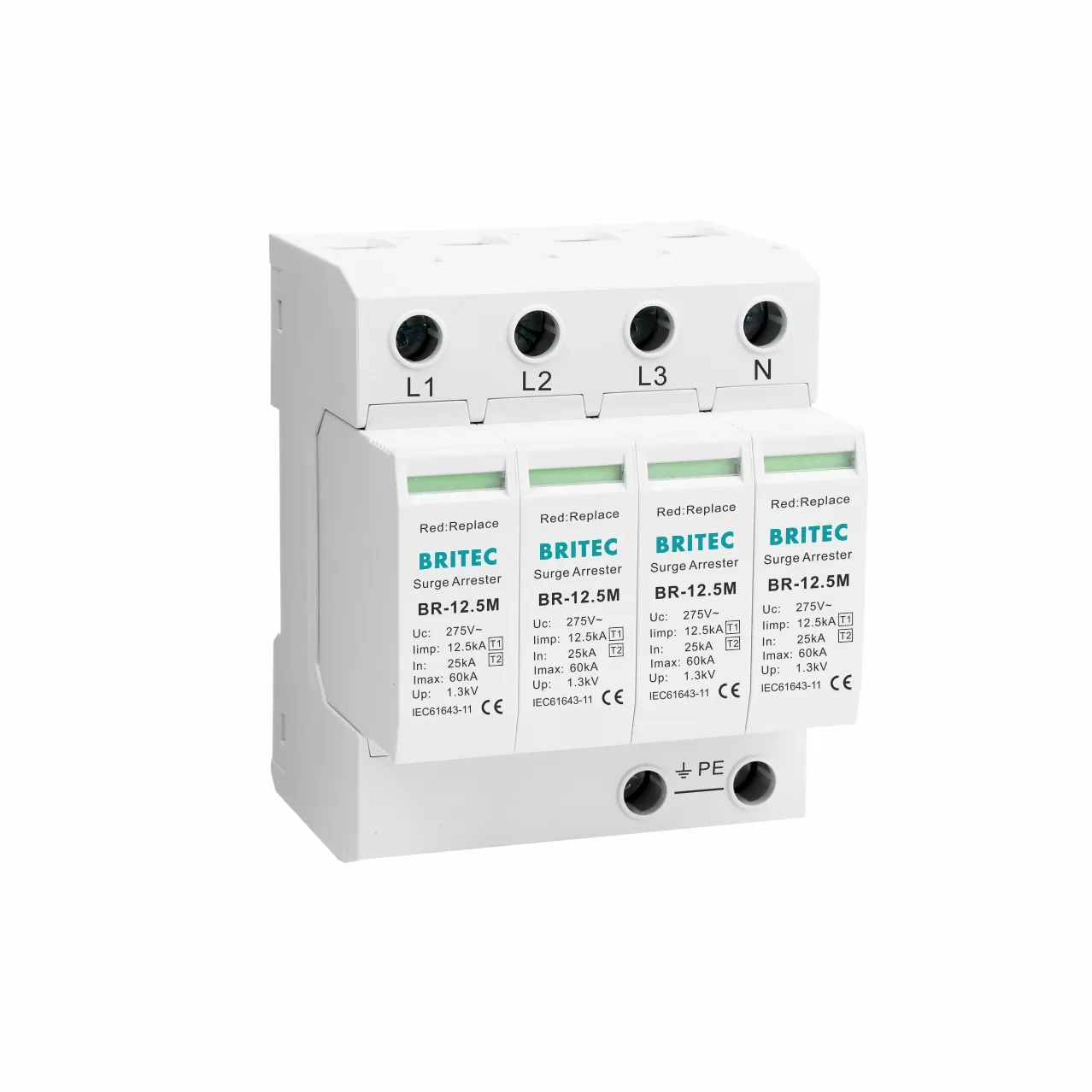
SPD can achieve high-speed protection not by relying on complex mechanical structures,but by utilizing the material properties of its internal nonlinear core components.There are no extra transmission components,relying solely on electrical properties for response,with fast enough speed and accurate action.There are only two types of mainstream core components,with clear division of labor and cooperation to complete overvoltage discharge.Gas discharge tube, specializing in high-energy surge discharge.Under normal power supply voltage,it is in a state of insulation disconnection and does not interfere with the normal running of the circuit. Once struck by high-energy overvoltage such as lightning strikes,the gas inside the tube instantly ionizes and the resistance drops sharply,transitioning from insulation to conduction in seconds, with a speed calculated in nanoseconds.A temporary discharge path is specially opened for extremely large surge currents.Varistors focus on voltage clamping and residual voltage control. Under normal circumstances,when the high resistance circuit is broken,the resistance value quickly drops when the overvoltage exceeds the conduction threshold.While continuing to divert current,the line voltage is tightly controlled within a safe range to prevent residual voltage from exceeding the limit and damaging the backend equipment.These two types of components are neither good nor bad,and are mostly used together in actual products.It can withstand the impact of high-energy surges and maintain precise voltage regulation,covering the entire process from high-energy surges to residual voltage control.This is also the core reason why SPDs can respond quickly and provide adequate protection.
Surge energy will not disappear out of thin air,it can only be quickly transferred.The core function of SPD is to provide a low impedance shortcut for surge current,bypassing all sensitive electrical equipment and directly conducting it to the ground,preventing current from passing through the equipment and causing breakdown.During normal power supply,SPD is like an invisible component on the circuit,not involved in power transmission and without additional losses.Once overvoltage strikes,the core components instantly conduct,and a low resistance path is immediately formed,forcibly diverting the surge current.The entire process takes very little time and hardly affects the continuity of normal power supply.Residual voltage refers to the voltage remaining in the circuit after the SPD discharges the surge,which directly determines whether the protection is effective or not.A good SPD will minimize residual voltage through component selection and internal circuit optimization,which must be lower than the insulation withstand value of the backend equipment.If the residual voltage cannot be controlled,even if most of the surge energy is released,the remaining voltage can still penetrate the insulation layer of the equipment,and the protection is useless.Simply put,venting is the foundation,and controlling residual pressure is the key to the end.Without any link,it won’t work.
In engineering,people often confuse quick break protectors and surge protectors,with names that sound similar.The protection logic is completely different,and the core protected objects are completely different.Quick break protector is essentially an overcurrent protection component that monitors line overload and short circuit faults to detect abnormal current.As soon as the current exceeds the set value,the circuit is immediately cut off to prevent high current heating and fire, protecting the circuit itself.Surge protectors,also known as SPDs,only focus on transient overvoltages and target microsecond level high-energy voltage spikes.It will not cut off the normal power supply circuit,only perform shunting and voltage limiting,and its operating speed is much faster than that of a quick break protector.The fundamental difference between protecting current and breaking circuit,and protecting voltage and conducting current,is absolutely irreplaceable.
Quick break protector,biased towards basic line safety, can be used in all conventional power distribution circuits,and is indispensable for home decoration,tooling,and industrial power distribution.The main risk of short circuit and overload electricity is to install it at the front end of the main incoming line and branch circuit,which is equivalent to an emergency power-off switch for the circuit.Surge protectors are highly targeted and are only used in areas with high surge rates:open high-rise buildings,outdoor power distribution equipment,data centers,precision medical equipment,industrial automation production lines, and distribution systems in lightning prone areas.It doesn’t need to move frequently,one action is high-energy impact,installed on the power supply line or front end of the equipment,it is a flood discharge channel for voltage surges.In actual power distribution,both are used in combination,with a quick break protector as the base to prevent overcurrent and an SPD for perlindungan lonjakan arus,forming a complete electrical safety network.
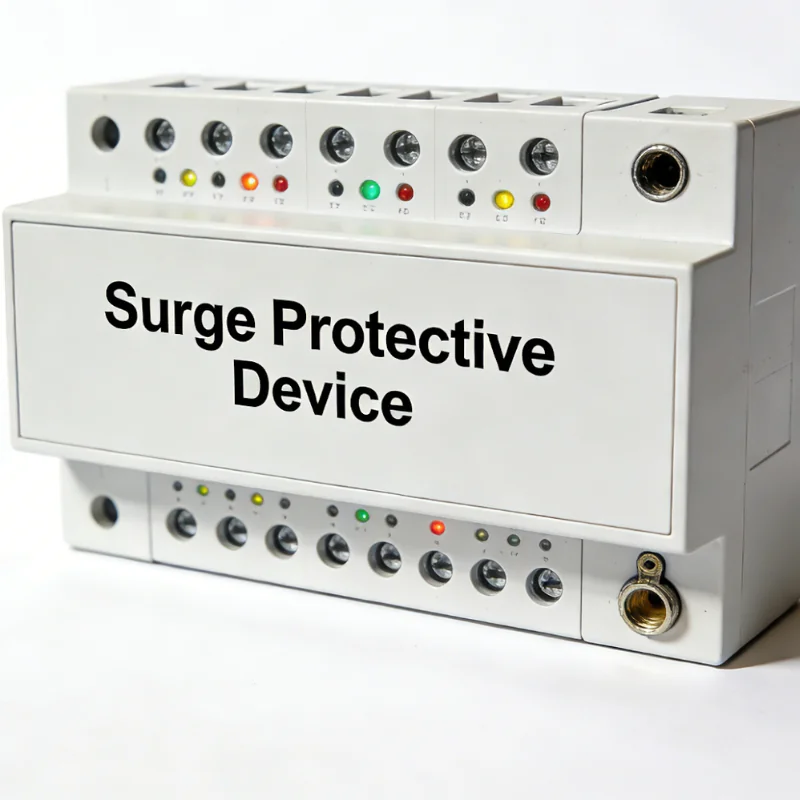
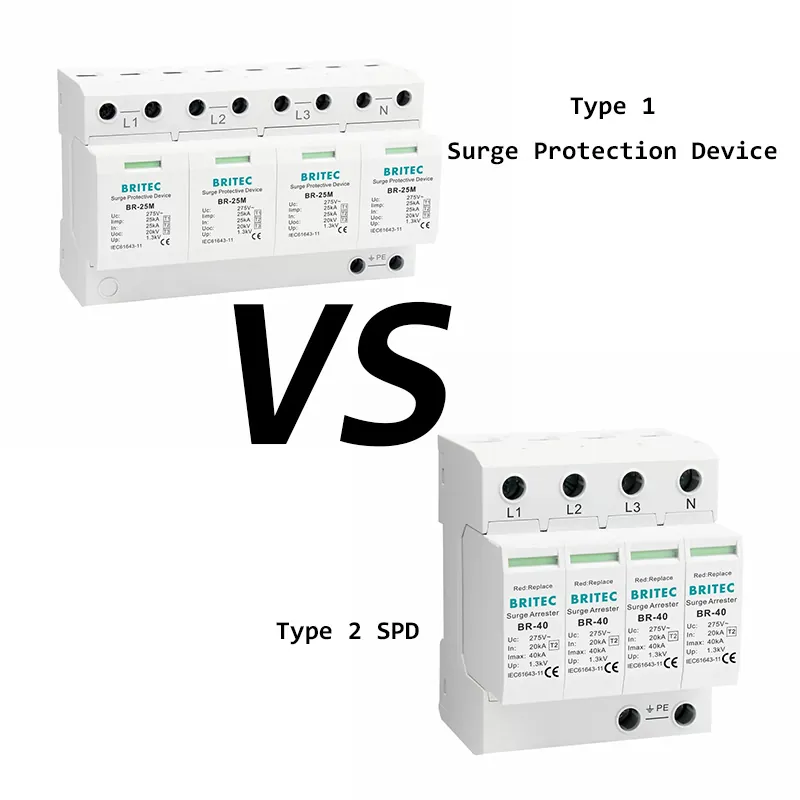
The Type 1 and Type 2 SPDs referred to in the industry are core categories classified according to IEC standards, corresponding to different surge protection levels. Their applicable scenarios, tolerance capabilities, and installation locations vary greatly, and should not be blindly mixed. Type 1 SPD, belonging to the first level protection, focuses on withstanding lightning strikes and high-energy surges. It can catch the huge current impact caused by direct lightning strikes and strong induction lightning, with extremely high peak withstand current and fast response. Specially installed at the entrance of the building’s main distribution line and the low-voltage side of the transformer, it is the first line of defense for the entire distribution system, removing the vast majority of external surge energy. The disadvantages are also obvious, with a larger volume, higher cost, and relatively higher residual voltage. Type 2 SPD belongs to secondary protection, focusing on handling internal overvoltage and residual surges. Regarding the residual surge after the discharge of Type 1 SPD, as well as the internal voltage spikes generated by grid operation and equipment start stop. The withstand current is lower than Type 1, but the voltage clamping ability is stronger, the residual voltage is lower, the size is compact, and the installation is flexible. Mostly used in floor distribution boxes, distribution cabinets, and important equipment front-end, it is the second line of defense, with a wider range of applicable scenarios and high cost-effectiveness. Summary in one sentence: Type 1 carries heavy loads, Type 2 provides precision protection, with clear hierarchy and division of labor. Together, they form a multi-level perlindungan lonjakan arus system.
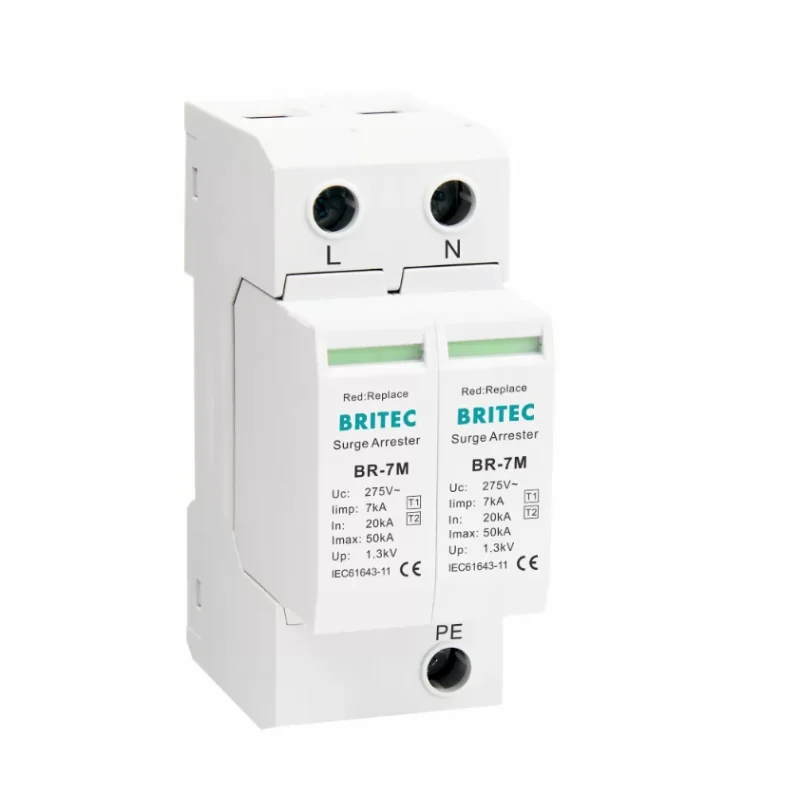
The first step in selection is to determine the local lightning risk level, which is the core basis for determining the SPD type. In open areas, high-rise buildings, mountain tops, and high-risk areas for lightning strikes along the coast, where the risks of direct and induced lightning are high, it is necessary to prioritize the installation of Type 1 SPDs and establish the first line of defense; The densely populated buildings, low rise factories, and ordinary office areas in the urban area have low lightning risks, and the main focus is on type 2 SPDs, which are mainly used to deal with internal surges. Risk assessment should not be based on intuition, but should refer to the daily statistics of landmines, building height, and surrounding environment. High risk areas must not save type 1 SPDs, otherwise surges will directly hit the backend equipment and the protection will be completely ineffective.
The distribution system hierarchy is different, and SPD types must be matched accordingly. The main distribution room and building incoming cabinet must be equipped with Type 1 SPD and connected to external high-energy surges; Floor distribution box, area distribution cabinet, equipped with type 2 SPD, further voltage residual; Precision equipment front-end can be equipped with three levels of SPD for precise protection. It is strictly prohibited to choose beyond the level: only type 2 is installed in the main incoming line, which cannot withstand high-energy surges and can directly penetrate; Installing Type 1 branch circuit is a pure waste of cost, with high residual voltage, and may actually harm backend equipment. Remember to ‘allocate type 1, allocate type 2’, and gradually release and reduce pressure layer by layer is the correct approach.
Once the type is determined,the core parameters cannot be taken lightly.This is a hard indicator. The focus of Type 1 SPD is on the nominal discharge current and maximum impulse current, which must withstand the estimated lightning strike energy in the local area;The key to type 2 SPD lies in the voltage protection level,that is,residual voltage,which must be lower than the withstand voltage of the backend equipment.At the same time,it is necessary to match the power supply system,voltage level,industrial three-phase power and household single-phase power,and SPD parameters are completely different.It also depends on the installation space and wiring method to ensure stable installation and standardized wiring.Do not cause SPD failure or even new electrical faults due to mismatched parameters or non-standard installation.
Q1:Can Type 1 Spd And Type 2 Spd Be Used Together?
A1:Sure,and highly recommended for pairing.Type 1 and Type 2 SPDs are not substitutes,but rather a collaborative effort.Type 1 releases amplified energy,Type 2 strictly controls residual pressure,multi-level coordination,and maximizes protective effect.As long as the installation is done in a hierarchical manner and the wiring is standardized,seamless connection can be achieved,resulting in higher overall protection reliability.
Q2:What Is A Surge Protective Device & Why Needed?
A2:Surge protection device is SPD,an electrical protective equipment used to limit transient overvoltage and discharge surge current.Nowadays,equipment is becoming increasingly sophisticated and sensitive to voltage fluctuations.Although the surge is short,it can directly penetrate electronic components,resulting in equipment scrapping,data loss,system shutdown, and significant losses from maintenance and production stoppage.Spending a small amount of money to install SPD can avoid large equipment losses and operational risks,which is a must-have.
Q3:What Are Spd Core Components & How Do They Work?
A3:The core components are gas discharge tubes,varistors,and in some scenarios,diode modules are added.Under normal conditions,high resistance insulation does not affect power supply; Once the overvoltage is triggered,the second becomes low resistance conduction,and the surge current quickly enters the ground;After the voltage stabilizes,it automatically restores insulation and responds throughout the process without manual operation.
Q4:Type 1 Vs Type 2 Spd: Core Characteristics Compared?
A4:The core difference lies in two points:protective capability and installation location. Type 1 is resistant to high-energy surges,equipped with a main incoming line,and focuses on discharge; Type 2 is resistant to moderate surges,equipped with distribution terminals,and focuses on controlling residual voltage;Type 1 has high current parameters,while Type 2 has better residual voltage control.With different division of labor,it is suitable for different protection levels.
Q5:What Is The Essential Difference Between Spd And Surge Protector?
A5:Quick circuit breaker prevents overcurrent,breaks the circuit in case of a fault,and protects the circuit;Surge protectors prevent overvoltage,limit voltage during operation,do not cut off power,and protect equipment.One tube for current breaking and fire prevention,and one tube for voltage discharge and breakdown prevention,have completely different protection logic and objects,and must be used in combination.
Q6:What Factors Should Be Considered When Selecting Type 1 Or Type 2 Spd?
A6:There are three key points to consider:the risk level of landmines,the level of power distribution installation,and the tolerance parameters of backend equipment.Next,consider the power supply voltage,installation space,and budget.Choose type 1 for high-risk scenarios,type 2 for ordinary scenarios,and choose a combination of multi-level systems instead of a one size fits all approach.
Perlindungan lonjakan arus is never an additional decoration,it is the bottom line guarantee for the safe operation of electrical systems.Type 1 SPDs are capable of withstanding external high-energy impacts,while Type 2 SPDs ensure the safety of backend equipment.Only with the proper coordination and cooperation of quick disconnect devices and surge protectors can a complete overcurrent and overvoltage protection system be established.Understanding the basic principles of SPD,distinguishing the core differences between Type 1 and Type 2,and accurately selecting based on actual scenarios are essential for effective protection,avoiding equipment damage and safety hazards caused by selection errors and configuration deficiencies.The selection of perlindungan lonjakan arus products,the construction of system solutions,reliable products,and professional support are crucial.Britec Listrik is deeply rooted in the field of electrical protection,focusing on high-performance and highly stable SPD products,covering all specifications of Type 1 and Type 2, suitable for various distribution scenarios,and can provide precise selection guidance and complete protection solutions to help various electrical systems build a strong safety line and operate stably in the long term.