
When a drive fails on a Tuesday morning, nobody logs it as surge damage. It goes down as a component failure, a warranty claim, or bad luck. The transient that caused it lasted microseconds, left no mark, and happened three weeks earlier when a compressor started up two panels away. That gap between cause and symptom is why surge damage is so consistently under-diagnosed — and why the case for an industrial surge protection device is usually made after the loss rather than before it. The seven mechanisms below are what actually happens inside your equipment, and each one tells you where protection needs to sit.
The IGBT modules and DC bus capacitors inside a variable frequency drive operate close to their voltage limits by design. A transient arriving on the supply pushes the DC bus above the rating of those components, and the result is either an immediate short circuit across the module or a puncture in the gate oxide that leaves the drive working but compromised.
This is the most expensive failure on the list. A drive module runs from several hundred to fifteen thousand dollars, and lead times of weeks are common on larger units, turning a microsecond event into an extended stoppage. A VFD surge protection device at the motor control centre is the intervention point.
Controllers fail in two distinct ways. A transient reaching the processor can corrupt memory without destroying hardware, so the PLC continues running but executes altered logic — the failure mode that produces mysterious sequence faults nobody can reproduce. Separately, surges arriving through field wiring destroy input and output cards directly, because the I/O terminals are connected to long cable runs across the plant.
An industrial surge protection device for PLC installations therefore needs to cover both paths. Protecting only the panel supply leaves every field-wired input as an open route into the rack.
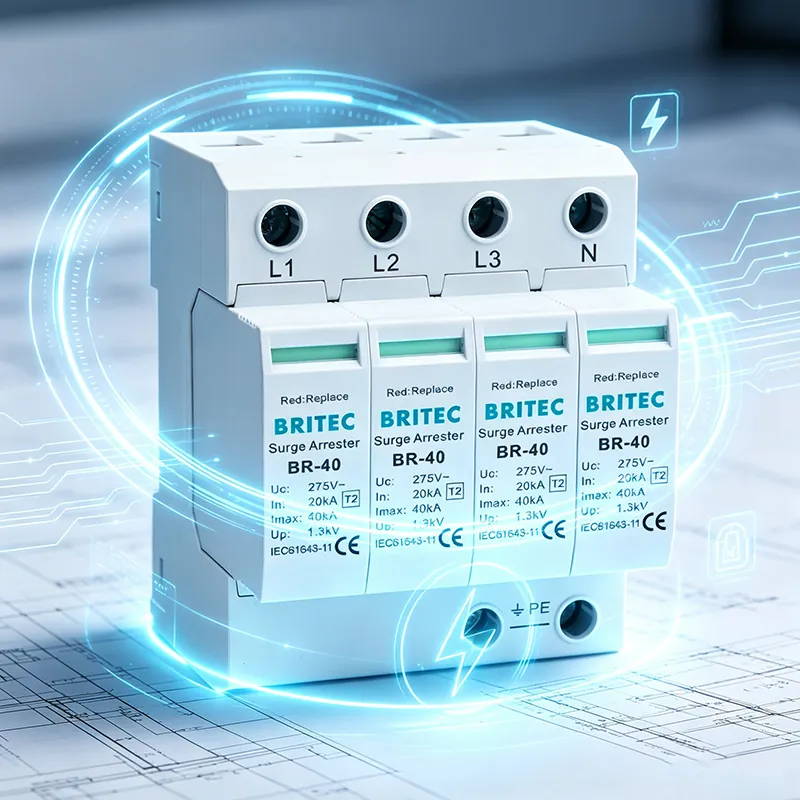
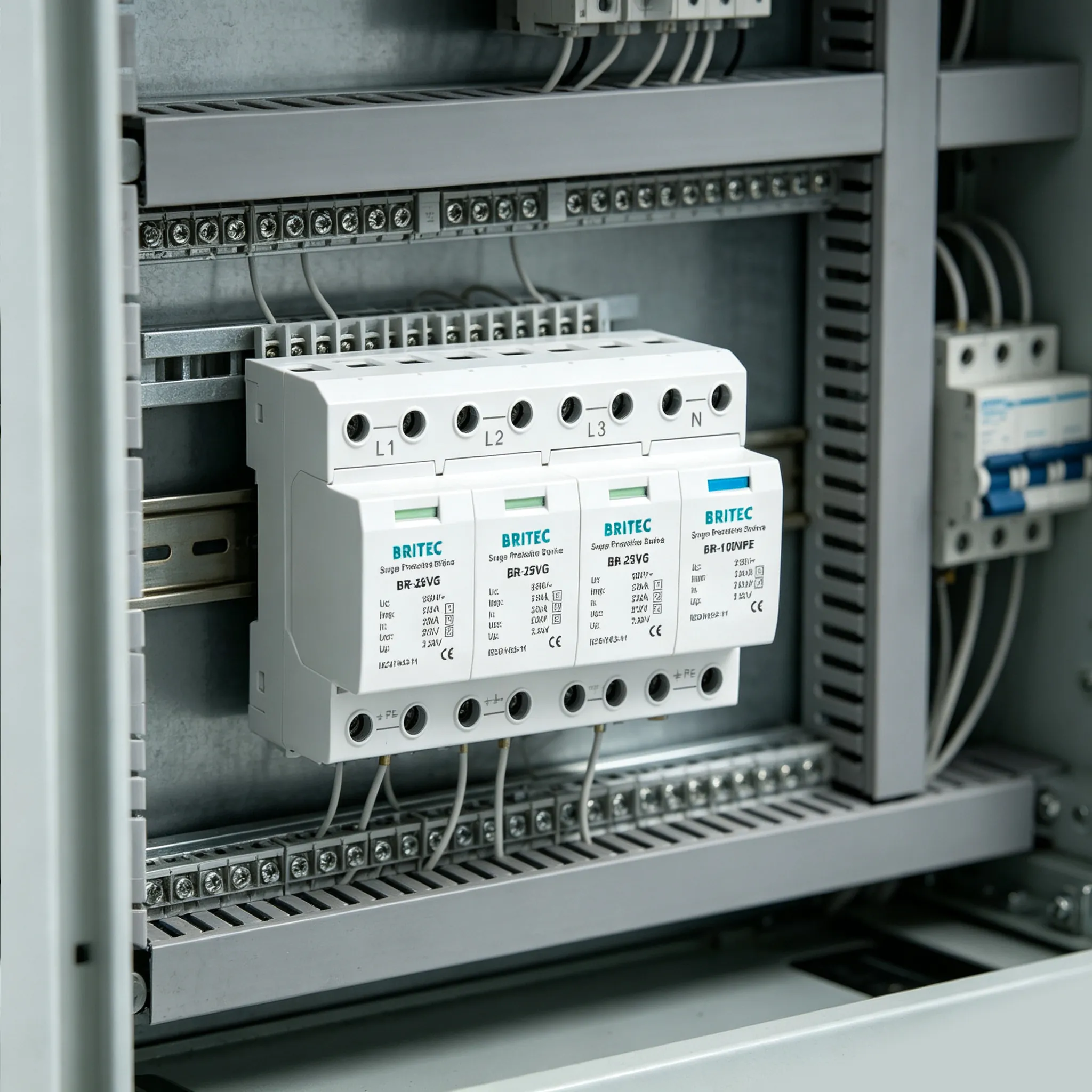
A Type 2 industrial SPD at the motor control centre — the intervention point for transients reaching drive and controller supplies.
Motors rarely fail from one surge. They fail from thousands. Each transient stresses the inter-turn insulation in the stator winding, and where the voltage gradient is steepest — typically the first few turns of the first coil — partial discharges erode the insulation film. On drive-fed motors the effect compounds, since reflected waves on the cable already double the voltage at the motor terminals. The failure arrives months later as a winding fault with no obvious trigger, which is why it is almost never attributed to surge activity.
Instrumentation failures split the same way as controller failures, and the silent version is worse. A transient through a 4-20 mA loop can destroy the input stage outright, giving you a dead channel you notice immediately. Or it can degrade the transmitter’s analogue front end so the device keeps reporting — slightly wrong.
A pressure transmitter reading two percent low does not raise an alarm. It quietly shifts your process, and in regulated production it can put an entire batch outside specification before anyone questions the instrument. Signal-line SPDs on loop circuits are the only practical defence.
Surge damage to the SCADA layer costs you information rather than hardware. A transient reaching servers, historians or network switches can interrupt logging mid-write, corrupting the records that prove a batch was manufactured correctly. In pharmaceutical, food and biotechnology plants that record is a regulatory obligation, so its loss can invalidate product that is otherwise perfectly good. An industrial SPD for SCADA system protection covers both the equipment supply and the data lines linking it to the plant floor.
The 24V switch-mode supply in a control panel is a single point of failure with an unusually wide blast radius. When a surge destroys it, everything it feeds — controllers, I/O modules, relays, HMI — loses power at once, and in the worst case the failing supply passes the transient downstream to the devices it was powering.
Uninterruptible power supplies deserve specific mention here, because they are widely assumed to provide surge protection. Most offer only limited filtering, and a UPS sitting unprotected on the incoming supply is itself a surge casualty waiting to happen.
The seventh mechanism never appears in a fault log. Every transient reaching an electronic device does a small amount of damage — stressing semiconductor junctions, degrading capacitor dielectrics, eroding relay contacts — and none of it individually causes a failure. What it does is shorten mean time between failures across your entire installed base. Equipment that should give fifteen years gives eight, and the shortfall is recorded as a series of unrelated random faults.
Those seven mechanisms trace back to three sources, and the balance between them is not what most people assume.
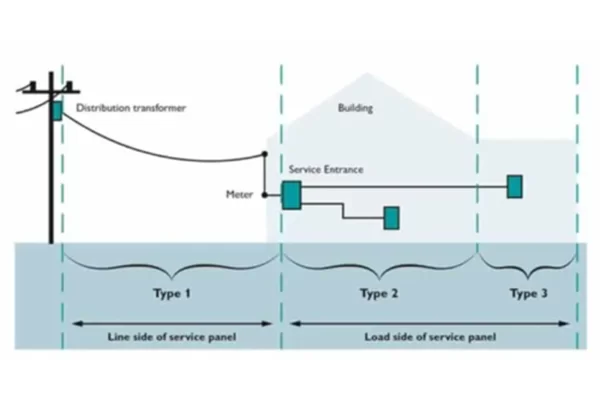
Lightning is the most severe but the least frequent. A direct or nearby strike delivers energy that no downstream device can absorb alone, and it reaches you through overhead supply lines, buried cabling and earthing systems alike. This is the exposure that IEC 62305 industrial surge protection risk assessment is designed to quantify, and it is what a Type 1 device at the service entrance exists to handle.
Utility switching sits in the middle. Capacitor bank switching, automatic reclosing after a fault and load transfers all produce transients arriving at your service entrance without warning and without any fault on your side of the meter.
Internal load switching is the most frequent by a wide margin, and it is generated by your own plant. Contactors opening, motors starting, welders firing and drives switching at kilohertz frequencies all put energy back onto the local supply, hundreds of times a day. The practical consequence is important: protection at the service entrance alone cannot address surges that originate downstream of it.
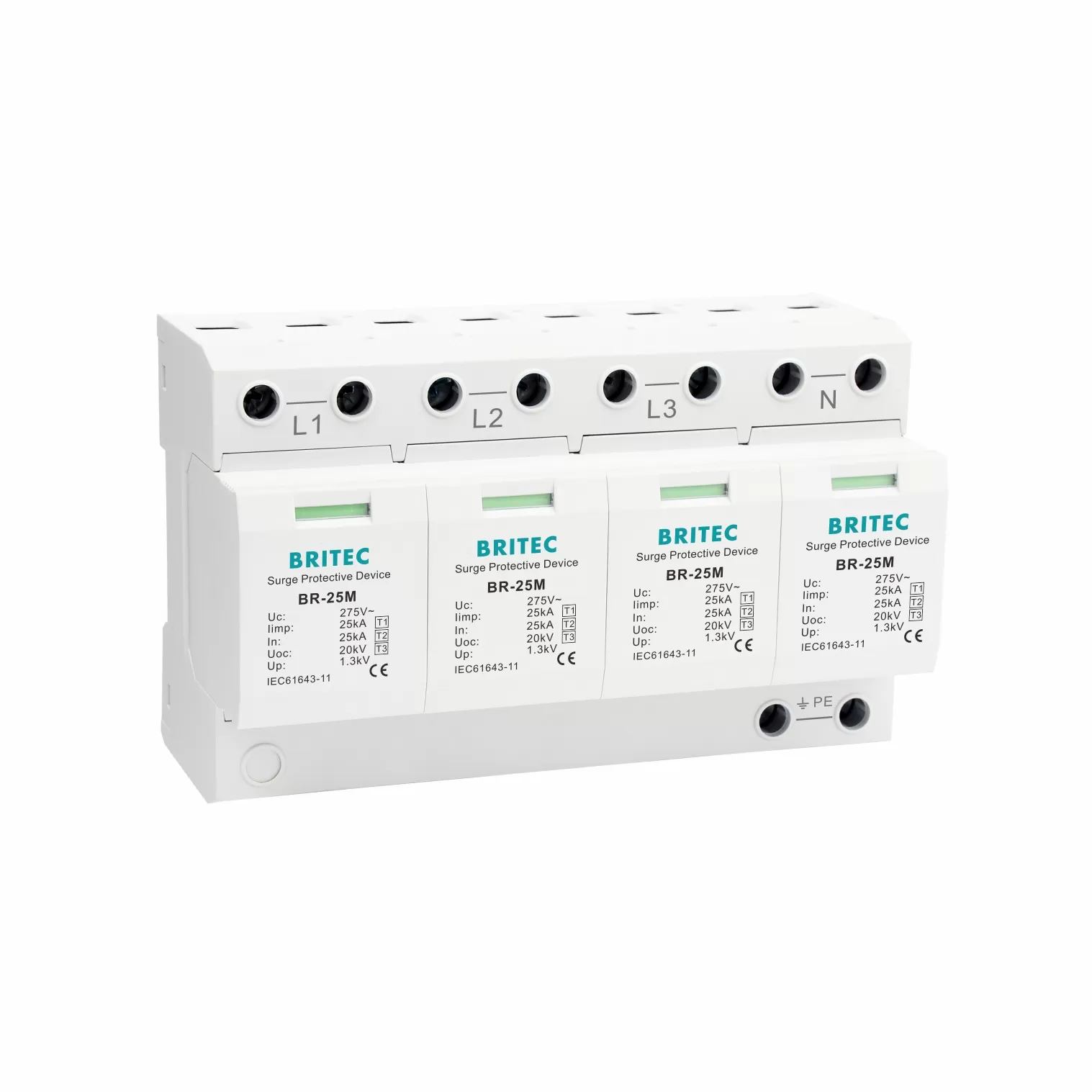
A Type 1 device at the service entrance handles the lightning-origin energy that downstream protection cannot absorb on its own.
The table below maps each of the seven damage mechanisms to where the energy comes from and the protection that interrupts it.
| Damage Mechanism | Typical Origin | Protection That Stops It |
| IGBT and DC bus failure in VFDs and servo drives | Utility switching and internal load transients | Type 2 SPD at the motor control centre; Type 3 at the drive panel |
| PLC logic corruption and I/O card burnout | Panel supply transients and surges on field wiring | Type 3 SPD at the control panel plus signal SPDs on I/O circuits |
| Motor winding insulation breakdown | Repeated switching transients and drive reflected waves | Type 2 at the MCC, reducing the transient count reaching motors |
| Sensor drift and dead 4-20 mA channels | Induced surges on long instrument cable runs | Signal-line SPDs at both transmitter and input card ends |
| SCADA data loss and corrupted records | Supply transients and surges on network cabling | Type 3 on server supplies plus data-line SPDs on network links |
| Switch-mode supply and UPS cascade failure | Transients passing through unprotected panel supplies | Type 2 upstream with Type 3 immediately ahead of the supply or UPS |
| Cumulative silent degradation | High-frequency internal switching, hundreds of events daily | Coordinated Type 1, 2 and 3 scheme lowering total transient exposure |
Read down the right-hand column and a pattern emerges: no single device covers the list. Lightning-origin energy needs interception at the boundary, internally generated transients need protection close to the equipment that suffers, and every signal or data circuit crossing the plant needs its own device. A coordinated scheme is not a premium option — it is what the failure mechanisms require.
Britec Electric Wenzhou has manufactured surge protective devices since 2003, holding ISO 9001 and ISO 14001 certification with products tested in-house to IEC 61643 and UL 1449.
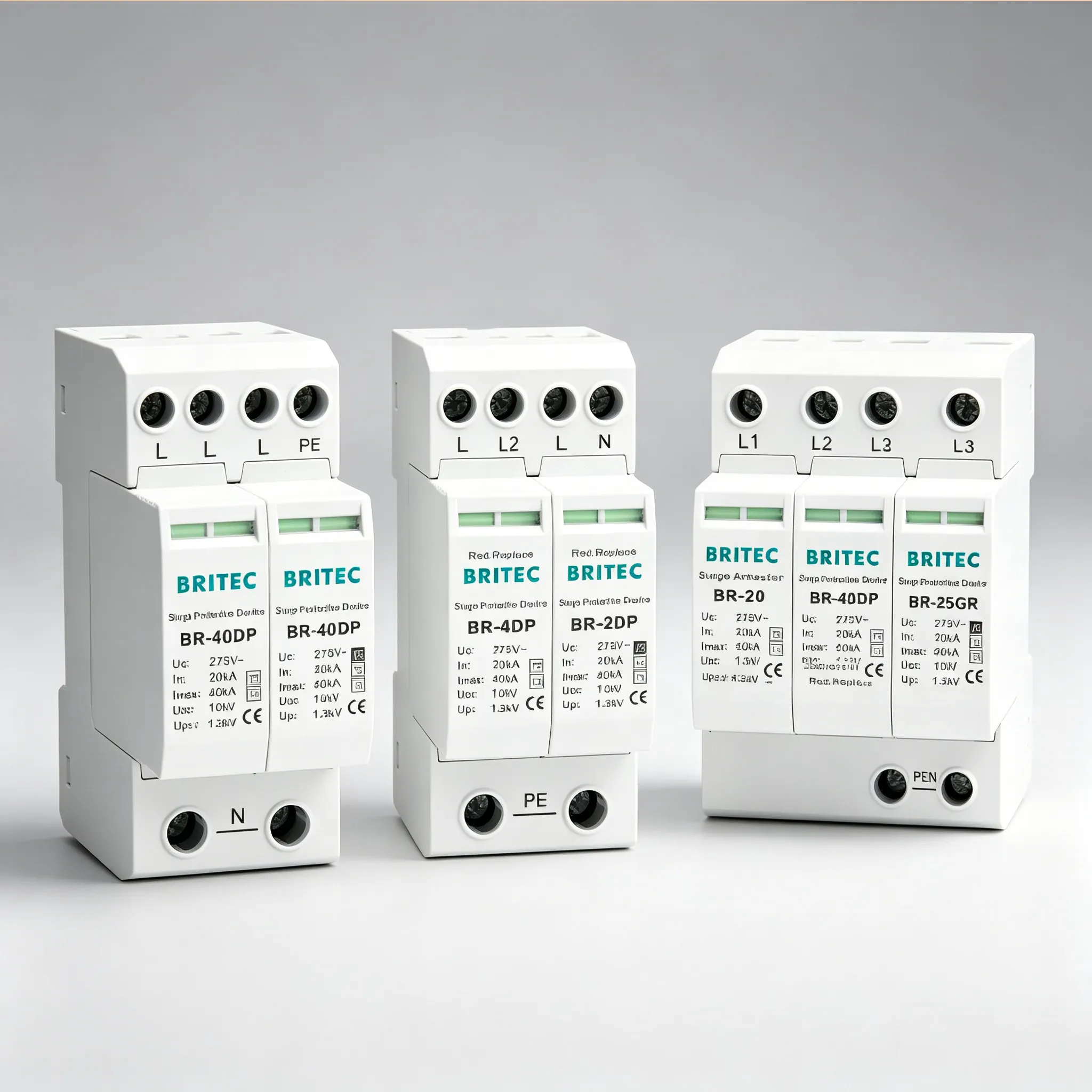
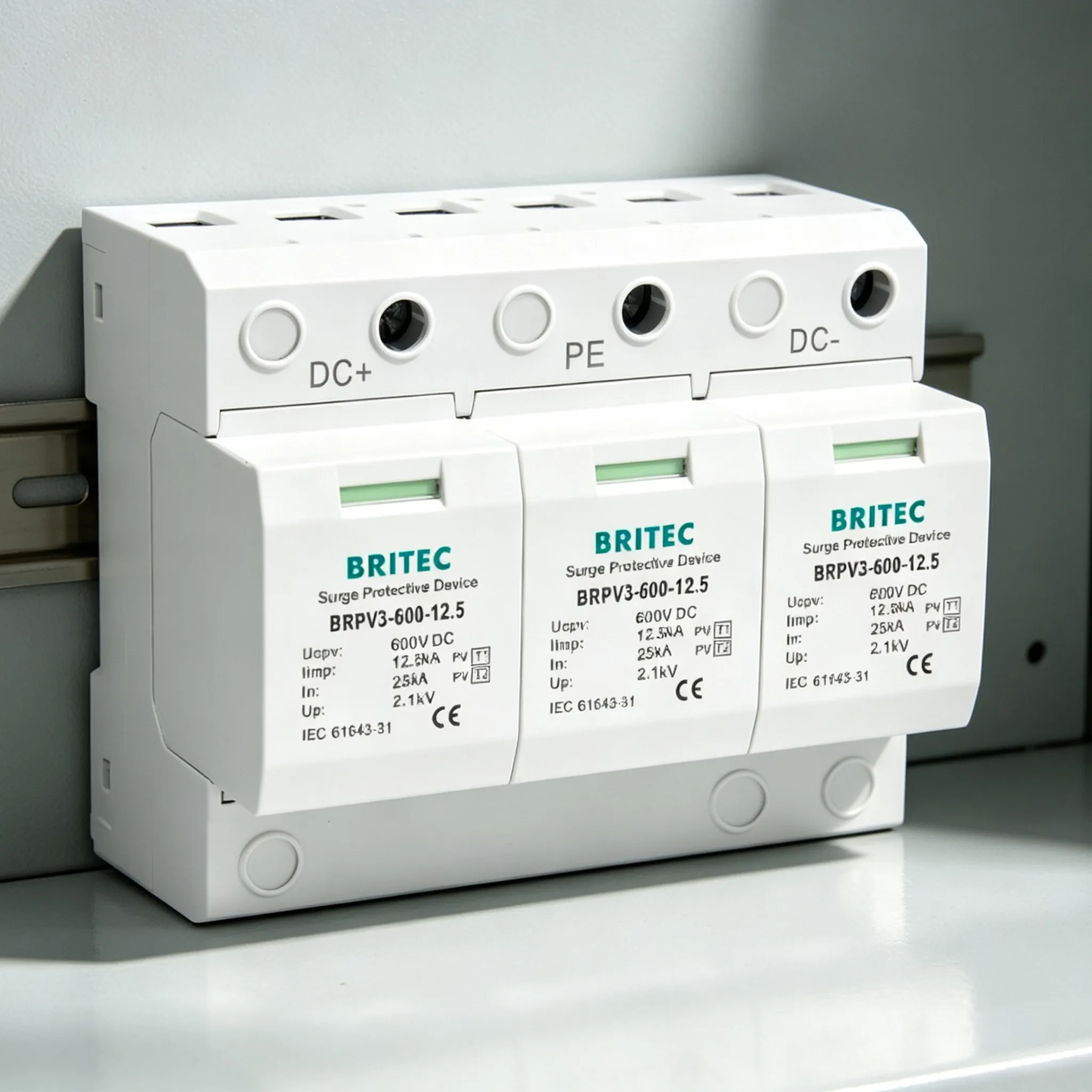
For plant protection, the useful characteristic is that one supplier covers every row of the table above. The range spans Type 1, Type 1+2, Type 2 and Type 3 AC devices in TN-S, TN-C and TT configurations, DC and PV protectors, and signal-line SPDs for instrumentation and data circuits — so the service entrance, the motor control centre, the machine panel and the SCADA network can be specified as one coordinated scheme with consistent documentation. Devices are available with replaceable modules, visual status indication and remote signalling contacts for unmanned installations, and OEM programmes are supported on roughly 45-day tooling.
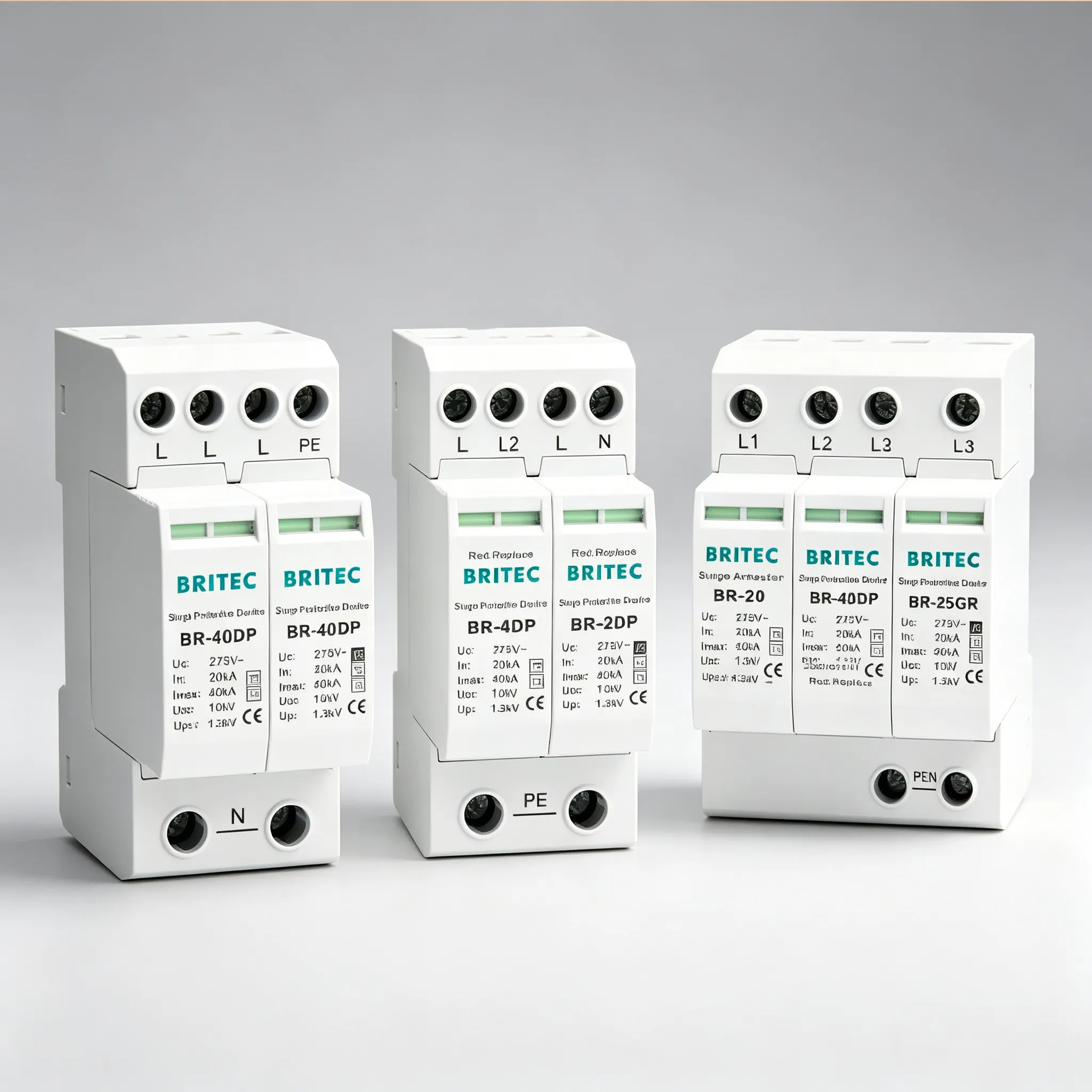
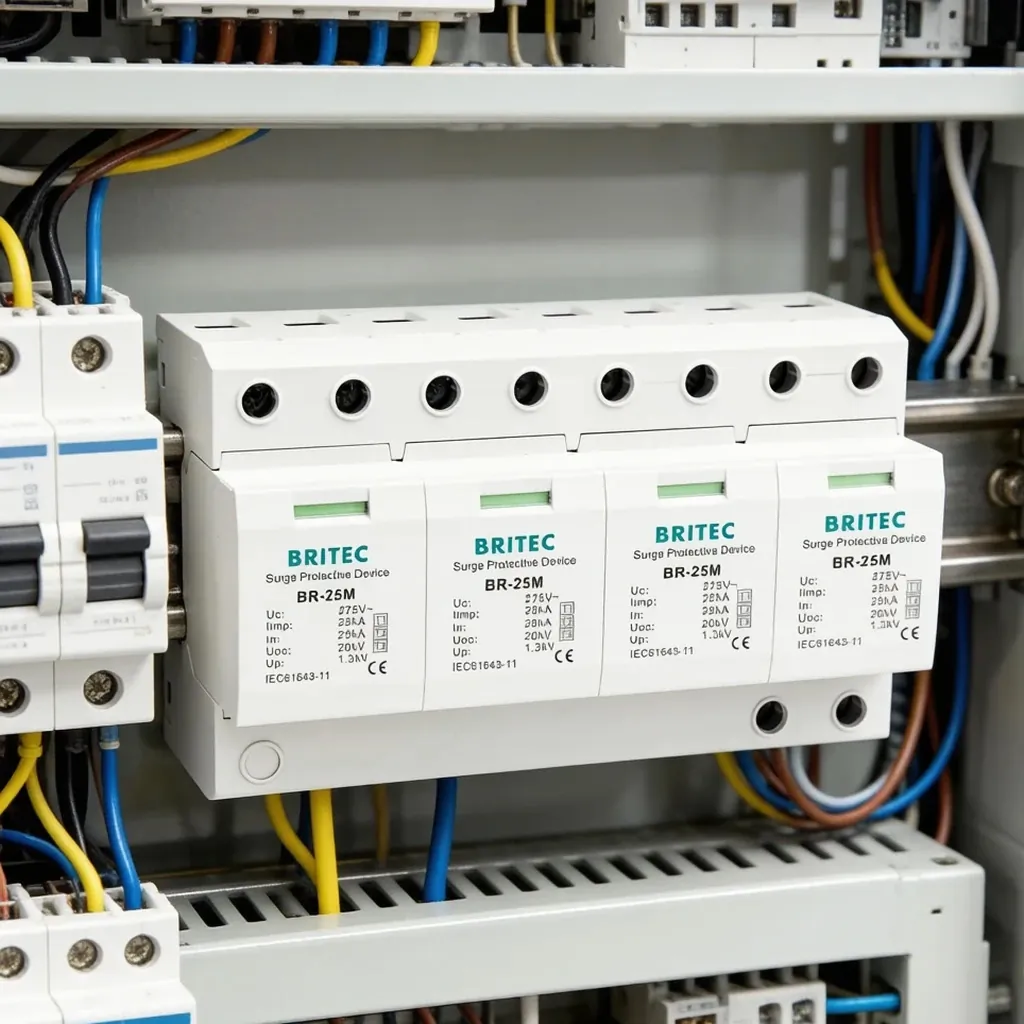
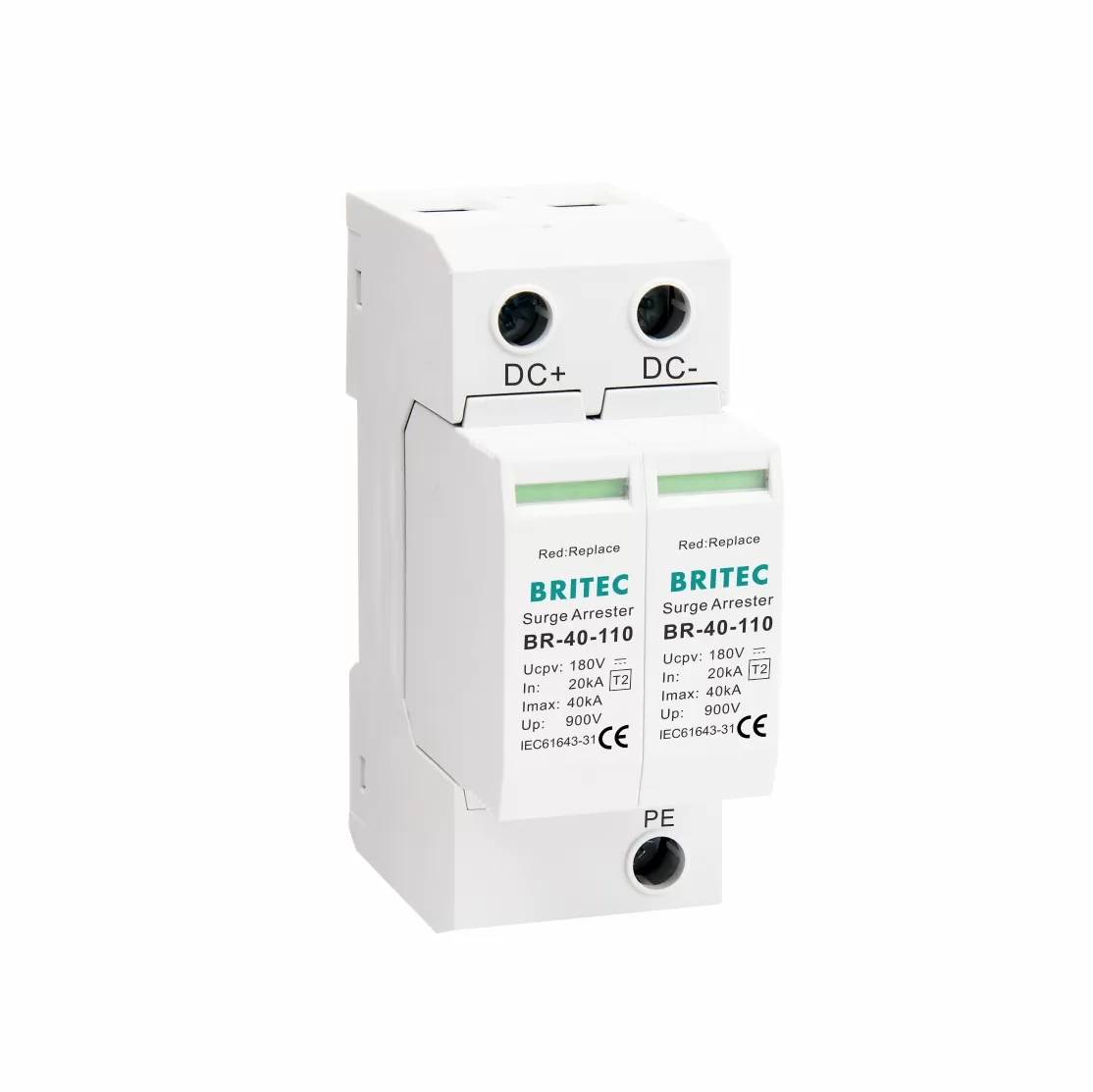
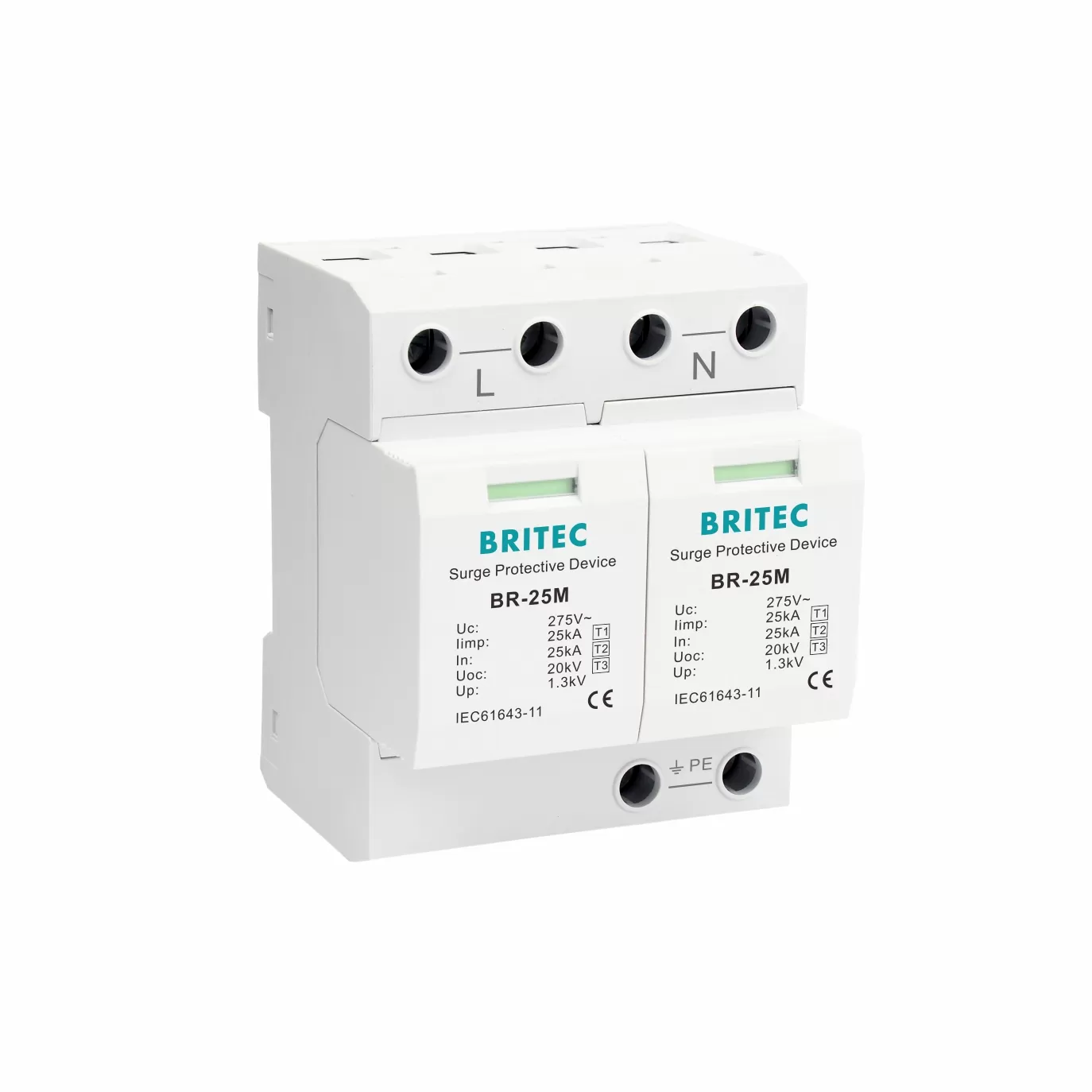
Britec surge protective devices on DIN rail, with the status indicator window used to confirm protection is still active.
It protects everything downstream containing electronics: variable frequency and servo drives, PLC processors and I/O cards, motor windings, 4-20 mA instrumentation, SCADA servers and network equipment, and the switch-mode supplies feeding control panels. Coverage depends on placement — a service entrance device handles incoming energy, while panel-level devices address transients generated inside the plant.
Yes, when correctly placed. Drives are protected by a Type 2 device at the motor control centre, ideally with Type 3 protection at the drive panel itself. PLCs need Type 3 protection on the panel supply plus signal-line SPDs on field wiring, since a significant share of controller damage enters through I/O terminals rather than the power supply.
Frequently. Latent damage is the normal outcome for lower-energy transients — degraded semiconductor junctions, eroded capacitor dielectrics and partial discharge in motor insulation all accumulate silently. The equipment continues operating and fails weeks or months later, which is why surge damage is so often recorded as an unrelated random fault.
They do, but only if positioned for it. Internally generated transients from contactors, drives and welders originate downstream of the service entrance, so an incoming Type 1 device cannot address them. Type 2 devices at distribution boards and Type 3 devices inside machine panels are what intercept these, and they matter more than lightning protection on many indoor manufacturing sites.
Service life depends on how much energy the device absorbs rather than on operating hours. Five to fifteen years is typical in moderate exposure, though a severe event can end it immediately. Check status indicators as part of routine maintenance and specify remote signalling contacts anywhere the device is not inspected regularly.
Surge damage in industrial plants is systematically under-diagnosed because six of these seven mechanisms produce delayed or invisible symptoms — corrupted PLC logic that reproduces as an intermittent sequence fault, a transmitter that drifts two percent instead of dying, motor insulation eroding over thousands of transients, and a background rate of electronic failures that nobody connects to electrical events at all; once you map each mechanism to its origin, the protection scheme follows logically, with a Type 1 device intercepting lightning energy at the boundary, Type 2 devices at motor control centres addressing the switching transients your own plant generates hundreds of times a day, Type 3 devices guarding sensitive panels, and signal-line SPDs closing the field-wiring routes into controllers and SCADA. If you are assessing surge exposure at your facility, contact Britec Electric at [email protected] or +86 0577-6260 5321 for technical drawings, certificates and a quotation on a coordinated scheme for your site — our technical team responds to all enquiries within 24 hours.