
If you specify surge protection across more than one industrial site, you already know that a device list which works for a bottling plant is wrong for a remote pump station. The equipment is different, the surge sources are different, and the consequences of a failure are measured in completely different units — lost batches in one case, an environmental discharge in another.
Industrial surge protection devices are selected on three questions: where does the surge come from, what does it reach, and where can you intercept it first. The answers change by sector, which is why a single recommendation like “fit a Type 2 at the main board” leaves so many facilities under-protected. This guide works through five industrial sectors and sets out, for each one, the dominant surge sources, the equipment most at risk, and the device types and installation points that match the exposure.
Your surge exposure here is dominated by geography. Wellheads, tank farms and pipeline stations sit in open terrain with long overhead supply lines and tall structures, which makes direct and nearby lightning strikes the primary threat. Large compressors and pump motors add switching transients from inside the fence.
What that surge reaches is disproportionately expensive: SCADA remote terminal units, flow computers, gas detection heads, and emergency shutdown systems. An ESD system that fails a self-test can force a controlled shutdown of the whole process.
Specify a Type 1 industrial SPD at the service entrance wherever an external lightning protection system is installed, a Type 2 at motor control centres and sub-distribution boards, and signal-line SPDs on instrumentation and telemetry. One practical constraint: in hazardous-area classifications, mount the devices in safe-area enclosures or the control room rather than in Zone 1, and protect the cabling that crosses the boundary.
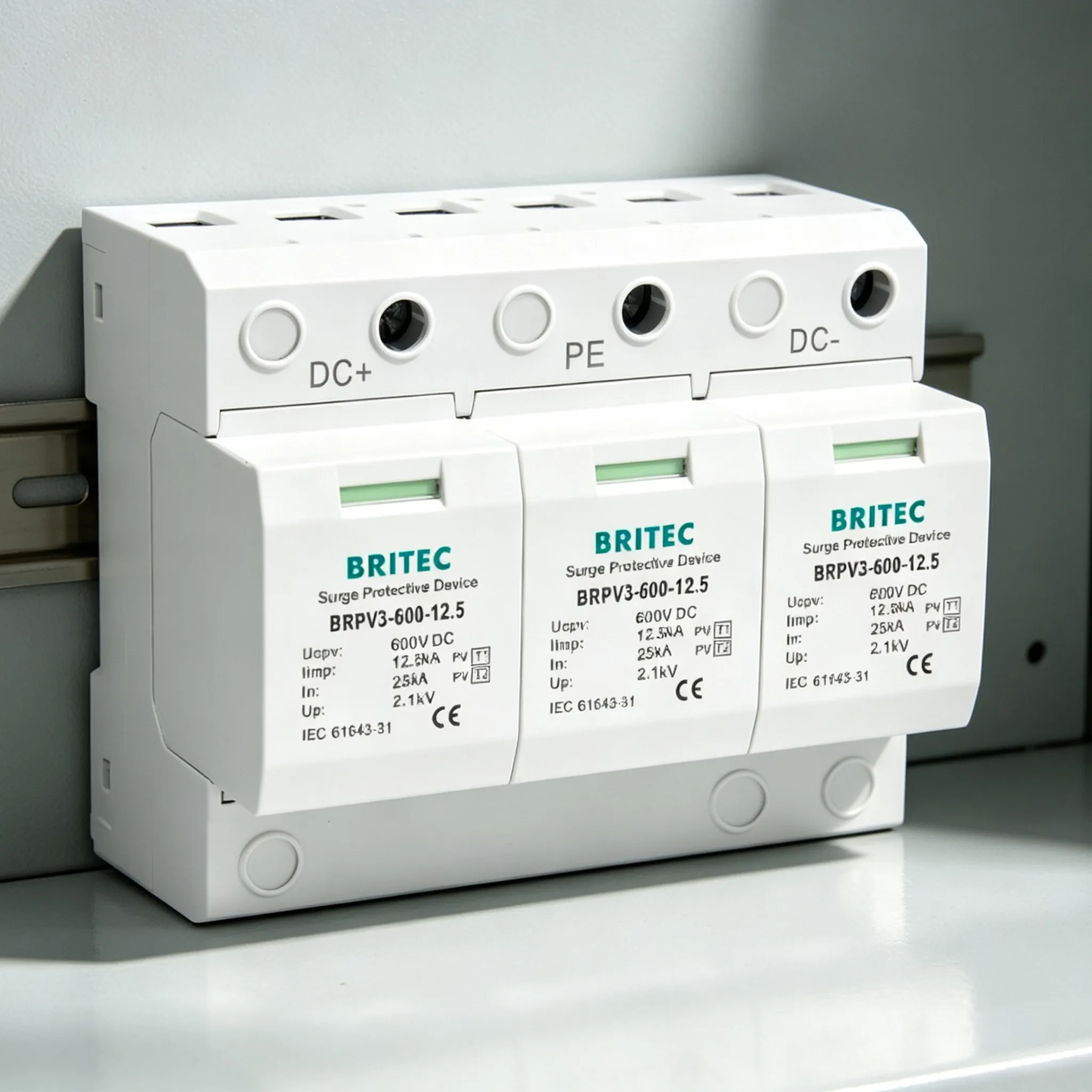
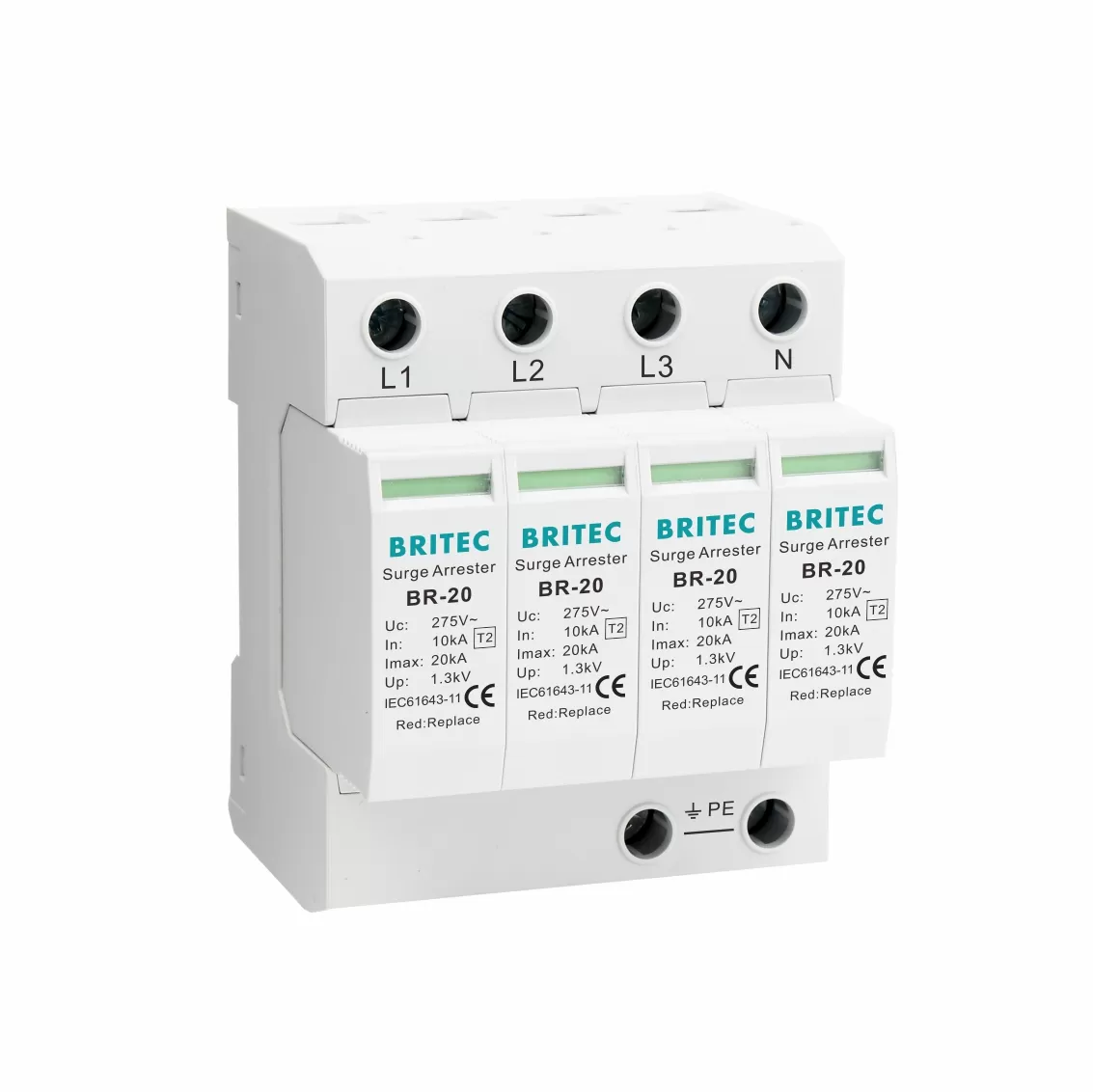
A Type 1 industrial SPD rated for 25kA Iimp — the service-entrance device specified where an external lightning protection system is present.
Water networks are dispersed by design, and every remote pump station, borehole and lift station is an independent point of exposure. Long cable runs between sites collect induced surge energy, and most of these assets are unmanned, so a failure is discovered when a level alarm stops reporting rather than when it happens.
The vulnerable equipment is a familiar list: pump VFDs, level and flow transmitters, dosing controllers, and the telemetry radios reporting back to central SCADA. Because so much instrumentation runs on 4-20 mA loops, protecting only the power side leaves an open path into the control panel.
For a surge protection device for a water treatment plant, use a Type 1+2 combined unit at each remote station service entrance where panel space is limited, a Type 2 at the main plant distribution board, and signal SPDs on both instrumentation loops and antenna feeds. Telemetry masts deserve particular attention, as the coaxial feed is a direct route from the most exposed point on site into the electronics.
Substations and generating stations see the highest surge energies of any sector, from lightning on transmission infrastructure and from switching within the station itself — breaker operations, capacitor bank switching and transformer energisation all push fast transients into the auxiliary supply.
The equipment that suffers is not the high-voltage plant but the low-voltage systems supporting it: protection relays, RTUs, battery chargers, and the communications carrying teleprotection signals. A relay that misoperates after a transient can trip a healthy circuit or fail to trip a faulted one.
Specify an industrial surge arrester for substation service at the station auxiliary supply entrance — typically a Type 1 device — with Type 2 protection at auxiliary distribution boards and dedicated data-line SPDs on communications circuits. Coordination matters more here than elsewhere, since the residual energy passing a first-stage device is proportionally larger.
In regulated production, the cost of a surge is rarely the damaged component. It is the batch. A transient that corrupts a PLC mid-cycle, or interrupts the environmental monitoring of a cleanroom, can invalidate a production run and the records that prove it was made correctly.
Your exposure is less about lightning and more about internal switching — refrigeration compressors, sterilisers and large HVAC plant cycling on and off — combined with utility-side disturbances. At risk are batch controllers, weighing and filling systems, environmental monitoring, and the historian servers holding your compliance data.
A Type 2 device at each distribution board with Type 3 protection at sensitive machine panels covers most of the risk, and data-line SPDs on the SCADA and historian network close the remaining gap. Choose devices with remote status contacts so that a failed protection module raises an alarm in the control system rather than waiting for a manual inspection.
On a modern machine line, most of the damaging transients are generated inside your own building. Every contactor opening, every VFD switching at kilohertz frequencies, and every resistance welder firing puts energy back onto the local supply. This is why a PLC VFD surge protection device strategy that relies solely on a service-entrance arrester tends to disappoint — the surge originates downstream of it.
The equipment most exposed is also the slowest to source: IGBT modules in variable frequency and servo drives, PLC processor and I/O cards, robot controllers and vision systems. Several weeks’ lead time on a drive module turns a minor electrical event into an extended stoppage.
Fit Type 2 devices at motor control centres and Type 3 devices inside individual machine panels, close to the load they protect. Keeping the connecting conductors short — within roughly 0.5 metres — preserves the protection level the datasheet promises, which is easy to lose through generous cable loops.
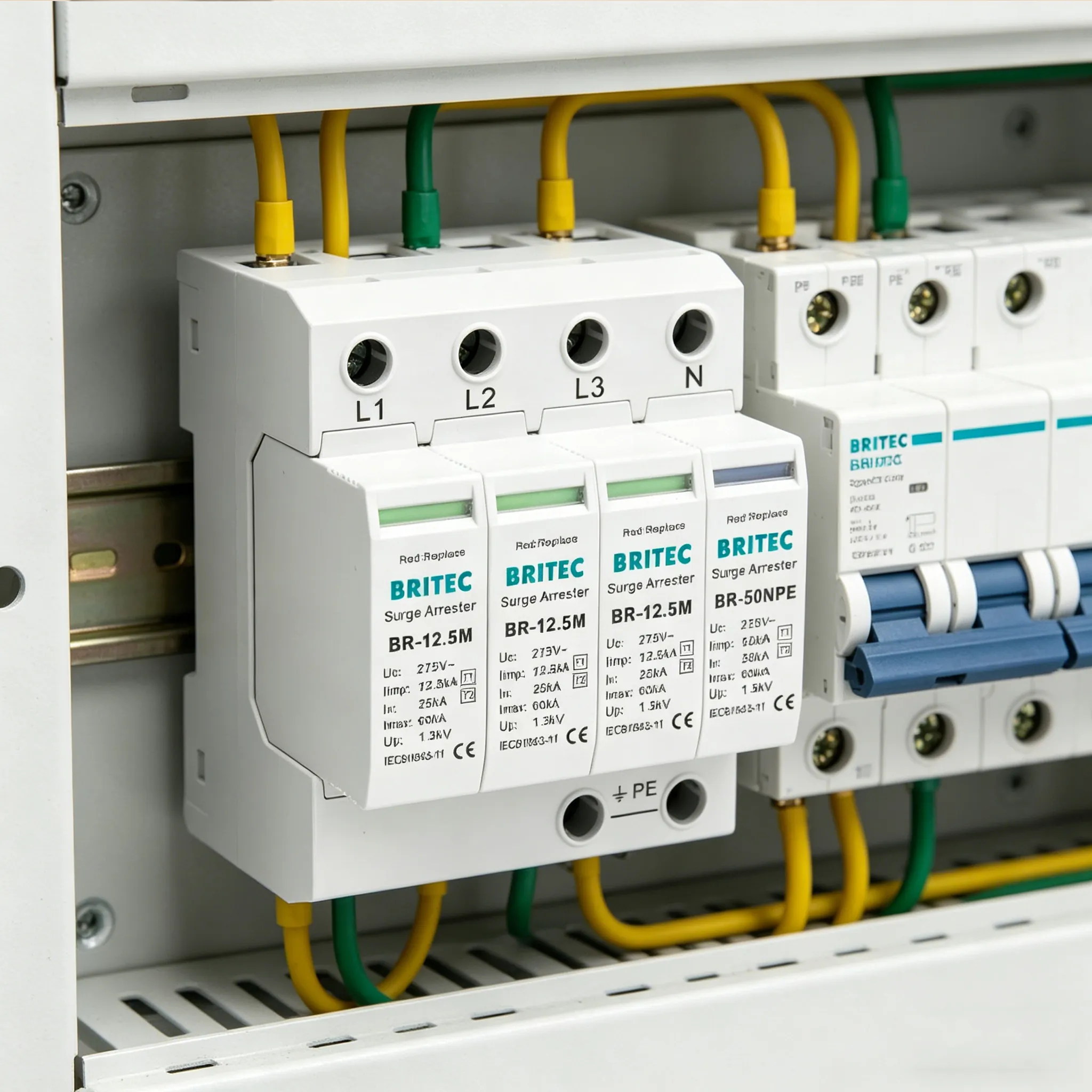
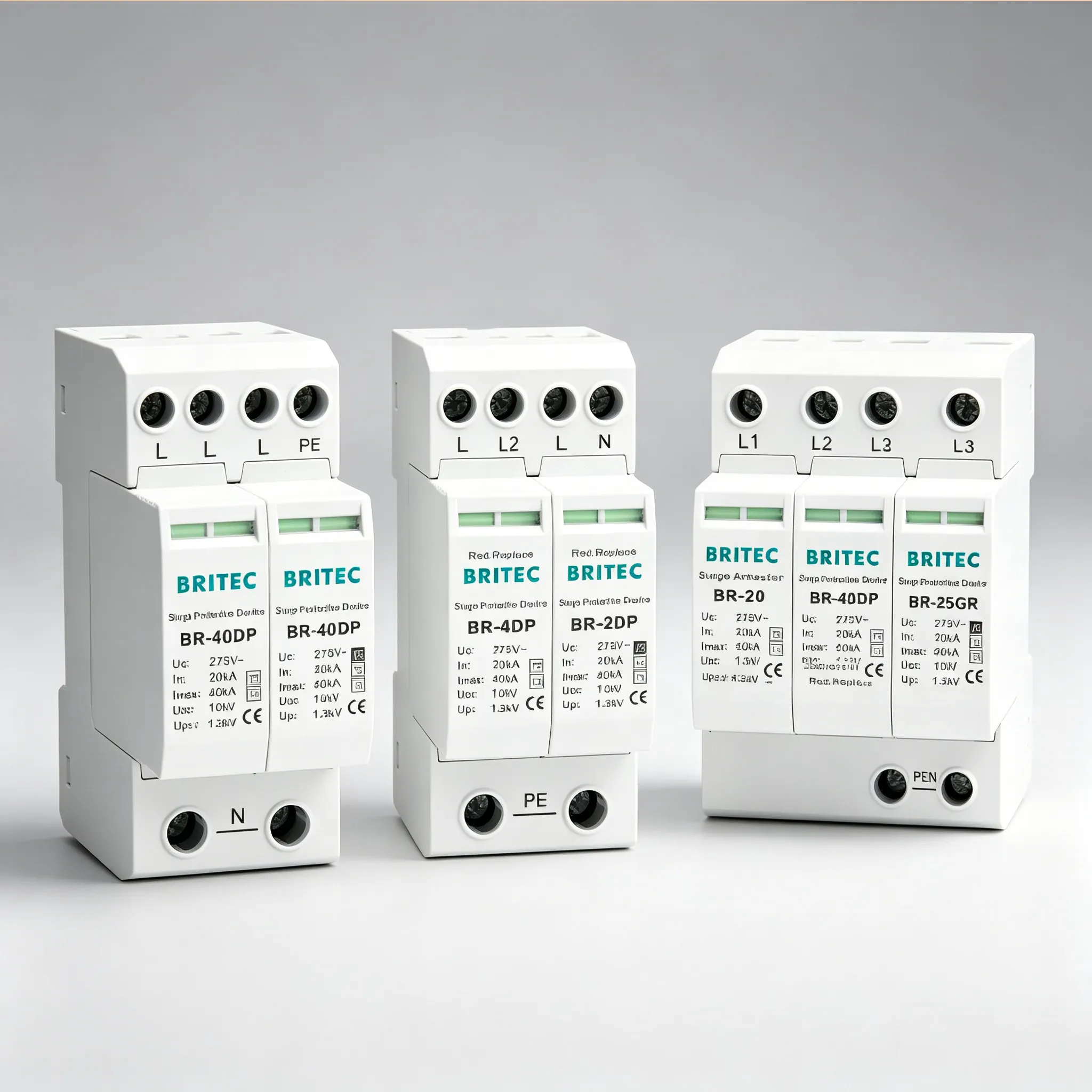
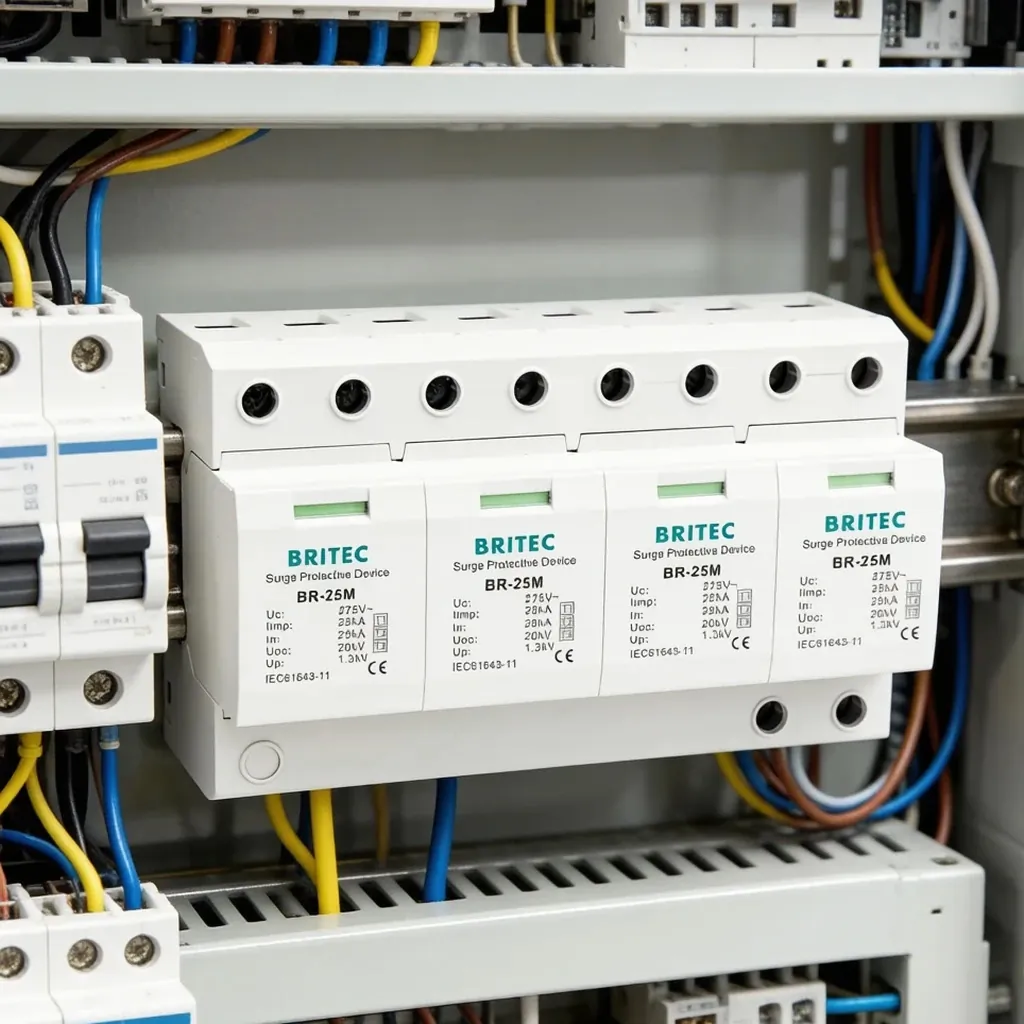
A Type 1+2 combined device in 3P+N configuration — a space-efficient option where a remote station or machine line has limited panel width.
The matrix below summarises the five sectors, the surge sources that dominate each, the equipment most at risk, and the recommended device types and installation points.
| Sector | Main Surge Sources | Critical Equipment | Recommended SPD Type & Location |
| Oil, gas & petrochemical | Direct and nearby lightning; compressor and pump switching | SCADA RTUs, flow computers, gas detection, ESD systems | Type 1 at service entrance; Type 2 at MCCs; signal SPD on instrumentation |
| Water & wastewater | Induced surges on long inter-site cabling; lightning at remote sites | Pump VFDs, level and flow transmitters, dosing control, telemetry | Type 1+2 at remote station entrance; Type 2 at plant board; signal SPD on 4-20 mA and antenna feeds |
| Power generation & substations | Transmission lightning; breaker, capacitor and transformer switching | Protection relays, RTUs, battery chargers, teleprotection links | Type 1 at auxiliary supply entrance; Type 2 at auxiliary boards; data SPD on comms |
| Food, pharma & biotech | Internal switching from refrigeration, sterilisers and HVAC; utility disturbances | Batch controllers, filling and weighing systems, environmental monitoring, historians | Type 2 at distribution boards; Type 3 at machine panels; data SPD on SCADA network |
| Manufacturing with PLCs, VFDs & robotics | Internally generated switching transients from contactors, drives and welders | VFD and servo IGBT modules, PLC processor and I/O cards, robot and vision controllers | Type 2 at MCCs; Type 3 inside machine panels with leads under 0.5 m |
Two patterns run through the matrix. Sectors exposed to open terrain need protection highest up the chain, at the service entrance, while those whose surges are self-generated need it closest to the load. And every sector carries signal or data circuits needing their own protection — power-side devices alone leave a route into the control system in all five cases.
Britec Electric Wenzhou has manufactured surge protective devices since 2003, with ISO 9001 and ISO 14001 certification and products tested to IEC 61643 and UL 1449. Testing is carried out in-house, and the supply chain is traceable from raw material through to finished module.
For industrial projects, the practical advantage is that one supplier covers the whole scheme. The range spans Type 1, Type 1+2, Type 2 and Type 3 AC devices in TN-S, TN-C and TT configurations, DC and PV protectors, and signal-line SPDs — so the service entrance, the motor control centre, the machine panel and the SCADA network are specified and documented together. Britec supplies the oil and gas, petrochemical, power generation, food, pharmaceutical, biotechnology and water treatment sectors, with OEM and ODM programmes on roughly 45-day tooling for non-standard configurations.
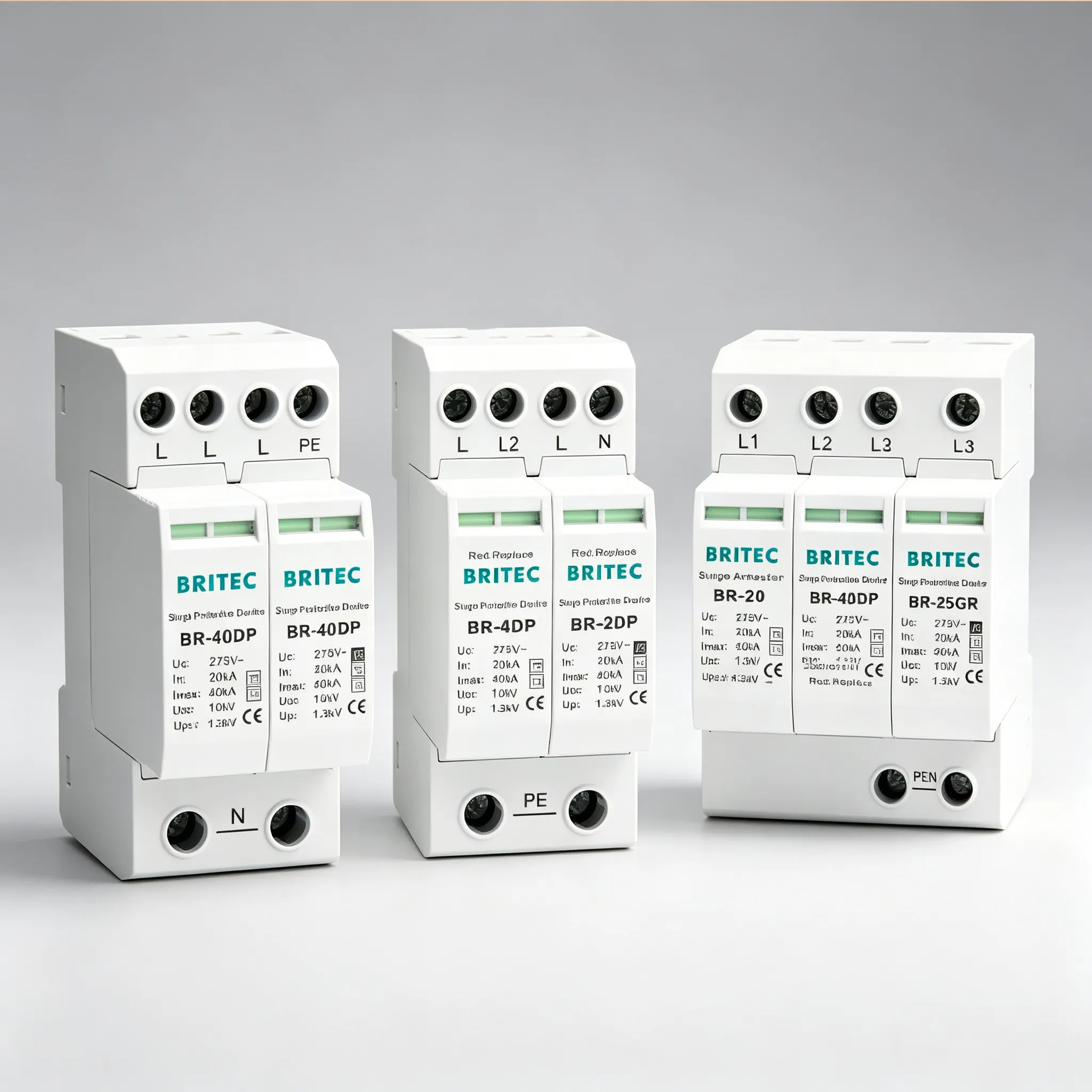
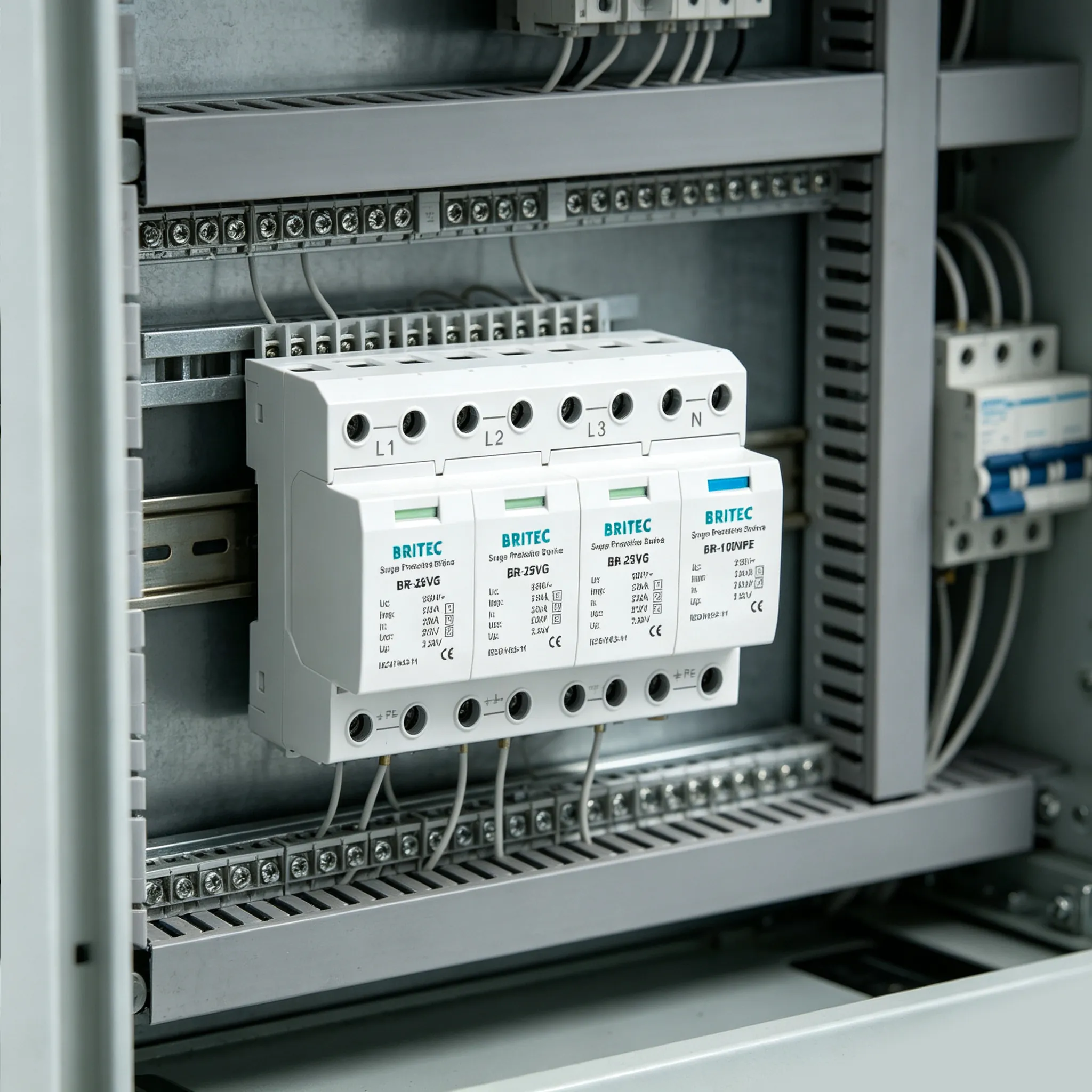
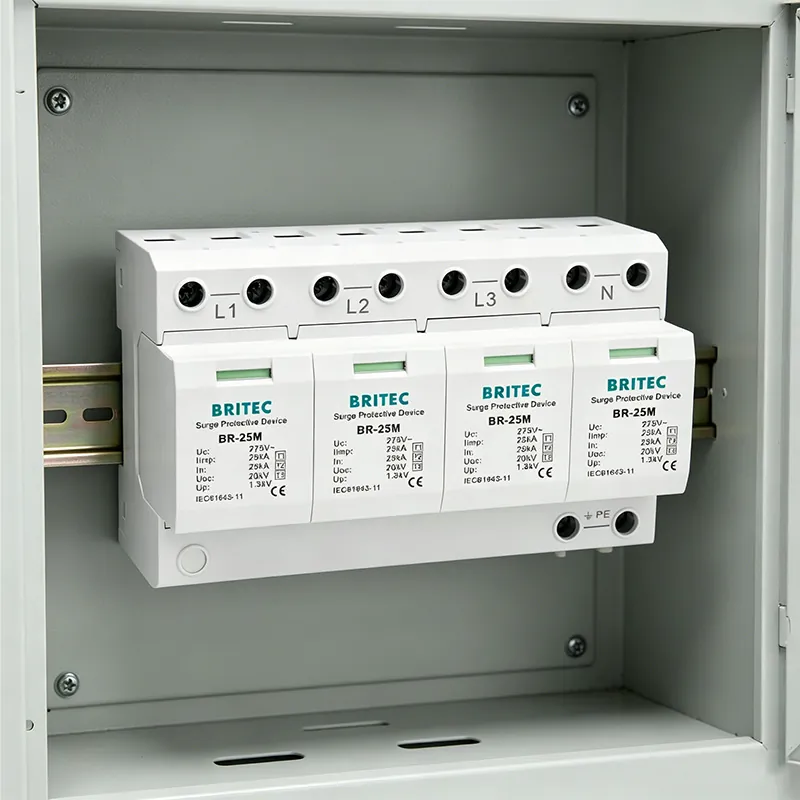
Britec surge protective devices installed on DIN rail in a distribution enclosure, with the status indicator window visible for routine inspection.
Oil and gas, water treatment, power generation and manufacturing carry the highest exposure, for different reasons. The first three combine outdoor infrastructure with lightning risk, while manufacturing generates most of its transients internally. Regulated production such as pharmaceuticals ranks high on consequence rather than frequency — one corrupted batch record can cost more than the equipment.
Where an external lightning protection system is installed, a Type 1 device tested to the 10/350 µs waveform is required at the service entrance, supported by Type 2 devices at motor control centres and signal SPDs on instrumentation. In hazardous-area zones, install the devices in safe-area enclosures and protect the circuits crossing the boundary rather than mounting equipment inside the classified zone.
Protect three points: the service entrance of every remote pump or lift station, the main plant distribution board, and the signal circuits — both 4-20 mA instrumentation loops and telemetry antenna feeds. Remote unmanned sites deserve first priority, since they combine the highest exposure with the longest time to discover a fault.
Yes. Contactor operations, motor starting and stopping, and high-frequency switching inside VFDs all inject transients onto the local supply. These are lower in energy than lightning but far more frequent, and cumulative exposure degrades nearby electronics — which is why Type 3 protection close to the load matters on drive-heavy lines.
On any unmanned or hard-to-access installation, yes. A surge protective device that has reached end of life looks identical to a working one from a distance, so a remote signalling contact wired into the PLC or SCADA system is the only practical way to know. For accessible indoor boards inspected regularly, a visual status window is usually sufficient.
Industrial surge protection devices only work when they are matched to the exposure of the site they defend — a Type 1 arrester at the service entrance is essential on a lightning-exposed wellhead or substation and largely irrelevant to a machine line whose transients are generated by its own drives, while the signal and data circuits that every one of these five sectors depends on need their own protection regardless of what sits on the power side; work through your facilities sector by sector, identify where the energy comes from and what it would reach first, and build a coordinated scheme from service entrance to machine panel rather than a single device at the board. If you are specifying protection for an industrial project, contact Britec Electric at [email protected] or +86 0577-6260 5321 for technical drawings, certificates and a quotation on the configurations your site requires — our technical team responds to all enquiries within 24 hours.