
While both lightning arresters and Type 1 Surge Protection Devices (SPDs) shield electrical infrastructure from high-voltage transients, they serve distinct roles in power protection networks. This comprehensive guide breaks down their differences in operation, placement, and standards (IEC/UL), helping B2B procurement managers and electrical engineers make informed decisions to safeguard critical equipment.
When designing electrical safety architecture for commercial buildings, industrial facilities, or power infrastructure, securing the primary power inlet against high-energy transients is critical. However, engineers and procurement managers often use the terms Blitzableiter Und Überspannungsschutzgerät Typ 1 (SPD) interchangeably.
While both devices serve the ultimate purpose of suppressing destructive voltage spikes caused by atmospheric discharges or grid switching, they are built for different deployment zones, operating principles, and compliance standards. Understanding these differences is essential to ensuring full protection for downstream equipment and compliance with international standards such as IEC 61643-11 Und UL 1449.
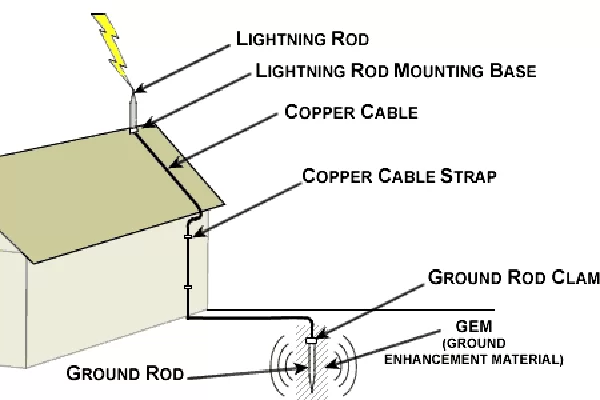
A Blitzableiter (often installed outdoors) is a high-voltage protection device installed on transmission lines, substations, and overhead lines. Its primary function is to prevent direct lightning strikes from damaging transformers, insulators, and heavy utility equipment by diverting high-voltage impulses directly to the earth.
Lightning arresters operate primarily on external distribution systems. They handle extreme energy surges, frequently rated in tens of kilovolts (kV), before power ever enters a building’s internal switchgear.
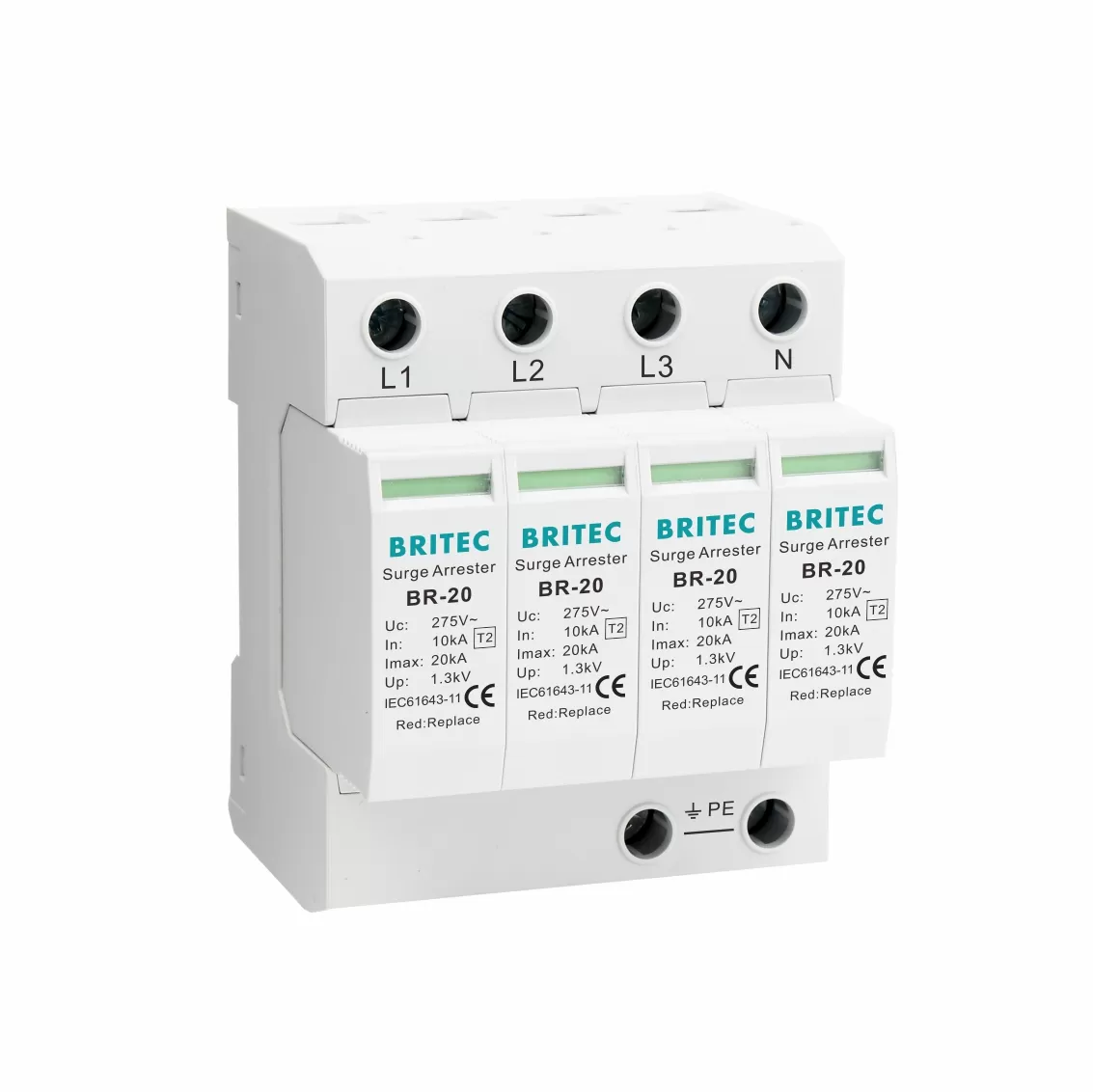
A Überspannungsschutzgerät Typ 1 (also known as a Class I SPD) is specifically designed for low-voltage electrical installations at the main distribution board (service entrance).
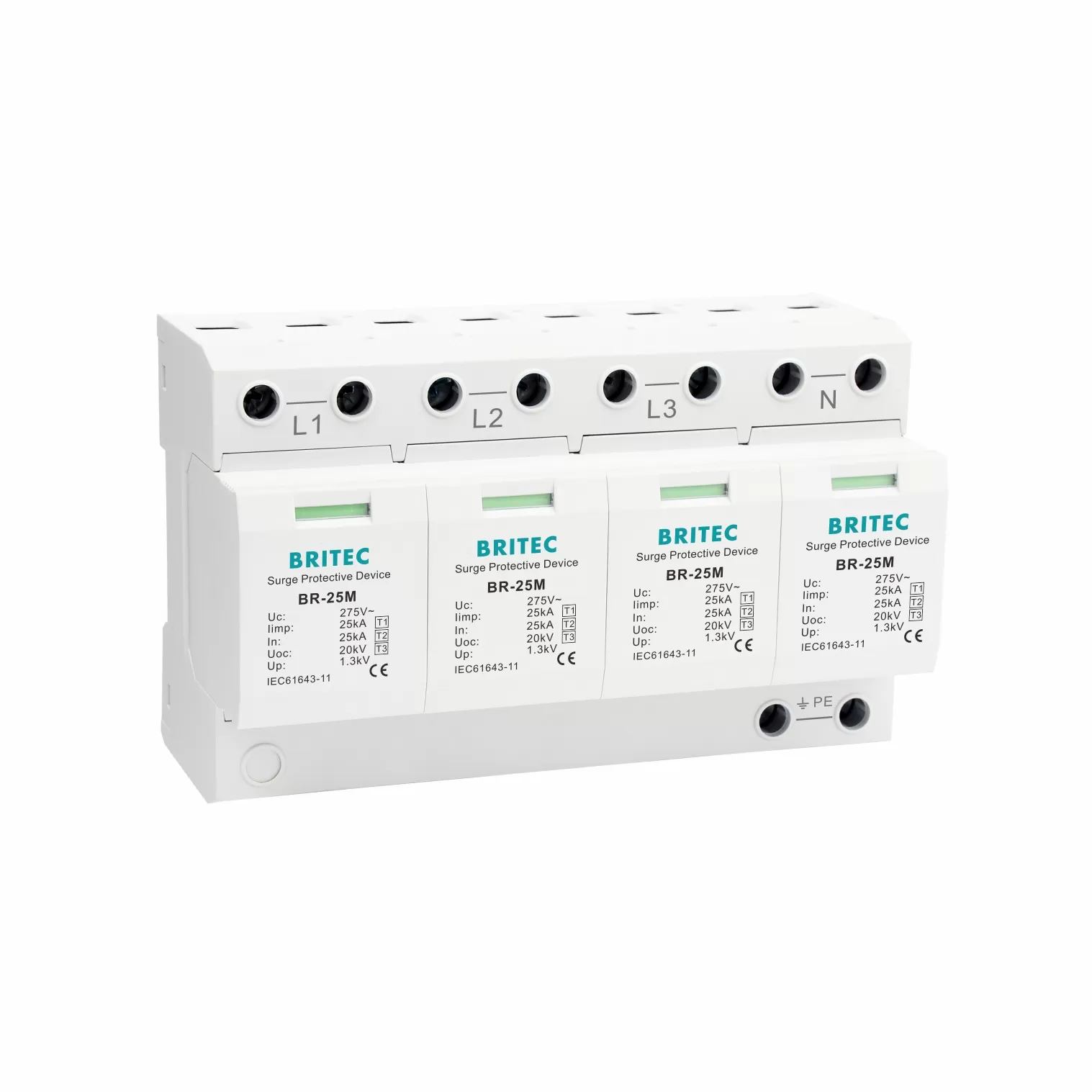
Type 1 SPDs are engineered to withstand direct lightning currents characterized by a 10/350 µs waveform. They act as the first line of defense inside or right at the entry point of a facility, protecting low-voltage electrical systems from partial lightning currents conducted through external conductors or structural lightning protection systems (LPS).
To help B2B buyers and technical personnel quickly evaluate their options, the table below highlights the technical parameters and deployment scopes of both solutions:
| Feature / Parameter | Blitzableiter | Type 1 SPD (Class I) |
|---|---|---|
| Installation Site | Outdoors, substations, utility overhead lines | Main Low-Voltage Distribution Panel (Service Entrance) |
| Voltage Level | Medium to High Voltage (kV to MV networks) | Low Voltage Systems (< 1000V AC) |
| Test Waveform Standard | 8/20 µs impulse waveform | 10/350 µs direct impulse current (Iimp) |
| Primäre Funktion | Protects high-voltage grid & transformational insulation | Protects building interior power lines & terminal equipment |
| Governing Standard | IEC 60099-4 / IEEE C62.11 | IEC 61643-11 / UL 1449 |
Selecting the right surge protection system requires evaluating your site infrastructure:
At Britec Electric, we manufacture certified Class I / Type 1 SPDs engineered to handle high impulse currents and protect critical industrial assets worldwide.
No. Lightning arresters are designed for medium/high-voltage utility systems, whereas Type 1 SPDs are engineered specifically for low-voltage commercial and industrial power distribution cabinets.
The 10/350 µs waveform simulates high-energy direct lightning strikes. Type 1 SPDs must pass this test to guarantee they can discharge high peak currents without destruction.
It must be installed at the main electrical incoming point (Main Distribution Board), right after the main switch or utility meter.
Not always. Type 1 SPDs handle high energy, but residual voltage may still damage sensitive electronics. A coordinated Type 1 + Type 2 system is recommended.
Yes. Regular visual inspection of the status indicators and remote signaling contacts is essential to confirm that the internal MOV or Spark Gap components remain functional.
Type 1 protects against direct lightning strikes (10/350 µs waveform), while Type 2 protects against indirect lightning and switching surges (8/20 µs waveform).
Britec’s surge protective devices comply strictly with international standards, including IEC 61643-11 and EN 61643-11.
Spark gap technology handles higher impulse currents (Iimp) and is ideal for main entrances, whereas MOV-based SPDs offer faster response times and lower voltage protection levels (Up).
If a surge exceeds the maximum rating (Imax/Iimp) of the SPD, the device will safely sacrifice itself and disconnect from the circuit, protecting your primary electrical equipment.
You can directly contact Britec Electric’s technical team with your technical specs for customized OEM/ODM solutions.
Discover Britec’s full range of IEC-certified Class I / Type 1 SPDs for reliable power defense.