

In modern electrical systems, surge protection is a crucial element in ensuring the safe and stable operation of equipment. However, terms such as SPD (surge protector), surge suppressor, and surge arrester are often used interchangeably in the industry, leading to incorrect selection and application.
This article will systematically clarify the core differences between these three technologies to help you establish a clear understanding of protection concepts and build an effective “defense line.”
Although all three share the same goal—to transfer or absorb surge energy—their designs, standards, and application scenarios differ fundamentally.
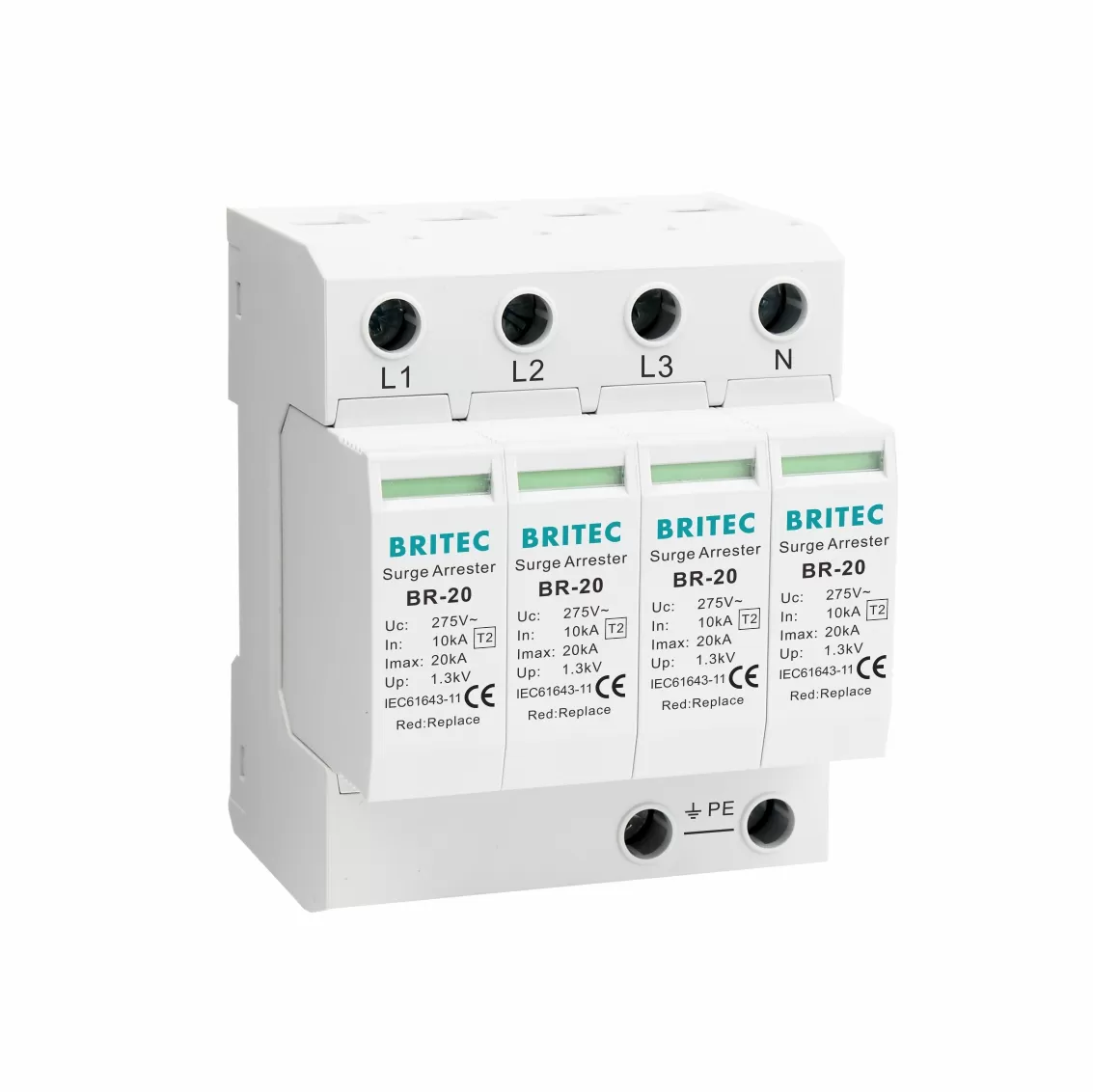
Surge Arrester: Primarily used in medium- and high-voltage power systems (such as transmission and distribution lines and substations). Its core purpose is to protect the insulation of the power system’s lines and equipment, preventing system failures caused by external overvoltages resulting from direct lightning strikes or lightning-induced voltage. It acts as a “safety valve” for the power system.
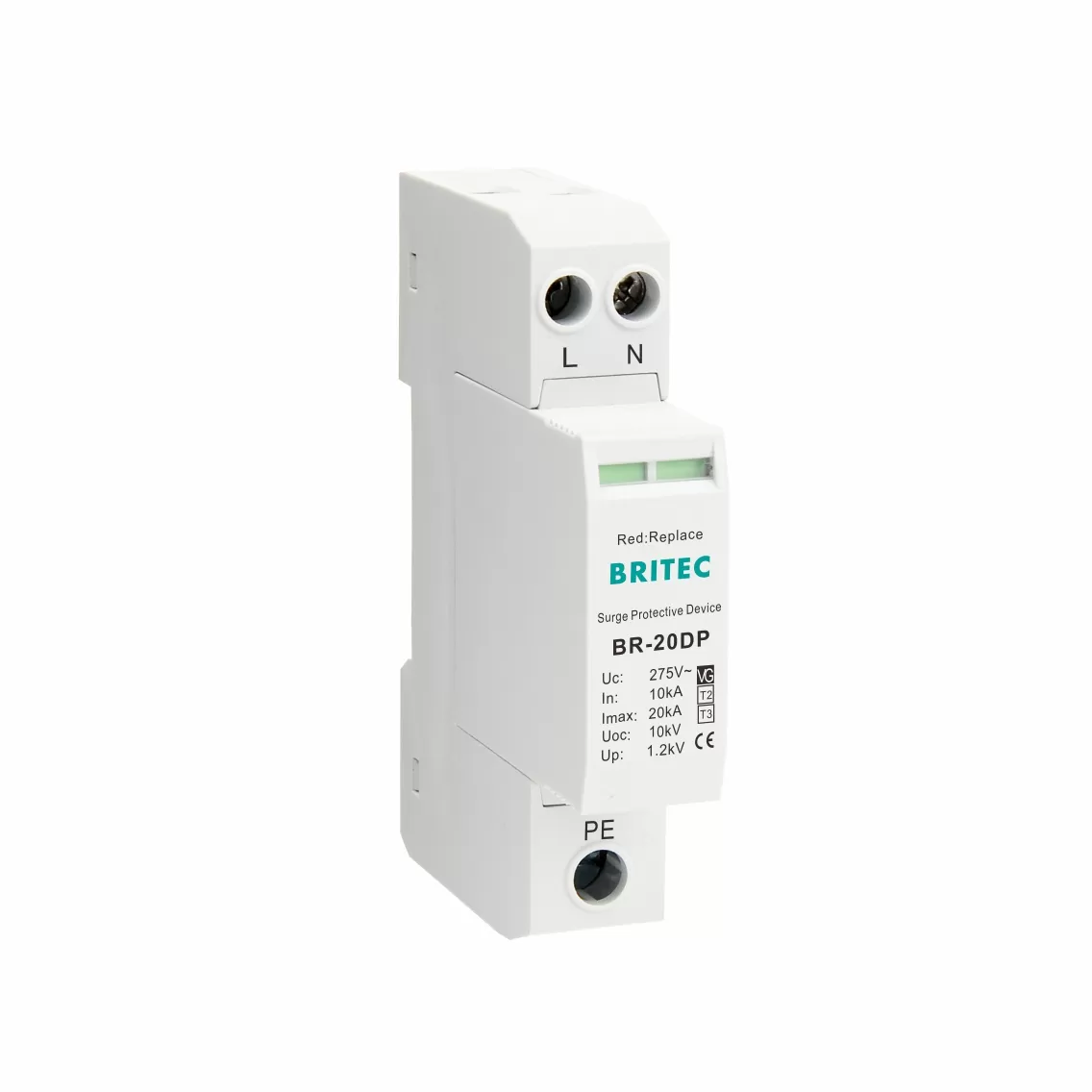
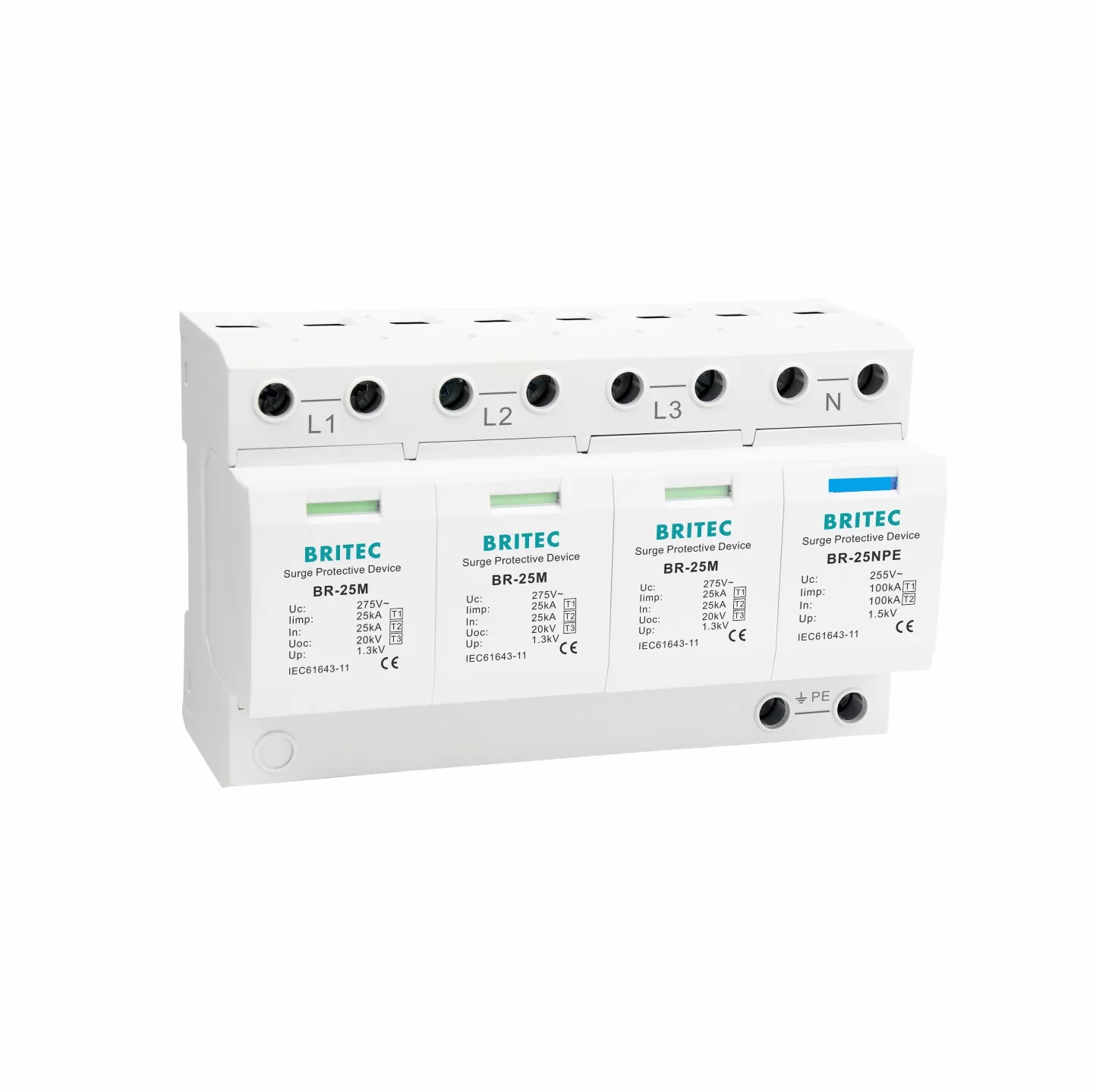
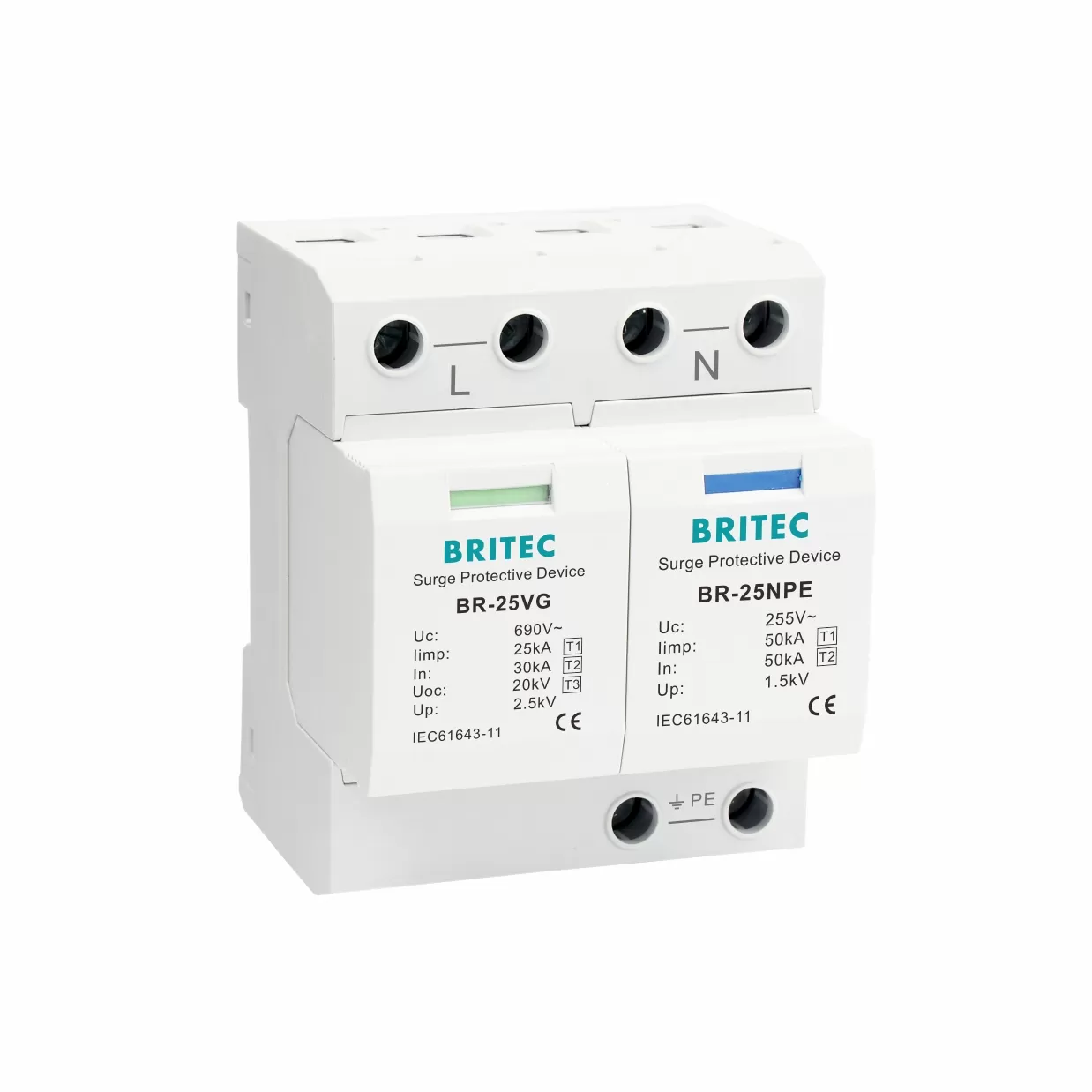
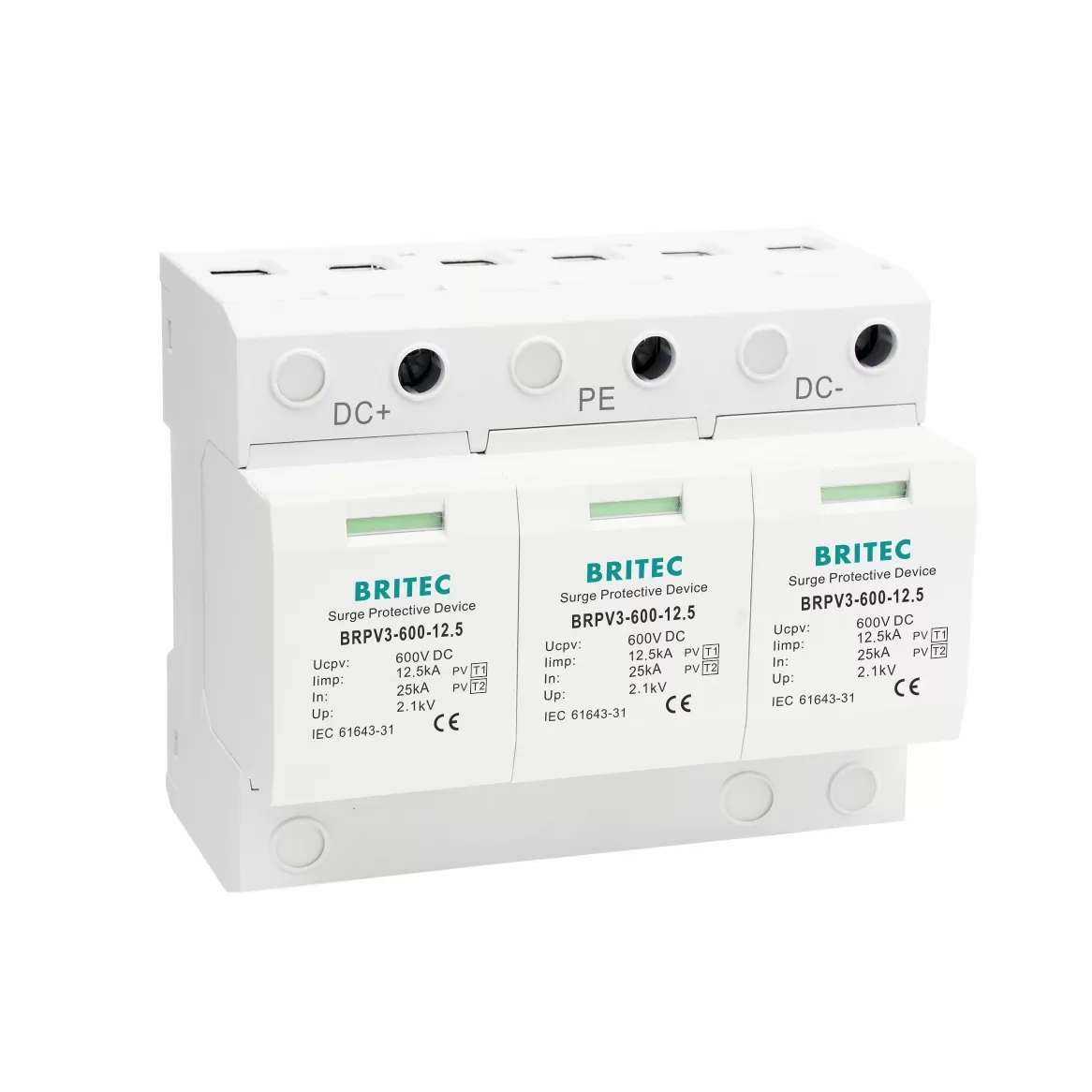
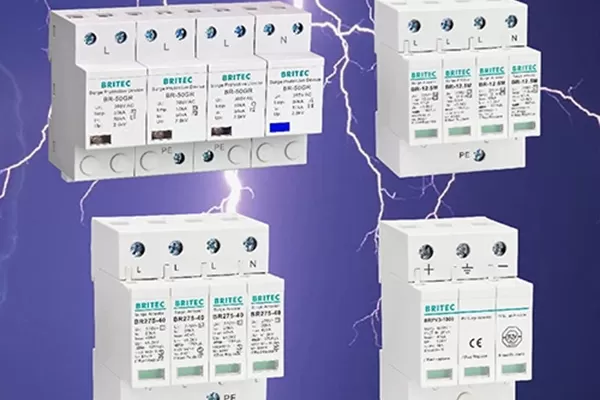
Surge Protector (SPD): This is a standard term used in low-voltage electrical and electronic systems. Its core purpose is to protect electrical installations and sensitive electronic equipment within buildings from damage caused by transient overvoltages resulting from lightning electromagnetic pulses or switching operations. It acts as a “buffer” between equipment and surges.
Surge Suppressor (SPS): Typically refers to low-voltage, plug-in consumer-grade products. Its function is similar to a SPD, but it usually has a lower protection level and capability. Its core purpose is to provide convenient basic protection for end-user electrical equipment.
Surge arresters: Handle medium to high voltage levels, typically above 1kV, and can reach hundreds of kV.
Surge breaker (SPD) and surge suppressor: Handle low voltage levels, typically 1000V AC or 1500V DC and below. Commonly used 220V/380V systems fall into this category.
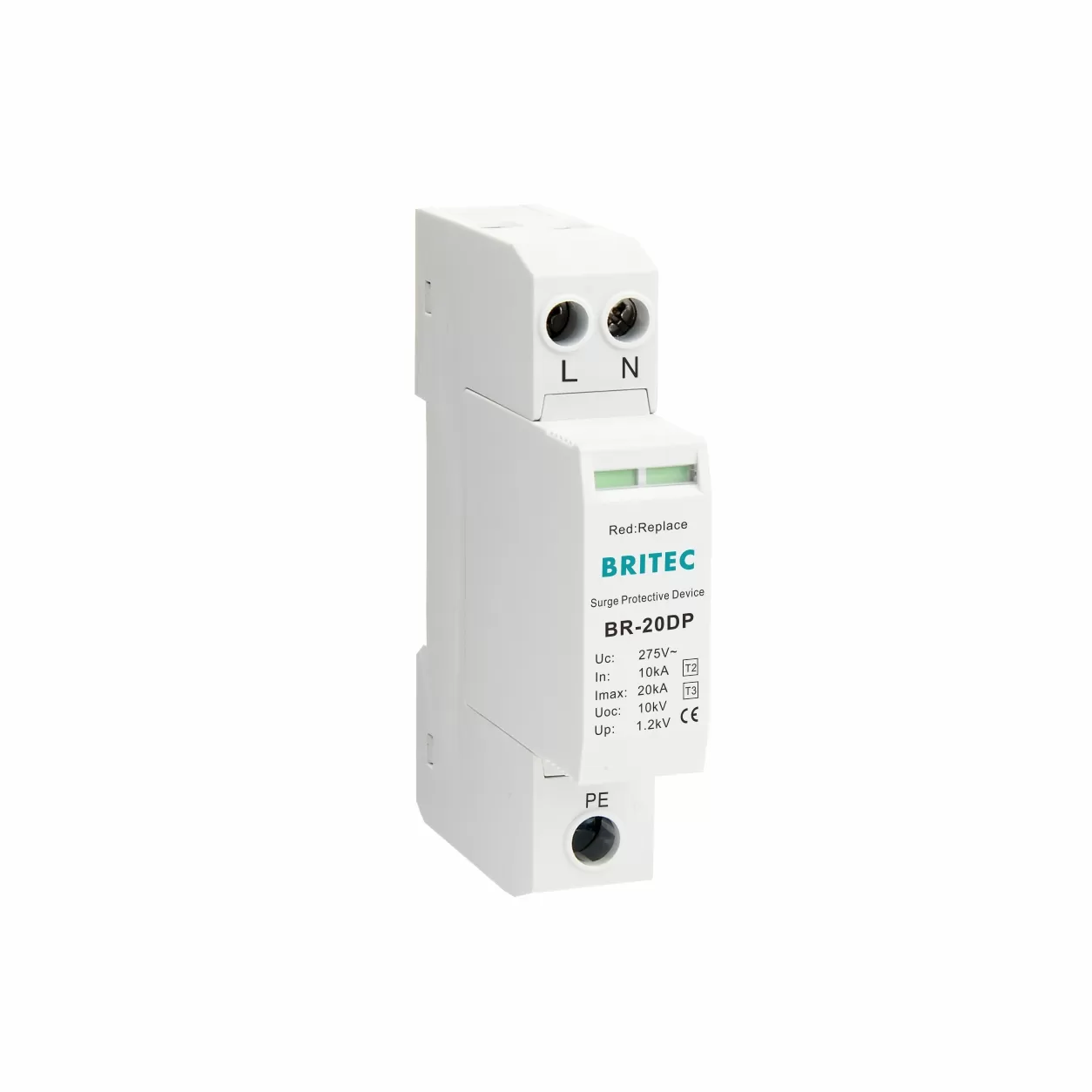
Surge protectors: Protect electrical infrastructure such as transformers, circuit breakers, and the insulation of transmission lines.
SPD: Protect the overall electrical systems and critical equipment within buildings, such as distribution cabinets, data center servers, and industrial control systems.
Surge suppressors: Protect specific end devices such as personal computers, televisions, and household appliances.
Surge Discharge Devices (SPD): Extremely high. Designed to discharge large-scale lightning current energy from direct lightning strikes or induced in their vicinity.
SPD: High to medium, and graded. Depending on the installation location, they range from hundreds of kiloamps (Class I) at the main distribution end to thousands of kiloamps (Class III) at the equipment front end, forming a coordinated protection system.
Surge Suppressors: Lower. Discharge capacity is typically below 10kA (8/20μs waveform), suitable for handling residual surge energy and localized disturbances.
Surge arresters: Installed at the entry point or critical node of the power system, such as transmission towers, the outgoing line side of substations, and the high-voltage side of 10kV distribution transformers.
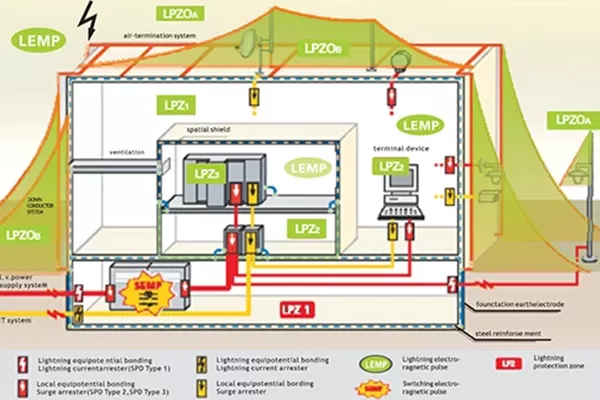
SPD: Installed in stages at different levels of the low-voltage power distribution system according to the Lightning Protection Zone (LPZ) concept: such as the main distribution box of a building (LPZ 0-1 boundary), floor distribution boxes (LPZ 1-2 boundary), and the front end of equipment cabinets (LPZ 2-3 boundary).
Surge suppressors: Installed at the most distant point of use, i.e., on the socket or as an integrated function of a power strip.
Surge arresters: Comply with power industry standards, such as IEC 60099 series and GB 11032 (AC gapless metal oxide surge arresters).
SPD: Comply with international/national standards for low-voltage surge protectors, such as IEC 61643 series and GB/T 18802.1. These standards clearly define Class I, II, and III tests and classifications.
Surge suppressors: Typically comply with product safety and performance standards, such as UL 1449 (USA) and EN 61643-11, but the evaluation focus differs from that of system-level SPD.
Surge arresters: Power transmission and transformation systems, power plants, new energy substations, industrial high-voltage power distribution.
SPD: Commercial buildings, data centers, factories, communication base stations, smart buildings, medical facilities.
Surge suppressors: Homes, offices, small shops, audio-visual systems.
The entire power-to-consumption protection system can be imagined as a coastal defense line:
Surge arresters are like deep-sea breakwaters, resisting the most destructive giant waves (direct lightning strikes/system overvoltages).
SPD (Class I/II/III) are like multi-layered seawalls, revetments, and drainage gates, progressively weakening the energy of waves as they surge inland (lightning-induced surges/switching surges).
Surge suppressors are like the sealing strips of building doors and windows, responsible for blocking any remaining traces of moisture (residual transient overvoltages and interference).
These three components differ in their design intent, application scenarios, and technical standards, but in a comprehensive protection system, they can work together to build comprehensive protection from the power grid inlet to the chip level.
The Shorter The Reaction Time, The Better
Misconception: Nanosecond-level response time is the primary indicator of a protector’s quality.
Clarification: Response time is important, but not the only indicator. Voltage limiting (Up) is more critical, as it determines the peak voltage ultimately applied to the device. A product with a slightly slower response but a lower Up value may offer better protection. Modern MOV (varistor-based) SPD already have nanosecond-level response times, with little difference between them.
Surge Arresters Offer Stronger Protection Than SPD
Misconception: Because they are commonly used in high-voltage systems, surge arresters (SPD) are superior to low-voltage SPD in all aspects.
Clarification: The two have different application scenarios and cannot be directly compared. SPD are designed to withstand extremely high direct lightning strike energy, but their residual voltage (protection level) may still be too high for sensitive electronic equipment. Low-voltage SPD are specifically designed to limit surge voltage to a safe level for equipment; the two are complementary, not substitutes.
Multi Level SPD Protection, Simply Installed In Series
Misconception: Connecting multiple SPD in series online automatically achieves energy coordination.
Clarification: Simple series connection may cause the upstream SPD to fail, resulting in the downstream SPD bearing all the energy and causing damage. Proper multi-stage protection requires energy coordination and decoupling design (usually using line inductors or dedicated decoupling devices) to ensure that each stage initiates energy discharge in the designed sequence.
Installing “Surge Suppressor” Means Everything Is Fine
Misconception: Plug in a surge protector and all devices are fully protected.
Clarification: Such devices only provide the most basic level of protection and have limited energy dissipation capacity. For large energy surges entering from the power line (such as lightning strikes transmitted through the distribution system), primary and secondary discharge must be performed using Class I/II surge protectors installed in the distribution box. Without upstream protection, the terminal blocker is highly susceptible to damage.
“Lightning Protection Device”=”Surge Protection Device” ?
Misconception: The two are completely equivalent.
Clarification: They are often used interchangeably in colloquial and non-standard contexts. However, strictly speaking:
Surge protector: May specifically refer to equipment used to protect against direct lightning strikes or their large shunts (such as lightning arresters, down conductors, grounding systems, and SPD that meet Class I testing requirements).
Surge protection device (SPD): A broader term encompassing all protective equipment against induced lightning surges and switching overvoltages.
Conclusion: All surge protectors used in internal systems are a type of SPD, but not all SPDs are adequate to handle direct lightning currents (only Class I).
SPD VS Surge Arrester
The key lies in the application voltage level and the object being protected.Surge arresters are used to protect line insulation in medium and high voltage power systems; SPDs are used to protect terminal equipment in low voltage power distribution and consumption systems.
Surge Arrester VS Surge Protector
This is the difference between high-voltage and low-voltage system equipment. At the low-voltage side inlet, SPD that meet Class I testing standards are sometimes also called “Surge arresters,” but this should be based on standard terminology.
Surge Arrester VS Surge Suppressor
This is the difference between system-level protection and device-level protection. The former has a very large capacity and is installed at the system inlet; the latter has a small capacity and is plugged directly into a socket.
Which SPD Class Is Used For Surge Arrester
In terms of functional positioning, the surge arrester of the power system corresponds to Class I products in the low-voltage SPD category (which must pass the 10/350μs lightning current test).
Which Protection Level Is Higher, SPD Or Surge Arrester?
This question is inaccurate. They belong to different system levels. In terms of the absolute energy discharged, high-voltage surge protectors (SPDs) are higher. However, in terms of the ability to limit overvoltages to a safe level for the equipment, low-voltage SPD (especially Class II and III) are more sophisticated in design.
Can We Make Direct Comparison Based On Their Energy Release Capabilities?
No. Discharge capacity (e.g., Imax) is only meaningful when compared under the same waveform standard (e.g., 8/20μs or 10/350μs). The test waveforms for high-voltage surge arresters and low-voltage Class I SPD may differ from the standards, making direct numerical comparisons meaningless. Selection must be based on the standards and protection level requirements of the system in which it is used.
Understanding the differences between SPD, surge arresters, and surge suppressors is fundamental to building an effective surge protection system. SPDs are the “heavy line of defense” for power systems, SPD form the “core multi-layered defense system” of building electrical systems, while surge suppressors act as the “close-fitting bodyguards” for end-user equipment.
Successful protection does not depend on the power of a single device, but on proper energy coordination based on the Lightning Protection Zone (LPZ) concept, forming a seamless protection chain from the point of entry to the equipment.
For precise surge protection solutions for your home, data center, or industrial facility, it is recommended to consult a qualified electrical engineer or a professional surge protection company. Protect your investment, starting with proper understanding. Let’s work together to transform unpredictable surge risks into manageable safety.


 Optimized by Seraphinite Accelerator