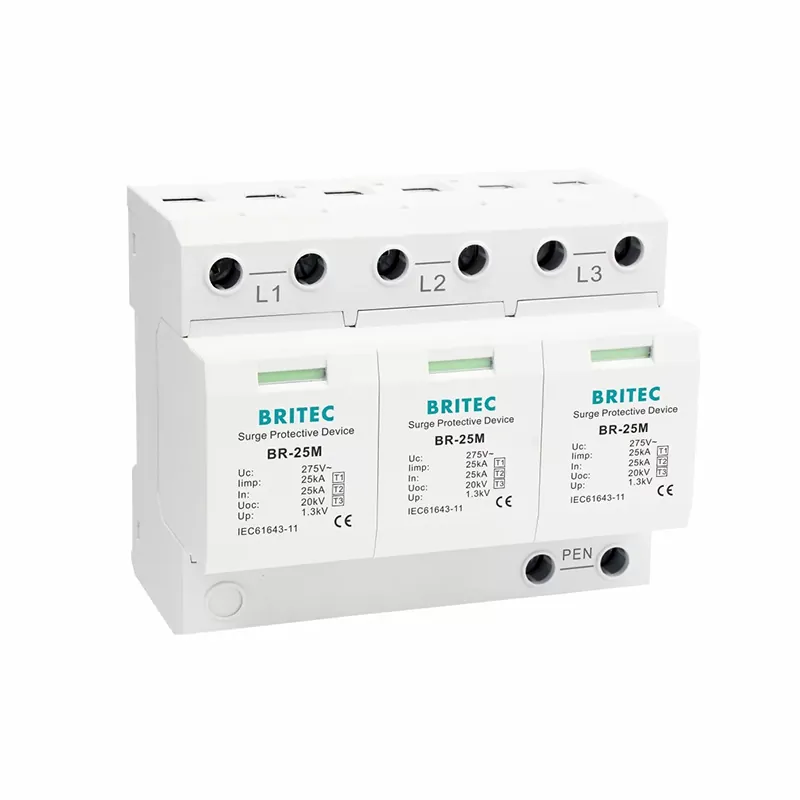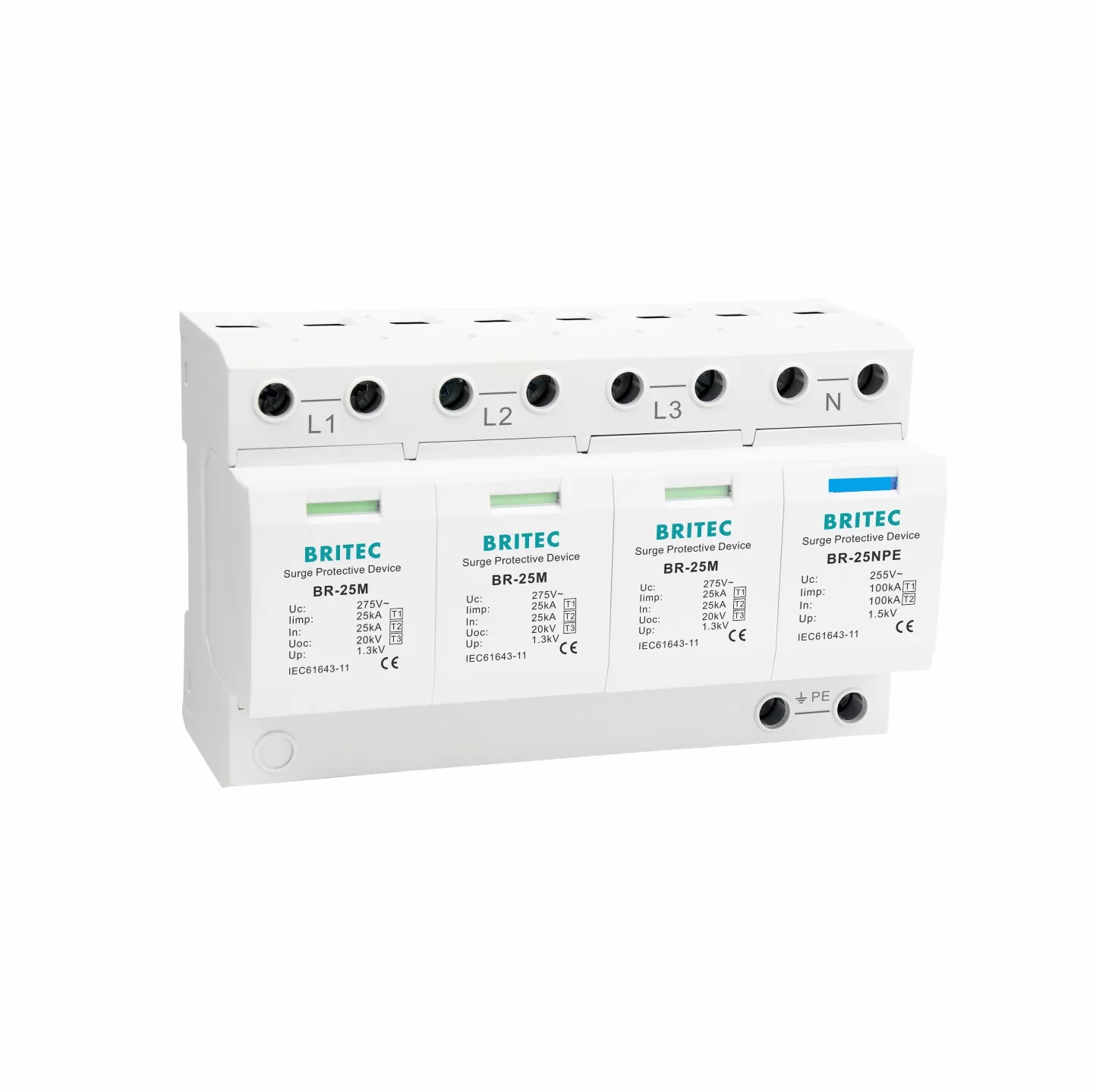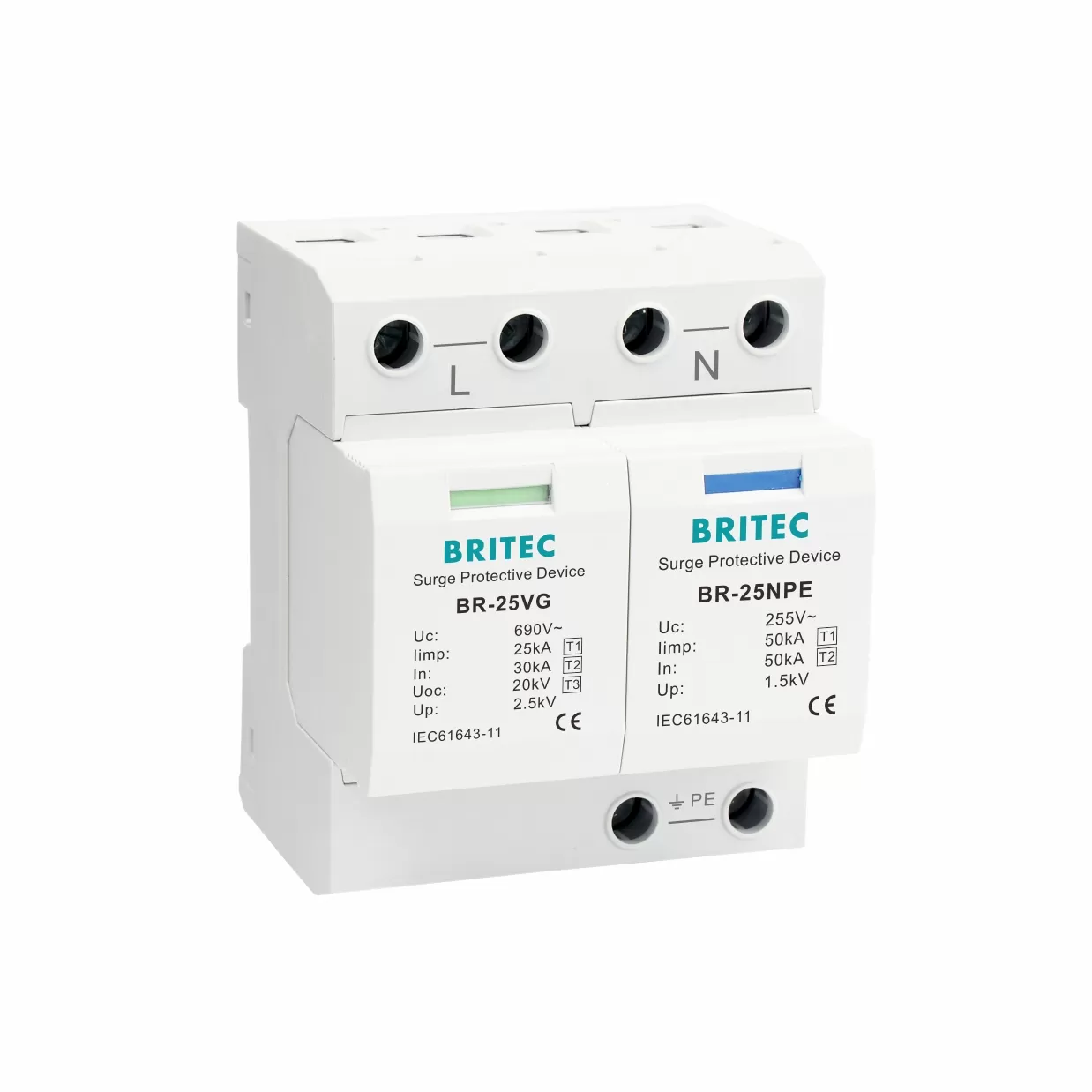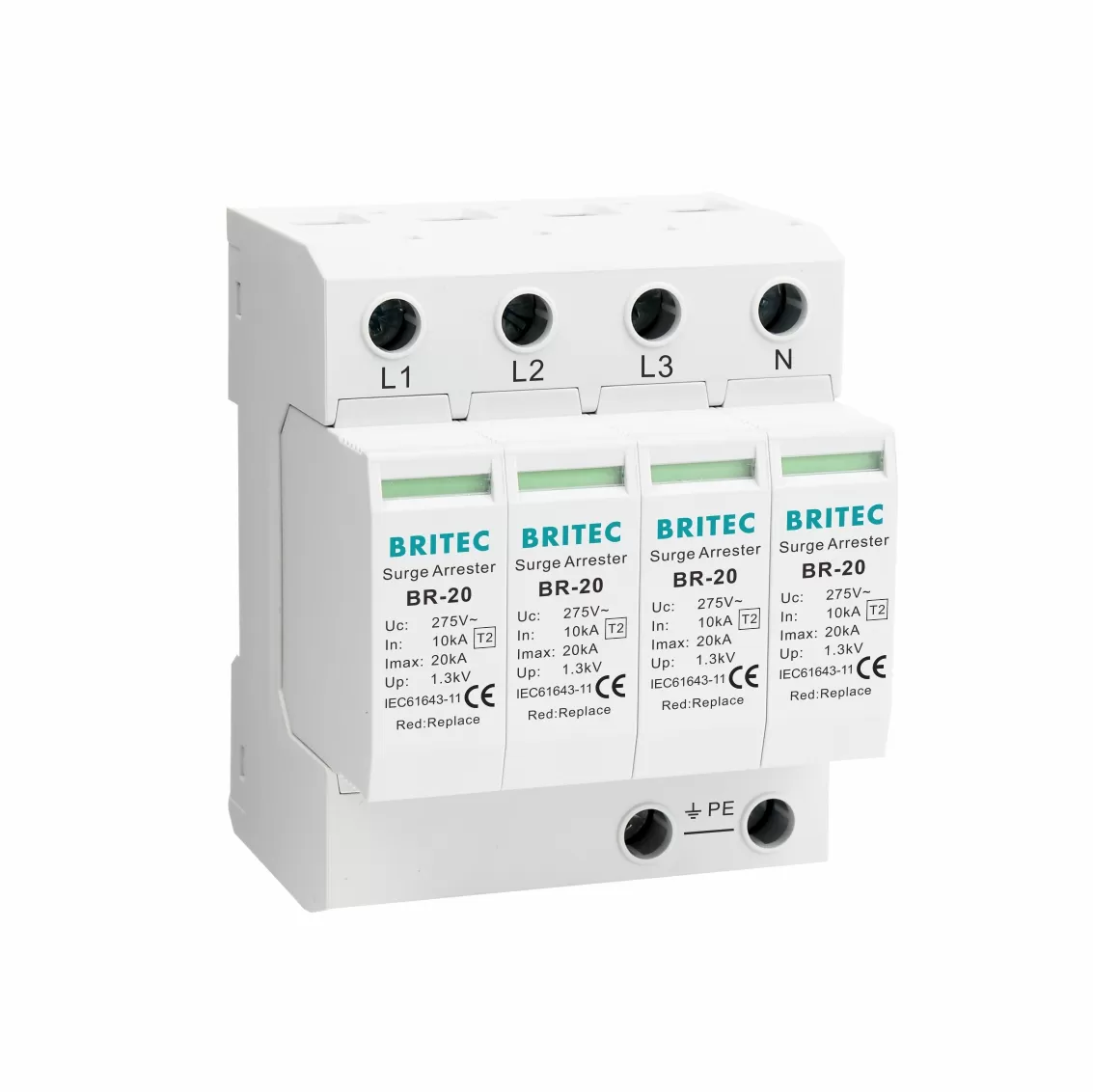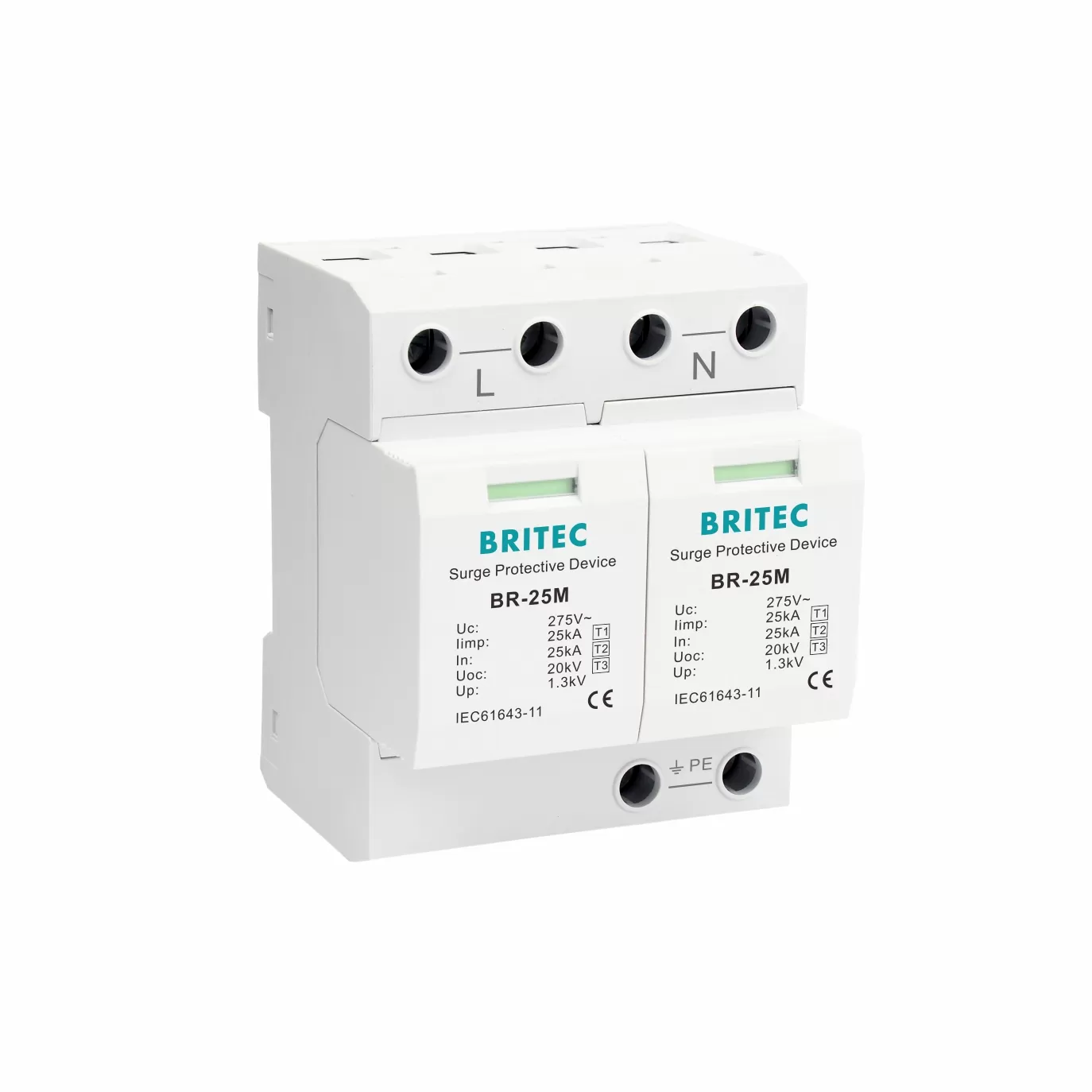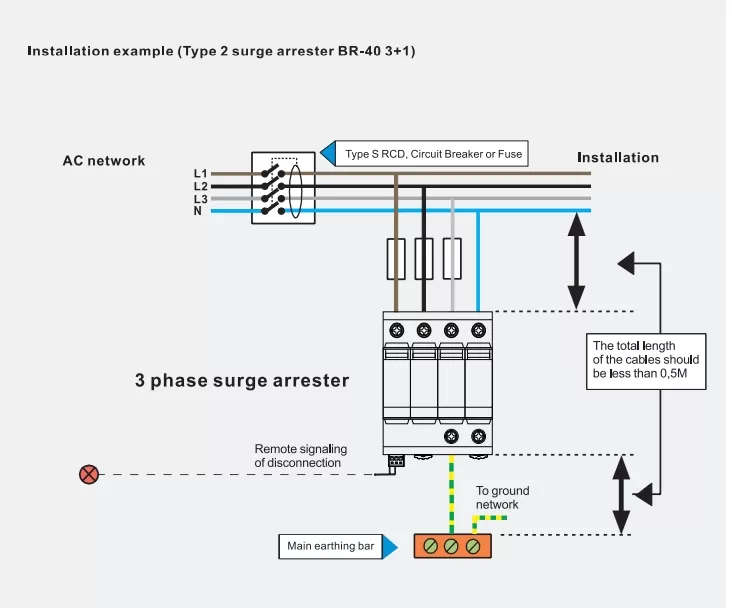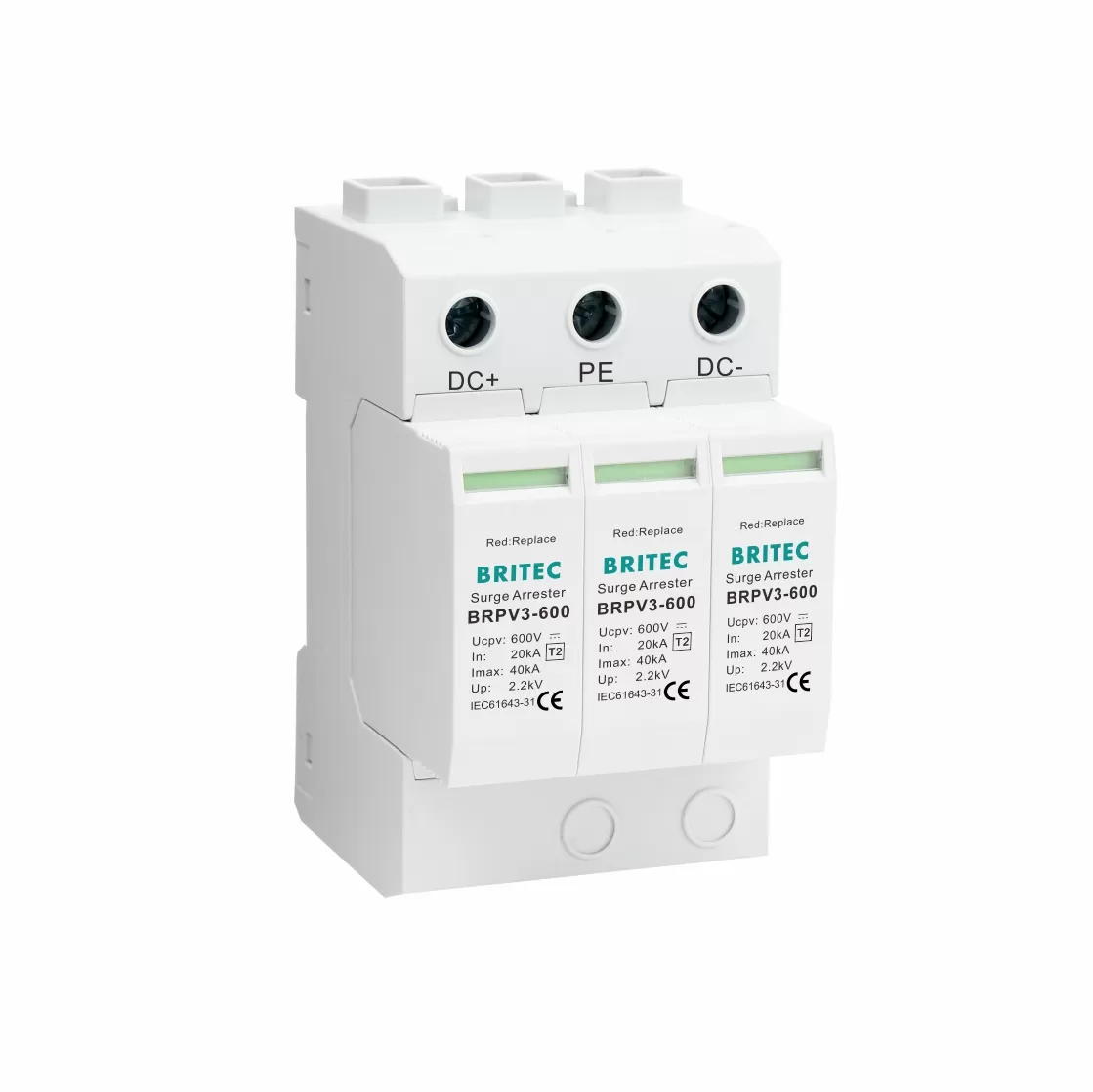


Compared to the IEC 61643-01:2024, the IEC 61643-11:2025 version incorporates the following significant technical changes:
Introduction to IEC 61643-11:2025
IEC 61643-11:2025 is based on IEC 61643-01:2024 and adds specific test items applicable to AC systems. These tests are set for SPDs that will be connected to AC supply circuits powered by sources having a linear voltage-current characteristic. Special consideration is required if the SPD is to be connected to other forms of power sources or sources with different frequencies.
Annex G: Test Procedures for SPDs Combining Short-Circuit Protection and Surge Protection Functionality (Non-Separable)
The SPD described in Annex G consists of two parts connected in series: one is a composite unit integrating both surge protection function and short-circuit protection function (this composite unit is integral and cannot be physically separated during testing or sample preparation), and the other is a surge protection component (SPC), typically including voltage-limiting or voltage-switching components. SPDs with combined protection functions require specific short-circuit tests and overload tests, both of which necessitate preparing special test samples.
1. Short-Circuit Test
* Three “Type A” and three “Type B” samples must be prepared. Each sample is tested individually. Either AC or DC supply may be used, depending on which facilitates stable test current flow through the sample. The current amplitude is between 1A and 20A, as declared by the manufacturer. The source voltage under open-circuit conditions must not be less than 1200V and should be high enough to maintain a stable current through the sample.
* An overload test is performed on the “Type A” samples. The test voltage is applied across the sample, and the resistance in the test circuit is adjusted to achieve the required current until the sample fails (either short-circuit or open-circuit). The duration of the test is recorded. This procedure is repeated for the other two “Type A” samples, and the longest duration among the three is used as the benchmark to determine the test duration for the “Type B” samples. The “Type B” samples are then tested following the same procedure, but the test duration is set to the longest duration from the “Type A” samples plus 0.5 seconds.
* After the test, Type B samples shall still provide short-circuit protection function, verified as follows:
* The impulse voltage amplitude must be corrected for altitude. No discharge or breakdown should occur during the application of the 1.2/50 μs impulse wave.
2. Overload Test
* To verify the comprehensive performance of the SPD, considering that impulse currents conducted over its lifetime might adversely affect it’s short-circuit protection capability, an additional preconditioning test (operating duty test) is required before the short-circuit test for all prepared samples.
* Six “Type A” and six “Type B” samples are prepared. For “Type A” samples, the part combining surge and short-circuit protection is replaced by an appropriate copper block, while internal connections, cross-sections, surrounding materials (e.g., resin), and packaging remain unchanged. For “Type B” samples, the surge protection component (SPC) connected in series with the combined protection function is replaced by an appropriate copper block, maintaining other physical aspects.
* The prepared “Type A” and “Type B” samples are connected in series for the preconditioning test (operating duty test).
* Use the preconditioned Type B samples for the short-circuit test: three samples undergo the claimed rated short-circuit current test (Isccr); the other three undergo a low short-circuit current test, where the test current is calculated as: Imin/Imin + 0.05 ×(ISCCR − Imin )/Imin + 0.1 ×(ISCCR − Imin ). Each sample is tested at one current value.
* Since Type B samples have combined protection, short-circuit current may not necessarily flow through them when Utest is applied; therefore, trigger short-circuit current using impulse current or a combination wave according to classification: for T1 and T2 class samples, a 3 kA, 8/20 μs current with amplitude equal to Iimp or In (whichever is lower) is applied; for T3 class samples, a 6 kV combination wave or Uoc (whichever is lower) is applied. If the short-circuit current cannot be triggered with these levels, the amplitude can be increased up to Iimp, In, or Uoc.
* After the test, in addition to meeting short-circuit criteria, the following additional requirement applies: after the disconnector operates, apply a 1.2/50ps impulse and verify:
3. Dedicated Overload Test
* This test does not require special sample preparation but must be performed on each protection mode of the sample. Based on the Uc value of the different protection modes, a preconditioning voltage is applied to that mode, graded as follows:
*When Uc ≤ 180V:
*When 180V < Uc ≤ 440V, the preconditioning voltage is 1200V.
*When Uc > 440V, the preconditioning voltage is 3 times Uc.
* The preconditioning voltage is applied for 5 seconds, during which the prospective short-circuit current through the sample is between 1A and 20A, as declared by the manufacturer. After the preconditioning voltage, the Utest voltage is applied for 5 minutes, or if an internal or external disconnector in the sample operates during preconditioning, the Utest is applied for at least 0.5 seconds after the disconnector operates. During the application of Utest, the prospective short-circuit current through the sample is set to 100A, 500A, 1000A, or ISCCR, selected based on actual conditions (not all values are necessarily tested for every sample).
* If all measurements from the first set of samples (test setup for 100A) meet the following criteria, further testing at higher currents may not be necessary:
* The pass/fail criteria after the test differ depending on whether the sample experienced disconnection.
4. Simplified Test Procedure for Series-Connected Protection Modes
This simplified procedure can be applied to samples like 3P+NPE or 1P+NPE, which may have multiple protection modes (e.g., L-N, N-PE, L-PE, L-L). Since the L-PE protection mode is essentially a series combination of the L-N and N-PE protection modes, testing all three modes separately according to standard requirements could lead to redundant testing for the L-PE mode. Therefore, the standard specifies a simplified test procedure for series-connected protection modes (e.g., L-PE).
A series-connected protection mode (e.g., L-PE) can be tested using the simplified procedure only if it meets all the following conditions:


 Optimized by Seraphinite Accelerator