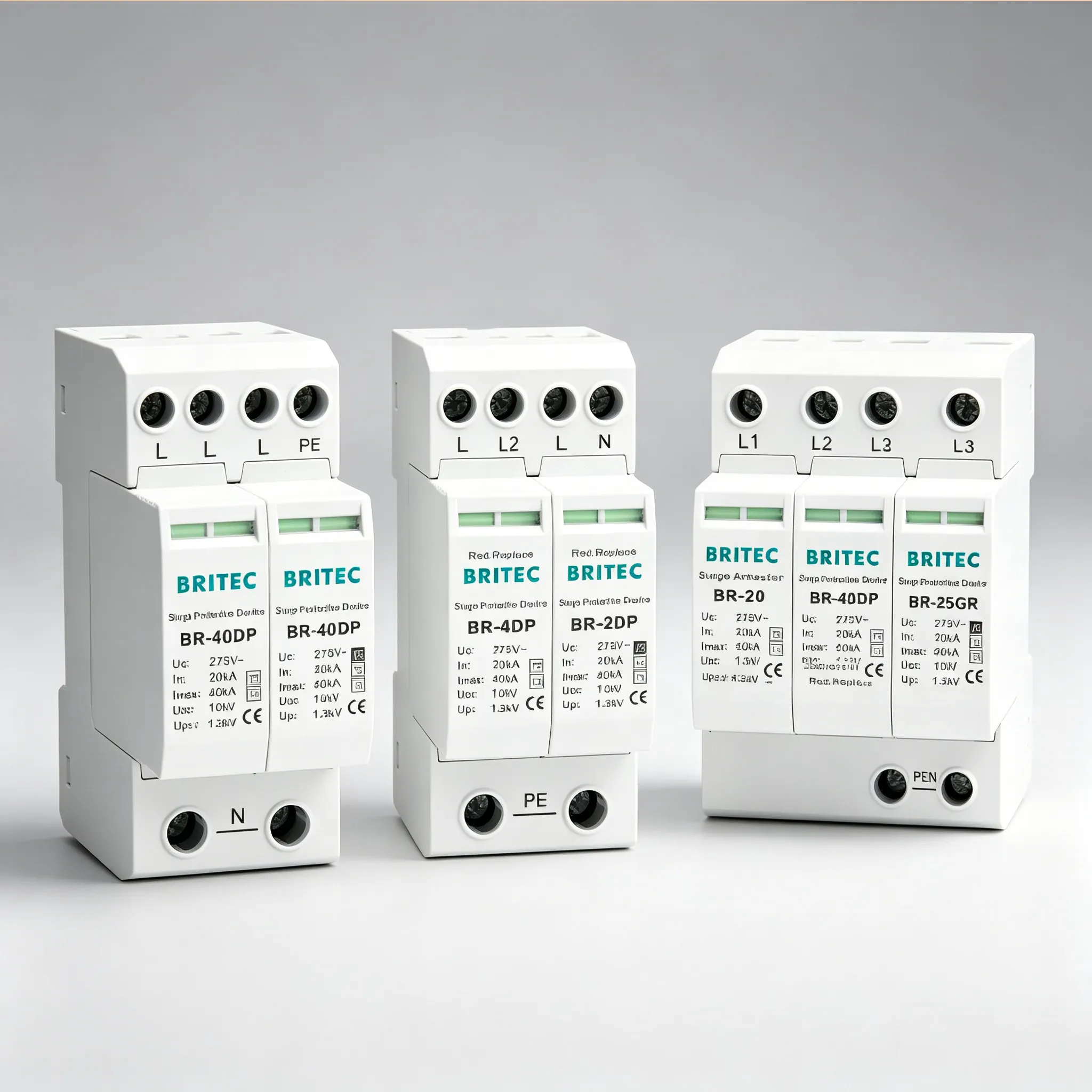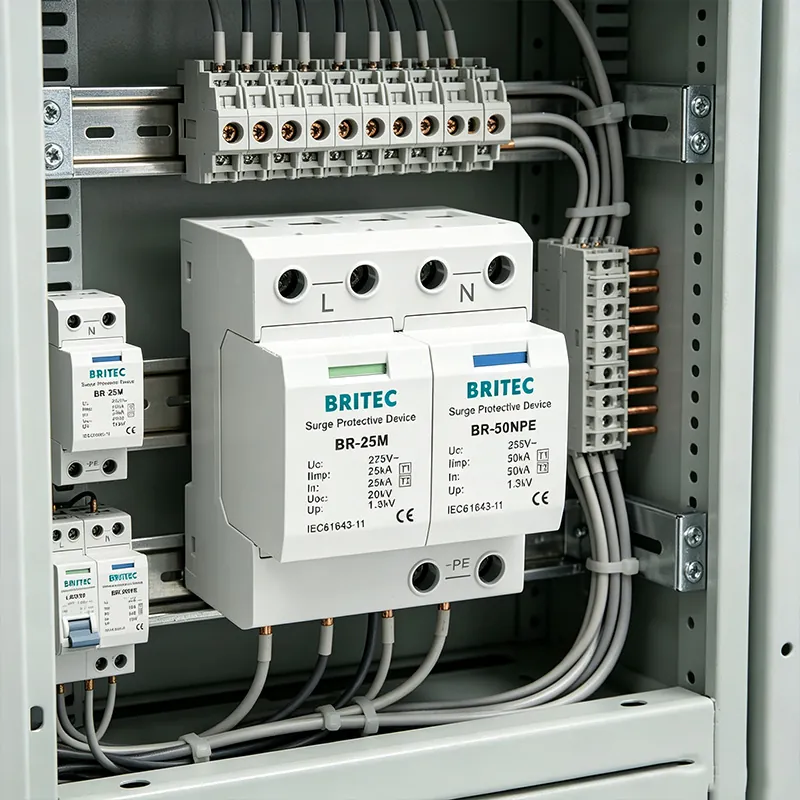

In modern electrical systems, surges (voltage transients) are invisible killers of electronic equipment. This article will provide a detailed explanation of the connection methods for single-phase surge protectors and offer a comprehensive selection guide for your reference.
A single-phase surge protector is an electronic device installed in a single-phase AC power distribution system (typically live wire L, neutral wire N, and ground wire PE). Its core principle is that when the line voltage is normal, it is in a high-impedance state; once a dangerous surge voltage is detected, it immediately switches to low impedance within nanoseconds, discharging the overcurrent to the ground, thereby limiting the voltage across the device to a safe value. It acts like a loyal “voltage guardian,” absorbing and transferring dangerous energy.
This work must be performed by a certified electrician! Work involving the main distribution box carries a fatal risk of electric shock.
Always completely disconnect the power before starting work! Turn off the main power switch and confirm there is no power using a voltage tester.
Follow the product manual and local electrical codes.
Prepare the following tools: screwdriver, electrician’s pliers, wiring, etc.
Based on the SPD dimensions, plan the installation location on the DIN rail of the distribution box, typically after the main switch.
Strictly adhere to the power-off and voltage testing procedures.
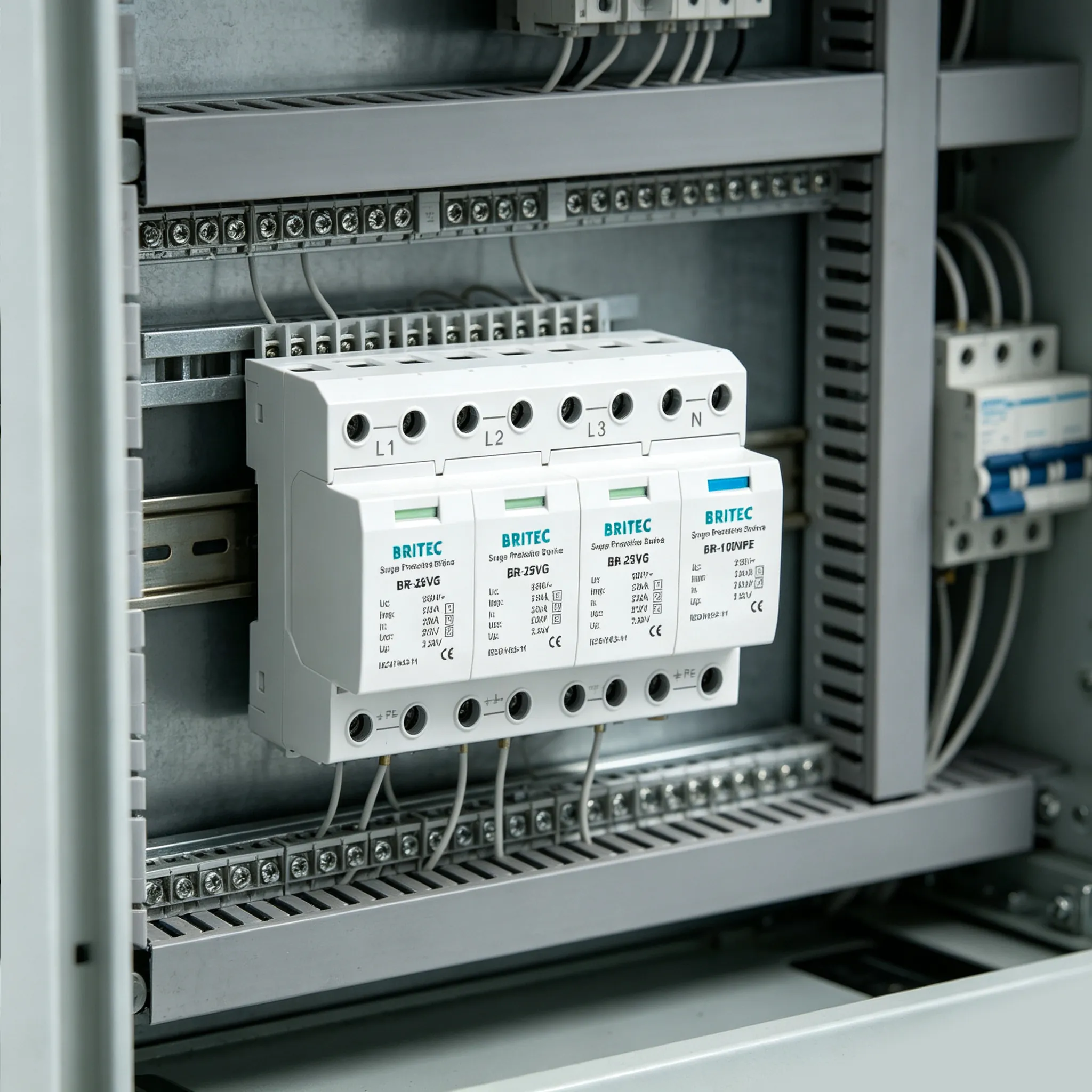
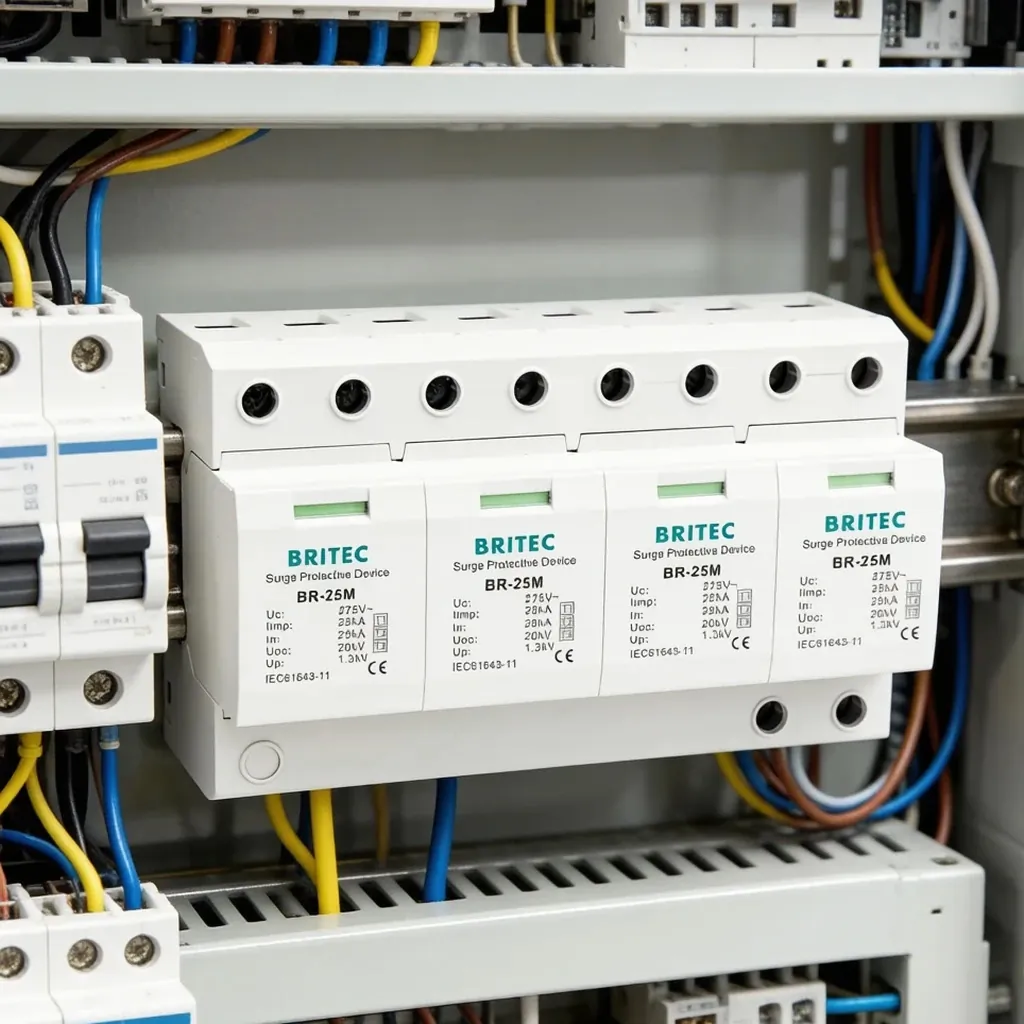
Install the single-phase SPD card onto the DIN rail in the distribution box.
Ensure a secure single phase surge protector installation and allow sufficient space around it for ventilation.
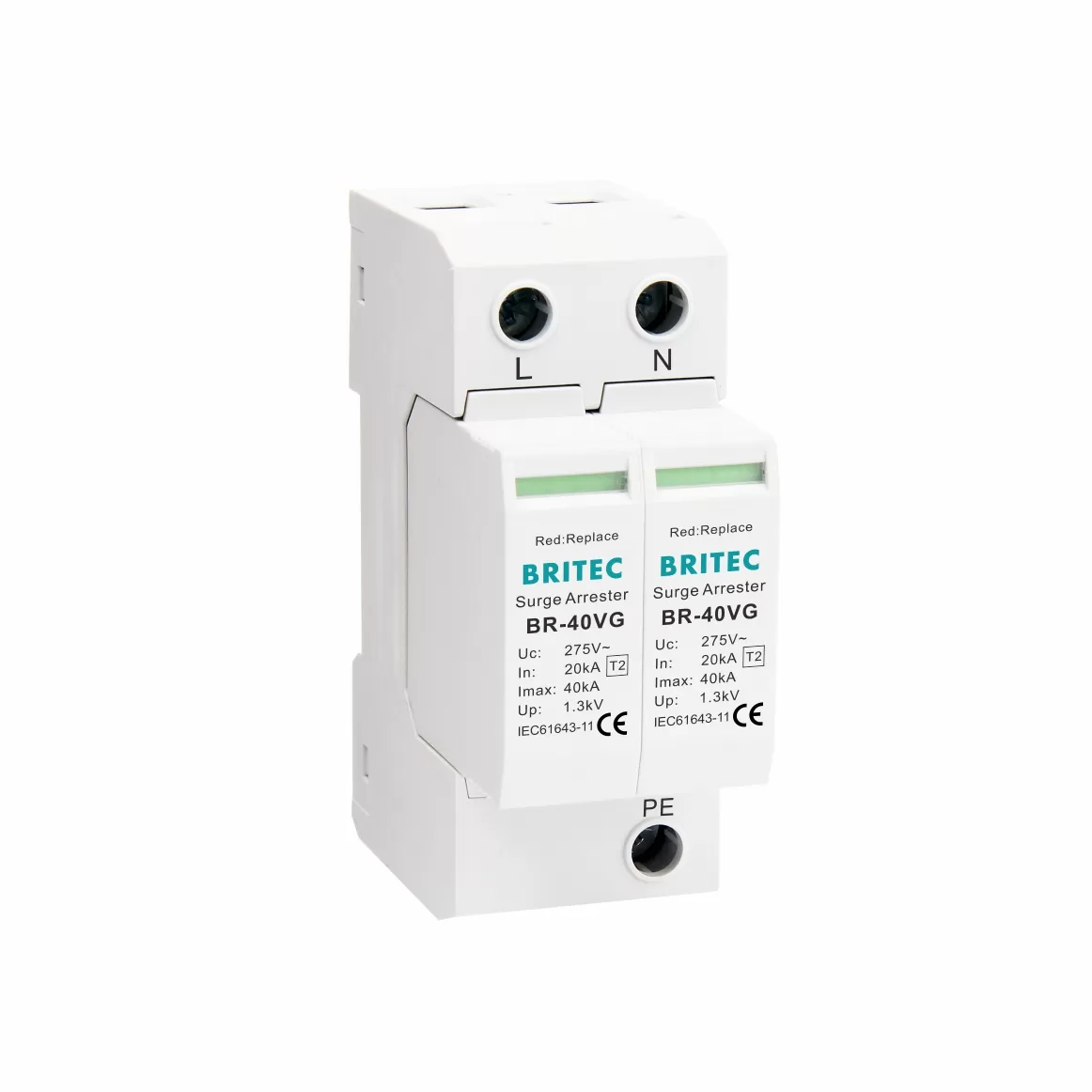
Input Connections: Connect the live wire (L) and neutral wire (N) from the bottom of the main switch (or circuit breaker) to the “L” and “N” input terminals marked on the SPD, respectively.
Output Connections: Connect the “L” and “N” output terminals of the SPD to the subsequent branch circuit switches.
Ground Connections: Connect the “PE” or grounding marking terminal of the SPD directly to the main grounding busbar of the distribution box using the shortest possible thick wire. This is crucial for discharging surge current; poor grounding will completely disable the SPD.
Use a torque screwdriver to ensure all connections are secure and avoid loose connections.
Carefully check that all wiring is correct and secure, with no exposed copper wire.
Close the main switch and observe the SPD status indicator window (usually green for normal operation, red for failure). Restore power.
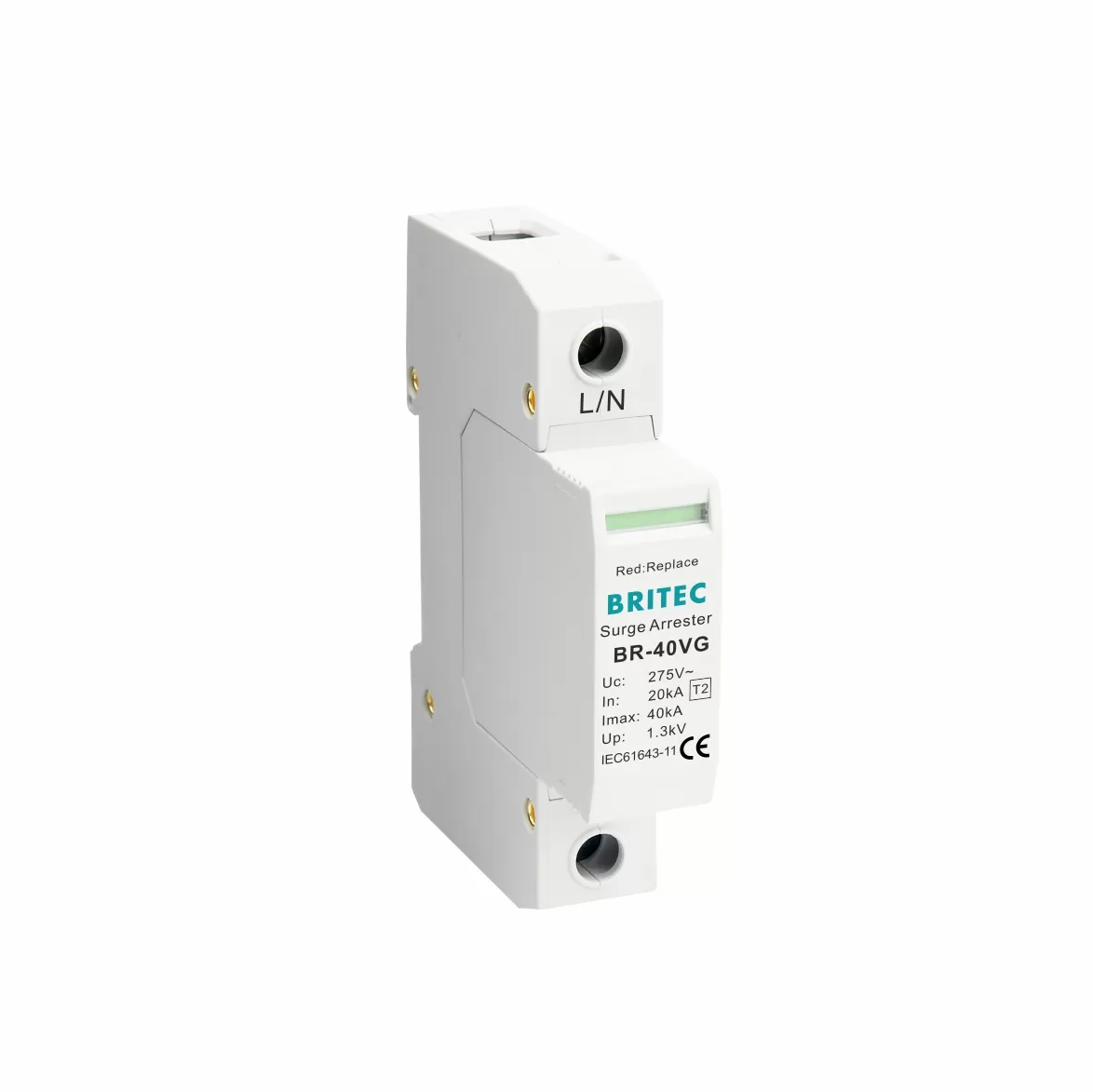
Front-end protection: A dedicated circuit breaker or fuse (usually specified by the manufacturer) must be connected in series with the SPD for short-circuit protection in case of SPD failure.
Minimize lead length: Wires connecting to the SPD, especially the ground wire, should be as short, straight, and thick as possible to reduce impedance in the discharge path and ensure effective protection.
Tiered coordination: For critical systems, SPDs with coordinated parameters should be installed at the main distribution box (first level), floor distribution boxes (second level), and equipment front-ends (third level) to achieve tiered energy discharge.
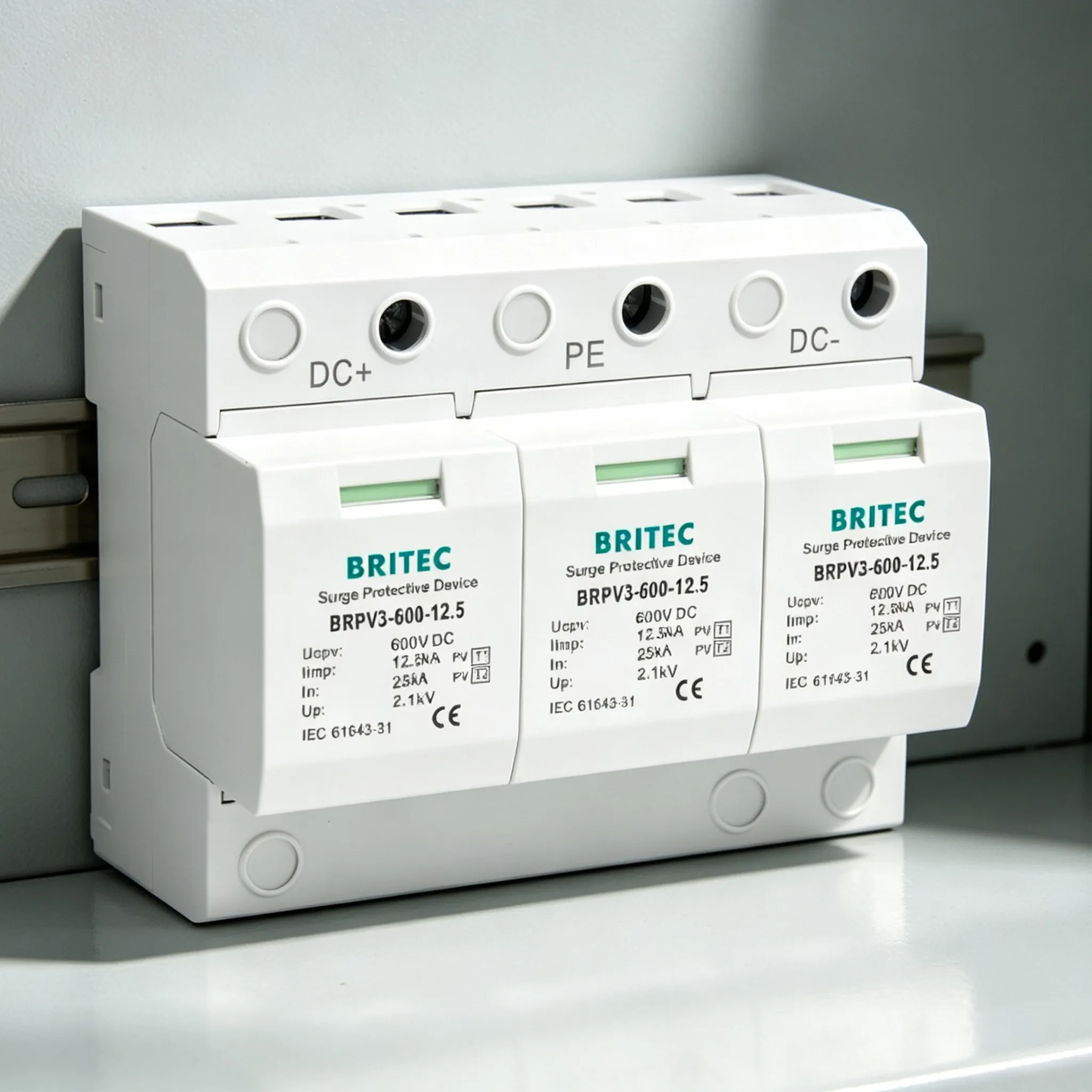
This refers to the maximum AC voltage that the SPD can withstand for an extended period without starting. It must be greater than the highest possible voltage of the local power grid (for example, in a 220V area, considering voltage fluctuations, Uc ≥ 275V or 320V is usually selected).
After the SPD trips, the peak voltage remaining at both ends is the final voltage experienced by the equipment. The UP value must be lower than the withstand voltage rating of the protected equipment. For household appliances, Up < 1.5kV is generally required.
In: The SPD’s ability to withstand more than 10 standard lightning current waveforms represents its durability.
Imax: The SPD’s maximum peak current withstands in a single strike represents its discharge capacity.
For the main incoming line of a household, it is recommended that In ≥ 20kA (8/20μs) and Imax ≥ 40kA. Higher specifications should be selected for high-risk lightning or critical locations.
The shorter the time from surge detection to initiation of action by a surge protection device (SPD), the better. A high-quality SPD has a response time of less than 25 nanoseconds.
Class 1 (Class B): Installed in the main distribution box to handle the enormous energy of direct or induced lightning strikes; Imax is typically 40kA-100kA or higher.
Class 2 (Class C): Installed in the distribution box to further limit the voltage; In is typically 20kA-40kA.
Class 3 (Class D): Installed at the upstream end of equipment (such as sockets) to provide fine protection; In is typically 5kA-10kA.
Household Users
Installing a single-phase SPD (Class C or B+C composite type) with Uc=320V, In=20-40kA, Up<1.5kV in the main electrical panel is the basic configuration. A socket-type SPD can be added for valuable appliances (such as televisions and computers).
Small Businesses/Shops
In addition to the main incoming line SPD, a second-level or socket-type SPD should be installed before precision equipment (such as cash registers and monitoring hosts).
Industrial/Data Centers
Graded protection must be implemented. Starting from the low-voltage side of the transformer, each level of distribution cabinet should be equipped with a parameter-matched SPD, all the way to the server rack PDU. Communication lines also require dedicated signal SPDs.
Communication/Signal Lines
Corresponding signal surge protectors should be installed at the entry points of telephone lines, network cables, television coaxial cables, etc.
Brand And Quality Certification
Prioritize well-known electrical brands. Confirm that the product has certifications from authoritative organizations (such as TUV, UL, CE, and national mandatory certifications).
Self Inspection Of Installation Conditions
Before purchasing, confirm whether your distribution box has spare space and DIN rails, and whether the grounding system is in good condition. Without proper grounding, the SPD is useless.
Maintenance And Lifespan
SPDs are consumables. Modules are typically equipped with status indicators (window color change or remote signaling contacts). When the indicator shows “failed,” the module must be replaced immediately. Even if it is not failed, it is recommended to check and replace it every 5-8 years or after a major lightning strike.
First, check the grounding: Ensure the building’s grounding resistance is within acceptable limits (≤4Ω).
Pay close attention to the parameters: Focus on Uc, In/Imax, and Up, and select the appropriate setting based on your needs.
Choose the right location: For residential use, install at the main power inlet.
Professional installation: Always hire a professional electrician for standardized installation.
Regular inspection: Monitor status indicators and replace any faulty components promptly.
Single Phase Surge Protector Price Performance Parameters: A higher Imax/In value and a lower Up value result in a higher price.
Protection Modes: Full protection modes (L-N, N-PE, L-PE) are more expensive than single modes.
Additional Functions: Features such as remote signaling alarms, thermal tripping, and lifespan indication increase costs.
Brands and Certifications: Leading international brands command higher prices than domestic brands, but their quality is generally more stable.
Installation Methods: Modular, replaceable installations are more expensive than fixed, integrated installations.
Can Single-Phase Surge Protectors Prevent Lightning Damage?
It can greatly prevent damage caused by induced lightning and power grid conducted surges. However, for direct lightning strikes, a complete lightning protection system (lightning rod, down conductor, grounding grid, etc.) is required, and SPD is a key component of this system.
What Is The Price Of A Single-Phase Surge Protector?
The price range is wide. Basic home-use models range from one to two hundred RMB; high-performance or branded products are in the hundreds; industrial-grade products can reach thousands of RMB. Do not choose a product solely based on its low price.
Will There Be Prompt After The Protector Fails Or Is Damaged?
Most high-quality SPDs come with a mechanical color window indicator (green turns red) or provide remote signaling contacts for connecting alarm devices, clearly indicating a failure status.
What Devices Are Surge Protectors Suitable For Protecting?
Almost all electronic devices powered by AC power, including but not limited to: computers, televisions, refrigerators, air conditioners, washing machines, smart home systems, industrial PLCs, communication equipment, medical instruments, etc.
Surge Protection Device Single Phase Vs Three Phase SPD
The main difference lies in the application system. Single-phase SPDs are used in single-phase systems with L+N+PE (such as homes and small shops); three-phase SPDs are used in three-phase systems with L1+L2+L3+N+PE (such as factories and large buildings). Their working principles and core parameter selection principles are similar.
Investing in a suitable single-phase surge protector and installing it correctly is the most cost-effective and wise move to protect your electrical equipment.
Take action now! Take a few minutes to check your home or office distribution box. If you don’t already have an SPD installed, consult a professional electrician immediately to select a suitable product based on this guide.