
The question sounds like a product comparison, and it is not. Surge protection single phase and three phase devices are not two grades of the same thing, one better than the other — they are two answers to a question your electricity supply has already decided for you.
What the choice actually governs is how many poles the device has, which conductors it protects, and whether it will physically fit the board. Get it wrong and you either leave a conductor unprotected or buy a device that cannot be wired into the supply you have. Five differences explain the whole decision.
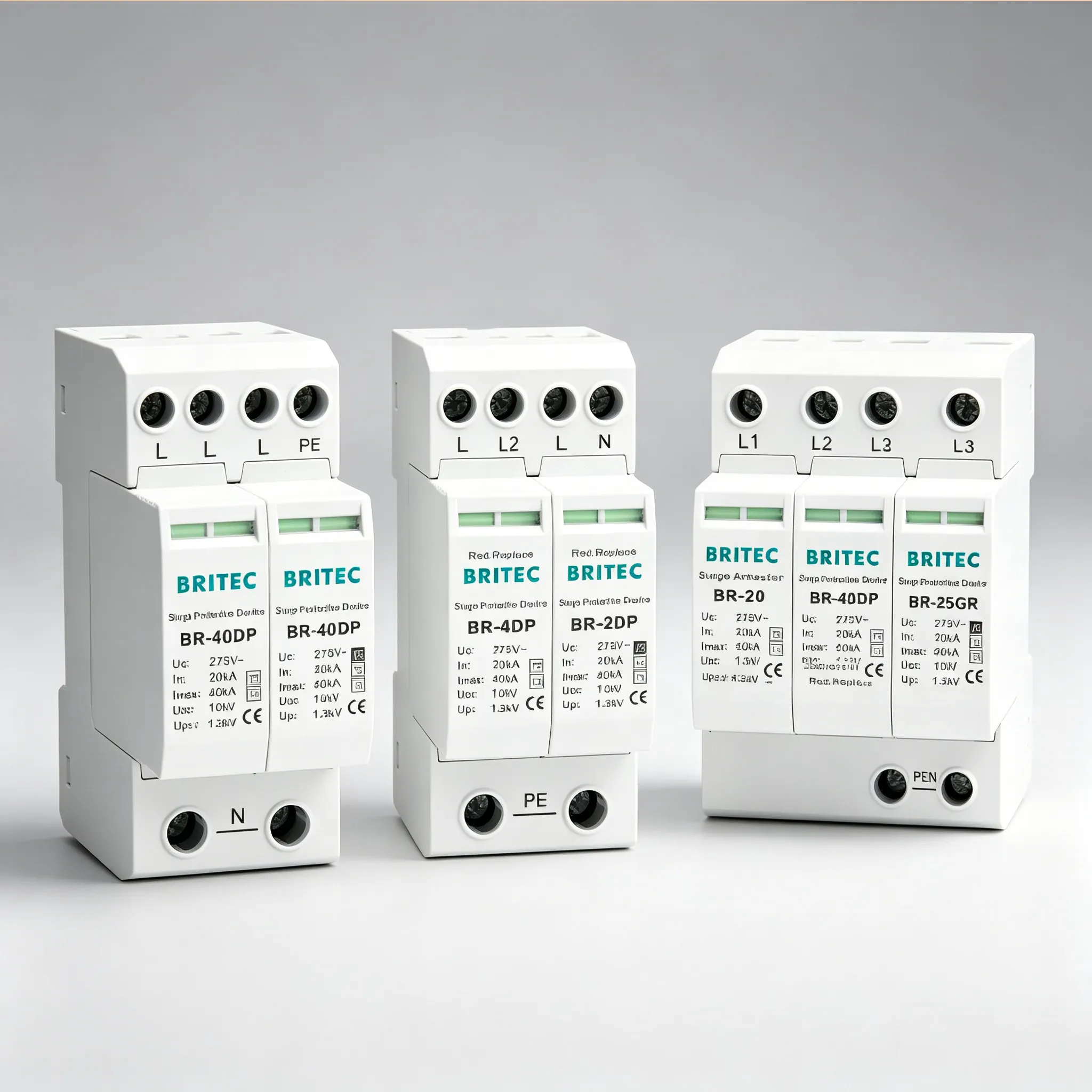
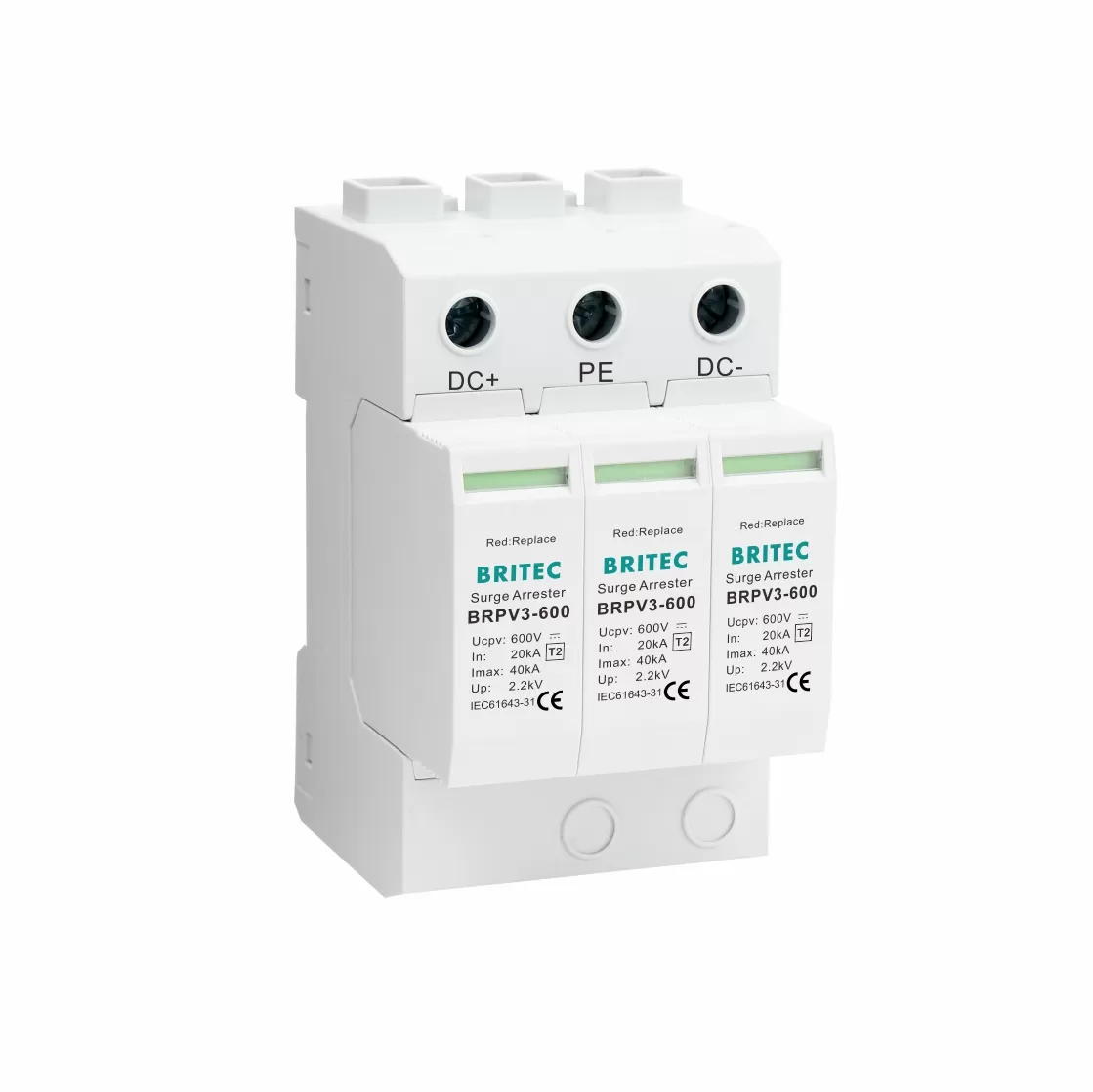
A single phase surge protector 230V installation carries one live conductor and a neutral, so devices come in three arrangements: 1P protecting line to earth, 1P+N adding neutral protection, and 2P covering both conductors fully.
Three phase supplies carry three live conductors at 400V between phases, giving 3P for TN-C systems where neutral and protective functions are combined, 3P+N for TT and TN-S systems needing a separate neutral path, and 4P as the full four-conductor arrangement. БРИТЕК’s БР-20 series illustrates the pattern well — the same Type 2 platform is built as 1P, 1+1, 2P, 3P, 3+1 and 4P, with identical electrical characteristics and only the pole count changing.
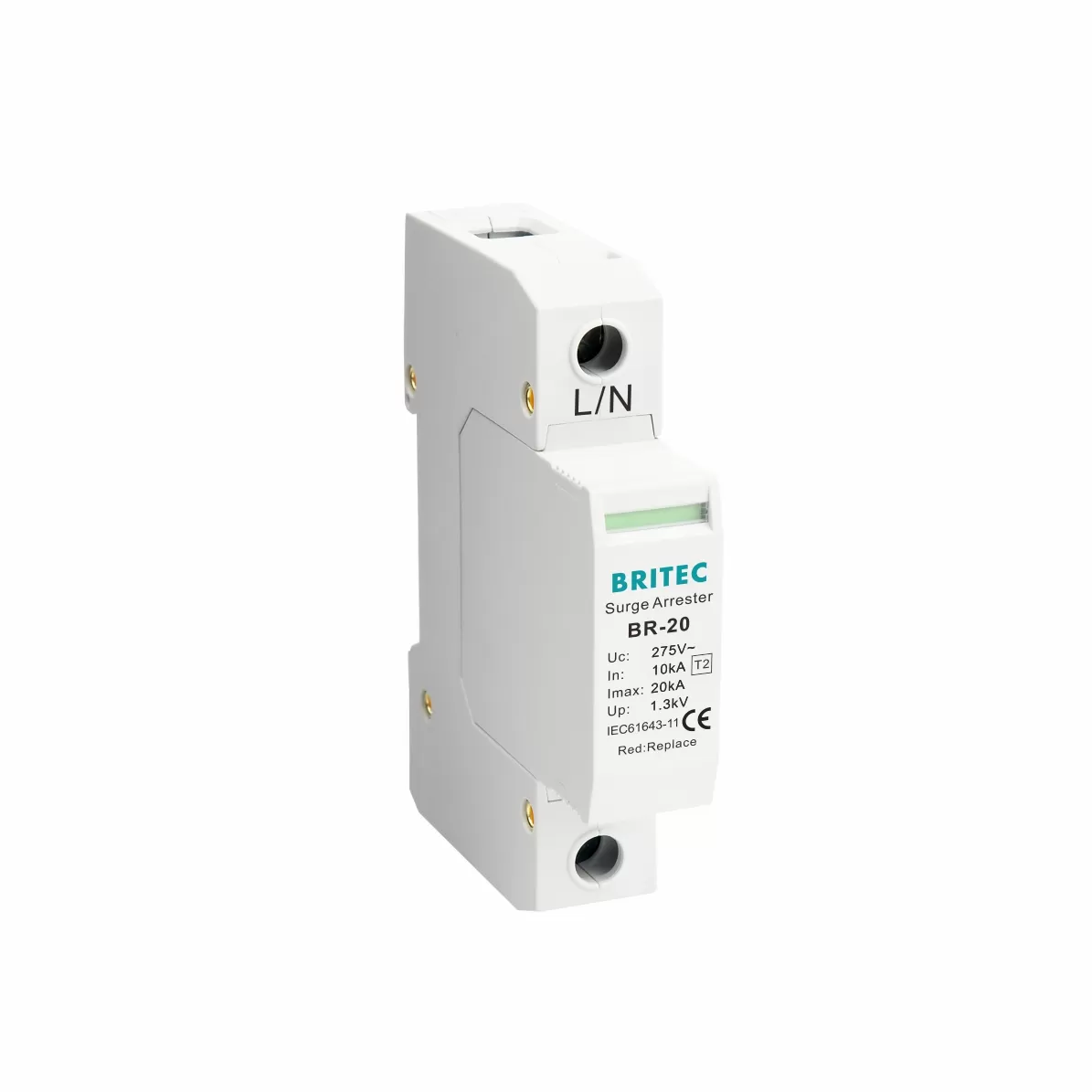
The BR-20 1P in single-pole format — one module wide, for line-to-earth protection on a single phase supply.
Protected modes are the conductor pairs a device actually clamps across, and this is where pole count stops being a formality. A 1P device protects line to earth only. Add the neutral and you gain line-to-neutral and neutral-to-earth paths as well.
The earthing arrangement decides which you need. TN-C systems combine neutral and protective functions, so no separate neutral protection applies and 1P or 3P suffices. TN-S and TT systems have a separate neutral, which must be protected — TT in particular requires an N-PE path built around a spark gap so that no continuous leakage exists to the local earth electrode. In БРИТЕК’s BR-12.5M 1P+N, that N-PE stage carries its own ratings: Uc 255V, Iimp 25kA and a temporary overvoltage withstand of 1200V for 200 ms.
Surge protection single phase devices belong in domestic consumer units, small shops and offices, individual machine panels within a larger site, and remote single-phase equipment such as pump stations or telecom cabinets. The load is modest and the board is small.
Three phase devices sit in commercial and industrial main distribution boards, motor control centres, and any installation running three-phase motors, drives or large HVAC plant. A common mistake is assuming a large building needs three phase protection everywhere — in practice the main board is three phase while dozens of downstream sub-boards are single phase and need their own devices.
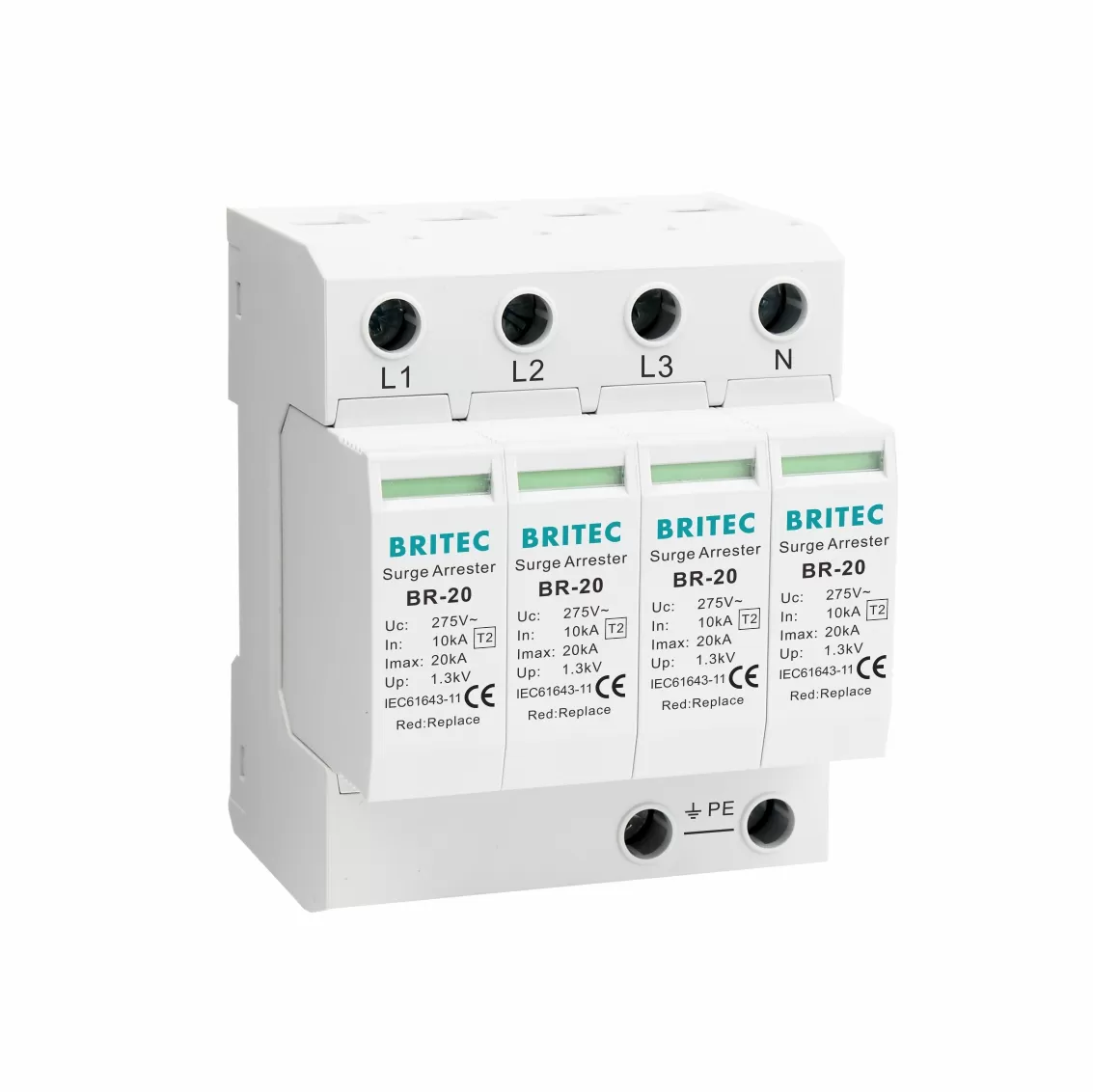
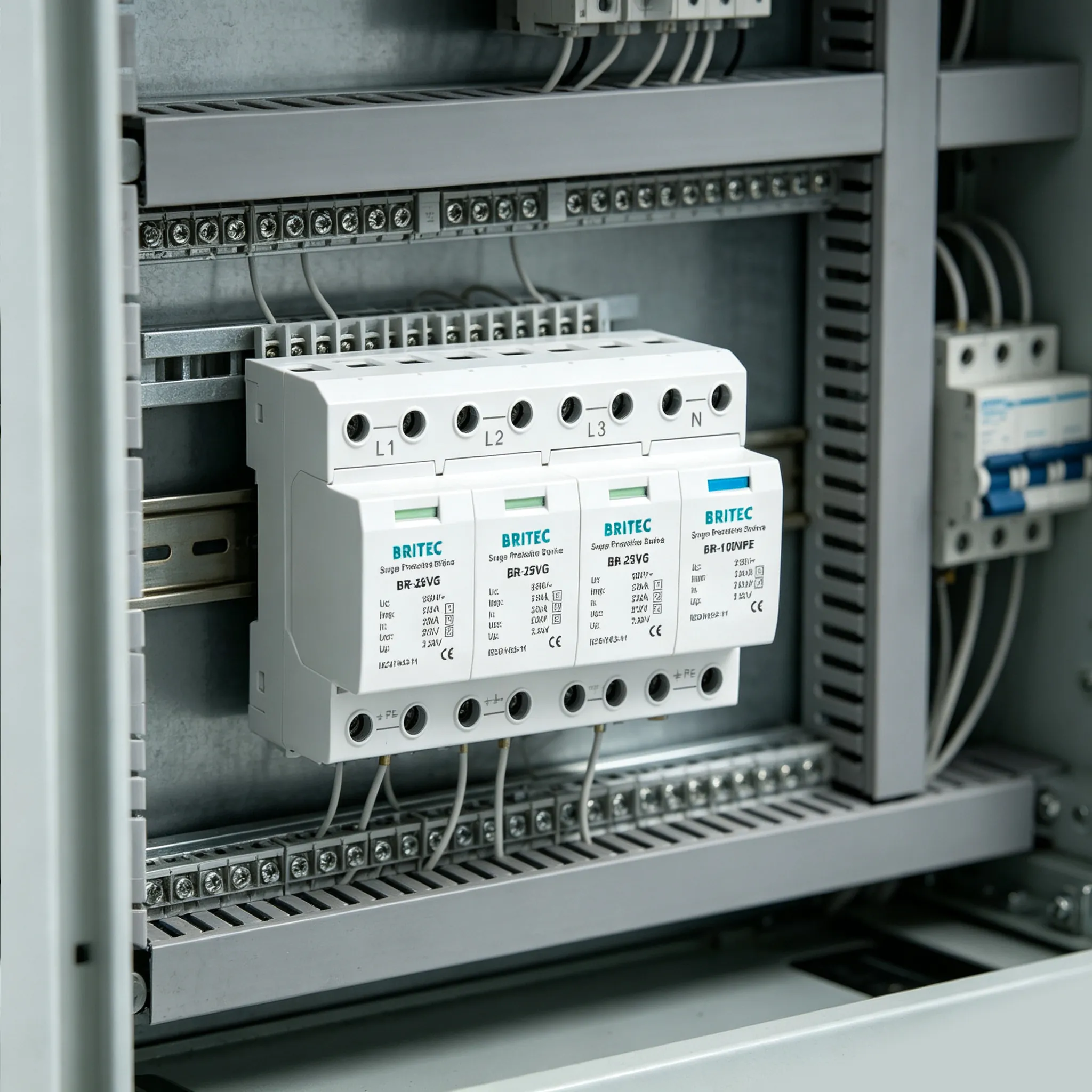
The same BR-20 platform in 4P form for three phase TN-S supplies — four modules wide, with identical electrical ratings per pole.
Here is the point most buyers get wrong: the electrical ratings do not change with phase count. A БР-20 module is rated In 10kA, Imax 20kA, Up ≤1.3kV at 275V and a maximum backup fuse of 63 A gG whether it sits in a 1P device or a 4P one. Each pole is an independent protection element.
What does change is the wiring. A single phase SPD 2P takes two conductors plus earth; a three phase surge protector 4P takes four plus earth, and the earth conductor must be sized for the combined discharge current of all poles. The 0.5 metre total lead length rule applies to both, and it is markedly harder to achieve on a four-pole device in a crowded board — plan the routing before terminating anything.
Cost scales roughly with pole count, since each pole contains its own varistor block and thermal disconnect. A 4P device typically costs three to four times a 1P device of the same series, and occupies four modules of DIN rail against one.
Panel space is the constraint that bites in practice. A single phase surge protection device DIN rail installation needs one to two modules and fits almost any consumer unit. A 3P+N or 4P device needs four, which on a retrofit frequently means the board has no room and either a larger enclosure or an adjacent sub-board becomes part of the job.
The table compares the two using published BRITEC BR-20 figures, so the differences appear as they would on a real datasheet.
| Параметр | Single Phase (BR-20 1P / 1+1 / 2P) | Three Phase (BR-20 3P / 3+1 / 4P) |
| Supply voltage | 230V line to neutral | 400V between phases |
| Pole configurations | 1P, 1P+N (1+1), 2P | 3P, 3P+N (3+1), 4P |
| Protected modes | L-PE; plus L-N and N-PE with neutral | L-PE per phase; plus L-N and N-PE with neutral |
| Earthing systems | TN-C (1P); TN-S and TT (1P+N or 2P) | TN-C (3P); TN-S and TT (3P+N or 4P) |
| In / Imax per pole | 10 kA / 20 kA | 10 kA / 20 kA (identical) |
| Up at Uc 275V | ≤ 1.3 kV | ≤ 1.3 kV (identical) |
| Макс. резервный предохранитель | 63 A gG | 63 A gG |
| DIN rail width | 1–2 modules | 3–4 modules |
| Typical location | Consumer units, shops, machine panels | Main boards, MCCs, industrial distribution |
| Relative cost | Baseline | Roughly 3–4× a 1P device |
Read the In, Imax, Up and backup fuse rows together and the key insight emerges: protection quality per conductor is identical. You are not buying stronger protection with a three phase device — you are buying more of the same protection, once per conductor.
Three checks settle it. Look at the incoming supply first: one live conductor plus neutral means single phase, three live conductors means three phase. The main breaker gives it away immediately by its width and terminal count.
Second, confirm the earthing arrangement, because it decides whether you need the neutral variant. TN-C takes 1P or 3P; TN-S and TT take 1P+N, 2P, 3P+N or 4P. Confirm this on site rather than from the drawing.
Third, remember that mixed sites are normal rather than exceptional. A commercial building typically has a three phase main board and many single phase sub-boards, and each level needs protection matched to its own supply. Fitting a three phase surge protector 4P at the main board does not protect a single phase sub-board thirty metres downstream — that board needs its own device.
Бритек Электрик Вэньчжоу has manufactured surge protective devices since 2003, with ISO 9001 and ISO 14001 certification, products tested to IEC 61643-11 and UL 1449, and an in-house impulse laboratory so production batches are verified rather than only certification samples.
Every series is built across the full pole range, which means one supplier and one specification covers a mixed site. The БР-20 Type 2 series spans 1P, 1+1, 2P, 3P, 3+1 and 4P with Uc options from 150V to 440V and Up as low as 0.8kV; the БР-40 series offers higher discharge ratings on the same footprint; and the БР-12,5М Type 1+2 series adds lightning current capability where the building has an external lightning protection system. All use plug-in replaceable modules, green/red status windows, optional remote signalling contacts and UL94 V-0 housings on 35 mm DIN rail.
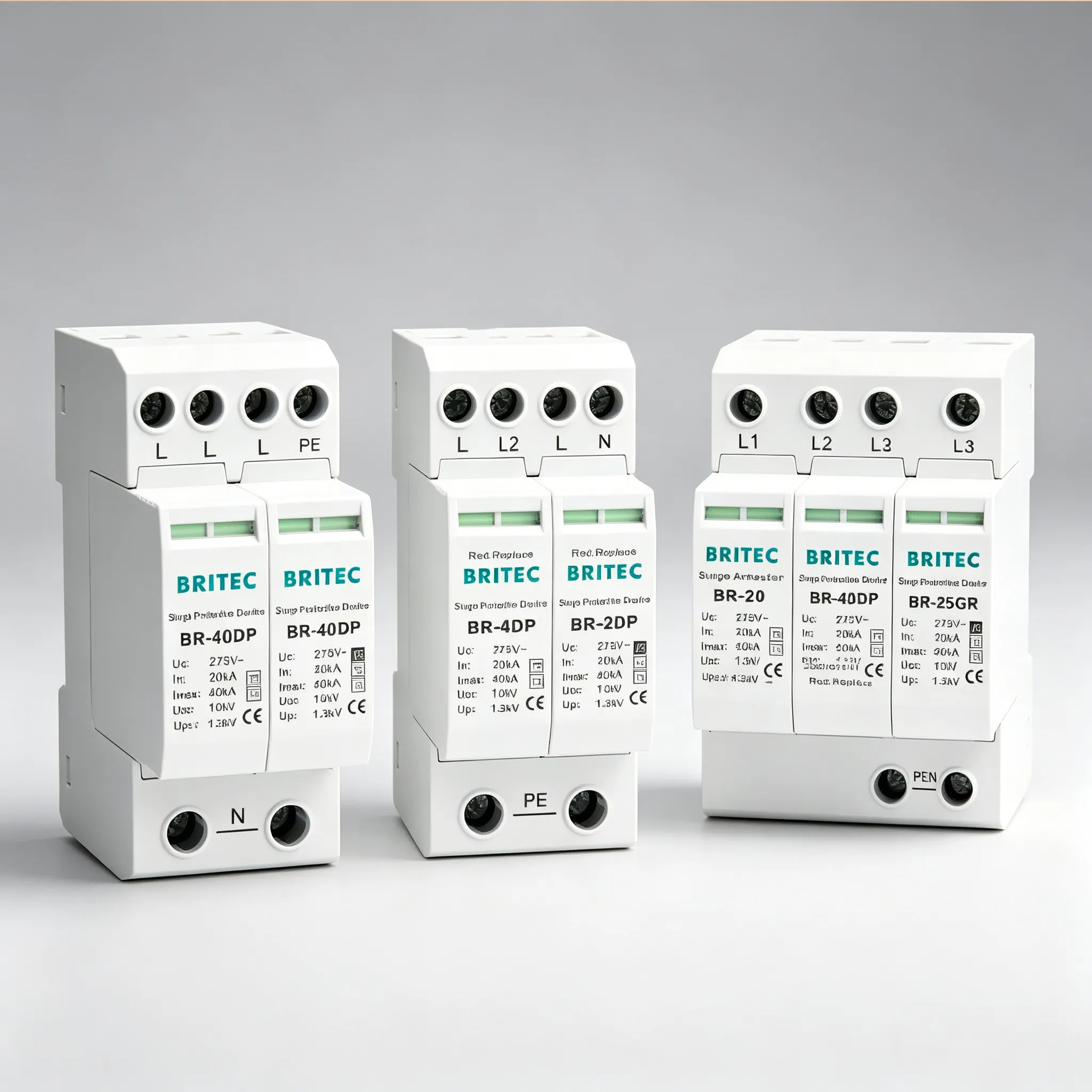
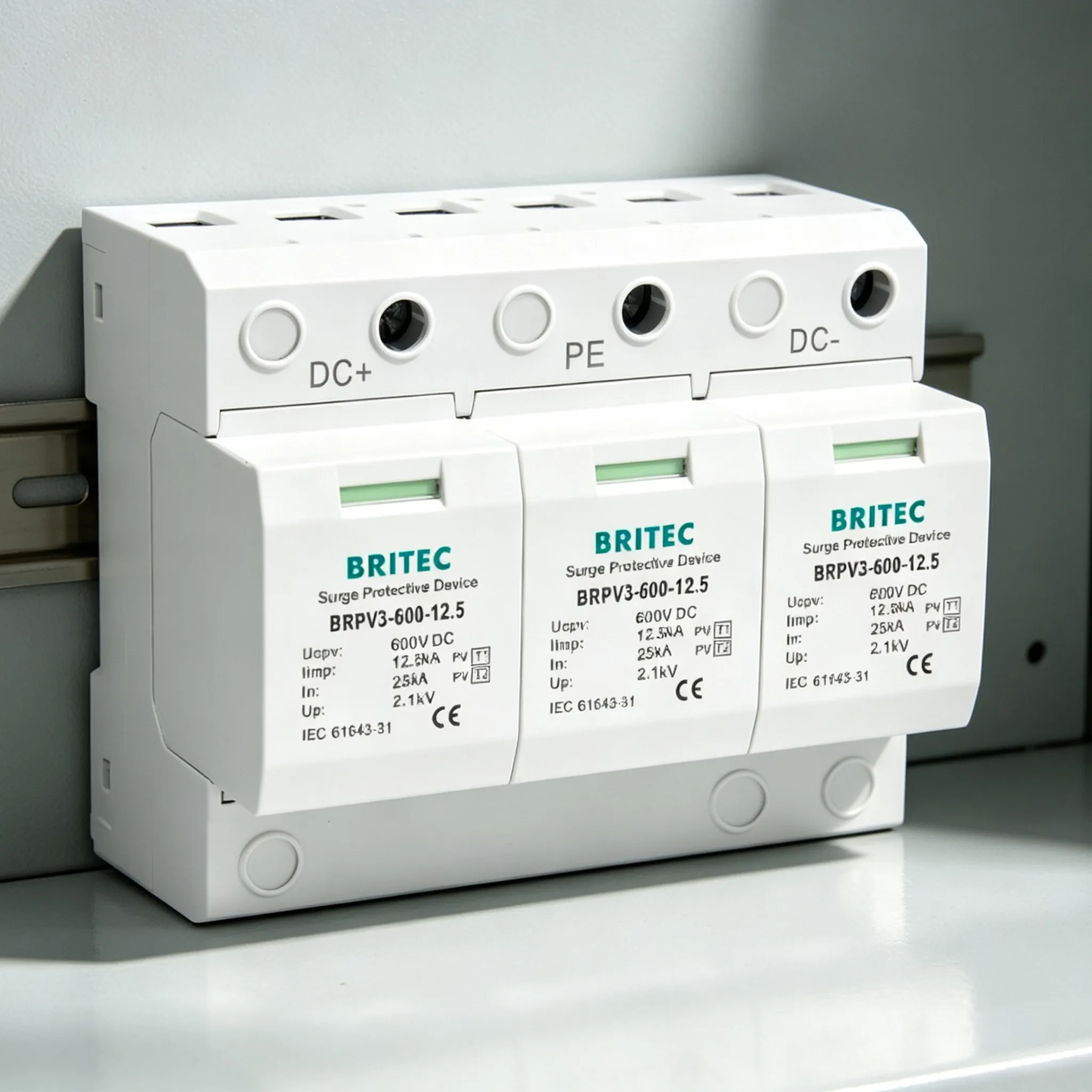
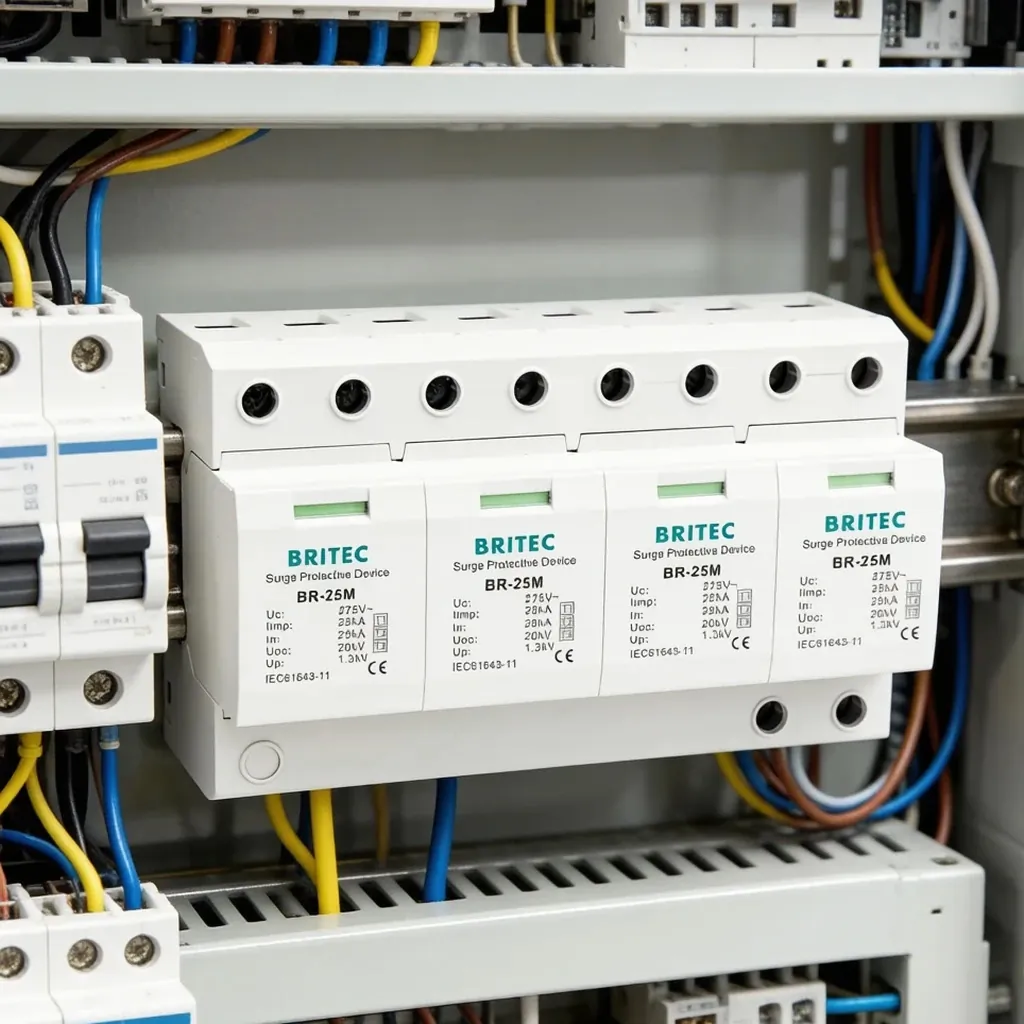
Britec surge protective devices on DIN rail — single phase and three phase configurations share the same platform and status indication.
It is not the correct approach. A 4P device has poles intended for three separate line conductors, and connecting only one leaves poles unused while occupying four modules of rail. Fit the pole configuration that matches your supply — it costs less, fits the board and is what the device was tested as.
It depends on the earthing system. In TN-C, neutral and protective functions are combined, so a 1P device is appropriate. In TN-S and TT, the neutral is a separate conductor that can carry surge energy, so use 1P+N or 2P. TT systems specifically need the N-PE spark gap arrangement to avoid a continuous leakage path to the earth electrode.
It describes a device with one varistor pole for the line conductor plus a separate stage between neutral and earth, usually a spark gap. It is often written 1+1. This gives protection line to neutral and neutral to earth, which is the arrangement TT systems require.
Electrically it is close — each pole is an independent protection element with the same ratings. The differences are practical: a single housing provides one shared status indication, one set of terminals and coordinated internal earthing, and it is treated as one device for certification and inspection.
A three phase device costs roughly three to four times a comparable single phase unit and takes four modules of rail instead of one. Installation labour is broadly similar, though achieving short lead lengths on four poles in a crowded board takes more planning — which is where the real time is spent.
А surge protection single phase versus three phase decision is made by your supply rather than by any judgement about protection quality — the БР-20 figures make that plain, with In 10kA, Imax 20kA, Up ≤1.3kV and a 63 A gG backup fuse per pole regardless of whether the device is 1P or 4P, so a three phase unit gives you more of the same protection, once per conductor, not better protection; identify the supply at the incoming board, confirm the earthing arrangement to decide whether you need the neutral variant, and remember that a mixed site with a three phase main board and single phase sub-boards needs a device matched to each level rather than one large unit at the origin. If you are specifying protection across a mixed installation, contact Бритек Электрик at [email protected] or +86 0577-6260 5321 for datasheets, certificates and a quotation on the pole configurations your boards require — our technical team responds to all enquiries within 24 hours.