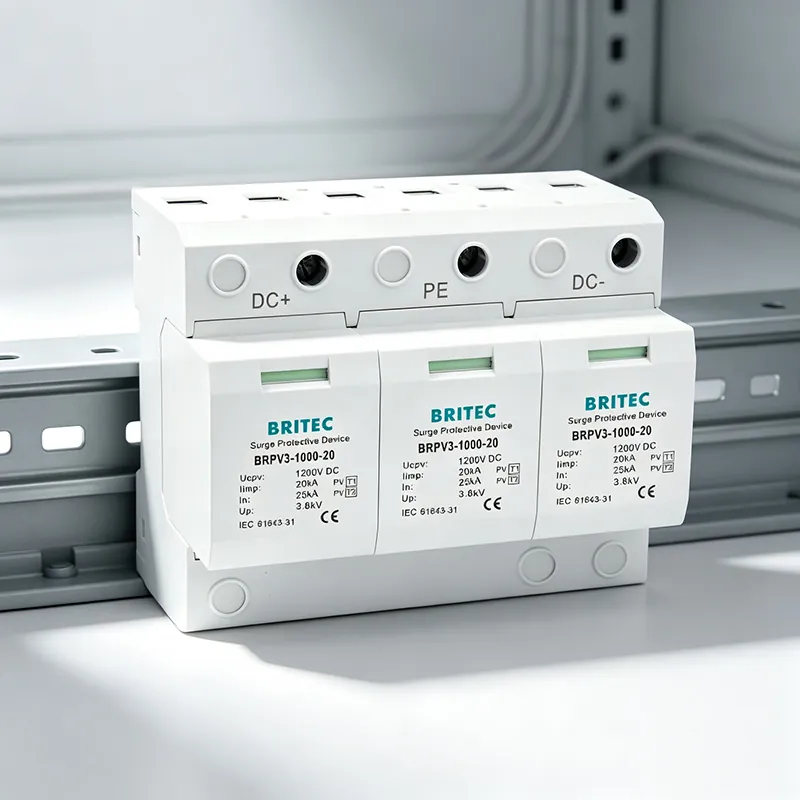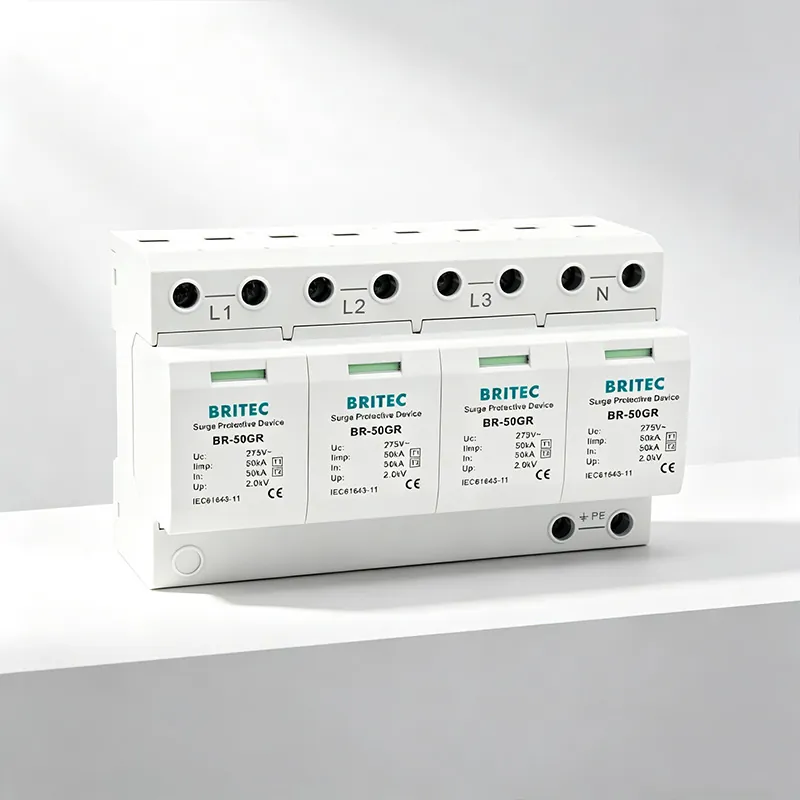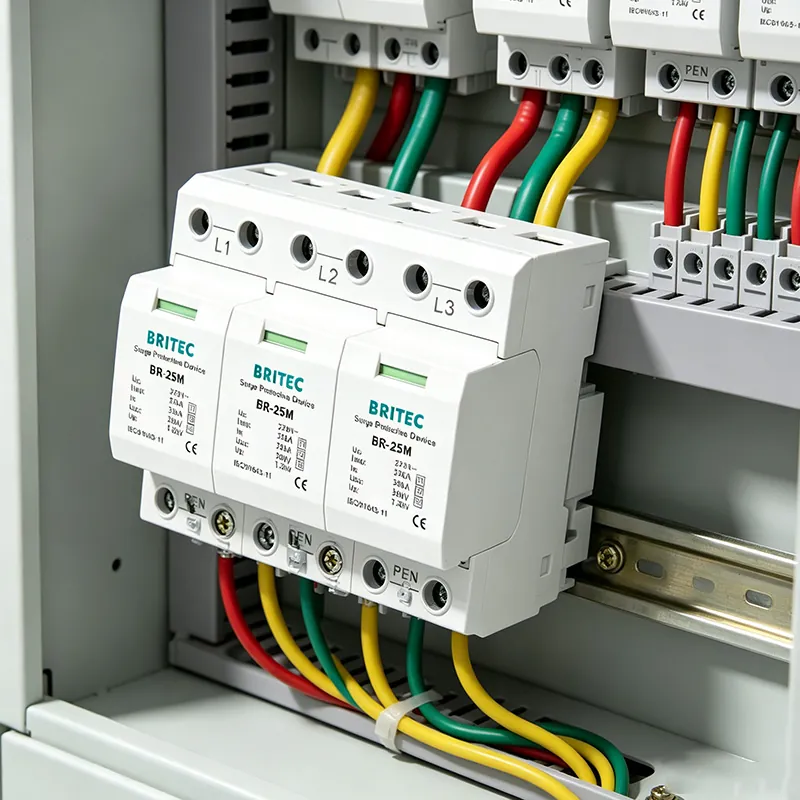

Core Reason: The Neutral (N) Line is Subjected to Abnormal Overvoltage or Overcurrent
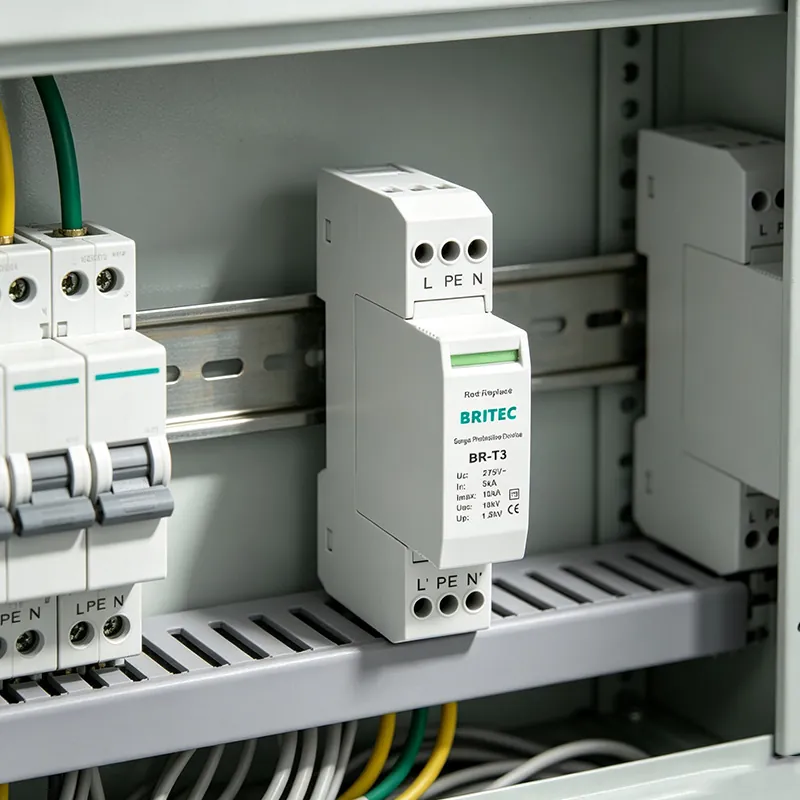
The fact that the N line of a three-phase Surge Protective Device (SPD) is burned out while the live lines (L1/L2/L3) remain intact indicates that the fault current or voltage is highly concentrated in the neutral circuit. The common causes are as follows:
This is the most typical cause in practical cases. When a high-voltage side experiences faults such as cable insulation damage or poor grounding, the high fault voltage can intrude into the grounding system of the transformer room, causing a significant rise in the neutral point potential. At this point, the N-phase modules of all SPDs in the downstream distribution cabinets are subjected to abnormally high fault voltages. The Metal Oxide Varistors (MOVs) remain continuously conductive and overheat, eventually leading to thermal breakdown or arcing. Meanwhile, the phase-to-ground voltage of the three live lines may not have risen abnormally, leaving the L1/L2/L3 modules mostly intact.
Real-world Case: In a school, the SPDs in three distribution cabinets all had their N phases burned out, while the L1/L2/L3 phases were nearly intact. Upon inspection, it was found that the insulation of the cable under the high-voltage fuse cutout was damaged, and the grounding protection wire connection bolt was loose. This caused the high fault voltage to intrude into the grounding system, leading to the sequential burning of the N-phase SPDs due to overvoltage.
Modern non-linear loads (LED lights, variable frequency drives, switching power supplies, UPS, computers, etc.) generate abundant 3rd, 9th, 15th, and other zero-sequence harmonics. These harmonics are in phase across the three phases and do not cancel each other out. Instead, they superimpose linearly on the N line, causing the N line current to potentially reach 1.5 to 2 times the phase current. The N-phase module of the SPD bears continuous high-current impacts, leading to severe heating and eventual burnout.
When the single-phase loads connected to phases L1, L2, and L3 have massive power differences, the unbalanced current cannot be fully canceled out, and the residual current converges onto the N line. If the N line cross-section is the same as or even smaller than the phase lines, it easily overheats and burns out the N-phase terminals or modules of the SPD.
If the N line terminal screws are loose, oxidized, or poorly connected, the contact resistance increases. As current passes through, this junction generates massive heat ( P=I2R ), creating a vicious cycle of “heating → aggravated oxidation → higher resistance → more heat,” which ultimately burns out the N line terminal or wire. If the live line terminals are well-connected, this issue will not occur.
Troubleshooting Recommendations
Preventive Measures
If an N line burnout has already occurred on-site, it is highly recommended to prioritize investigating high-voltage side ground faults, as this is the most dangerous and easily overlooked root cause.