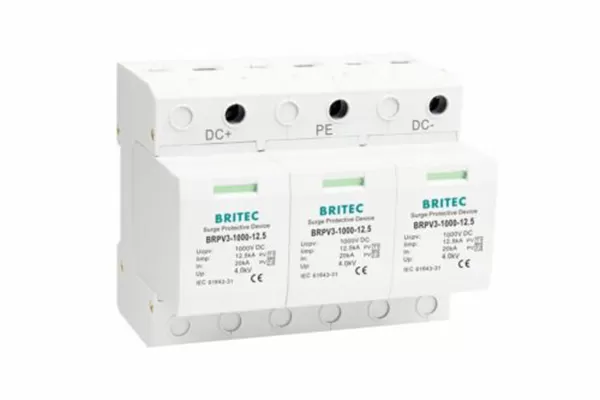

Three devices sit on the shelf with the same discharge ratings, the same protection level and the same price per pole. One is 1P, one is 1P+N, one is 2P. Choosing between them looks like a question about how much protection you want, and it is not.
It is a question about which conductors carry surge energy in your earthing system, and therefore which conductors need clamping. Single phase surge protection in the wrong configuration either leaves a live path unprotected or creates a leakage route that should not exist. The three sections below set out what each one actually protects.
A 1P device contains a single protection element connected between the line conductor and earth. It occupies one module of DIN rail and is the narrowest and cheapest option in any series.
This is the correct choice in TN-C systems, where the neutral and protective functions are combined in a single PEN conductor. There is no separate neutral to protect, so a second pole would have nothing to clamp across. BRITEC’s BR-20 1P is a typical example: Type 2 classification, In 10kA, Imax 20kA, Up ≤1.3kV at Uc 275V, with a maximum backup fuse of 63 A gG and a response time of ≤25 ns.
Where a 1P device is wrong is a TN-S or TT installation. There the neutral is a separate conductor that can carry surge energy into the installation, and a line-only device leaves that path open.
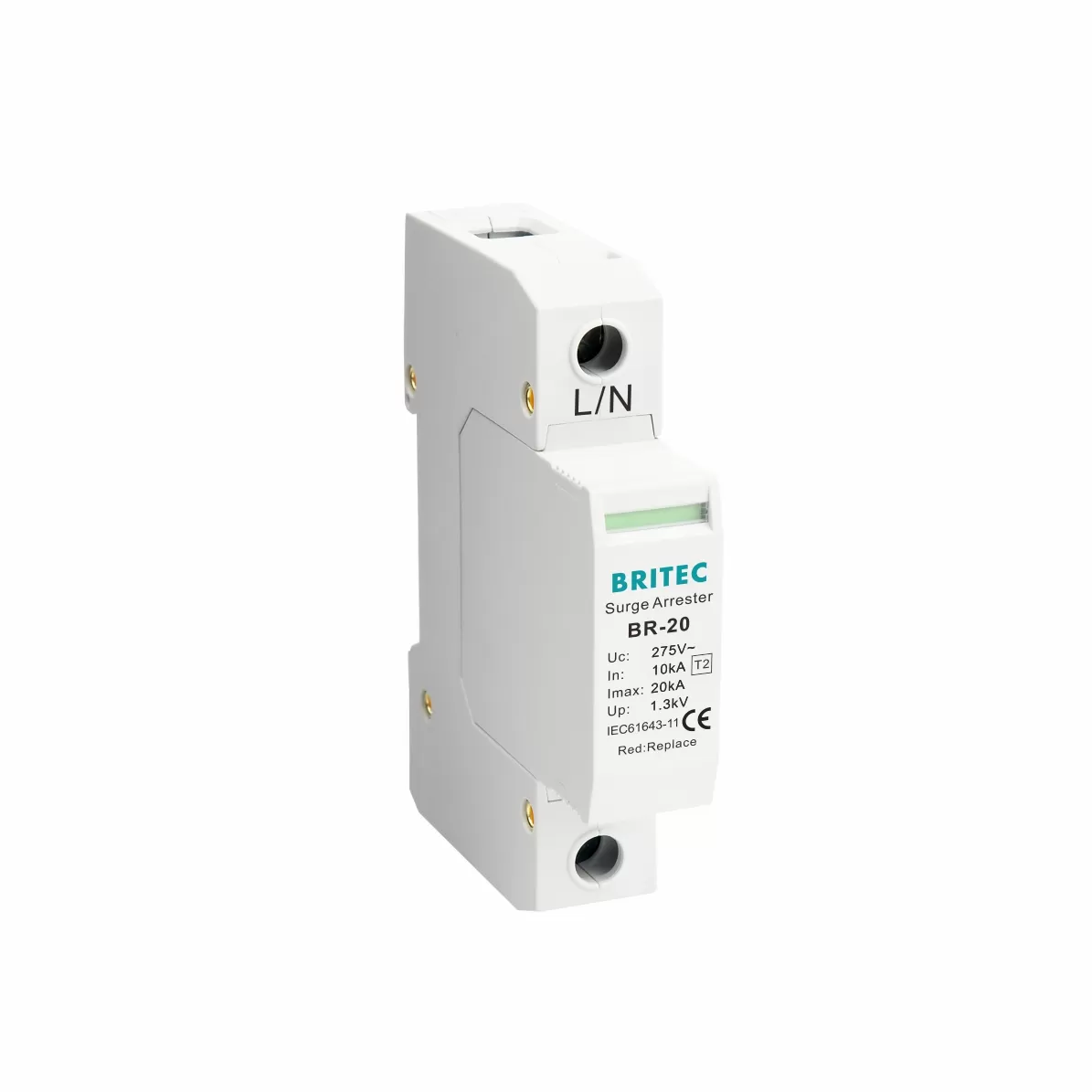
The BR-20 1P — one module wide, protecting line to earth, and the correct configuration for TN-C systems.
A 1P+N surge protector, often written 1+1, combines two dissimilar stages in one housing: a varistor between line and neutral, and a spark gap between neutral and earth. It is not simply a 1P device with an extra varistor bolted on, and the difference matters.
The spark gap is what makes this configuration suitable for TT systems. Unlike a varistor, a spark gap draws no continuous leakage current, so no permanent path exists between the neutral and the local earth electrode — which is precisely what a TT installation with an RCD cannot tolerate.
The two stages carry different ratings, and the datasheet shows both. In BRITEC’s BR-12.5M 1P+N, the line-to-neutral path is rated Uc 275V, Iimp 12.5kA, In 25kA and Up ≤1.3kV with ≤25 ns response, while the neutral-to-earth spark gap is rated Uc 255V, Iimp 25kA, In 50kA and Up ≤1.5kV with ≤100 ns response and a temporary overvoltage withstand of 1200V for 200 ms. Reading only the headline figure on a 1+1 device tells you about half of it.
A 2P single phase SPD carries two identical protection elements, one on the line conductor and one on the neutral, both referenced to earth. It occupies two modules and protects both conductors with matching characteristics.
This suits TN-S systems, where neutral and earth are separate throughout but no local earth electrode creates the leakage concern that drives the TT requirement. It is also the straightforward option where a designer wants symmetrical protection on both conductors without specifying a mixed-technology device.
The trade-off against 1P+N is subtle but real. A 2P arrangement puts a varistor between neutral and earth, which does draw a small continuous leakage current — acceptable in TN-S, but the reason a 1P+N surge protector with its spark gap remains the specified arrangement for TT.
The clearest way to see the difference is by protection mode rather than by pole count. The table below sets out which conductor pairs each configuration actually clamps across, and which earthing system each suits.
| Aspecto | 1P | 1P+N (1+1) | 2P |
| L-PE protection | Yes, direct | Via L-N plus N-PE in series | Yes, direct |
| L-N protection | No | Yes (varistor) | Sim |
| N-PE protection | No | Yes (spark gap) | Yes (varistor) |
| N-PE leakage current | Not applicable | None (spark gap) | Small, continuous |
| Suits TN-C | Sim | Not applicable | Not applicable |
| Suits TN-S | No | Sim | Sim |
| Suits TT | No | Yes, preferred | Not recommended |
| DIN rail width | 1 module | 2 modules | 2 modules |
| Replaceable modules | 1 cartridge | 2 cartridges (different types) | 2 cartridges (identical) |
Two rows do most of the work. The N-PE leakage row explains why TT systems specify 1P+N rather than 2P, and the replaceable modules row has a practical consequence: on a 1+1 device the two cartridges are not interchangeable, so a 1P+N SPD replacement cartridge must be ordered for the correct stage. On a 2P device both cartridges are the same part.
Britec Elétrica Wenzhou has manufactured surge protective devices since 2003, with ISO 9001 and ISO 14001 certification, products tested to IEC 61643-11 and UL 1449, and an in-house impulse laboratory so production batches are verified rather than only certification samples.
All three configurations are available across the range, so the same series covers whichever earthing system you meet on site. The BR-20 Type 2 series offers 1P, 1+1 and 2P with Uc from 150V to 440V and Up as low as 0.8kV; the BR-40 series raises the discharge rating on the same footprint; and the BR-12,5M Type 1+2 series adds lightning current capability for buildings with an external lightning protection system. Every version uses plug-in replaceable cartridges, a green/red status window, an optional remote signalling contact, UL94 V-0 housing and 4–35 mm² terminals on 35 mm DIN rail.
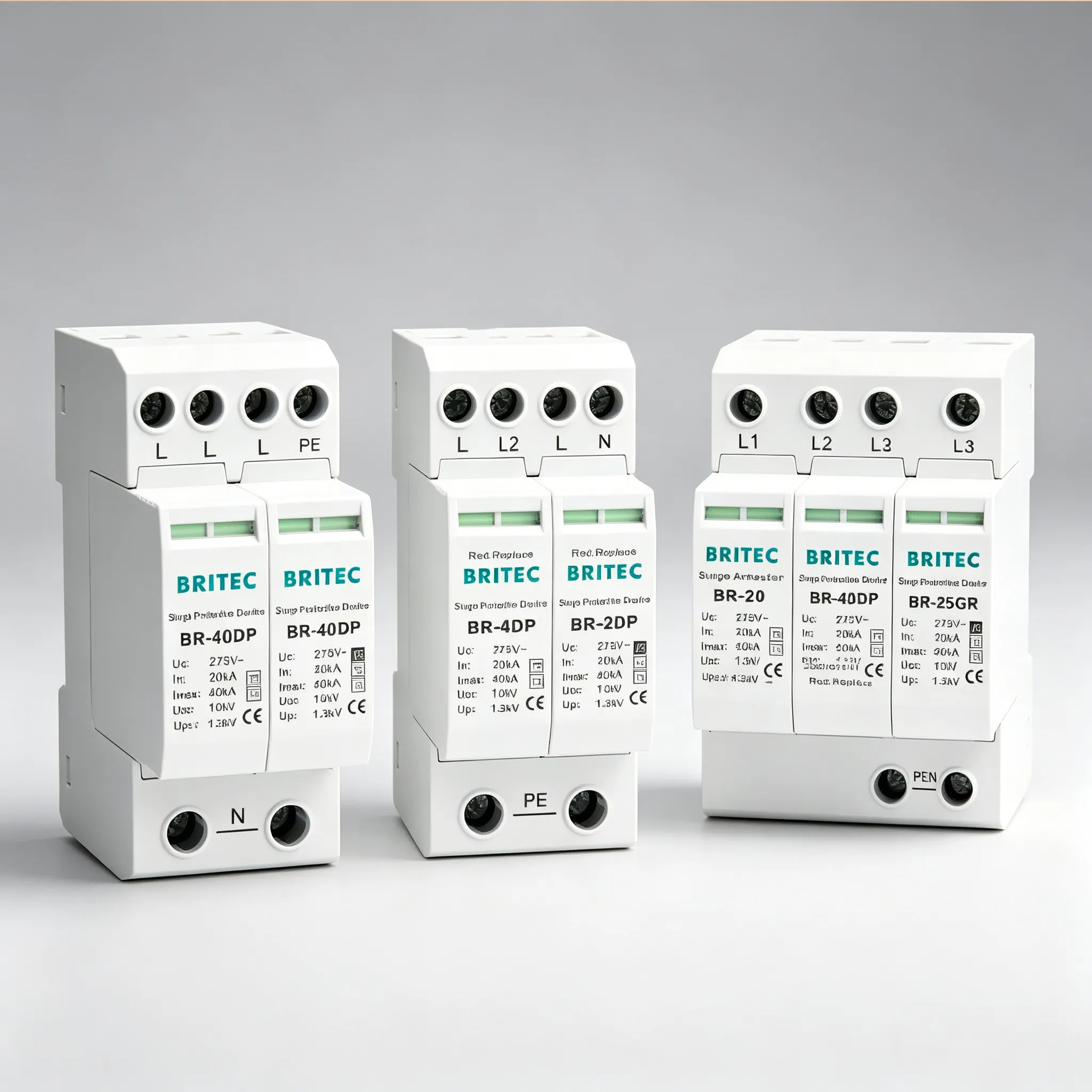
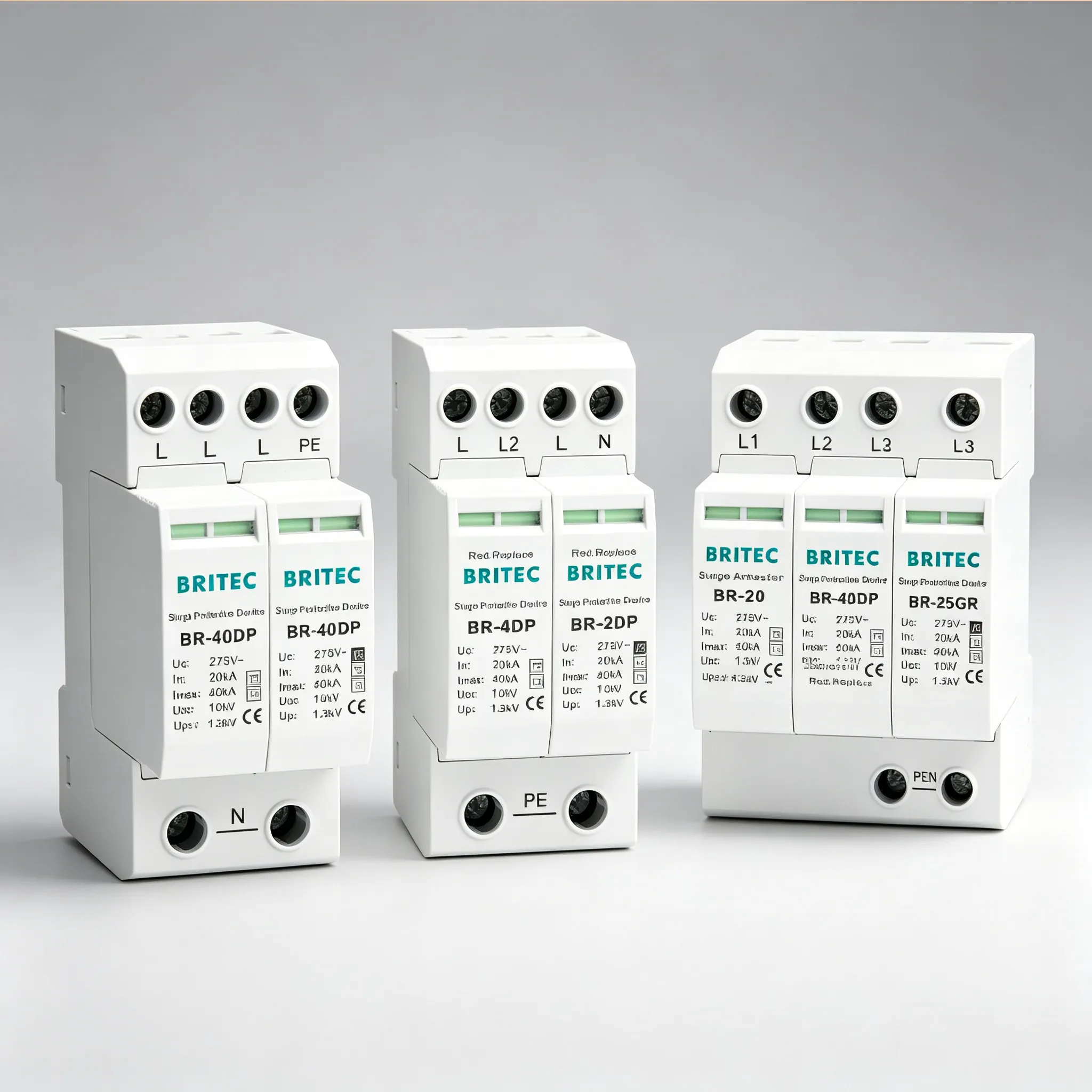
Britec single phase devices on DIN rail, showing the status window used to confirm each cartridge is still functional.
A 1P device protects line to earth only and suits TN-C systems where neutral and protective functions are combined. A 1P+N device adds a second stage between neutral and earth — normally a spark gap — giving line-to-neutral and neutral-to-earth protection, which is what TN-S and TT systems require.
Neither is better in general; they suit different earthing systems. 2P places varistors on both conductors and works well in TN-S. 1P+N uses a spark gap on the neutral-to-earth path, which draws no continuous leakage current and is therefore the specified arrangement for TT systems with a local earth electrode.
Usually, but check two things. The 1P+N needs two modules of rail instead of one, and the panel must have a separate neutral conductor available to terminate — in a TN-C system there is no separate neutral, so the upgrade has nothing to connect to. Also confirm the existing backup fuse is at or below the new device’s maximum rating.
Yes, roughly double, since both contain two protection stages instead of one and occupy two modules rather than one. A 1P+N device may cost slightly more than a 2P of the same series because the spark gap stage is a different and more specialised component than a second varistor.
The earthing system decides. TN-C needs 1P. TN-S accepts 1P+N or 2P. TT needs 1P+N with the neutral-to-earth spark gap. Confirm the arrangement at the board rather than assuming from the drawing — a mismatch either leaves the neutral unprotected or introduces a leakage path that should not be there.
Choosing between 1P, 1P+N and 2P single phase surge protection is not a question of buying more protection but of matching the protection modes to the conductors your earthing system actually leaves exposed — 1P covers line to earth and belongs in TN-C where no separate neutral exists, 2P adds a varistor on the neutral and suits TN-S, and a 1P+N surge protector uses a spark gap on the neutral-to-earth path specifically because it draws no continuous leakage current, which is what makes it the correct and often the required choice for TT systems; check the earthing arrangement at the board before ordering, read both sets of ratings on any 1+1 datasheet rather than the headline figure alone, and note that the two cartridges in a 1+1 device are different parts when you come to order replacements. If you are specifying single phase protection for a project, contact Britec Eletrônica at [email protected] or +86 0577-6260 5321 for datasheets, certificates and a quotation on the configuration your installation requires — our technical team responds to all enquiries within 24 hours.