
Written by the Britec Electric engineering team — Wenzhou Britec Electric Co., Ltd. has designed and manufactured surge protective devices (SPDs) in Wenzhou, Zhejiang, since 2003, with in-house R&D, ISO 9001 certified production and TUV, CE and Intertek SEMKO approvals. This type 3 surge protective device selection guide is written for panel builders, system integrators and facility engineers who specify point-of-use protection for servers, medical instruments, laboratory equipment and industrial controllers, and every figure quoted below comes from the parameters we test and publish on our own datasheets.
A correctly selected Type 3 surge protective device is the last line of defence between a transient overvoltage and your most expensive electronics. Upstream Type 1 and Type 2 SPDs absorb the bulk of the surge energy, but the wiring between the distribution board and the socket still leaves residual voltage on the terminals of a switch-mode power supply. This guide covers the whole Type 3 SPD selection process: what qualifies as Type 3 under IEC 61643-11, how to match Uc, Up, In and Uoc to the load, how to coordinate the device with upstream protection stages, and the installation rules that decide whether it actually protects anything.
Every metre of cable between an SPD and the protected load adds inductance — roughly 1 µH per metre — and that inductance develops additional voltage while the surge current flows. A Type 2 device that clamps well at the distribution board can therefore deliver several hundred volts more at the far end of a long branch circuit. Modern electronics make this margin matter: switch-mode power supplies, PLC input cards, network switches and medical front-end amplifiers are typically only tested to immunity levels of 1–2 kV under IEC 61000-4-5, which is far below what an unassisted branch circuit can present during a lightning-induced or switching transient.
The consequence is familiar to anyone who runs a control room or a server estate: equipment that survives the storm but dies slowly over months as each small transient degrades semiconductor junctions, corrupts memory or trips power supplies. A Type 3 SPD installed at the point of use is what removes that residual overvoltage before it reaches the device.

Type 3 is the EN 61643-11 name for what IEC 61643-11 calls Klasse III: an SPD tested with a 1.2/50 µs – 8/20 µs combination wave at a declared open-circuit voltage Uoc, and intended for installation on the load side of the distribution board, at the boundary of LPZ 2 and LPZ 3 — in other words, at or immediately beside the equipment. A nominal discharge current In of 5 kA (8/20 µs) and a combined impulse Uoc of 10 kV are the values most Class III products are built and tested around.
Two practical points follow from the definition. First, Type 3 describes a test class and an installation position, not a form factor: a compact DIN-rail module and a two-pole feeder protector can both be Type 3 devices. Second, a Type 3 SPD is a supplement to — never a replacement for — the Type 1 or Type 2 stage at the service entrance and distribution boards, because its discharge capacity is deliberately modest so that its clamping voltage can be very low.
● Step 1 — Confirm the supply system and pick Uc. The maximum continuous operating voltage Uc must sit at or above the highest voltage your circuit can hold in normal operation, including expected temporary overvoltages. On a 230/240 V network that means Uc 275 V AC; on a 120 V circuit use Uc 150 V AC; for 60 V telecom or battery supplies use Uc 75 V AC / 100 V DC; and for 24 V control loops use Uc 30 V AC / 38 V DC. Undersizing Uc ages the thermal disconnector prematurely; oversizing it raises the protection level the load will see.
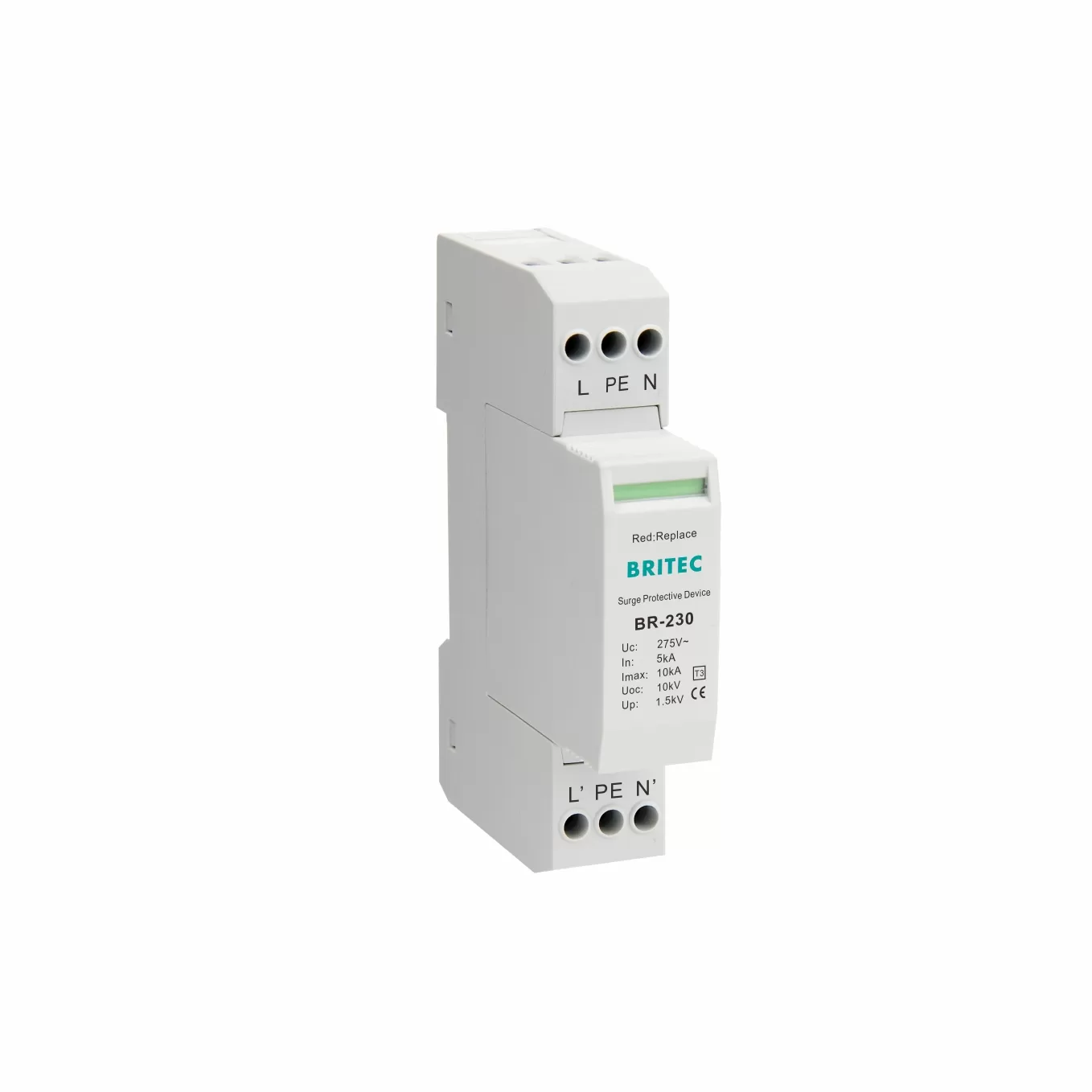
● Step 2 — Check the voltage protection level Up against the equipment. Up is the voltage the protected device actually sees, so it is the single most important number for sensitive electronics. Take the lowest Up that your Uc requirement allows: the BR-T3 Type 3 surge protector series, for example, holds Up to ≤630 V in its 24 V variant, ≤800 V in its 120 V variant and ≤1500 V in its 230 V variant, while maintaining In 5 kA across the whole family.
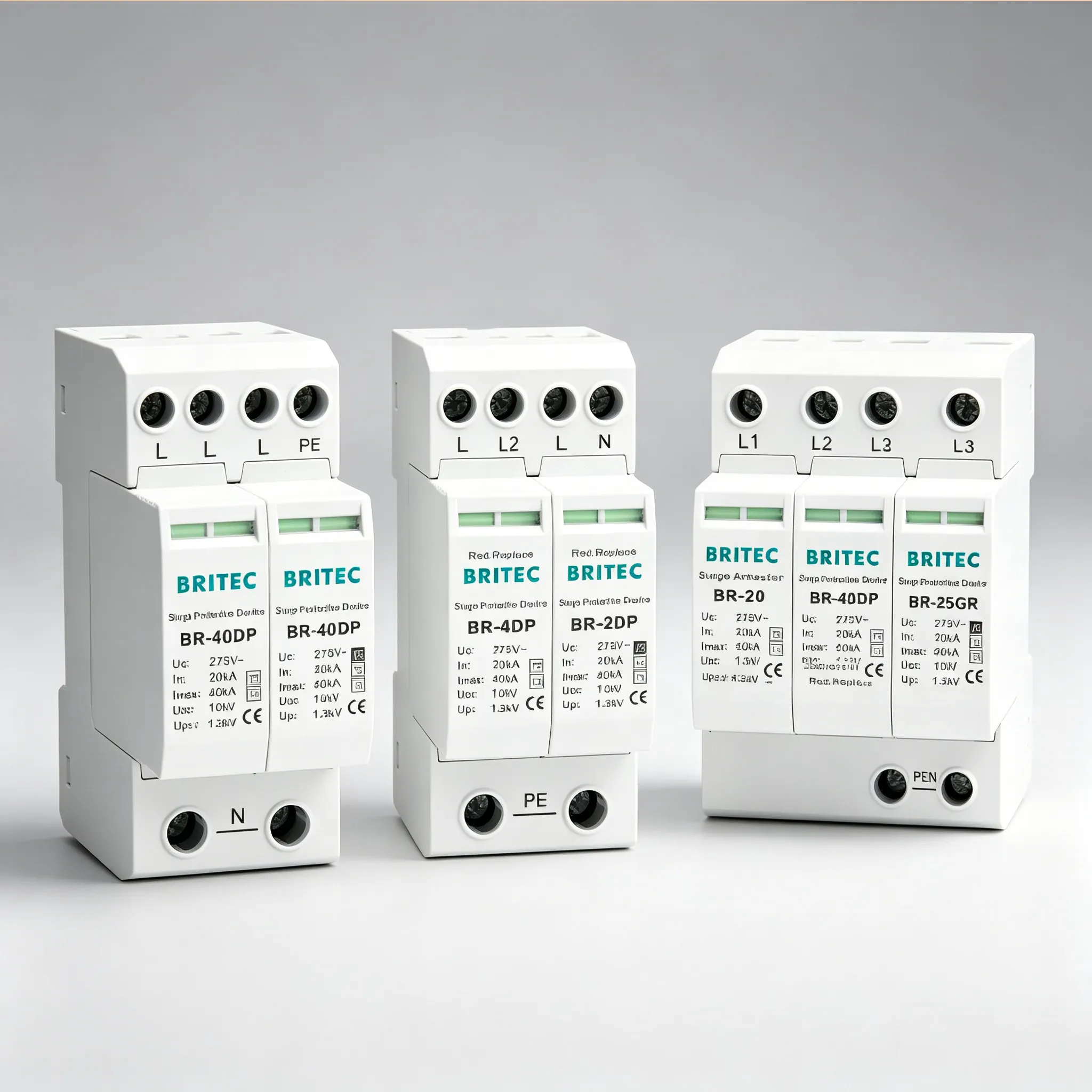
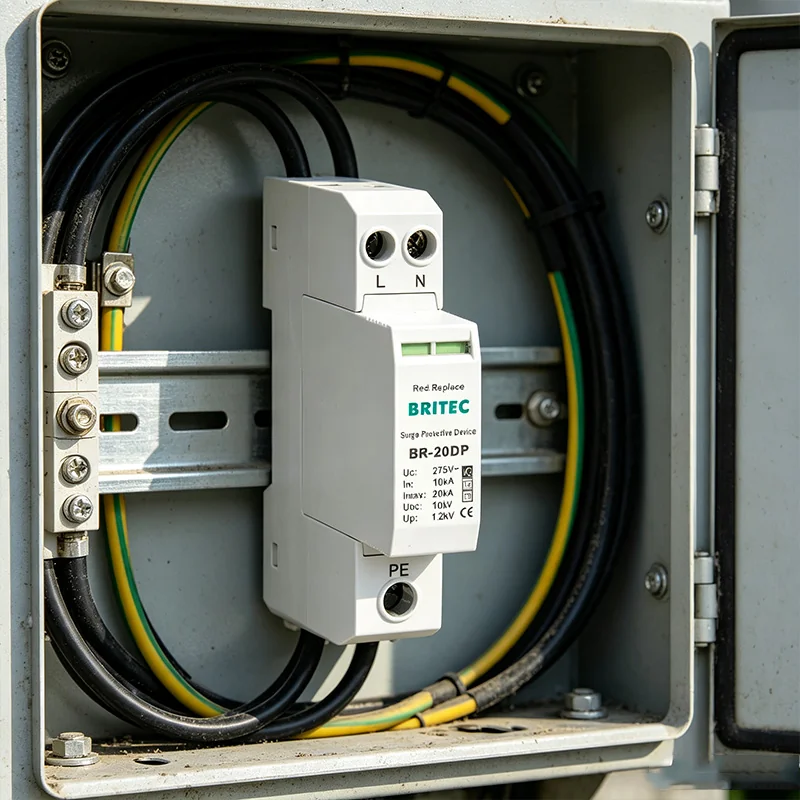
● Step 3 — Match In, Imax and Uoc to the exposure. In (nominal discharge current, 8/20 µs) describes repeated surge handling and Imax the single maximum discharge the device survives. At a quiet final socket, In 5 kA with Uoc 10 kV — the standard Class III package — is normally sufficient. Where the point-of-use board feeds machinery, lifts or a busy workshop floor, step up to a device such as the BR-20DP 2P 20 kA Type 3 SPD, which combines In 10 kA, Imax 20 kA and Up ≤1200 V in the same DIN-rail format.
● Step 4 — Coordinate with the upstream SPD. A Type 3 device must not be asked to absorb the whole surge alone. Keep at least 10 m of cable between the upstream Type 1/Type 2 stage and the Type 3 device — or fit a decoupling inductor where the distance cannot be achieved — so the upstream stage fires first. Our guide to how to cascade Type 1, Type 2 and Type 3 SPDs explains the coordination distances in detail.
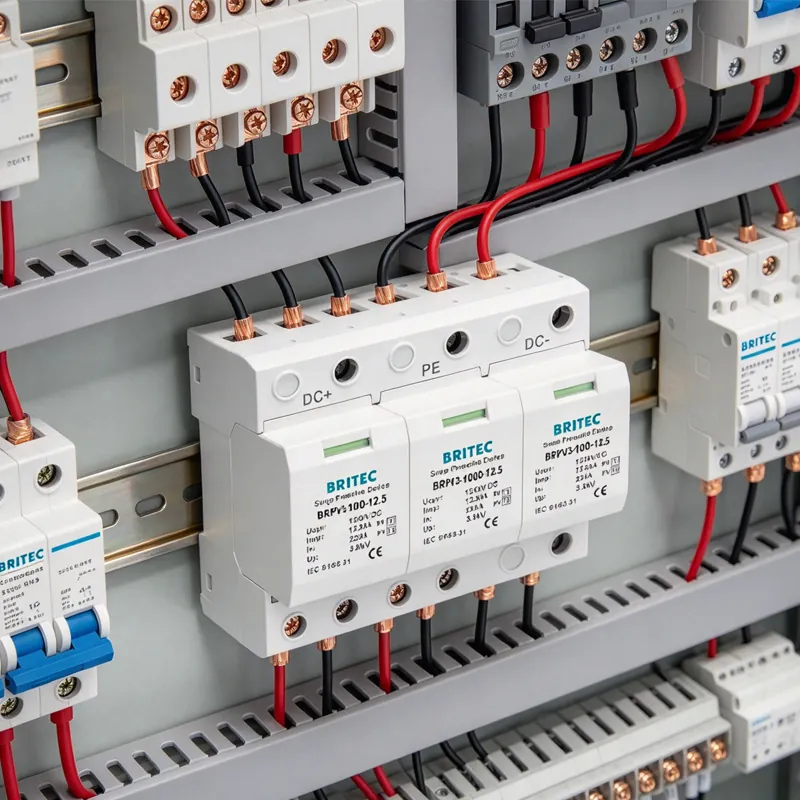
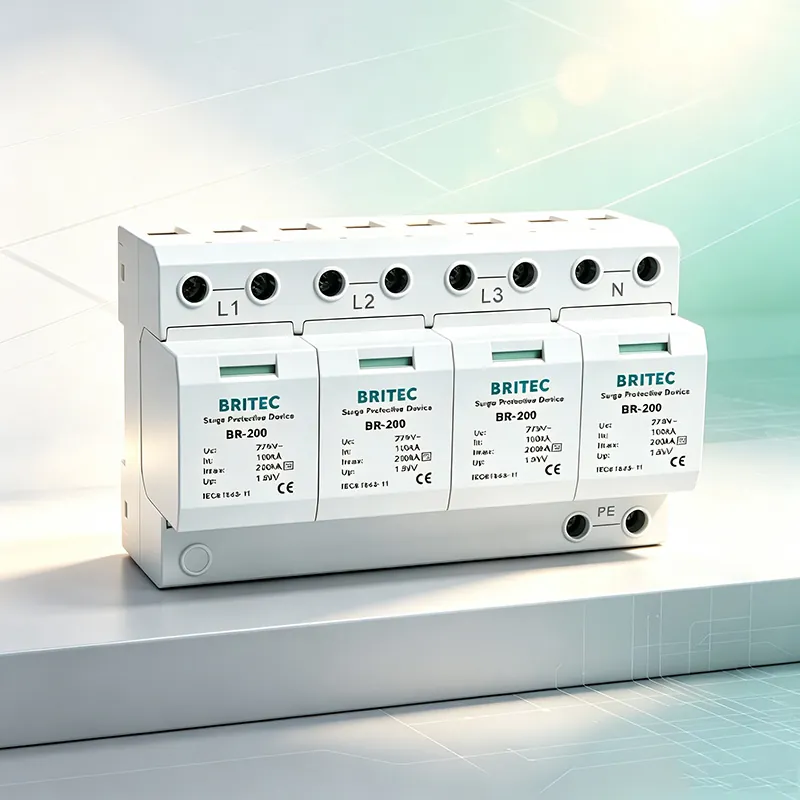
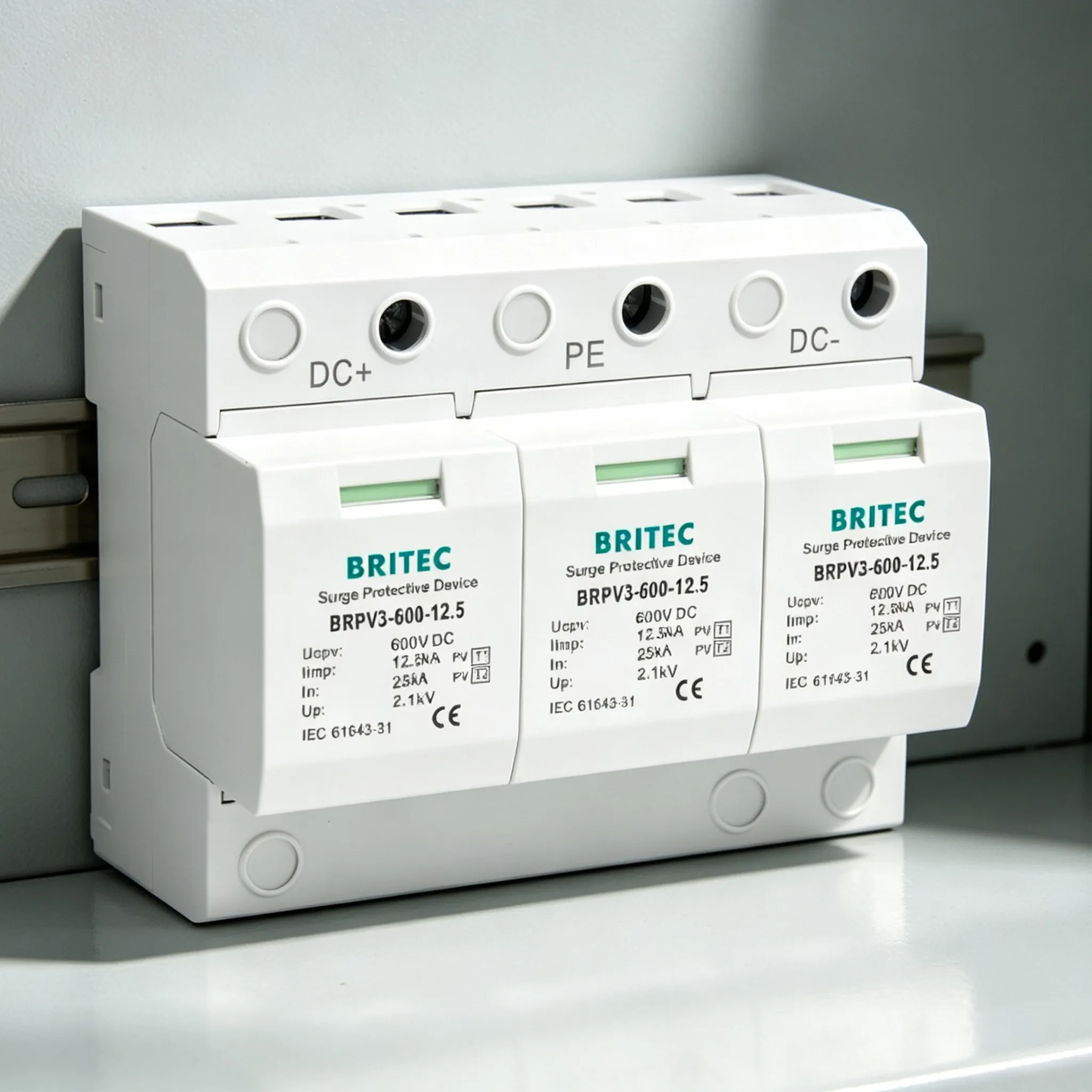
● Step 5 — Choose the form factor and the signalling you need. All Britec Type 3 devices mount on a 35 mm DIN rail in UL94 V-0 thermoplastic housings rated IP20, with a green/red status window that shows the thermal disconnector state at a glance. For server rooms, telecom shelters and other unattended sites, order the remote-signalling version so a dry contact reports end of life to your monitoring system instead of waiting for an inspection.
The table below summarises the BR-T3 selection grid so you can move directly from system voltage to an orderable variant:
| Variant | Nominal AC Voltage Un | Uc (AC / DC) | Voltage Protection Level Up |
|---|---|---|---|
| BR-T3 30 | 24 V | 30 V AC / 38 V DC | ≤630 V |
| BR-T3 75 | 60 V | 75 V AC / 100 V DC | ≤730 V |
| BR-T3 150 | 120 V | 150 V AC / 180 V DC | ≤800 V |
| BR-T3 275 | 230 V | 275 V AC / 300 V DC | ≤1500 V |
| All variants: In 5 kA (8/20 µs), combined impulse Uoc 10 kV, load current IL 25 A, response ≤25 ns (L-N) / ≤100 ns (L/N-PE), −40 °C to +80 °C, 35 mm DIN rail, IP20. | |||
● Server racks and network cabinets — keep a Type 2 SPD at the rack PDU feed and add a Type 3 device at the rack or equipment outlet so the residual voltage arriving down the branch circuit is removed before the power supply sees it.
● Medical and laboratory instruments — analysers, imaging support systems and measurement front ends tolerate the least disturbance; specify the 120 V or 230 V BR-T3 variant with the lowest Up your supply allows and keep the lead length to the instrument under half a metre.
● PLC and industrial automation panels — protect the 24 V control side with the BR-T3 30 variant (Up ≤630 V) alongside the mains stage; the analog and digital I/O that fails first is almost always the low-voltage side.
● Telecom, broadcast and security equipment — pair the power-side Type 3 SPD with dedicated data-line protectors on every Ethernet, coaxial or control cable that enters the room, because surges ride in on signal lines just as often as on power.
● POS terminals, ATMs and retail electronics — point-of-use Type 3 protection at the final socket stops the transients that building wiring picks up from lift motors, refrigeration compressors and switching operations elsewhere in the premises. For the wider picture on layered protection, read our guide to the best surge protection for electronics and sensitive equipment.
Not Sure Which Type 3 Variant Fits Your Load?
Send Britec your system voltage and equipment list and our engineers will return the right Uc, Up and In combination within 24 hours.
A perfectly specified Type 3 SPD can be defeated by careless wiring. Mount the device as close to the protected equipment as the panel allows, ideally within a few metres of the load and always downstream of the 10 m coordination distance from the upstream stage. Keep the connection leads short and straight — 0.5 m or less — and wire them in a V configuration so both the feed and the return pass through the device terminals; every extra centimetre of lead adds inductive voltage on top of Up.
Use conductor cross-sections within the datasheet range — 1 to 4 mm² on the BR-T3 and 2.5 to 16 mm² on the BR-20DP — and fit the backup fuse or breaker the datasheet calls for, so an end-of-life device disconnects safely without dropping the feeder. Because the housing is IP20, install the SPD inside an enclosure, which the UL94 V-0 thermoplastic body is designed for. Where the device feeds an unattended site, the remote-signalling contact turns the green/red status window into a signal your BMS or network monitor can log, and our guide on how to know if a Type 3 SPD needs replacement covers what that signal means in practice.
Run through this list before you release a Type 3 specification to purchasing or submit it with a tender:
Type 3 SPD Selection Checklist
☐ System voltage and earthing system (TN-S, TT, TN-C) confirmed
☐ Uc at or above the highest continuous operating voltage of the circuit
☐ Up equal to or below the equipment immunity requirement (IEC 61000-4-5 level)
☐ In and Imax matched to the site exposure, not just the price list
☐ At least 10 m of cable (or a decoupling inductor) to the upstream SPD
☐ Mounting position within a few metres of the protected equipment
☐ Connection leads 0.5 m or shorter, wired in a V configuration
☐ Conductor cross-section inside the datasheet range
☐ Backup fuse or circuit breaker specified per the datasheet
☐ Remote signalling ordered for unattended equipment rooms
☐ Status window accessible for routine inspection
● Buying on Imax alone. A high Imax figure says nothing about the voltage your equipment will see; Up is the number that decides survival.
● Ignoring the coordination distance. Fitting a Type 3 device less than 10 m from an upstream SPD can force both stages to compete for the same surge and age them prematurely.
● Over-sizing Uc. A 275 V device on a 120 V circuit works electrically but leaves the load with a higher Up than necessary — select Uc correctly first, then optimise Up.
● Forgetting the low-voltage side. Sensitive 24 V loops, sensors and serial links need their own BR-T3 30 protection; mains-side devices cannot see transients coupled into control wiring.
● Omitting backup protection. Without the datasheet backup fuse or breaker, an end-of-life SPD can hold a fault in the circuit instead of isolating itself.
● Treating the SPD as fit-and-forget. MOV-based devices age with every surge they absorb; check the status window on every maintenance round and replace on the first red indication.
Need Type 3 SPDs With Published Test Data?
Britec supplies the full Type 3 range from 24 V control circuits to 230 V mains, with remote signalling options and datasheets you can attach directly to your tender.
1. What is a Type 3 surge protective device?
A Type 3 SPD, called Class III in IEC 61643-11, is a point-of-use surge protector tested with a 1.2/50 µs – 8/20 µs combination wave at a declared Uoc and installed on the load side of the distribution board, immediately before sensitive equipment.
2. Do I still need a Type 3 SPD if my panel already has a Type 2 device?
Yes, when the load is sensitive. The Type 2 stage absorbs the bulk of the energy, but residual overvoltage still travels down the branch circuit; only a Type 3 device at the point of use removes that last few hundred volts.
3. What voltage protection level Up should I choose for sensitive electronics?
Take the lowest Up your Uc requirement allows: on 230 V systems that is typically ≤1500 V, and for 120 V instruments, 24 V control loops and laboratory loads you should target ≤800 V or below with the appropriate BR-T3 variant.
4. How far from the equipment can a Type 3 SPD be installed?
As close as possible — within a few metres of the load, with connection leads of 0.5 m or less. At the same time keep at least 10 m of cable between it and the upstream Type 2 stage so the two stages coordinate instead of competing.
5. Can a Type 3 SPD protect 24 V DC control circuits?
Yes. The BR-T3 30 variant is rated Uc 30 V AC / 38 V DC with Up ≤630 V, which covers 24 V PLC loops, sensors and serial buses that are usually the first casualties of a switching transient.
6. Is a higher In or Imax always better for a Type 3 SPD?
No. In 5 kA with Uoc 10 kV is the standard Class III package and is sufficient at quiet final outlets; step up to In 10 kA / Imax 20 kA only where the point-of-use board serves machinery or a high-traffic installation.
7. Does a Type 3 SPD need its own backup fuse or breaker?
Follow the datasheet: the backup protection ensures an end-of-life device disconnects safely without interrupting the feeder. Britec publishes the recommended backup ratings for every Type 3 variant.
8. How do I know when a Type 3 SPD has reached end of life?
The status window turns from green to red when the thermal disconnector has separated the varistor, and the remote-signalling version forwards the same signal to your monitoring system — replace the plug-in module at that point.
Britec Electric has focused on low-voltage surge protection from our factory in Wenzhou, Zhejiang, since 2003. Every device is developed and produced in-house on an ISO 9001 certified line, carries TUV, CE and Intertek SEMKO approvals, and is published with the same parameters used in this guide — Uc, In, Imax, Uoc and Up — so your selection can be verified line by line. Alongside the Type 3 range you can source the coordinated Type 3 surge protector family, the upstream Type 1, Type 1+2 and Type 2 stages, and the data-line protectors that complete a full LPZ 0 to LPZ 3 protection scheme from a single supplier, with OEM and ODM support and engineering replies within 24 hours.
Get A Complete Type 3 SPD Proposal
Tell us your system voltage, load list and installation environment — we will size the Type 3 device and its coordination with the upstream stages, and quote with full test data.
● Wat is een type 3-overspanningsbeveiliging?
● SPD Type 3 vs Surge Protection Power Strip: Key Differences Explained
● What Happens When Type 3 Surge Protection Device Reaches End of Life
● What Happens Without Surge Protection Device Type 3?
● How To Select Appropriate kA Rating For AC Surge Protection Device