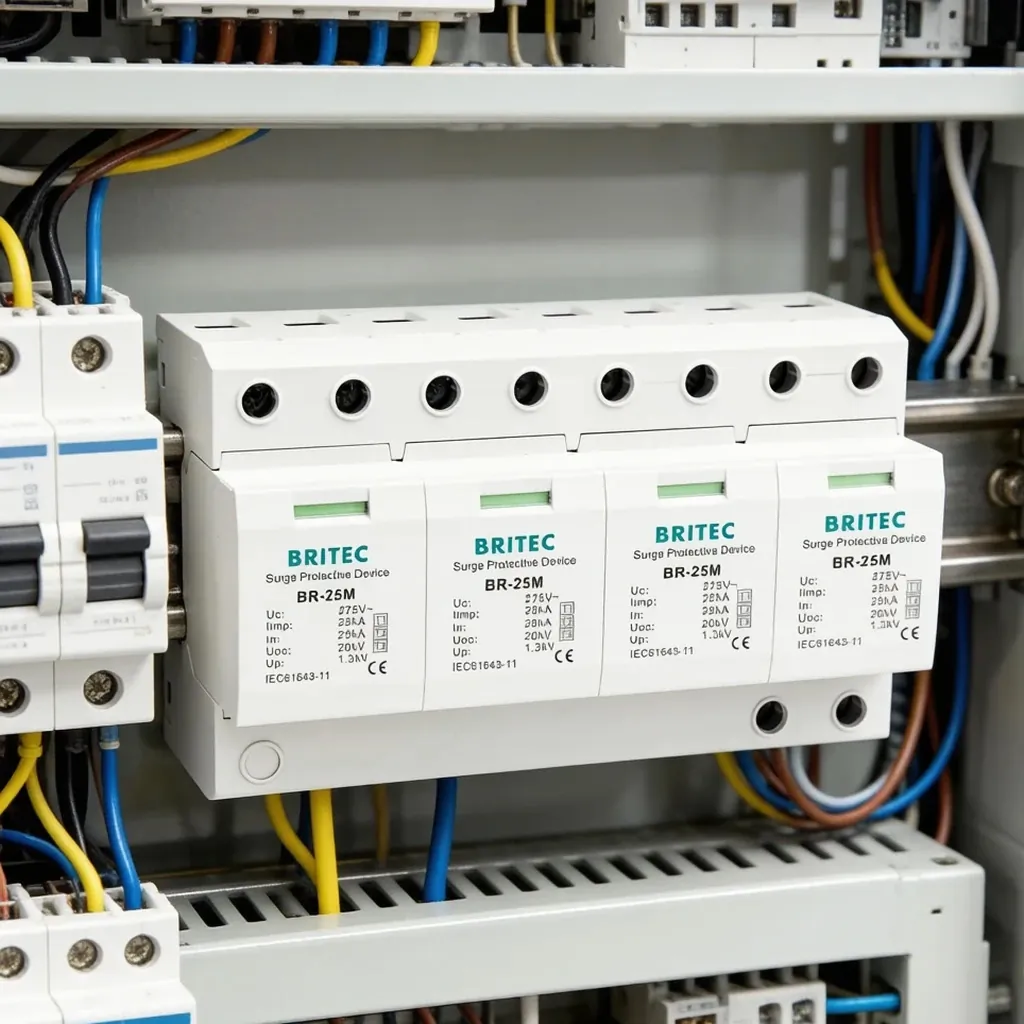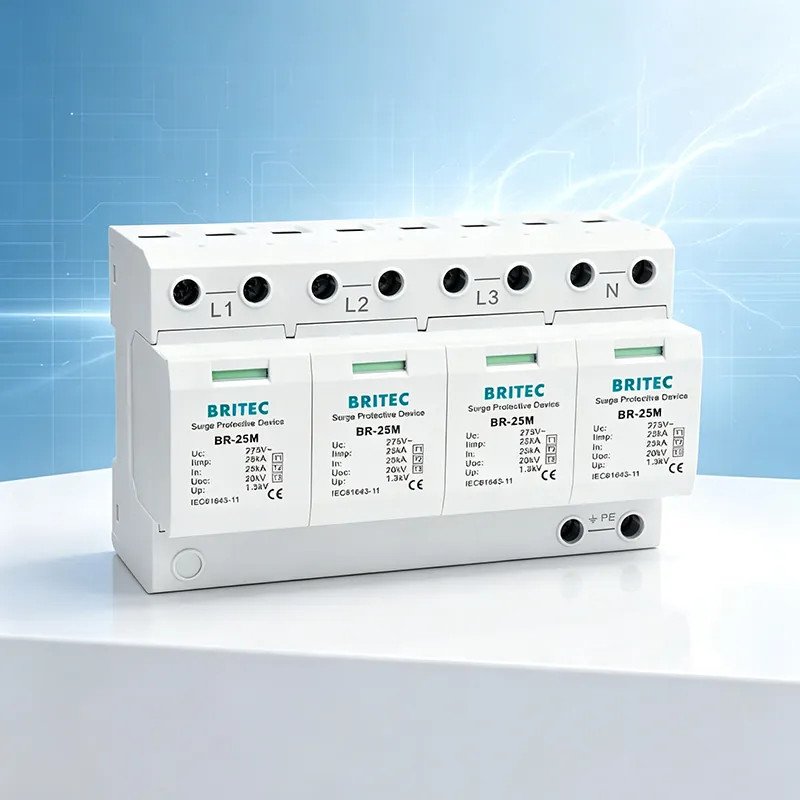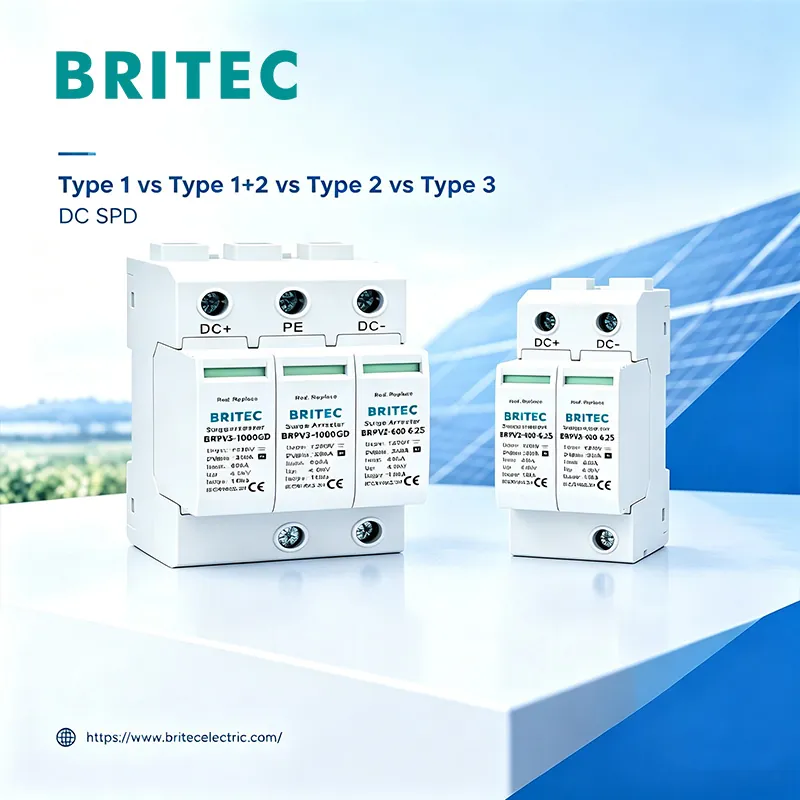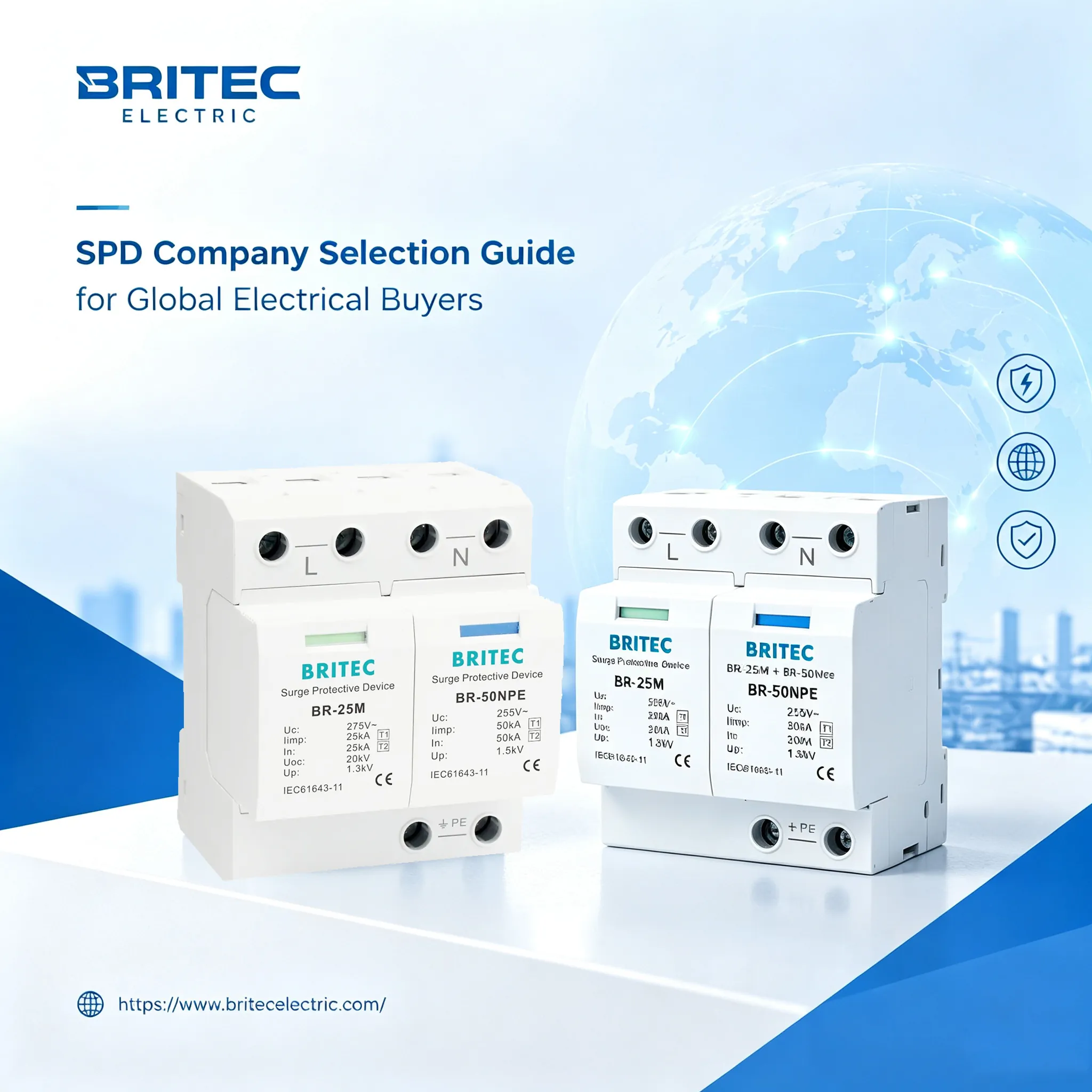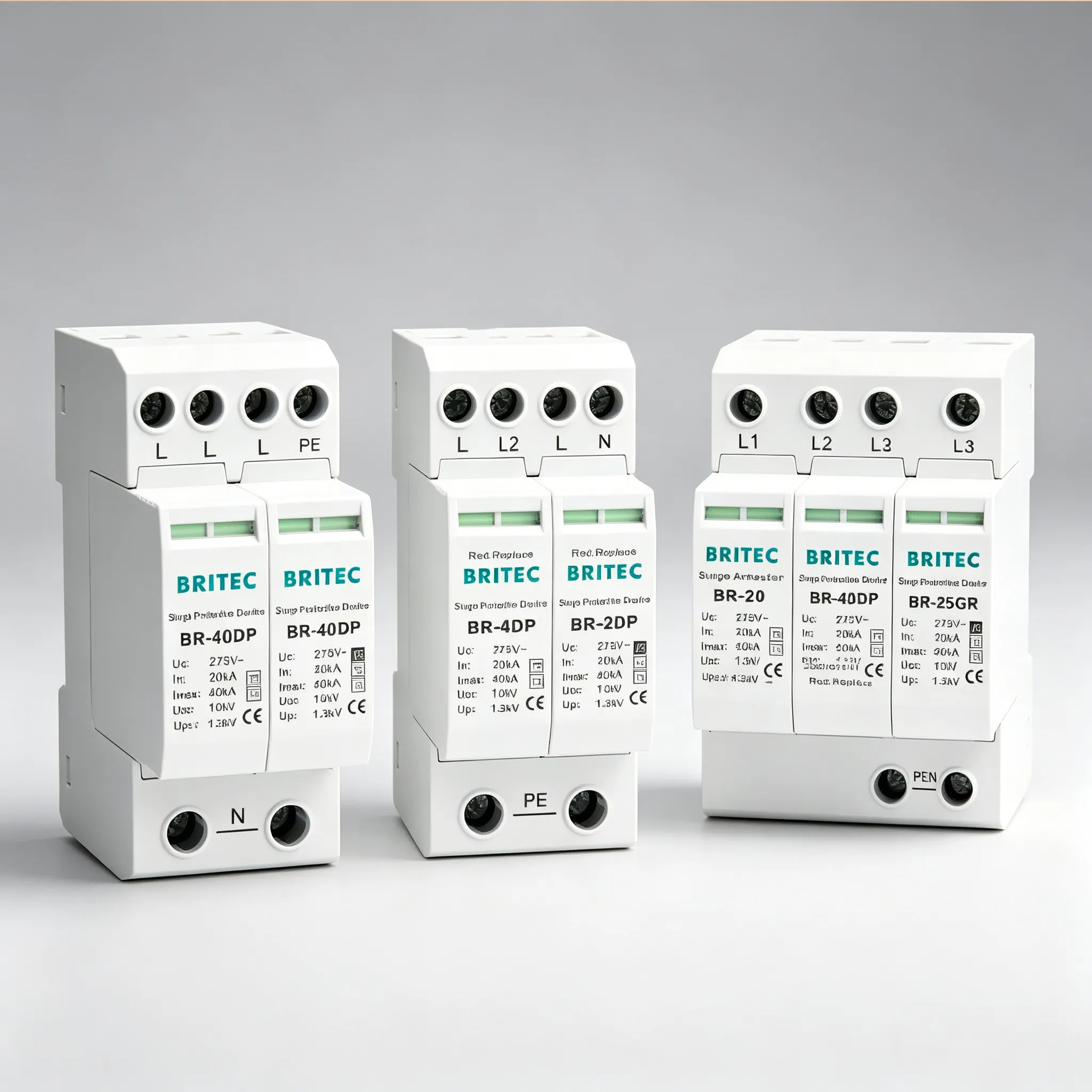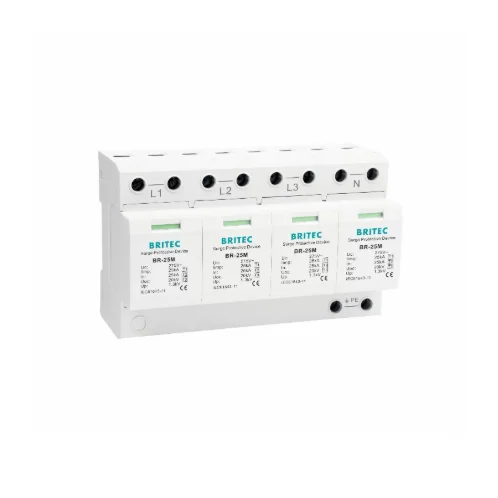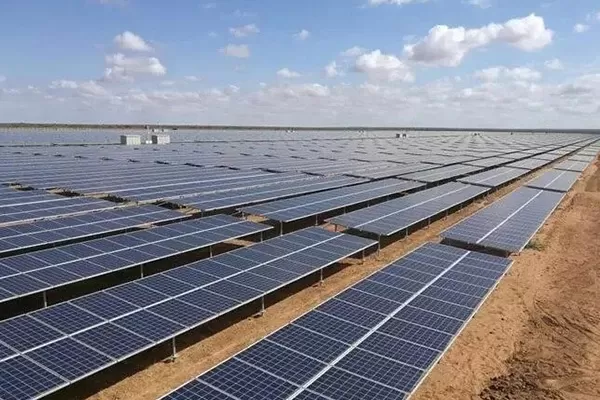

surge is a fatal hazard in the operation of electrical systems. The strong impact of external lightning strikes, as well as the surge during the operation of internal equipment start stop and line switching, can cause damage to components and insulation breakdown, and in severe cases, can lead to the paralysis of the entire system. Surge protection devices 그리고 lightning arresters are two key components of power protection, but they are often confused. Although both focus on suppressing surge and ensuring safety, their protection goals, working logic, and carrying capacity are completely different. One focuses on fine protection on the low-voltage side, while the other focuses on lightning surge discharge on the high-voltage side, each performing their own duties and cannot be replaced arbitrarily. This article breaks down differences from ten dimensions, with selection techniques and practical cases attached, delineating boundaries and accurately adapting to scenarios.
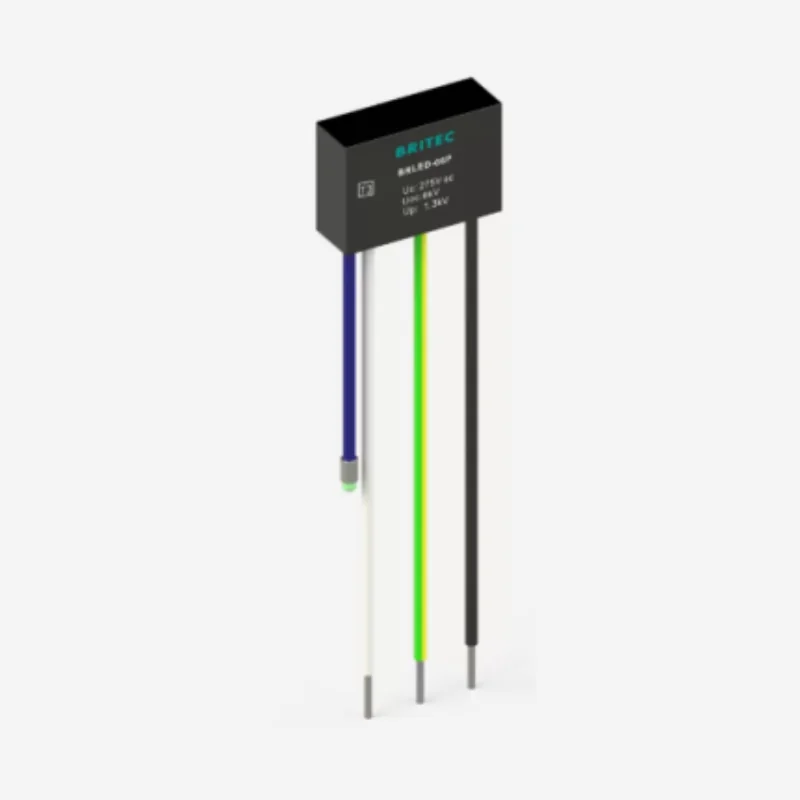
Surge protection devices belong to surge protectors, designed for internal and various instantaneous abnormal surges in power systems, covering scenarios such as operation, lightning induction, and power frequency resonance. With voltage limiting and diversion as the core, they are suitable for the precise protection needs of low-voltage distribution, electronic equipment, and industrial control circuits. A lightning arrester is a specialized high-voltage protection device for lightning, with only one core – releasing lightning current. Specializing in ultra-high amplitude and high current surges caused by direct lightning strikes and lightning invasion waves, only conducting and discharging lightning energy quickly into the ground, without considering conventional internal surge protection.
The discharge capacity is the most intuitive difference between the two, directly determining the upper limit of protection. Surge arresters are heavy-duty protective equipment with extremely strong discharge capacity. Conventional models can discharge up to tens or even hundreds of kiloamperes, withstand direct lightning strikes with ultra large pulse currents, and instantly release huge amounts of energy, with full impact resistance. surge protection device is a lightweight and refined protective equipment with a relatively small discharge capacity, mostly in the thousands of amperes level, and the highest is difficult to exceed 20 kiloamperes. It focuses on small energy and high-frequency surge suppression, and cannot withstand direct lightning strikes and high currents. It only deals with secondary surges caused by lightning induction and equipment start stop.
그만큼 lightning arrester works by means of nonlinear resistor valve plates or discharge gaps. High resistance insulation under normal voltage, does not interfere with the circuit; When encountering lightning surge, a sudden drop in resistance forms a low resistance channel, forcing lightning to flow into the ground; After the surge disappears, the insulation is automatically restored without any disconnection action, only leakage without voltage limitation. The surge protection device combines components such as varistors, gas discharge tubes, and solid-state current limiting modules, with multiple working principles. Immediate response to voltage exceeding the standard, or voltage limiting clamp, or instantaneous circuit disconnection, not only releases small energy surges, but also cuts off abnormal voltage conduction, balancing voltage limiting and power-off, and adapting to the fragile insulation of precision electronic equipment.
The response speed directly determines whether the protection is effective. The surge protection device responds extremely quickly, with a conventional nanosecond level, and can immediately block the instantaneous peak surge of the low-voltage circuit, avoiding the breakdown of precision components by millisecond level surges. It is suitable for electronic devices that are highly sensitive to voltage fluctuations. The response of lightning arresters is slightly slow, mostly in the microsecond range. Lightning surge has high amplitude and fast propagation, with microsecond level response sufficient to complete leakage without the need for extreme nanosecond speed. If it is too fast, it can be easily triggered by conventional voltage fluctuations, affecting the stability of the power grid.
그만큼 lightning arrester is designed specifically for occasional lightning strikes, with almost no loss or frequent operation under normal working conditions. High quality products can operate stably for 10-15 years or even longer, and only require regular testing on a daily basis without frequent replacement. Surge protection devices need to frequently respond to small energy surge caused by equipment start stop and line fluctuations. The core components gradually age and their performance deteriorates with the action, and their normal service life is only 3-5 years. When the action threshold is reached or the components age, they must be replaced in a timely manner, otherwise they will completely lose their protective ability.
Surge arresters are mainly used in medium and high voltage scenarios, suitable for 10kV, 35kV and above high voltage transmission lines, substations, and high voltage distribution equipment. They are specifically designed for lightning surge in high voltage systems and are almost useless in low voltage scenarios. The surge protection device focuses on the low-voltage field and is suitable for 220V, 380V low-voltage distribution systems, as well as low-voltage circuits such as industrial control equipment, household appliances, precision instruments, etc. It cannot withstand the surge impact of high-voltage systems and must not be used beyond the level.
그만큼 lightning arrester is highly adaptable to the environment. It is designed for outdoor sealing, waterproof, dust-proof, high and low temperature resistance, and anti-aging. It can be directly installed in outdoor towers and outdoor substations, facing the harsh natural environment, and still works stably under long-term wind and sun exposure. Surge protection devices have weak environmental tolerance and are mostly installed indoors, avoiding humid, dusty, high-temperature, and highly corrosive environments. They require high installation space and conditions and are mainly used inside indoor distribution boxes and equipment cabinets.
Lightning arresters protect large power equipment such as high-voltage transmission lines, transformers, and high-voltage switchgear, focusing only on lightning energy protection and only targeting external lightning surge, without handling internal power frequency surge. The surge protection device protects small electrical equipment such as household appliances, computers, industrial control PLCs, precision instruments, and low-voltage distribution circuits, covering all types of low-voltage surge such as lightning induction, operational surges, and resonant surge, providing a more comprehensive protection scenario.
그만큼 lightning arrester is installed on the high voltage side of the power system and is a first level protective equipment. It is located at the outdoor line inlet end, the high voltage cabinet of the substation, and the high voltage side of the transformer. It stands at the front end of the power grid protection and is specifically designed to intercept lightning intrusion waves. The surge protection device is installed at the end or branch circuit of the low-voltage distribution system, and is a secondary or tertiary protection equipment. It is located in the indoor main distribution box, equipment power supply input terminal, socket circuit, and other positions, close to the protected equipment, and finely intercepts residual surges.
The cost of a single lightning arrester is relatively high, and the core components are made of special materials with complex manufacturing processes. It also needs to balance high current discharge and outdoor durability, resulting in a high overall cost. It is mainly used in power engineering and industrial high-voltage projects. The surge protection device has low cost, diverse models, affordable prices for household and small industrial use, and lower bulk procurement costs, making it suitable for widespread use in large-scale low-voltage scenarios.
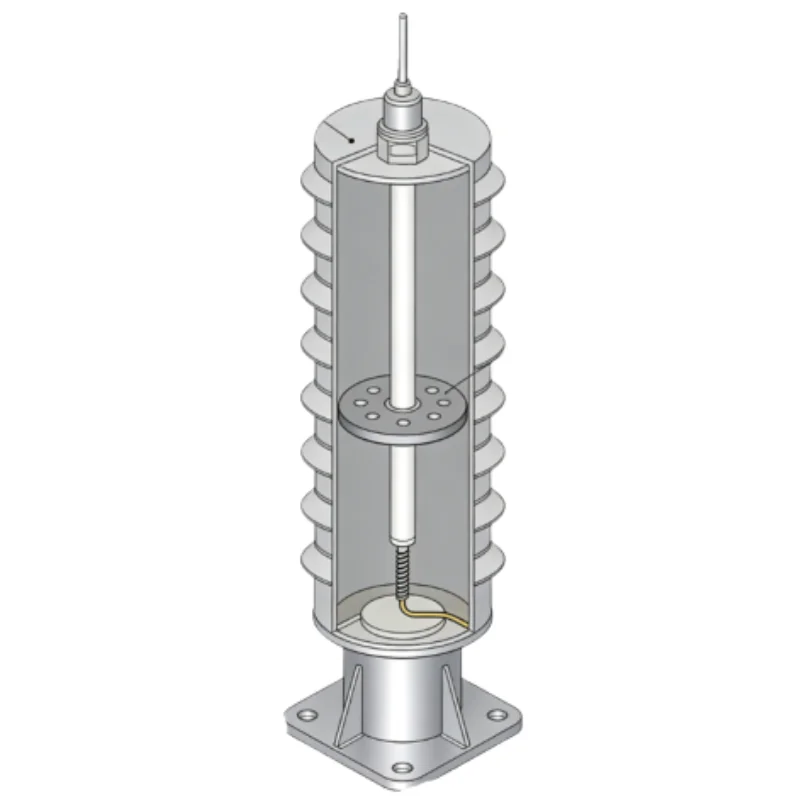
Selection core: Suitable for the scene, layered protection, not greedy for expensive, only choose the right one. First, determine the voltage level. Choose lightning arresters for medium and high voltage outdoor power equipment, with a focus on discharge capacity, withstand voltage, and outdoor protection level; Select surge protection devices for low-voltage indoor equipment, paying attention to response time, voltage limit level, and circuit adaptation. The requirement for nuclear protection is only to select lightning arresters to prevent direct lightning strikes; It is necessary to consider lightning induction, equipment start stop surge, and internal surge, and surge protection devices must be selected. Large industrial projects are equipped with graded protection, front-end lightning arresters for leakage, and terminal surge protection devices for precise protection.
Finally, match the environment, control the budget, and select high protection level lightning arresters for outdoor use; Select surge protection devices as needed indoors, high-performance models for household economy and industrial precision equipment, balancing protection and cost.
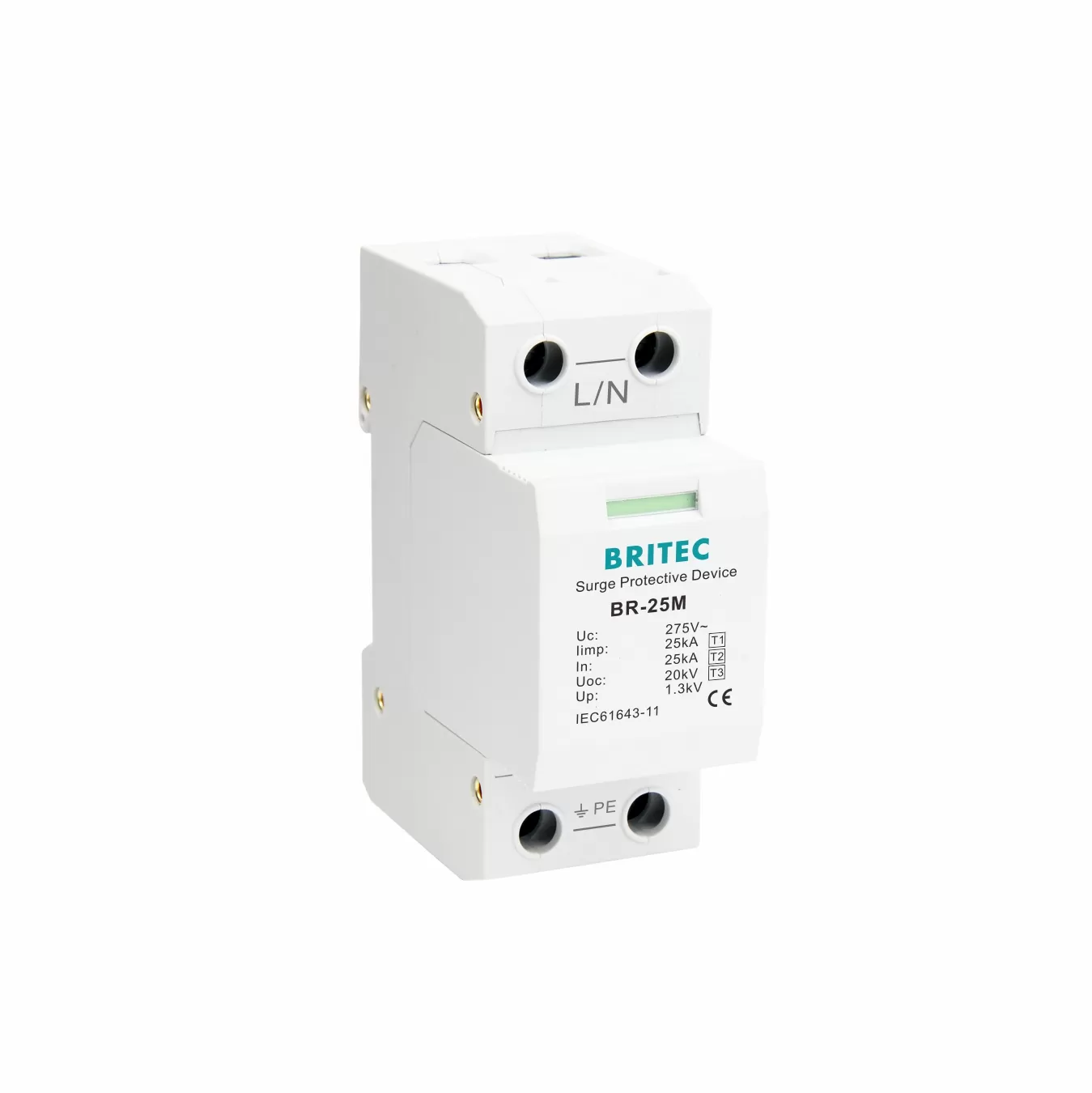
Case 1: Outdoor Substation Protection. A suburban 10kV substation experiences frequent lightning strikes in summer. Initially, only indoor low-voltage cabinets were equipped with surge protection devices. After multiple direct lightning strikes, the insulation on the high-voltage side of the transformer broke down and the equipment was shut down. After rectification, a zinc oxide lightning arrester was installed at the incoming end to discharge high direct lightning current, and an surge protection device was retained at the end. There were no lightning damage equipment accidents in the following two years. Core issue: The surge protection device has insufficient discharge capacity and cannot withstand direct lightning strikes. The combination of the two is the key to full level protection.
Case 2: Household Electricity Protection: During summer thunderstorms, a resident in a residential area frequently burned out their home appliances and routers due to surges. After installing lightning arresters on their own, they failed to provide protection and even caused line malfunctions. Replace the household level surge protection device, install it in the main distribution box and weak current circuit, and completely solve the problem of surge burning household appliances. Core issue: The home is a low-voltage indoor scene, and lightning arresters cannot be adapted and do not handle internal operational surges. Surge protection devices are the precise choice. Two cases confirm that the two cannot be replaced by each other, and mismatched scenarios will inevitably lead to ineffective protection. Graded selection and combination use are the optimal solutions for power protection.
Although both surge protection devices 그리고 lightning arresters belong to surge protection equipment, they have clear functional boundaries and scene division of labor, and each is indispensable and specialized. Lightning arrester is the core of high-voltage side, outdoor, and lightning high current protection. It has a large discharge capacity, long service life, and strong environmental adaptability, and only focuses on lightning protection; The surge protection device is the main force for low-voltage side, indoor, and all types of small energy surge protection. It has fast response, adapts to precision equipment, low cost, and balances lightning induction and internal surge protection. In practical applications, avoid confusion in selection and arbitrary substitution. Large power systems require hierarchical coordination and collaborative protection between the two; In low voltage civilian scenarios, priority should be given to selecting surge protection devices; In outdoor high-voltage scenarios, lightning arresters must be selected. Only by following the principle of scenario adaptation can a complete power protection system be constructed, minimizing the risk of equipment damage and system paralysis caused by surge. 브리텍일렉트릭 has been deeply involved in the research and supply of power protection equipment for many years, accumulating rich technical and practical experience. The lightning arresters and surge protection devices launched by 브리텍일렉트릭 have stable performance and complete specifications, accurately adapting to the protection needs of different scenarios, and building equipment barriers for the safe and stable operation of the power system.
Q1:Can Spd Replace Lightning Arrester?
A1:No. SPDs target low-voltage minor surges and can’t withstand the huge lightning current that arresters handle, so they can’t replace each other.
Q2:What’S The Discharge Capacity Difference?
A2:Arresters have ultra-high discharge capacity, up to tens or hundreds of kA for direct lightning. SPDs are only a few kA, max around 20 kA, for secondary surges only.
Q3:Can Both Be Used In One System?
A3:Yes. It’s the optimal solution. Arresters work on the high-voltage side to discharge large currents, and SPDs on the low-voltage end for fine protection, forming layered defense.
Q4:Which Is Better For Home Use?
A4:SPDs. Arresters are for high-voltage scenarios, useless for home low-voltage circuits and may cause malfunctions, while SPDs fit household surge protection needs perfectly.
Q5:What’S The Typical Service Life?
A5:Arresters last 10-15 years or more; SPDs only 3-5 years due to frequent action and component aging.
Q6:Do Both Need Regular Maintenance?
A6:Yes.Arresters need regular testing for insulation performance;SPDs require timely replacement once components age or reach action thresholds.
Q7:Can Arrester Protect Against Switching Surges?
A7:No. Arresters are exclusively for lightning surge discharge and can’t protect against internal switching surges in power systems.